
8% Off
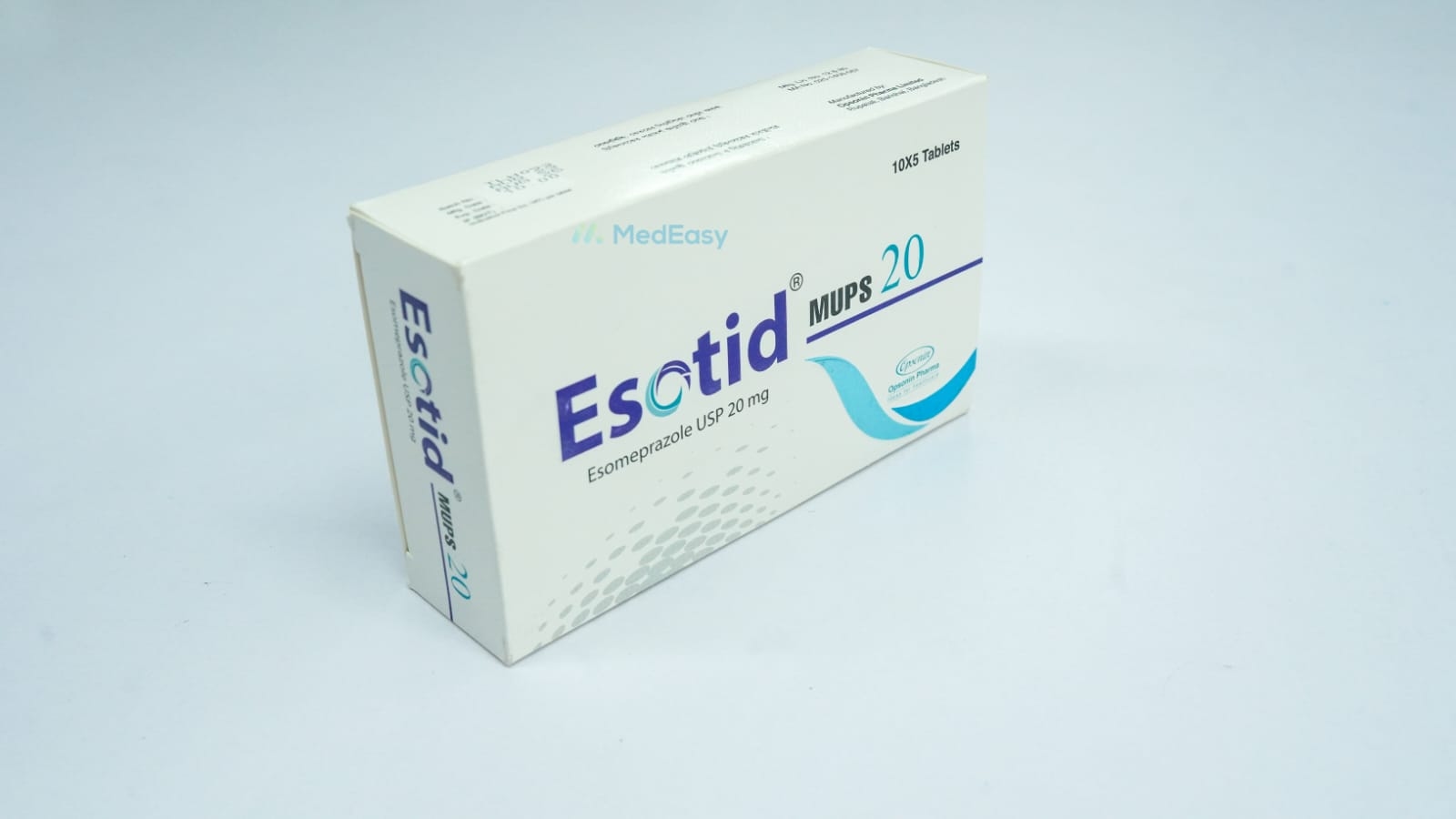
Esotid Mups20 mg
Opsonin Pharma Ltd.
৳92.00
Add to cart
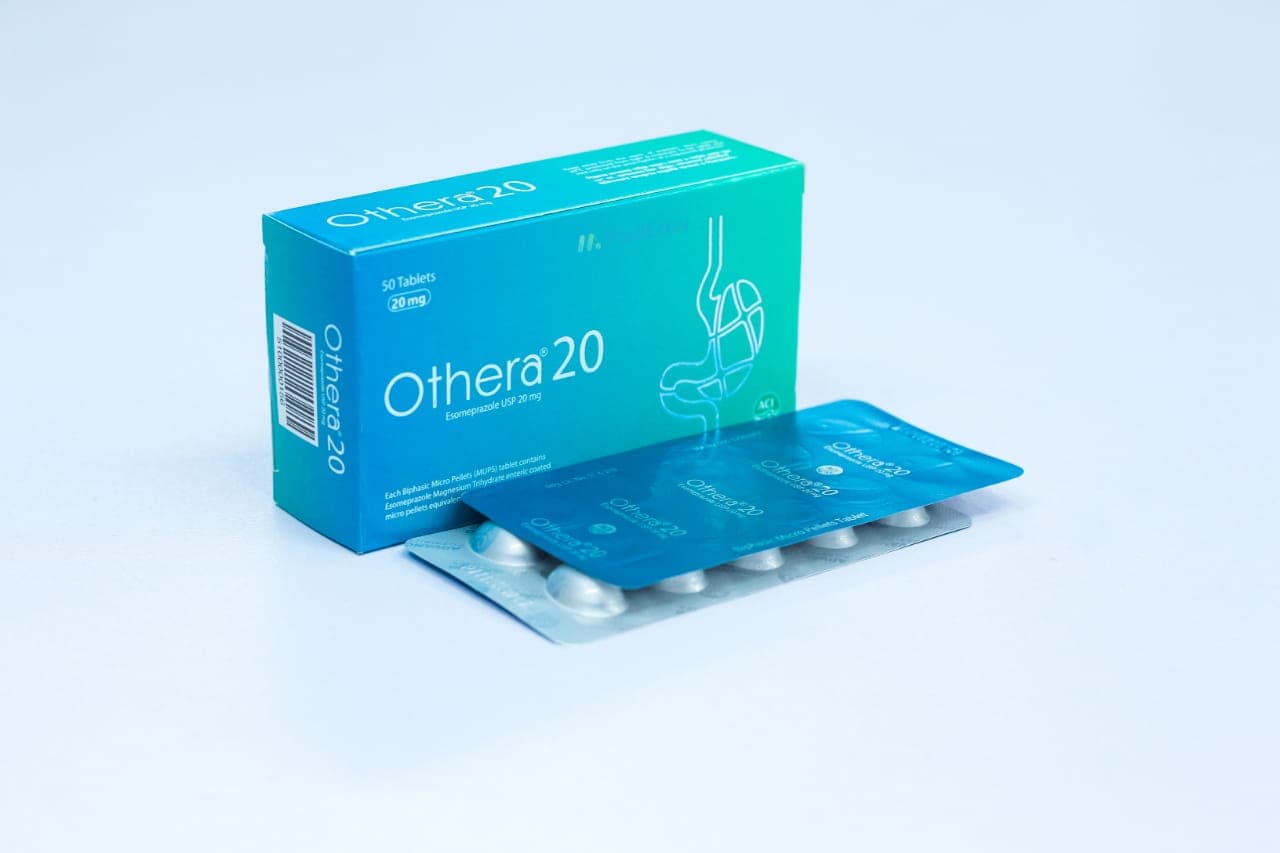

Othera is a proton pump inhibitor (PPI) indicated for the following conditions:
Each dosage unit contains Esomeprazole (as esomeprazole magnesium trihydrate or esomeprazole strontium, depending on formulation) as the active ingredient. Available as delayed-release capsules, delayed-release tablets (including multiple-unit pellet system/MUPS tablets), delayed-release oral suspension granules, and powder for injection/infusion for intravenous use.
Othera is the S-isomer of omeprazole and belongs to the class of medicines called proton pump inhibitors (PPIs). It works by irreversibly blocking the hydrogen-potassium ATPase (proton pump) in gastric parietal cells, profoundly suppressing gastric acid secretion.
Othera is used to treat conditions where reducing stomach acid is beneficial, such as gastroesophageal reflux disease (GERD), erosive esophagitis, and peptic ulcers, and is also used together with antibiotics to eradicate Helicobacter pylori infection.
Proton Pump Inhibitor (PPI) — Anti-peptic ulcer and anti-secretory agent. Othera is the S-enantiomer of omeprazole.
Esomeprazole suppresses gastric acid secretion through specific inhibition of the H+/K+-ATPase enzyme system (the "proton pump") at the secretory surface of the gastric parietal cell.
Because this enzyme system is regarded as the final step in acid production, Esomeprazole blocks gastric acid secretion in a dose-dependent manner, irrespective of the stimulus (histamine, acetylcholine, or gastrin). Esomeprazole is a weak base that is concentrated and converted to its active sulfenamide form in the highly acidic environment of the parietal cell canaliculus, where it binds to and inhibits the proton pump.
Pharmacokinetics: Esomeprazole is acid-labile and is administered as enteric-coated (delayed-release) granules. It is absorbed in the small intestine, undergoes extensive hepatic metabolism via CYP2C19 and CYP3A4, and is eliminated primarily in the urine (about 80%) with the remainder in feces. Onset of acid-suppressive effect occurs within 1 hour, with maximal effect after repeated once-daily dosing.
| Indication | Dose | Duration |
|---|---|---|
| GERD (symptomatic, no esophagitis) | 20 mg once daily | 4 weeks |
| Healing of erosive esophagitis | 20-40 mg once daily | 4-8 weeks |
| Maintenance of healed erosive esophagitis | 20 mg once daily | Up to 6 months |
| Risk reduction of NSAID-associated gastric ulcer | 20-40 mg once daily | Up to 6 months |
| H. pylori eradication (with clarithromycin and amoxicillin) | 40 mg once daily | 10 days |
| Pathological hypersecretory conditions (e.g. Zollinger-Ellison syndrome) | 40 mg twice daily, individualized and continued as long as clinically needed | Individualized |
For GERD in children, weight-based dosing is used under specialist supervision (typically 10-20 mg once daily depending on age and weight). Othera oral formulations are approved for children as young as 1 year for GERD-related indications; safety and efficacy in infants under 1 year have not been established. See Use in Special Populations for details.
Take Othera at least 1 hour before a meal, typically in the morning. Delayed-release capsules/tablets should be swallowed whole; for patients unable to swallow whole, capsules may be opened and granules mixed with a small amount of water or soft food and used immediately, without chewing or crushing the granules. Do not crush or chew tablets/granules.
No dosage adjustment is needed in mild-to-moderate renal impairment; data are limited in severe renal impairment. In severe hepatic impairment, a maximum dose of 20 mg once daily is recommended; no adjustment is required for mild-to-moderate hepatic impairment.
Othera should be taken at least 1 hour before a meal, typically in the morning, swallowed whole with water. Do not crush or chew delayed-release capsules, tablets, or granules.
The following are well-established, clinically significant interactions with Othera:
Esomeprazole is contraindicated in patients with:
Common side effects of Othera (occurring in more than 1% of patients) include:
Less common but clinically important adverse effects associated with long-term use include bone fracture, hypomagnesemia, vitamin B12 deficiency, and Clostridioides difficile-associated diarrhea (see Precautions and Warnings for details). Rare but serious effects include severe hypersensitivity reactions (anaphylaxis, angioedema, Stevens-Johnson syndrome), acute interstitial nephritis, cutaneous or systemic lupus erythematosus, and severe cutaneous adverse reactions. Seek prompt medical attention for rash, persistent joint pain, unexplained kidney symptoms, or signs of severe allergic reaction.
Pregnancy: Available data from published epidemiological studies have not established an association between Othera use during pregnancy and major birth defects, miscarriage, or adverse maternal/fetal outcomes; however, data remain limited. Othera should be used during pregnancy only if clearly needed and the potential benefit justifies the potential risk to the fetus. Consult a physician before use during pregnancy.
Lactation: Othera is present in human milk at low levels. There is limited information on effects on the breastfed infant or on milk production. The developmental and health benefits of breastfeeding should be weighed against the mother's clinical need for Othera and any potential adverse effects on the breastfed child. Consult a physician before use while breastfeeding.
The following precautions apply to the use of Othera, particularly with long-term or high-dose therapy:
Reported experience with intentional Othera overdose is limited. Symptoms that may occur include confusion, drowsiness, blurred vision, tachycardia, nausea, diaphoresis, flushing, and headache. There is no specific antidote for Othera overdose. Othera is not efficiently removed by hemodialysis.
In case of suspected overdose, seek immediate medical attention or contact a poison control center right away. Treatment should be symptomatic and supportive, under medical supervision.
Store at room temperature (below 30°C), away from light and moisture. Keep out of reach of children. Do not use after the expiry date printed on the pack.
Pediatric use: Othera is approved for GERD-related indications in children 1 year of age and older, with weight-based dosing under medical supervision. Safety and efficacy in infants younger than 1 year have not been established.
Geriatric use: No overall differences in safety or effectiveness have been observed between elderly and younger patients; no dosage adjustment is required based on age alone, though elderly patients may be at higher risk of PPI-associated fracture and other long-term adverse effects.
Renal impairment: No dosage adjustment necessary in mild-to-moderate renal impairment; data in severe renal impairment are limited and caution is advised.
Hepatic impairment: No adjustment needed in mild-to-moderate impairment. In severe hepatic impairment, do not exceed 20 mg once daily.
Duration of Othera therapy is indication-specific: typically 4-8 weeks for GERD/erosive esophagitis healing, up to 6 months for maintenance therapy or NSAID-ulcer risk reduction, and 10 days when used for H. pylori eradication as part of combination therapy. Use the lowest effective dose for the shortest duration appropriate to the condition; long-term use should be periodically reassessed by a physician.
For the intravenous powder-for-injection formulation of Othera, reconstitute the vial contents with the recommended volume of 0.9% Sodium Chloride Injection (or other compatible diluent per the manufacturer's instructions) and administer as an intravenous injection over at least 3 minutes or as an infusion over 10-30 minutes, per product labeling. Use reconstituted solution promptly; discard any unused portion.
Proton Pump Inhibitors (PPIs); Anti-secretory / Anti-ulcer agents
Esomeprazole irreversibly inhibits the gastric H+/K+-ATPase (proton pump) in parietal cells, blocking the final common pathway of gastric acid secretion regardless of the stimulating pathway, resulting in profound and long-lasting suppression of gastric acid production.
Othera is approved for the treatment of GERD in children 1 year of age and older, using weight-based dosing determined by a physician. It has not been established as safe and effective for use in infants younger than 1 year. Pediatric use for H. pylori eradication or other indications should be guided by a pediatric specialist.
Q: What is Othera 20 mg Tablet used for?
A: Othera 20 mg Tablet is used to treat gastroesophageal reflux disease (GERD), heal erosive esophagitis, reduce the risk of NSAID-associated stomach ulcers, treat conditions of excess stomach acid such as Zollinger-Ellison syndrome, and, in combination with antibiotics, to eradicate Helicobacter pylori infection.
Q: How should I take Othera 20 mg Tablet?
A: Take Othera 20 mg Tablet at least 1 hour before a meal, typically in the morning, and swallow the capsule or tablet whole with water. Do not crush or chew it unless your physician has specifically instructed an alternative administration method.
Q: Can I take Othera 20 mg Tablet for a long time?
A: Long-term use of Othera 20 mg Tablet (especially beyond 1 year) has been associated with increased risk of bone fracture, low magnesium levels, vitamin B12 deficiency, and intestinal infections such as Clostridioides difficile. Your physician should periodically review whether continued use is necessary and use the lowest effective dose for the shortest appropriate duration.
Q: Is Othera 20 mg Tablet safe during pregnancy or breastfeeding?
A: Othera 20 mg Tablet should be used during pregnancy only if clearly needed, as potential benefits must be weighed against potential risks to the fetus; consult your physician. Othera 20 mg Tablet passes into breast milk in small amounts, so breastfeeding mothers should also consult a physician before use.
Q: Can I stop taking Othera 20 mg Tablet suddenly?
A: Stopping Othera 20 mg Tablet abruptly after prolonged use may cause rebound acid hypersecretion (a temporary worsening of acid symptoms). Your physician may recommend gradually tapering the dose instead of stopping suddenly.
Q: Does Othera 20 mg Tablet interact with other medicines?
A: Othera 20 mg Tablet can reduce the effectiveness of clopidogrel (a blood-thinning medicine) and certain antifungal and antiviral drugs that need stomach acid for absorption. Always inform your physician or pharmacist of all medicines you are taking before starting Othera 20 mg Tablet.
Disclaimer
The information provided is accurate to the best of our knowledge, but it does not replace professional medical advice. We cannot guarantee its completeness or accuracy, and the absence of specific information about a drug should not be taken as an endorsement. We are not responsible for any consequences arising from this information, so please consult a healthcare professional for any concerns or questions.
