
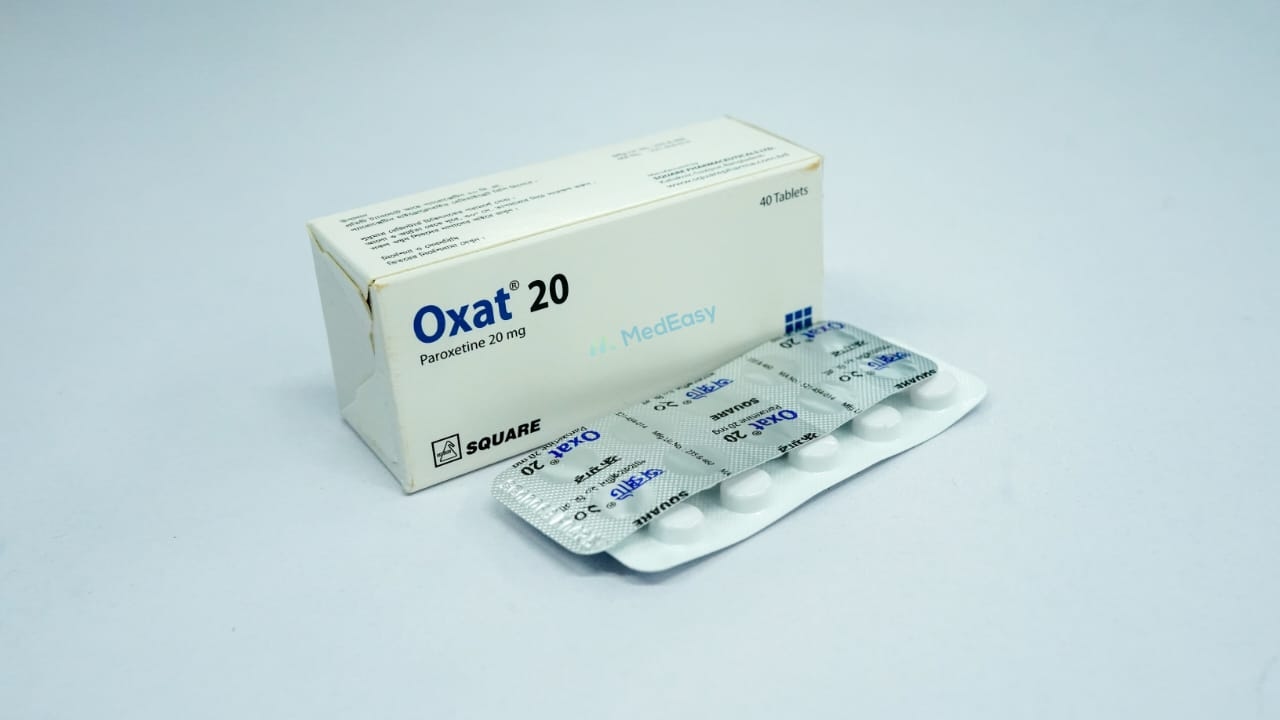
10% Off
Oxat20 mg
Square Pharmaceuticals PLC.
৳108.22
Add to cart
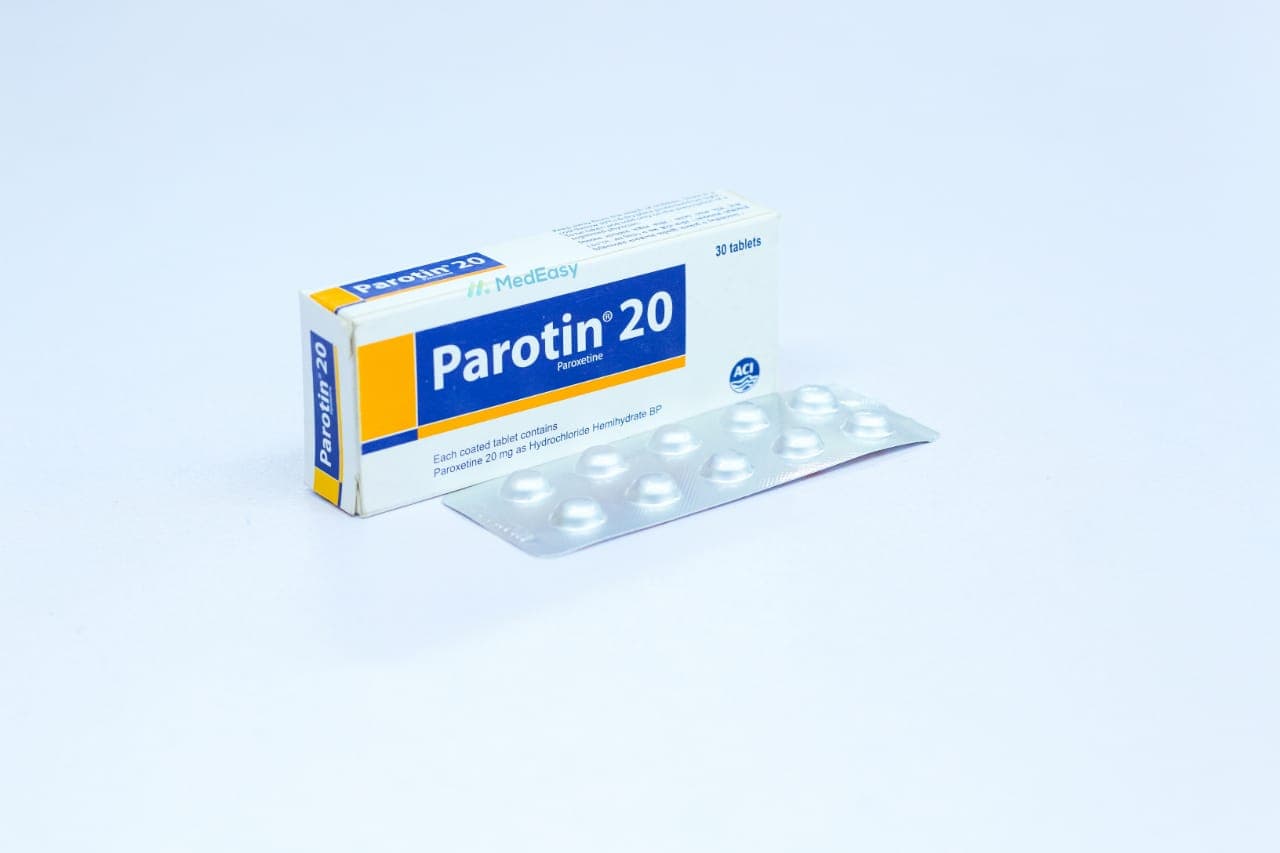
Parotin 20 mg Tablet is available on MedEasy for ৳90.63 per 10's Strip, with home delivery anywhere in Bangladesh. It is manufactured by ACI Limited. Its generic name is Paroxetine Hydrochloride.

Parotin is a selective serotonin reuptake inhibitor (SSRI) indicated for the treatment of the following conditions, classified by strength of evidence:
Use of Parotin should always be individualized and guided by a qualified physician based on diagnosis and risk-benefit assessment.
Each film-coated tablet of Paroxetine Hydrochloride contains paroxetine hydrochloride hemihydrate equivalent to 10 mg, 20 mg, 30 mg, or 40 mg of paroxetine base. Controlled-release (CR) tablets are available in 12.5 mg, 25 mg, and 37.5 mg strengths. An oral suspension containing the equivalent of 10 mg paroxetine per 5 mL is also available. Inactive excipients vary by manufacturer.
Parotin is a phenylpiperidine-derivative antidepressant belonging to the selective serotonin reuptake inhibitor (SSRI) class. It works by selectively blocking the reuptake of serotonin (5-hydroxytryptamine, 5-HT) into presynaptic neurons, thereby increasing serotonergic neurotransmission in the central nervous system. Parotin is widely used for the management of depressive and anxiety-spectrum disorders and is available as immediate-release tablets, controlled-release (CR) tablets, and oral suspension.
Selective Serotonin Reuptake Inhibitor (SSRI) — Antidepressant. Parotin is a well-established member of this class.
Paroxetine Hydrochloride is a potent and highly selective inhibitor of neuronal serotonin reuptake. By blocking the serotonin transporter (SERT) at the presynaptic membrane, it increases the concentration and duration of action of serotonin in the synaptic cleft, an effect believed to underlie its antidepressant and anxiolytic actions. It has minimal affinity for norepinephrine and dopamine reuptake transporters and weak anticholinergic, antihistaminic, and alpha-adrenergic blocking activity compared to older tricyclic antidepressants.
Dosing of Parotin should be individualized, starting at a low dose with gradual titration.
| Indication | Starting Dose (Adult) | Usual Target Dose | Maximum Dose |
|---|---|---|---|
| Major Depressive Disorder | 20 mg once daily (morning) | 20 mg/day | 50 mg/day |
| Generalized Anxiety Disorder | 20 mg once daily | 20 mg/day | 50 mg/day |
| Panic Disorder | 10 mg once daily | 40 mg/day | 60 mg/day |
| Social Anxiety Disorder | 20 mg once daily | 20 mg/day | 60 mg/day |
| Obsessive-Compulsive Disorder | 20 mg once daily | 40 mg/day | 60 mg/day |
| Post-Traumatic Stress Disorder | 20 mg once daily | 20 mg/day | 50 mg/day |
Dose increases, when needed, should generally occur at intervals of at least one week. Discontinuation must be gradual (tapered), not abrupt, to minimize discontinuation symptoms (see Precautions and Warnings).
Parotin tablets should be taken orally once daily, usually in the morning, with or without food. Tablets should be swallowed whole and not chewed or crushed, particularly the controlled-release formulation. The oral suspension should be measured using an appropriate measuring device. If a dose is missed, take it as soon as remembered unless it is close to the time of the next dose, in which case skip the missed dose — do not double the dose. Do not stop Parotin abruptly without consulting a physician.
Parotin has several clinically significant drug interactions:
Paroxetine Hydrochloride is contraindicated in the following situations:
Side effects associated with Parotin range from common and mild to rare but serious.
Parotin should be used during pregnancy only if the potential benefit justifies the potential risk to the fetus; use only if clearly needed and under physician guidance. Epidemiologic studies have suggested an increased risk of congenital cardiac malformations (particularly septal defects) associated with first-trimester exposure to Parotin, and neonates exposed late in the third trimester have developed complications including respiratory distress, feeding difficulty, and persistent pulmonary hypertension of the newborn (PPHN), sometimes requiring prolonged hospitalization. If discontinuation during pregnancy is considered, it should be done gradually and only under physician supervision, weighing the risk of relapse against fetal risk.
Parotin is excreted in human breast milk. Because of the potential for adverse effects in nursing infants, a decision should be made whether to discontinue breastfeeding or discontinue the drug, considering the importance of therapy to the mother, and only under medical supervision.
Parotin, like other antidepressants, carries an increased risk of suicidal thinking and behavior in children, adolescents, and young adults (under age 25), particularly during the initial months of treatment and following dose changes. Patients of all ages should be monitored closely for clinical worsening, unusual behavior changes, and suicidality, especially at treatment initiation and after dose adjustments. Parotin is not approved for use in pediatric patients (see Pediatric Uses).
Overdose with Parotin may cause symptoms such as nausea, vomiting, drowsiness, dizziness, tremor, dilated pupils, tachycardia, and, in severe cases, serotonin syndrome, seizures, or coma. If overdose is suspected, seek immediate medical attention or contact emergency services / a poison control center right away. Treatment is supportive and symptomatic; there is no specific antidote. Do not attempt to manage an overdose at home.
Store at room temperature (below 30°C), away from light and moisture. Keep out of reach of children.
Renal impairment: Reduced clearance occurs in moderate-to-severe renal impairment; initiate Parotin at a lower dose (10 mg/day) with cautious titration.
Hepatic impairment: Reduced clearance occurs in severe hepatic impairment; initiate at a lower dose (10 mg/day) with cautious titration.
Elderly: Higher plasma concentrations are observed; initiate at 10 mg/day, usual maximum 40 mg/day, with close monitoring for hyponatremia.
Pediatric patients: See Pediatric Uses.
Pregnancy and lactation: See Pregnancy and Lactation section.
An adequate trial of Parotin for depression or anxiety disorders typically requires 4-6 weeks at an appropriate dose before full benefit can be assessed. If effective, continuation therapy is generally recommended for at least 6 months to a year to reduce risk of relapse, and longer-term maintenance therapy may be advised for patients with recurrent depression or chronic anxiety disorders, per physician judgment. Discontinuation should always be gradual and under medical supervision.
Antidepressants; Selective Serotonin Reuptake Inhibitors (SSRIs)
Paroxetine Hydrochloride selectively and potently inhibits reuptake of serotonin (5-HT) at the presynaptic neuronal membrane by blocking the serotonin transporter (SERT). This increases the availability of serotonin in the synaptic cleft, enhancing serotonergic neurotransmission, an effect thought to mediate its antidepressant, anxiolytic, and anti-obsessional actions. It has negligible effect on norepinephrine and dopamine reuptake.
D
Safety and effectiveness of Parotin have not been established in pediatric patients for major depressive disorder. Placebo-controlled trials of Parotin in pediatric patients with MDD did not demonstrate efficacy and showed an increased risk of suicidal thinking and behavior compared to placebo; therefore, Parotin is not recommended for treating major depressive disorder in children and adolescents. Use in pediatric patients for other indications should only be considered under specialist supervision after careful risk-benefit assessment, as data are limited.
Q: What is Parotin 20 mg Tablet used for?
A: Parotin 20 mg Tablet is an SSRI antidepressant used to treat major depressive disorder, generalized anxiety disorder, panic disorder, social anxiety disorder, obsessive-compulsive disorder, and post-traumatic stress disorder.
Q: How long does it take for Parotin 20 mg Tablet to work?
A: It may take 2-4 weeks of regular use of Parotin 20 mg Tablet before noticeable improvement occurs, and up to 6-8 weeks for full benefit. Continue taking it as prescribed even if you do not feel an immediate effect.
Q: Can I stop taking Parotin 20 mg Tablet suddenly?
A: No. Stopping Parotin 20 mg Tablet abruptly can cause discontinuation symptoms such as dizziness, electric-shock-like sensations, irritability, and sleep disturbances. Always taper the dose gradually under your physician's supervision.
Q: Is Parotin 20 mg Tablet safe during pregnancy?
A: Parotin 20 mg Tablet should be used during pregnancy only if clearly needed, as it has been associated with a potential increased risk of congenital heart defects (especially with first-trimester use) and newborn complications with late-pregnancy use. Consult your physician before starting, stopping, or continuing this medicine during pregnancy.
Q: Who should not take Parotin 20 mg Tablet?
A: Parotin 20 mg Tablet should not be used by people with known hypersensitivity to it, those taking (or who have taken within the last 14 days) a monoamine oxidase inhibitor (MAOI), or those taking thioridazine or pimozide, due to serious risks including serotonin syndrome and dangerous heart rhythm problems.
Q: Can children take Parotin 20 mg Tablet?
A: Parotin 20 mg Tablet is not recommended for treating depression in children and adolescents, as studies did not show it to be effective in this age group and showed an increased risk of suicidal thoughts. Any pediatric use for other conditions should only occur under close specialist supervision.
Disclaimer
The information provided is accurate to the best of our knowledge, but it does not replace professional medical advice. We cannot guarantee its completeness or accuracy, and the absence of specific information about a drug should not be taken as an endorsement. We are not responsible for any consequences arising from this information, so please consult a healthcare professional for any concerns or questions.
