
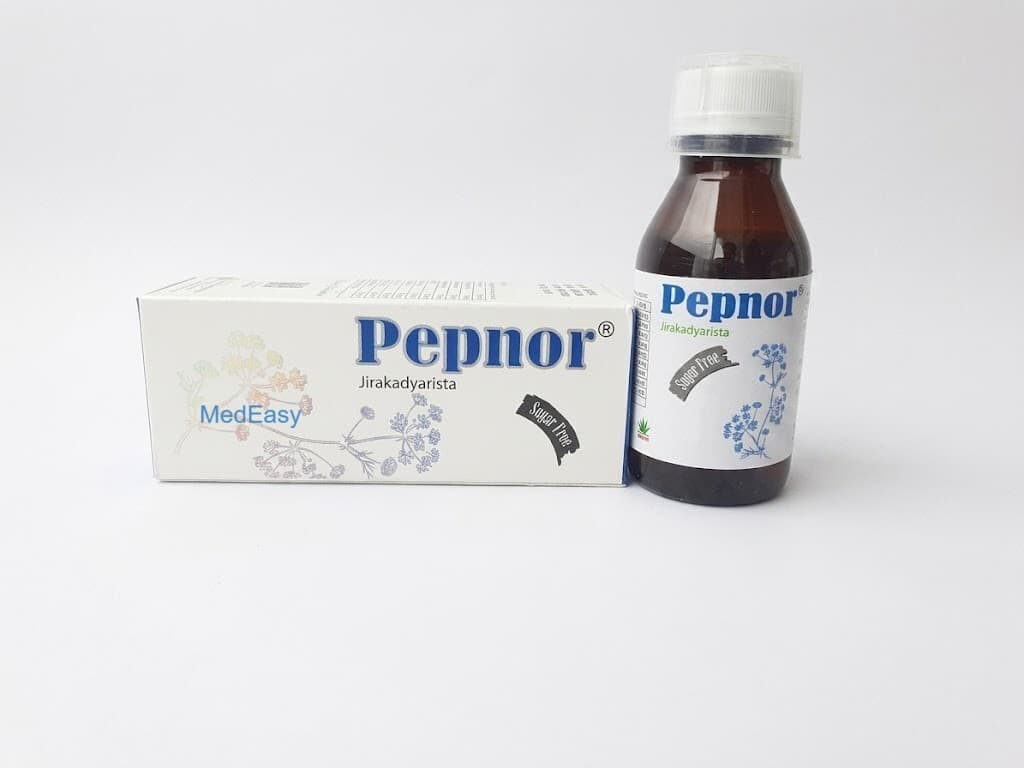

Medicine overview
Indications of Pepnor
Pepnor is a traditional Ayurvedic fermented herbal preparation (an "arishta"-typeself-fermented liquid tonic based on Jeeraka/cumin), used within traditional and complementary medicinepractice rather than as an FDA-approved conventional pharmaceutical. Evidence for its use is based ontraditional Ayurvedic literature and long-standing customary use rather than large randomized controlled trials,so it should be regarded as evidence-limited, traditional/complementary therapy.
- Traditional/customary use: Indigestion and dyspepsia (loss of appetite, delayed digestion,a feeling of heaviness after meals).
- Traditional/customary use: Flatulence and abdominal bloating (carminative action).
- Traditional/customary use: As a digestive and general tonic during the postpartum(after-childbirth) period, traditionally given to support digestion and recovery.
- Traditional/customary use: Mild colicky abdominal discomfort associated with gas.
Pepnor is not a substitute for conventional treatment of underlying gastrointestinal disease, and it shouldbe used as a complementary/adjunct measure. A physician or qualified Ayurvedic practitioner should be consultedbefore use, particularly if symptoms persist, are severe, or occur alongside other medical conditions.
Composition
Jeerakaddarishta Carminative is a self-fermented (Ayurvedic "arishta"-type) liquid preparation prepared using Jeeraka(cumin, Cuminum cyminum) as a principal ingredient, combined with other traditional digestiveherbs, along with jaggery/sugar and dhataki flower (used as a natural fermenting agent) in an aqueousdecoction, as per classical Ayurvedic formulation. The fermentation process generates a small amount ofself-generated alcohol (typically in the range seen in other arishta/asava preparations), which acts asa natural preservative and mild digestive stimulant.
The exact excipient/herb composition and concentration should be confirmed on the product label, asformulations may vary slightly between manufacturers while remaining within classical Ayurvedic pharmacopoeiallimits.
Description
Pepnor is a traditional Ayurvedic fermented herbal tonic of the "arishta" category, formulated primarilyaround Jeeraka (cumin) for its carminative and digestive properties. It is manufactured by fermenting aherbal decoction, a process characteristic of classical Ayurvedic arishta/asava preparations, which yieldsa small amount of self-generated alcohol.
Pepnor is positioned as a complementary/traditional digestive tonic rather than a conventionalpharmacotherapy, and its use should be framed conservatively, with realistic expectations based ontraditional use rather than robust modern clinical trial evidence.
Therapeutic Class
Pepnor belongs to the category of traditional Ayurvedic herbal/fermented preparations (arishta), usedas a carminative and digestive tonic. It is classified under complementary and alternative/traditionalmedicine rather than a conventional allopathic drug class.
Pharmacology
The proposed carminative and digestive action of Jeerakaddarishta Carminative is attributed to the volatile oils and otherconstituents present in Jeeraka (cumin) and the accompanying herbs, which are traditionally believed tostimulate digestive secretions, relieve gas, and reduce bloating. The small amount of self-generatedalcohol from fermentation may also contribute a mild appetite-stimulant effect.
These mechanisms are based on traditional Ayurvedic pharmacological concepts and preliminary/limitedscientific study of the individual herbal constituents, rather than well-characterized pharmacokinetic orpharmacodynamic data of the type available for conventional single-molecule drugs. No formal humanpharmacokinetic (absorption/distribution/metabolism/excretion) profile is established for Jeerakaddarishta Carminative as awhole formulation.
Dosage & Administration of Pepnor
General Dosing
| Population | Typical Dose | Frequency |
|---|---|---|
| Adults | 12–24 mL (approximately 2–4 teaspoons), mixed with an equal quantity of water | Twice daily, after meals, or as directed by a physician/Ayurvedic practitioner |
| Elderly | Same as adult dose unless otherwise advised | Twice daily after meals |
| Children | Lower, age-appropriate dose only under medical/Ayurvedic practitioner guidance(see Pediatric Use) | As advised by practitioner |
Exact dosing may vary by brand and concentration; always follow the dose printed on the product label oradvised by the prescribing physician/Ayurvedic practitioner. Pepnor should be diluted with water beforeconsumption and is generally taken after meals.
Administration of Pepnor
Pepnor is intended for oral use only. It should be diluted with an equal quantity of water and takenafter meals, unless the physician or product label directs otherwise. Do not exceed the recommended dose.Pepnor should not be injected or applied to the skin/mucosa.
Interaction of Pepnor
Formal drug-interaction studies have not been well established for Pepnor. Because Pepnor contains asmall amount of self-generated alcohol from fermentation, caution is advised when it is taken togetherwith:
- Disulfiram or metronidazole-type medicines: a disulfiram-like reaction (flushing,nausea, palpitations) is theoretically possible due to the alcohol content; avoid concurrent use.
- Sedatives, other CNS depressants, or other alcohol-containing products: additivesedative effects are possible.
- Antidiabetic medicines: because Pepnor may contain sugar/jaggery as part of thefermentation base, blood glucose control should be monitored in patients on antidiabetic therapy (seeContraindications/Use in Special Populations).
Patients should inform their physician of all medicines and herbal products they are taking beforestarting Pepnor.
Contraindications
Jeerakaddarishta Carminative is contraindicated in patients with known hypersensitivity to cumin (Jeeraka) or any otheringredient of the formulation.
Side Effects of Pepnor
Pepnor is generally well tolerated when used as directed. Reported effects are mostly mild and mayinclude:
- Mild gastrointestinal discomfort (nausea, acidity, or loose stools) in sensitive individuals
- Unpleasant taste or mild burning sensation if taken undiluted
- Rare hypersensitivity/allergic reactions (skin rash, itching) — discontinue and seek medical advice ifthis occurs
Because Pepnor contains a small amount of self-generated alcohol, excessive or prolonged use beyond therecommended dose is not advised.
Pregnancy & Lactation
Safety data for Pepnor in pregnancy and lactation are limited. As Pepnor is a fermented preparationthat may contain a small amount of self-generated alcohol, it should be used in pregnancy and duringbreastfeeding only if clearly needed and under the guidance of a physician or qualified Ayurvedicpractitioner, who can weigh the potential benefit against the potential risk. Routine self-medication withPepnor during pregnancy or lactation is not recommended without professional advice.
Precautions & Warnings
Use Pepnor with caution in the following situations:
- Diabetes mellitus: Pepnor may contain sugar/jaggery as part of its traditionalfermentation base; diabetic patients should use it only under medical guidance and monitor blood glucose(see Interactions).
- History of alcohol-use disorder: because Pepnor contains a small amount ofself-generated alcohol from fermentation, patients with a history of alcohol dependence should use it withcaution and under professional guidance.
- Active peptic ulcer disease: some traditional fermented tonics may be locallyirritating to an already inflamed gastric mucosa; use with caution in patients with active peptic ulcerdisease.
- Children: use only with age-appropriate dosing under medical/Ayurvedic practitionerguidance (see Pediatric Use).
- Pregnancy and lactation: use only if clearly needed and under professional guidance(see Pregnancy and Lactation).
Do not exceed the recommended dose or duration of use. Keep out of reach of children.
Overdose Effects of Pepnor
Specific overdose data for Pepnor are not well documented, as it is a traditional herbal preparationrather than a standardized single-molecule drug. Taking substantially more than the recommended dose mayincrease the risk of gastrointestinal upset and effects related to its self-generated alcohol content(e.g., drowsiness, nausea). If overdose is suspected, or if any unusual or severe symptoms occur, seekimmediate medical attention or contact a poison control center/emergency services rather than attemptinghome treatment.
Storage Conditions
Store at room temperature (below 30°C), away from light and moisture. Keep out of reach of children.
Use In Special Populations
Diabetic patients: use Pepnor with caution and under medical supervision, as it maycontain sugar/jaggery (see Precautions and Warnings).
Patients with alcohol-use disorder: use with caution due to the self-generated alcoholcontent of Pepnor (see Precautions and Warnings).
Patients with peptic ulcer disease: use with caution (see Precautions and Warnings).
Renal/hepatic impairment: no well-established formal dose adjustment exists forPepnor; use only under medical supervision in patients with significant renal or hepatic impairment.
Elderly: generally the usual adult dose applies, but underlying conditions such asdiabetes should be considered before use.
Duration Of Treatment
Pepnor is typically used for short courses to relieve acute digestive discomfort, flatulence, or duringthe postpartum recovery period, generally not exceeding a few weeks unless a physician or Ayurvedicpractitioner advises longer use. If symptoms persist beyond 1–2 weeks of use, or worsen at any time,medical advice should be sought rather than continuing self-medication with Pepnor indefinitely.
Drug Classes
Traditional Ayurvedic herbal/fermented preparation (arishta); digestive carminative tonic
Mode Of Action
Jeerakaddarishta Carminative is traditionally believed to act through the carminative and digestive-stimulant properties ofJeeraka (cumin) and its accompanying herbal constituents, which may help relieve gas, support digestivesecretions, and ease bloating. The small quantity of self-generated alcohol produced during fermentationis also traditionally believed to contribute a mild appetite-stimulant effect. These proposed mechanismsare drawn from traditional Ayurvedic concepts and limited pharmacological study of individual herbalconstituents, rather than an established modern mode-of-action profile.
Pediatric Uses
Pepnor may be used in children only with age-appropriate, reduced dosing and under the guidance of aphysician or qualified Ayurvedic practitioner. Safety and efficacy of Pepnor in children have not beenestablished through formal clinical trials in the way required for conventional pharmaceuticals; use inyoung children, especially infants, should be approached cautiously and only when advised by a healthcareprovider familiar with the child's condition.
Frequently Asked Questions
Q: What is Pepnor 100 ml Syrup used for?
A: Pepnor 100 ml Syrup is a traditional Ayurvedic fermented herbal tonic used as a digestive carminative — mainly for indigestion, flatulence/bloating, and as a digestive tonic during the postpartum period. It is a traditional/complementary remedy rather than a conventional FDA-approved drug, and evidence for its use comes from traditional Ayurvedic practice rather than large clinical trials.
Q: How should I take Pepnor 100 ml Syrup?
A: The usual adult dose of Pepnor 100 ml Syrup is 12–24 mL twice daily, diluted with an equal amount of water and taken after meals, or as directed by a physician or Ayurvedic practitioner. Always follow the dose on the product label.
Q: Is Pepnor 100 ml Syrup safe for diabetic patients?
A: Pepnor 100 ml Syrup may contain sugar/jaggery as part of its traditional fermentation base, so patients with diabetes should use it only under medical guidance and monitor their blood glucose while taking it.
Q: Can Pepnor 100 ml Syrup be used during pregnancy or breastfeeding?
A: Safety data are limited. Because Pepnor 100 ml Syrup is a fermented preparation that may contain a small amount of self-generated alcohol, it should be used in pregnancy or while breastfeeding only if clearly needed and under the guidance of a physician or qualified Ayurvedic practitioner.
Q: Does Pepnor 100 ml Syrup contain alcohol?
A: Yes. Like other Ayurvedic 'arishta' preparations, Pepnor 100 ml Syrup is produced by natural fermentation, which generates a small amount of self-generated alcohol. This should be considered by patients with a history of alcohol-use disorder, and by those taking medicines such as disulfiram or metronidazole.
Q: Can children take Pepnor 100 ml Syrup?
A: Pepnor 100 ml Syrup may be given to children only with age-appropriate, reduced dosing and under the guidance of a physician or Ayurvedic practitioner. Its safety and efficacy in children have not been established through formal clinical trials.
Disclaimer
The information provided is accurate to the best of our knowledge, but it does not replace professional medical advice. We cannot guarantee its completeness or accuracy, and the absence of specific information about a drug should not be taken as an endorsement. We are not responsible for any consequences arising from this information, so please consult a healthcare professional for any concerns or questions.
