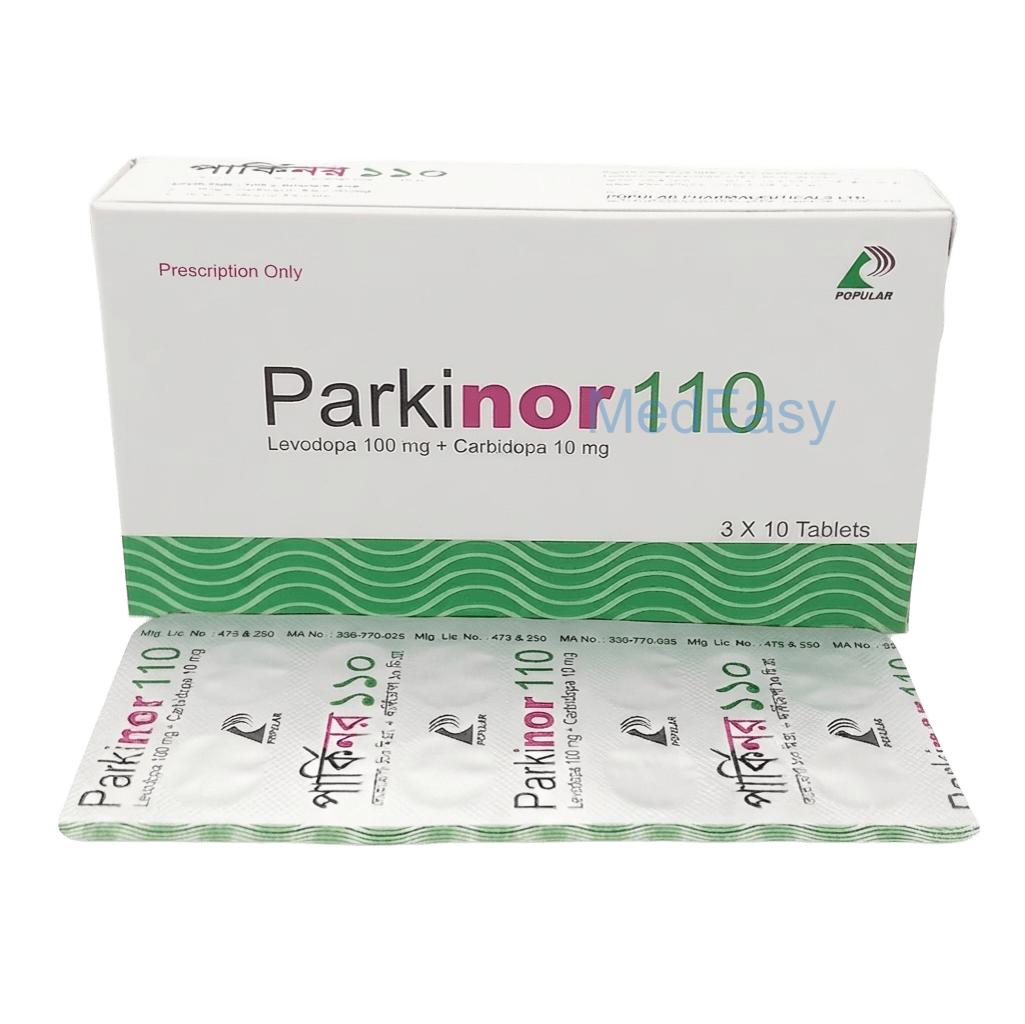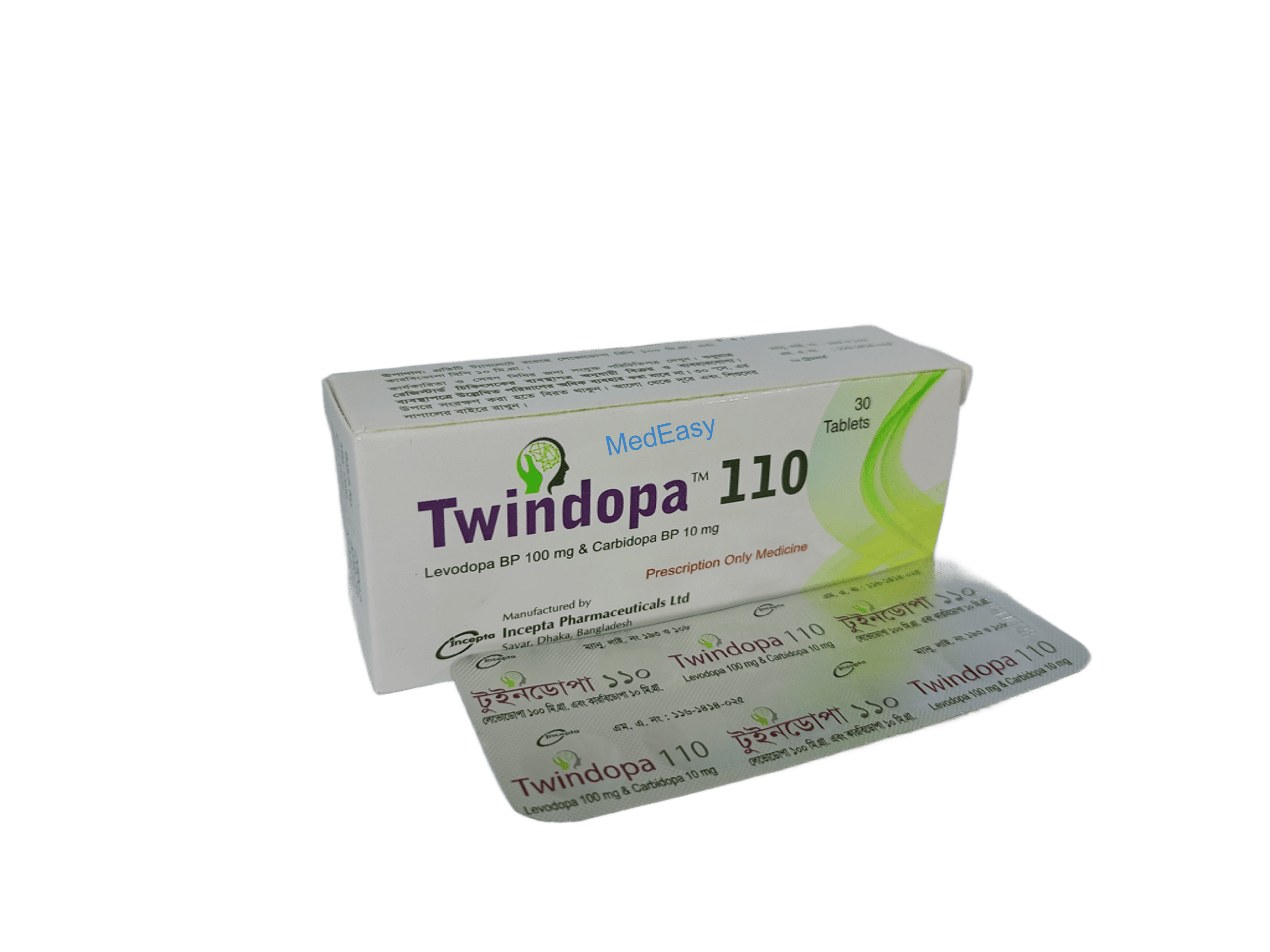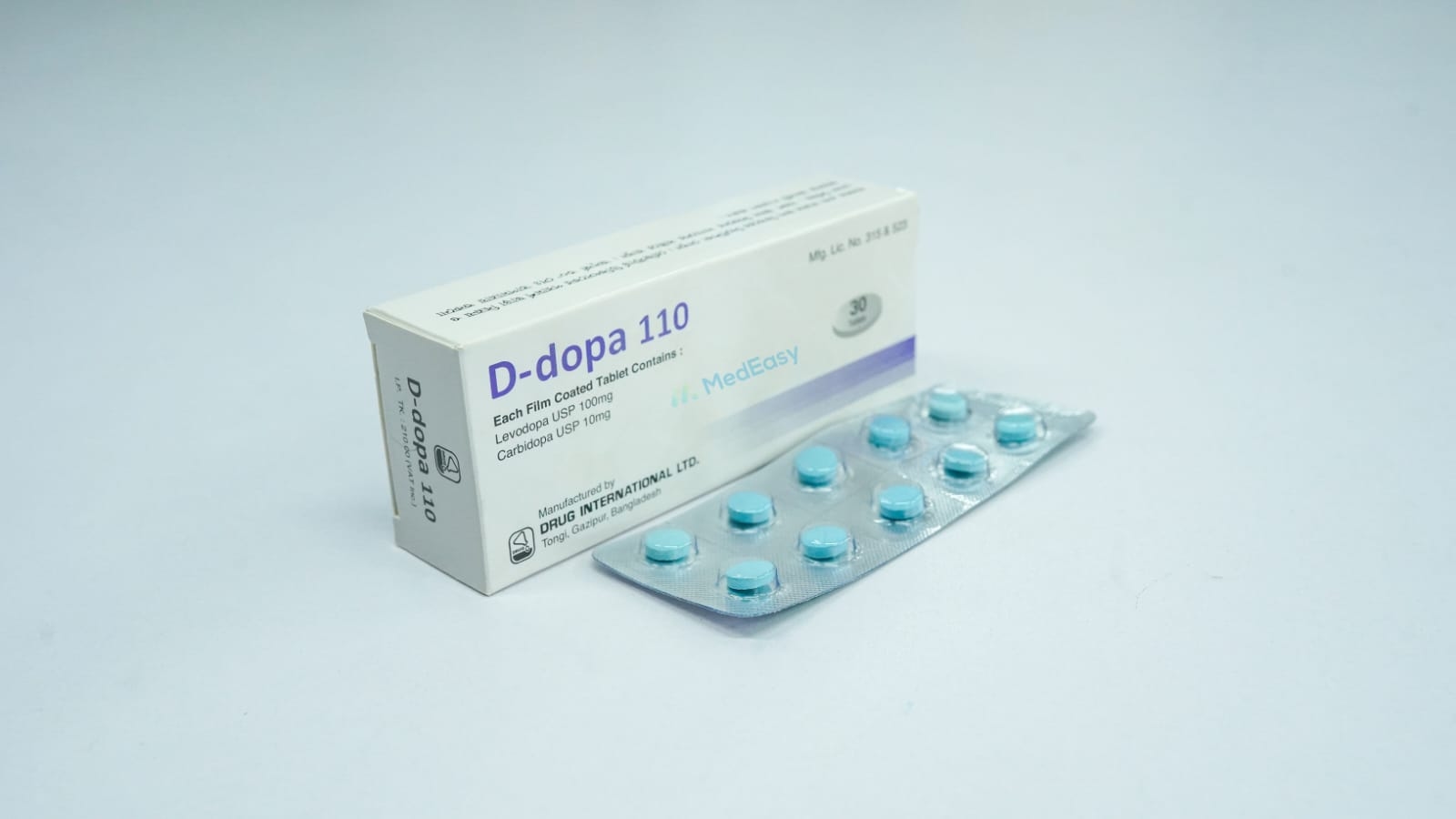
8% Off
D-Dopa100 mg+10
Drug International Ltd.
৳64.40
Add to cart
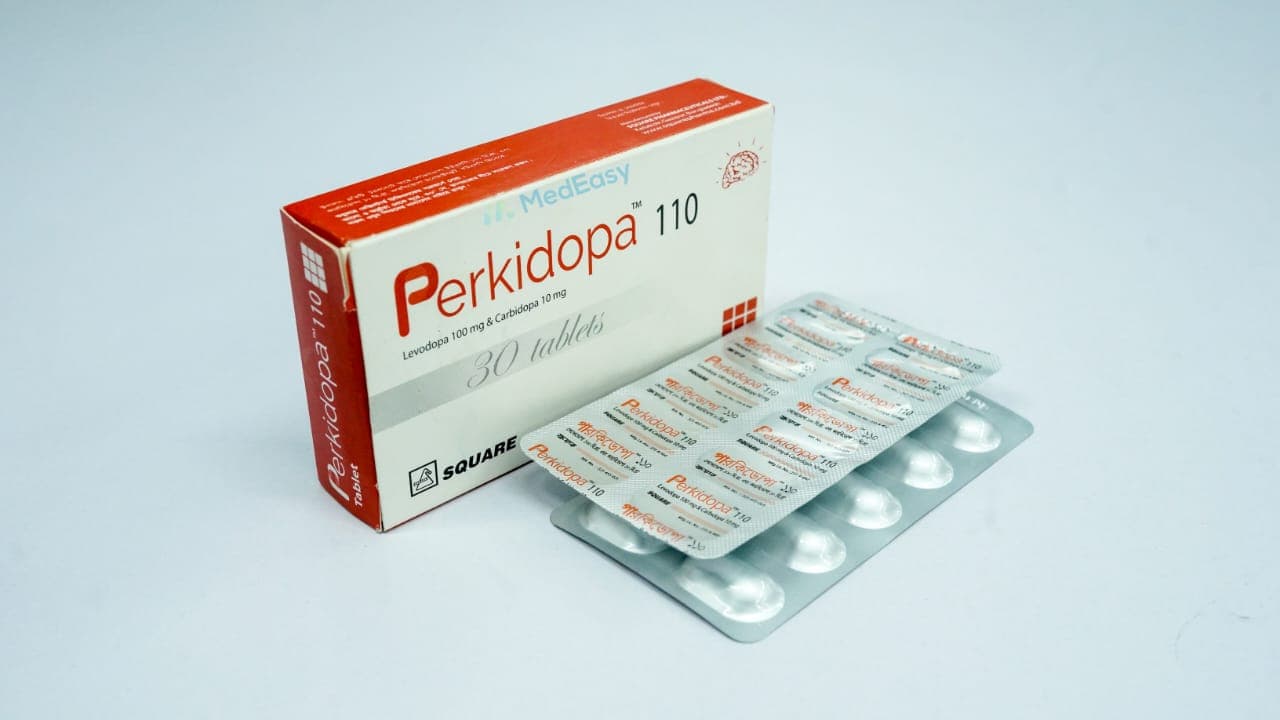
Perkidopa 100 mg+10 mg Tablet is available on MedEasy for ৳64.40 per 10's Strip, with home delivery anywhere in Bangladesh. It is manufactured by Square Pharmaceuticals PLC. Its generic name is Levodopa + Carbidopa.

Perkidopa is a combination antiparkinsonian medicine used to treat conditions involving dopamine deficiency in the brain.
Perkidopa is not effective for drug-induced (secondary) parkinsonism caused by antipsychotic medicines, and is not a cure — it controls symptoms only for as long as it is taken.
Levodopa + Carbidopa tablets combine two active ingredients in a fixed-dose combination:
Common strength combinations marketed include 100 mg/25 mg, 250 mg/25 mg, 100 mg/10 mg, and 50 mg/12.5 mg (levodopa/carbidopa), available as immediate-release and controlled/extended-release tablets, in accordance with local formulary availability.
Perkidopa is a fixed-dose combination used in the long-term management of Parkinson's disease and related parkinsonian syndromes. Levodopa is converted in the brain to dopamine, replenishing the dopamine deficiency that underlies Parkinson's disease symptoms. Carbidopa itself has no antiparkinsonian effect; instead, it blocks the breakdown of levodopa in the bloodstream and peripheral tissues before it can reach the brain.
By combining levodopa with carbidopa, a much smaller dose of levodopa is needed to achieve the same clinical effect compared with levodopa given alone, which reduces peripheral side effects such as nausea and vomiting and allows for faster dose titration. Perkidopa does not slow, halt, or reverse the underlying progression of Parkinson's disease; it controls symptoms only while treatment continues.
Parkinson's disease results from degeneration of dopamine-producing neurons in the substantia nigra of the brain. Dopamine itself cannot cross the blood-brain barrier, so it cannot be given directly as a drug.
Levodopa, the metabolic precursor of dopamine, does cross the blood-brain barrier. Once inside the central nervous system, it is decarboxylated to dopamine by the enzyme dopa-decarboxylase, replenishing depleted striatal dopamine stores and improving motor symptoms.
When levodopa is given alone, most of an oral dose is decarboxylated to dopamine in peripheral tissues (gut wall, liver, kidney) before it ever reaches the brain, producing high peripheral dopamine levels responsible for nausea, vomiting, and cardiovascular side effects, and leaving only a small fraction of the dose available centrally.
Carbidopa inhibits peripheral dopa-decarboxylase but does not cross the blood-brain barrier itself, so it does not interfere with the conversion of levodopa to dopamine within the brain. By blocking peripheral breakdown, carbidopa increases the fraction of an administered levodopa dose that reaches the central nervous system, permits use of substantially lower levodopa doses, and reduces peripheral (gastrointestinal and cardiovascular) side effects.
Dosage of Perkidopa must be individualized by a physician according to the patient's response; the tablets are usually adjustable/scored to allow dose titration. The information below reflects typical adult dosing for the 25 mg carbidopa/100 mg levodopa (25/100) and 25 mg carbidopa/250 mg levodopa (25/250) immediate-release strengths; extended-release and other local strengths are dosed differently — follow the prescribing physician's instructions and the specific product's labeling.
| Situation | Typical adult dosing |
|---|---|
| Patients not currently taking levodopa | Start with one 25 mg/100 mg tablet three times daily. May increase by one tablet every day or every other day, as needed, until a dose of 8 tablets/day is reached, or until optimal response. |
| Switching from levodopa alone | Stop levodopa at least 12 hours beforehand. Begin Perkidopa at roughly 25% of the previous levodopa dose. Patients previously on <1500 mg/day levodopa: start one 25 mg/100 mg tablet 3–4 times daily; on >1500 mg/day: start one 25 mg/250 mg tablet 3–4 times daily. |
| Maintenance | Adjust to the lowest effective dose that controls symptoms, typically providing at least 70–100 mg of carbidopa per day; most patients are maintained on 3–8 tablets/day in divided doses. Doses above 8 tablets/day (of the 25/100 strength) are not generally recommended. |
| Renal impairment | No formal dose adjustment is established; use with caution and titrate slowly, as levodopa/carbidopa metabolites are renally excreted. |
| Hepatic impairment | No formal dose adjustment is established; use with caution in significant hepatic disease. |
| Pediatric patients | Not recommended — safety and effectiveness in patients under 18 years have not been established (see Pediatric Uses). |
Perkidopa is taken by mouth, generally in 3–4 divided doses per day as directed by the physician. It may be taken with or without food, but a high-protein meal can reduce and slow absorption of the levodopa component, so patients should try to take Perkidopa at a consistent time relative to meals each day rather than switching timing unpredictably. Extended-release tablets should be swallowed whole (not crushed or chewed) unless the physician instructs otherwise. Doses should be spaced evenly through the day as prescribed, and the medicine should never be stopped or its dose reduced abruptly without medical advice (see Precautions and Warnings for the risk of a serious withdrawal reaction).
The following are well-documented, clinically significant interactions with Perkidopa:
Always inform the prescribing physician of all other medicines, supplements, and herbal products being used before starting Perkidopa.
Levodopa + Carbidopa is contraindicated in the following situations:
Side effects of Perkidopa can be dose-related and often overlap with disease-related symptoms. Report new or worsening symptoms to a physician.
Pregnancy: There are no adequate and well-controlled studies of Perkidopa in pregnant women. Animal reproduction studies have shown variable findings, including fetal malformations in some species at certain doses. Levodopa is known to cross the placenta. Perkidopa should be used during pregnancy only if the potential benefit to the mother clearly justifies the potential risk to the fetus, and only under a physician's supervision.
Lactation: Levodopa has been detected in human breast milk. Because of the potential for adverse effects in a nursing infant, a decision should be made, in consultation with a physician, whether to discontinue breastfeeding or discontinue the medicine, taking into account the importance of treatment to the mother.
The following precautions and warnings apply to treatment with Perkidopa:
Signs of Perkidopa overdose may include severe dyskinesias (involuntary movements), confusion, agitation, hallucinations, marked drops or rises in blood pressure, cardiac arrhythmia, and other exaggerated adverse effects.
In case of suspected overdose, seek immediate medical attention or contact emergency services / a poison control center right away. Management is supportive and should be carried out by medical professionals — this typically includes close monitoring of heart rhythm (ECG), careful attention to fluid and airway status, and general supportive care. Do not attempt to manage a suspected overdose at home; do not induce vomiting or give any treatment without professional medical guidance, as specific measures depend on the clinical situation.
Store at room temperature (below 30°C), protected from light and moisture. Do not use if the blister/packaging is torn or damaged. Keep out of reach of children.
Elderly: A large proportion of patients treated with Perkidopa are elderly. No age-related change in overall safety/efficacy has been established, but elderly patients may be more sensitive to certain adverse effects, particularly hallucinations, confusion, and orthostatic hypotension. No specific dose adjustment is defined by age alone; titrate carefully based on individual response and tolerability.
Renal impairment: No formal dosage adjustment has been established; use with caution and monitor closely, titrating slowly.
Hepatic impairment: No formal dosage adjustment has been established; use with caution in patients with significant liver disease.
Psychiatric history: Use with particular caution in patients with a history of psychosis, severe depression, or cardiovascular/pulmonary disease (see Precautions and Warnings).
Pediatric patients: Not recommended (see Pediatric Uses).
Perkidopa is generally used long-term, as Parkinson's disease is a chronic, progressive condition and the medicine controls symptoms only for as long as it is taken. Dosing is typically re-titrated periodically by the treating physician as the disease progresses and as tolerance to side effects or fluctuations in response (such as "wearing-off" or "on-off" phenomena) develop. Treatment should not be stopped or the dose reduced without medical supervision, given the risk of a severe withdrawal reaction (see Precautions and Warnings). There is no fixed maximum duration; therapy continues as long as it remains clinically beneficial and is periodically reviewed by the prescriber.
Antiparkinsonian agent — combination of a dopamine precursor (Levodopa) with a peripheral aromatic-L-amino-acid decarboxylase inhibitor (Carbidopa).
Levodopa, the component of Levodopa + Carbidopa responsible for the therapeutic effect, crosses the blood-brain barrier and is converted by dopa-decarboxylase into dopamine within the brain, replenishing dopamine stores depleted by the neurodegeneration of Parkinson's disease and thereby improving rigidity, bradykinesia, and tremor. Carbidopa, which does not cross the blood-brain barrier, inhibits dopa-decarboxylase in peripheral tissues only, preventing premature conversion of levodopa to dopamine outside the brain. This increases the amount of levodopa available to enter the central nervous system, allows lower overall levodopa doses, and markedly reduces peripheral dopamine-related side effects such as nausea.
C
Safety and effectiveness of Perkidopa in patients under 18 years of age have not been established. Perkidopa is not recommended for use in the pediatric population.
Q: What is Perkidopa 100 mg+10 mg Tablet used for?
A: Perkidopa 100 mg+10 mg Tablet is used mainly to treat Parkinson's disease and related parkinsonian conditions. Levodopa is converted into dopamine in the brain to relieve stiffness, slow movement, and tremor, while carbidopa reduces the breakdown of levodopa outside the brain so more of it reaches the brain and fewer side effects like nausea occur.
Q: Can I stop taking Perkidopa 100 mg+10 mg Tablet suddenly if I feel better or have side effects?
A: No. Perkidopa 100 mg+10 mg Tablet should never be stopped suddenly or have its dose reduced abruptly without a physician's guidance. Doing so can cause a serious reaction with high fever, severe muscle rigidity, and confusion (similar to neuroleptic malignant syndrome), as well as a marked return or worsening of Parkinson's symptoms. Always consult your physician before making any change to your dose.
Q: Can I take Perkidopa 100 mg+10 mg Tablet with a high-protein meal?
A: Perkidopa 100 mg+10 mg Tablet can be taken with food to reduce stomach upset, but a large, high-protein meal taken at the same time can reduce and delay the absorption of the levodopa component, making the dose less effective. It is best to take Perkidopa 100 mg+10 mg Tablet at a consistent time relative to meals each day, as advised by your physician, rather than changing the timing unpredictably.
Q: Are there any medicines I must avoid while taking Perkidopa 100 mg+10 mg Tablet?
A: Yes. Non-selective monoamine oxidase (MAO) inhibitors must not be used with Perkidopa 100 mg+10 mg Tablet, and should be stopped at least 2 weeks beforehand, because the combination can cause a dangerous rise in blood pressure (hypertensive crisis). Certain antipsychotic medicines, metoclopramide, and iron supplements can also reduce the effectiveness of Perkidopa 100 mg+10 mg Tablet. Always tell your physician about every medicine and supplement you take.
Q: Can Perkidopa 100 mg+10 mg Tablet cause unusual urges like gambling or overspending?
A: Yes, this is a recognized effect of dopaminergic medicines including Perkidopa 100 mg+10 mg Tablet. Some patients develop intense urges to gamble, spend money, eat, or engage in sexual activity, which they may not immediately connect to the medicine. If you or your family notice such behavior changes, tell your physician promptly, as your dose may need to be adjusted.
Q: Is Perkidopa 100 mg+10 mg Tablet safe to use during pregnancy or while breastfeeding?
A: There are no adequate, well-controlled studies of Perkidopa 100 mg+10 mg Tablet in pregnant women, and levodopa passes into breast milk. Perkidopa 100 mg+10 mg Tablet should be used in pregnancy only if the potential benefit clearly outweighs the potential risk to the baby, and a physician should be consulted before use during pregnancy or breastfeeding.
Disclaimer
The information provided is accurate to the best of our knowledge, but it does not replace professional medical advice. We cannot guarantee its completeness or accuracy, and the absence of specific information about a drug should not be taken as an endorsement. We are not responsible for any consequences arising from this information, so please consult a healthcare professional for any concerns or questions.