8% Off
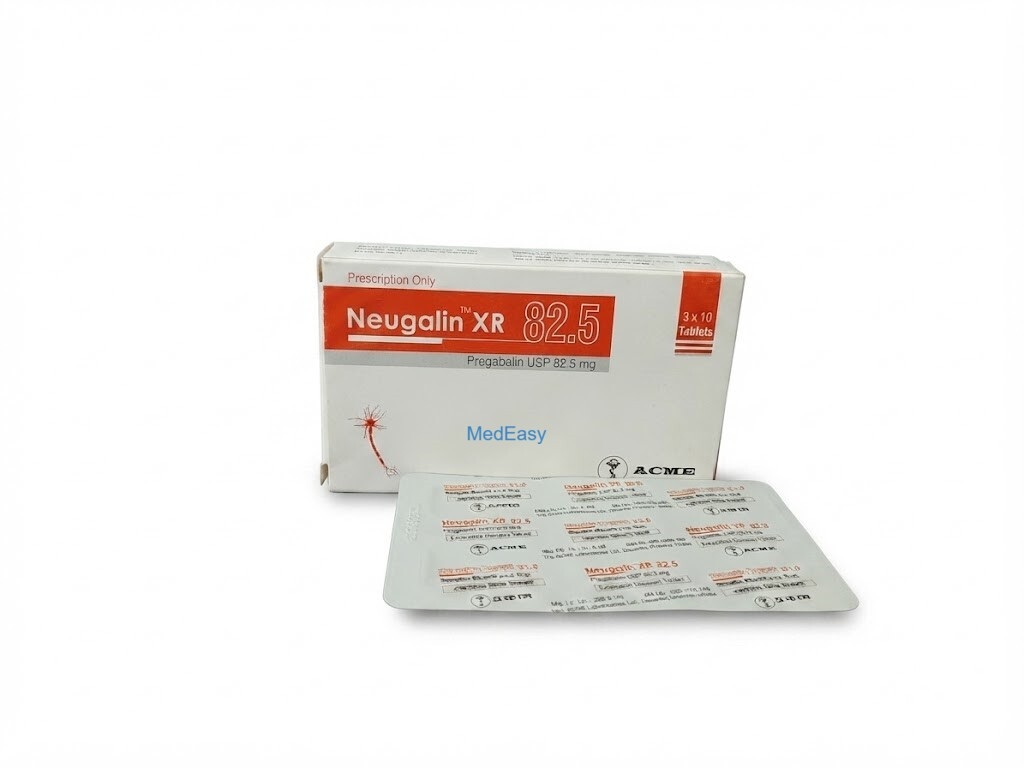
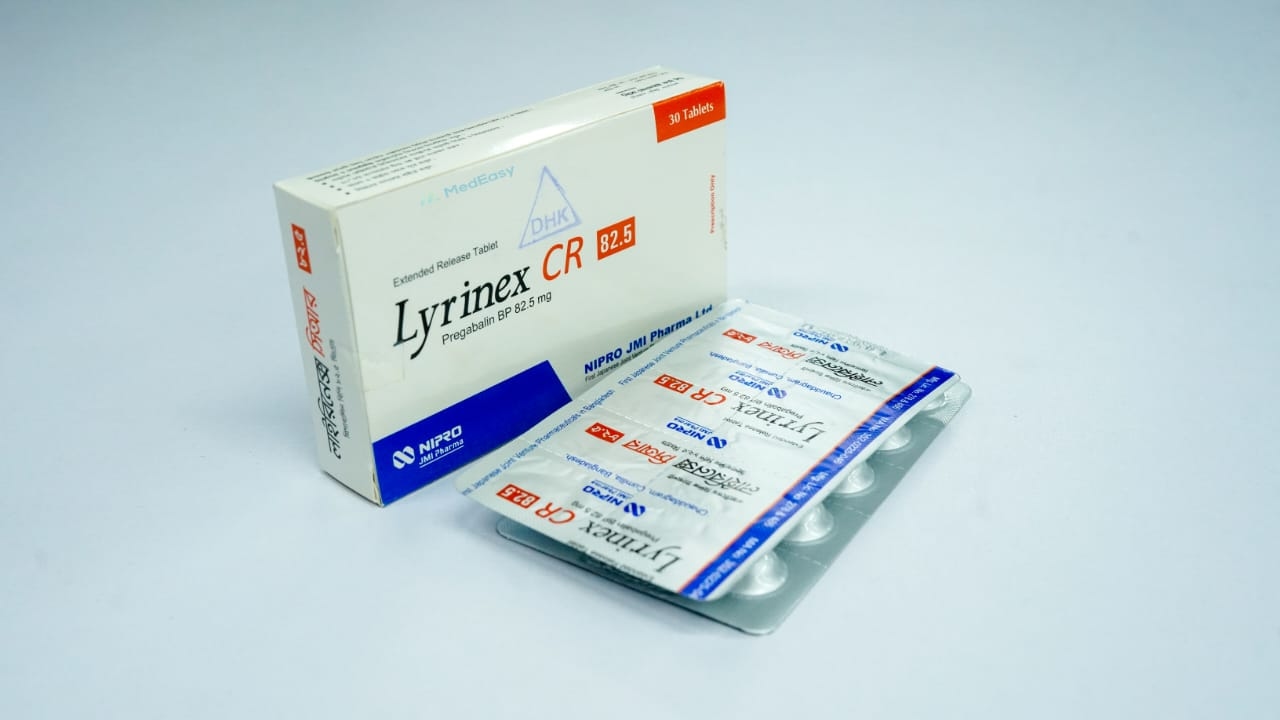
Lyrinex CR82.5 mg
NIPRO JMI Pharma Ltd.
৳165.60
Add to cart

Pregan ER 82.5 mg Tablet (Extended Release) is available on MedEasy for ৳460.00 per 20's pack, with home delivery anywhere in Bangladesh. It is manufactured by Navana Pharmaceuticals Ltd. Its generic name is Pregabalin.

Pregan ER is indicated for the following conditions:
Use of Pregan ER should always be guided by a qualified physician based on individual diagnosis.
Each capsule or tablet contains Pregabalin as the active pharmaceutical ingredient.
Inactive ingredients (fillers, coating agents, preservatives in the oral solution) vary by manufacturer and formulation; refer to the product-specific package insert for the complete excipient list.
Pregan ER is a synthetic amino acid analog structurally related to gamma-aminobutyric acid (GABA), belonging to the gabapentinoid class of medicines. It is used to relieve certain types of nerve (neuropathic) pain, manage fibromyalgia, and as an add-on treatment for partial-onset seizures.
Pregan ER is available as immediate-release capsules/tablets, extended-release tablets, and an oral solution, allowing dosing to be individualized to the patient's condition and renal function.
Pregan ER belongs to the gabapentinoid class of medicines, used therapeutically as an anticonvulsant (anti-epileptic) and neuropathic pain agent. In the United States it is classified as a Schedule V controlled substance due to its abuse/misuse potential.
Pregabalin binds with high affinity to the alpha-2-delta (α2δ) subunit of voltage-gated calcium channels in the central nervous system. This binding reduces calcium influx at nerve terminals, which in turn decreases the release of several excitatory neurotransmitters, including glutamate, norepinephrine, and substance P.
Although structurally related to GABA, Pregabalin does not bind to GABA-A or GABA-B receptors, is not converted into GABA or a GABA agonist, and does not directly affect GABA reuptake or degradation. Its analgesic, anticonvulsant, and anxiolytic-like effects are attributed to this modulation of calcium channel activity and consequent reduction in neuronal excitability.
Pharmacokinetics: Pregabalin is absorbed rapidly, is not appreciably bound to plasma proteins, undergoes negligible hepatic metabolism, and is eliminated almost entirely unchanged by the kidneys. Its elimination half-life is approximately 6 hours in patients with normal renal function, so dose adjustment is required in renal impairment (see Dosage and Administration).
Dosing of Pregan ER is individualized by indication, renal function, and patient response. Doses should be titrated gradually to reduce the risk of dizziness and somnolence.
| Indication | Starting dose | Titration | Maximum dose |
|---|---|---|---|
| Diabetic peripheral neuropathy | 50 mg 3 times/day (150 mg/day) | May increase to 100 mg 3 times/day within 1 week based on response/tolerability | 300 mg/day |
| Postherpetic neuralgia | 75 mg twice/day or 50 mg 3 times/day (150 mg/day) | May increase to 300 mg/day within 1 week; up to 600 mg/day after 2-4 weeks if pain is inadequately controlled and the dose is tolerated | 600 mg/day |
| Fibromyalgia | 75 mg twice/day (150 mg/day) | May increase to 150 mg twice/day within 1 week; further increase to 225 mg twice/day if needed | 450 mg/day |
| Adjunctive therapy, partial-onset seizures (adults) | 150 mg/day in 2-3 divided doses | May increase weekly based on response/tolerability | 600 mg/day |
| Neuropathic pain, spinal cord injury | 75 mg twice/day (150 mg/day) | May increase to 150 mg twice/day within 1 week; up to 300 mg twice/day after 2-3 weeks if needed and tolerated | 600 mg/day |
Dosing is weight-based (approximately 3.5-14 mg/kg/day in divided doses depending on age and body weight), started at a low dose and titrated gradually; see full prescribing information for the age/weight-specific schedule. Safety and efficacy for other indications (neuropathic pain, fibromyalgia) have not been established in patients under 18 years.
| Creatinine clearance (CrCl) | Dose adjustment |
|---|---|
| ≥60 mL/min | No adjustment; use standard dosing |
| 30-60 mL/min | Reduce total daily dose by ~50% |
| 15-30 mL/min | Reduce total daily dose by ~75% |
| <15 mL/min | Reduce total daily dose by ~87.5% (lowest effective dose) |
| Hemodialysis | Supplemental dose after each 4-hour hemodialysis session |
Extended-release Pregan ER is not recommended in patients with CrCl below 30 mL/min. No dose adjustment is required for hepatic impairment, as Pregan ER undergoes negligible hepatic metabolism.
When discontinuing Pregan ER, the dose should be tapered gradually over a minimum of 1 week rather than stopped abruptly (see Precautions and Warnings).
Pregan ER immediate-release capsules/tablets and oral solution may be taken with or without food. Extended-release tablets should be taken once daily after an evening meal and swallowed whole — they must not be split, crushed, or chewed.
If a dose is missed, it should be taken as soon as remembered unless it is almost time for the next dose, in which case the missed dose should be skipped; doses should not be doubled.
Do not stop taking Pregan ER suddenly; the dose should be tapered gradually under medical supervision (see Precautions and Warnings).
Clinically significant drug interactions with Pregan ER:
No clinically important pharmacokinetic drug-drug interactions have been established for Pregan ER, as it is not appreciably protein-bound and undergoes minimal hepatic metabolism.
Pregabalin is contraindicated in patients with a known history of hypersensitivity to Pregabalin or any of its formulation components — reactions have included angioedema and generalized hypersensitivity (e.g., dyspnea, wheezing, rash).
Common side effects of Pregan ER (may affect more than 1 in 10 people) include:
Less common but serious side effects — seek prompt medical attention if these occur:
Pregnancy: Human data on Pregan ER use during pregnancy are limited. Animal reproduction studies have shown developmental toxicity at doses relevant to human exposure. Pregan ER should be used during pregnancy only if clearly needed and if the potential benefit to the mother justifies the potential risk to the fetus. A pregnancy exposure registry exists in some countries to monitor outcomes; patients who become pregnant while taking Pregan ER should consult their physician promptly and should not stop the medicine abruptly without medical advice (see Precautions and Warnings on abrupt discontinuation).
Lactation: Pregan ER is excreted into human breast milk. Because of the potential for adverse effects in a breastfed infant (e.g., sedation, poor feeding), a decision should be made whether to discontinue breastfeeding or discontinue the medicine, taking into account the importance of treatment to the mother; this decision should be made with a physician.
The following precautions apply to treatment with Pregan ER:
Symptoms reported with Pregan ER overdose include marked somnolence, confusion, agitation, restlessness, and, less commonly, seizures. There is no specific antidote for Pregan ER overdose.
If an overdose of Pregan ER is suspected, seek immediate medical attention or contact a poison control center/emergency services right away. Management is supportive and symptomatic (airway protection, monitoring of vital signs). Pregan ER can be removed by hemodialysis, which may be considered in cases of significant overdose, particularly in patients with renal impairment. Do not attempt to manage a suspected overdose at home.
Store at room temperature (below 30°C), away from light and moisture. Keep out of reach of children.
Duration of Pregan ER therapy is individualized to the indication and clinical response:
Regardless of indication, Pregan ER should not be discontinued abruptly; if treatment is to be stopped, the physician will taper the dose gradually over a minimum of one week (see Precautions and Warnings).
Pregabalin belongs to the gabapentinoid drug class, grouped therapeutically with anticonvulsants (anti-epileptic drugs) and neuropathic pain agents. It is chemically and pharmacologically related to gabapentin.
Pregabalin binds to the alpha-2-delta subunit of voltage-gated calcium channels on nerve terminals in the central nervous system, reducing calcium influx and thereby decreasing the release of excitatory neurotransmitters such as glutamate, norepinephrine, and substance P. This dampens neuronal hyperexcitability underlying neuropathic pain and seizure activity, without directly acting on GABA receptors.
C
Pregan ER is approved as adjunctive (add-on) therapy for partial-onset seizures in pediatric patients 1 month of age and older, dosed on a weight (mg/kg/day) basis and titrated gradually (see Dosage and Administration).
Safety and efficacy of Pregan ER for other indications — including neuropathic pain and fibromyalgia — have not been established in patients under 18 years of age, and it should not be used for these indications in children outside specialist guidance.
Pediatric patients treated with Pregan ER for seizures should be monitored for increased appetite, weight gain, and mood/behavioral changes, and the dose should never be stopped abruptly (see Precautions and Warnings).
Q: What is Pregan ER 82.5 mg Tablet (Extended Release) used for?
A: Pregan ER 82.5 mg Tablet (Extended Release) is used to relieve nerve pain caused by diabetic peripheral neuropathy, postherpetic neuralgia (pain after shingles), and spinal cord injury; to manage fibromyalgia; and, together with other medicines, as an add-on treatment for partial-onset seizures.
Q: How long does it take for Pregan ER 82.5 mg Tablet (Extended Release) to work?
A: Some patients notice improvement in pain within the first week, but the full benefit of Pregan ER 82.5 mg Tablet (Extended Release) is usually assessed after several weeks of treatment at an optimized dose, since the dose is increased gradually to reduce side effects.
Q: Can I stop taking Pregan ER 82.5 mg Tablet (Extended Release) suddenly?
A: No. Stopping Pregan ER 82.5 mg Tablet (Extended Release) abruptly can cause withdrawal symptoms such as insomnia, nausea, headache, anxiety, and sweating, and in people with epilepsy it can trigger seizures, including status epilepticus. Always taper the dose gradually over at least one week under a physician's guidance.
Q: Is Pregan ER 82.5 mg Tablet (Extended Release) safe to take with alcohol or opioid painkillers?
A: No, this combination should be avoided. Pregan ER 82.5 mg Tablet (Extended Release) taken with alcohol, opioids, benzodiazepines, or other sedating medicines can cause additive drowsiness, dizziness, and impaired coordination, and combining it with opioids specifically increases the risk of serious breathing problems (respiratory depression).
Q: Can Pregan ER 82.5 mg Tablet (Extended Release) be taken during pregnancy or while breastfeeding?
A: Pregan ER 82.5 mg Tablet (Extended Release) should be used in pregnancy only if clearly needed, since human safety data are limited and animal studies have shown risks at relevant doses; the potential benefit must be weighed against potential risk to the fetus. Pregan ER 82.5 mg Tablet (Extended Release) also passes into breast milk, so a physician should help decide whether to continue breastfeeding or continue the medicine. Always consult your physician before use in pregnancy or lactation.
Q: What are the most common side effects of Pregan ER 82.5 mg Tablet (Extended Release)?
A: The most common side effects are dizziness, drowsiness (somnolence), dry mouth, blurred vision, swelling of the hands or feet, and weight gain. Contact your physician if these are severe or persistent, and seek immediate medical care for facial/throat swelling, difficulty breathing, unusual mood changes, or thoughts of self-harm.
Disclaimer
The information provided is accurate to the best of our knowledge, but it does not replace professional medical advice. We cannot guarantee its completeness or accuracy, and the absence of specific information about a drug should not be taken as an endorsement. We are not responsible for any consequences arising from this information, so please consult a healthcare professional for any concerns or questions.