
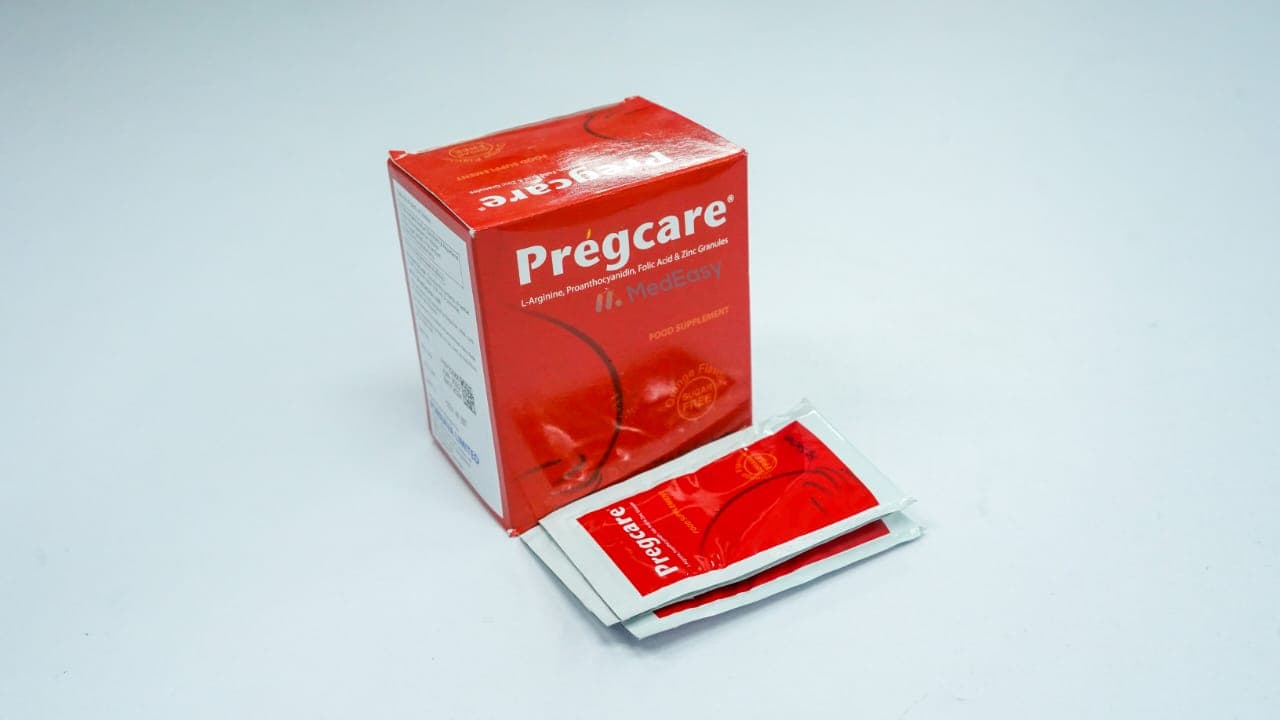

Medicine overview
Indications of Pregcare
Pregcare is a nutritional/dietary supplement combination, not a prescription drug approved by any regulatory authority for the treatment of a specific disease. It is marketed to support the following uses:
Supported by preliminary/limited clinical evidence
- Vascular and circulatory health support: L-arginine is a precursor of nitric oxide, which helps maintain healthy blood vessel (endothelial) function, and proanthocyanidins (grape seed/pine bark derived antioxidants) are used to support microcirculation and vascular tone.
- Male and female reproductive/fertility health support: some formulations of Pregcare are marketed as an adjunct to support sperm quality/motility or general reproductive wellness. Evidence for specific fertility outcomes is preliminary and limited.
Adjunct/general wellness use
- General antioxidant and micronutrient (folic acid) support as part of a balanced diet, particularly when dietary intake is inadequate.
Important: Pregcare is not a substitute for the medical evaluation and treatment of underlying cardiovascular disease, hypertension, erectile dysfunction, or infertility. Patients with such conditions should be evaluated and managed by a physician; this supplement should only be used as directed by, or after consultation with, a qualified healthcare provider.
Composition
L-Arginine, Proanthocyanidin, Folic Acid is typically supplied as an oral tablet, capsule, or sachet containing a fixed combination of:
- L-Arginine (usually as L-arginine base or L-arginine hydrochloride) — an amino acid.
- Proanthocyanidin — a standardized antioxidant bioflavonoid extract, commonly sourced from grape seed or pine bark.
- Folic Acid (Vitamin B9) — in milligram or microgram quantities.
Exact strengths of each component vary between brands and formulations; refer to the specific product label/packaging for the precise quantity of each ingredient in L-Arginine, Proanthocyanidin, Folic Acid.
Description
Pregcare is a combination nutritional supplement bringing together an amino acid (L-arginine), an antioxidant plant-derived bioflavonoid (proanthocyanidin), and a B-vitamin (folic acid).
L-arginine is a semi-essential amino acid and the metabolic precursor of nitric oxide (NO), a signaling molecule that helps relax and dilate blood vessels. Proanthocyanidins are polyphenolic antioxidants that help protect blood vessel walls from oxidative stress and support capillary integrity. Folic acid is an essential B-vitamin required for DNA synthesis, red blood cell formation, and homocysteine metabolism, and is also relevant to reproductive health.
Pregcare is marketed as a supportive supplement for vascular/circulatory wellness and, in some formulations, for male or female reproductive health support. It is presented conservatively as a nutritional supplement and is not intended to diagnose, treat, cure, or prevent any disease.
Therapeutic Class
Nutritional/Dietary Supplement — Amino Acid + Antioxidant Bioflavonoid + Vitamin B9 combination (Pregcare)
Pharmacology
L-Arginine, Proanthocyanidin, Folic Acid combines three components with complementary mechanisms:
L-Arginine
A semi-essential amino acid that serves as the substrate for nitric oxide synthase (eNOS), generating nitric oxide (NO). NO promotes vasodilation and supports healthy endothelial function, and has been studied for its role in blood flow and vascular tone.
Proanthocyanidin
A class of oligomeric flavonoid antioxidants (commonly from grape seed or pine bark extract) that scavenge free radicals, help reduce oxidative stress on the vascular endothelium, and are thought to support capillary strength and microcirculation.
Folic Acid
A water-soluble B-vitamin required as a cofactor for one-carbon metabolism, DNA/RNA synthesis, and red blood cell maturation. Folic acid also helps regulate homocysteine levels, and adequate folate status is important for reproductive health and, in pregnancy, for fetal neural tube development.
Together, these components are proposed to provide combined antioxidant and vascular-supportive effects; robust clinical trial data specifically on this fixed combination for disease treatment is limited, and the product should be regarded as a supportive supplement rather than a proven therapeutic agent.
Dosage & Administration of Pregcare
| Use | Typical Adult Dose* | Notes |
|---|---|---|
| General vascular/circulatory health support | One tablet/capsule of Pregcare once or twice daily, or as directed on the product label | Take with food to reduce the chance of GI upset |
| Reproductive/fertility health support (adjunct) | As directed by the prescribing physician, typically for a defined course of several weeks to months | Should be used alongside, not instead of, standard fertility evaluation and care |
*Exact dosing depends on the specific brand/strength of Pregcare; always follow the product label or a physician's/pharmacist's instructions rather than a generic dose.
Pregcare should be taken exactly as directed; do not exceed the recommended dose without medical advice.
Administration of Pregcare
Pregcare is taken orally, generally with a meal or a full glass of water to help minimize gastrointestinal discomfort. Swallow tablets/capsules whole; do not crush or chew unless the product labeling specifically permits it.
Interaction of Pregcare
The following clinically relevant interactions should be considered before using Pregcare:
- Antihypertensive medications and nitrates/PDE5 inhibitors (e.g., sildenafil): the L-arginine component may enhance the blood-pressure-lowering and vasodilatory effect of these medicines, increasing the risk of hypotension. Use together only under medical supervision.
- Potassium-sparing diuretics or potassium supplements: L-arginine can transiently raise serum potassium; concurrent use may increase the risk of hyperkalemia.
- Anticonvulsants (e.g., phenytoin) and methotrexate: these drugs can lower folic acid levels or have their effect altered by folic acid; concurrent use should be supervised by a physician.
- Anticoagulants (e.g., warfarin): high-dose antioxidant supplementation and folate status changes may theoretically affect anticoagulant control; monitoring is advisable if used together.
Inform your physician or pharmacist of all medications and supplements being used before starting Pregcare.
Contraindications
L-Arginine, Proanthocyanidin, Folic Acid is contraindicated in individuals with known hypersensitivity to L-arginine, proanthocyanidin (or its plant source, e.g., grape seed/pine bark), folic acid, or any other component of the formulation.
Side Effects of Pregcare
Pregcare is generally well tolerated when used as directed. Reported side effects include:
- Common: gastrointestinal upset such as nausea, abdominal discomfort, bloating, or diarrhea (chiefly related to the L-arginine component, especially at higher doses).
- Less common: headache, mild flushing, or low blood pressure symptoms (dizziness, lightheadedness) related to the vasodilatory effect of L-arginine.
- Rare: allergic reactions (rash, itching, swelling) — see Contraindications.
Discontinue Pregcare and seek medical advice if severe or persistent side effects occur.
Pregnancy & Lactation
Folic acid is an established and important nutrient in pregnancy (routinely recommended to help prevent neural tube defects). However, Pregcare is a fixed combination product, and the L-arginine and proanthocyanidin components have not been as well studied for safety in pregnancy and breastfeeding at supplement doses.
Pregnant or breastfeeding women should not use Pregcare as a source of folic acid or for any other purpose without first consulting a physician; use only if clearly needed and if the potential benefit justifies the potential risk, and prefer a physician-directed prenatal supplement regimen over this combination product unless specifically advised otherwise.
Precautions & Warnings
Use Pregcare with caution in the following situations:
- Low blood pressure or use of blood-pressure-lowering medication: the L-arginine component may enhance hypotensive effects — see Interactions.
- History of herpes simplex virus (cold sores/genital herpes): high-dose arginine has a theoretical association with reactivation of HSV; use cautiously and discuss with a physician if you have a history of outbreaks.
- Cardiovascular disease, recent heart attack, or being evaluated for a cardiac condition: use only under medical supervision, as Pregcare is not a substitute for prescribed cardiovascular therapy.
- Fertility evaluation or treatment: use as an adjunct only under the guidance of the treating physician, not as a replacement for standard fertility care.
- Renal impairment: use with caution, as altered handling of amino acids and potassium may occur — see Use in Special Populations.
Pregcare is a dietary supplement and is not intended to diagnose, treat, cure, or prevent any disease.
Overdose Effects of Pregcare
Taking more than the recommended dose of Pregcare may increase the likelihood of gastrointestinal upset, low blood pressure (dizziness, fainting), or electrolyte disturbances. There is no specific antidote.
If an overdose of Pregcare is suspected, seek immediate medical attention or contact a poison control center/emergency services; do not attempt home treatment for a significant overdose.
Storage Conditions
Store at room temperature (below 30°C), away from light and moisture. Keep out of reach of children.
Use In Special Populations
Renal impairment: use Pregcare with caution in patients with significant kidney disease, as arginine can affect potassium handling; consult a physician before use.
Hepatic impairment: no well-established dose adjustment is defined; use under medical supervision.
Elderly: no specific dose adjustment is established; use with the same precautions regarding blood pressure and concurrent medications as in other adults.
Children: safety and efficacy of Pregcare in children have not been established; not recommended for pediatric use without physician guidance.
Duration Of Treatment
Pregcare is generally used for a defined course as directed by the product label or a physician (commonly several weeks to a few months for vascular or reproductive health support). Long-term use beyond the recommended duration should only continue under medical supervision.
Drug Classes
L-Arginine, Proanthocyanidin, Folic Acid belongs to the combined categories of: amino acid supplement (L-arginine), antioxidant bioflavonoid/proanthocyanidin supplement, and B-vitamin supplement (folic acid).
Mode Of Action
L-Arginine, Proanthocyanidin, Folic Acid acts through three complementary mechanisms: L-arginine serves as a substrate for nitric oxide synthesis, supporting vasodilation and endothelial function; proanthocyanidin provides antioxidant protection to blood vessel walls and supports microcirculation; and folic acid supports DNA synthesis, red blood cell formation, and homocysteine metabolism relevant to vascular and reproductive health.
Pediatric Uses
Safety and efficacy of Pregcare in children and adolescents have not been established. Use in pediatric populations is not recommended except under the specific direction of a physician.
Frequently Asked Questions
Q: What is Pregcare 5g Sachet Food Supplement used for?
A: Pregcare 5g Sachet Food Supplement is a nutritional supplement combination marketed to support vascular/circulatory health and, in some formulations, male or female reproductive/fertility health. It is not a proven treatment for any specific disease and should be used alongside, not instead of, standard medical care.
Q: Can I take Pregcare 5g Sachet Food Supplement if I have low blood pressure or take blood pressure medication?
A: Use caution. The L-arginine in Pregcare 5g Sachet Food Supplement may enhance the blood-pressure-lowering effect of antihypertensive drugs or nitrates, increasing the risk of hypotension. Consult your physician before combining them.
Q: Is Pregcare 5g Sachet Food Supplement safe during pregnancy or breastfeeding?
A: Folic acid is important in pregnancy, but the full combination has not been well studied for safety in pregnancy or lactation. Pregnant or breastfeeding women should consult a physician before using Pregcare 5g Sachet Food Supplement and should only use it if the potential benefit justifies the potential risk.
Q: What side effects can Pregcare 5g Sachet Food Supplement cause?
A: The most common side effects are gastrointestinal upset such as nausea, bloating, or diarrhea, along with occasional headache or mild dizziness related to blood pressure changes. Allergic reactions are rare. Stop use and see a doctor if side effects are severe or persistent.
Q: Who should not take Pregcare 5g Sachet Food Supplement?
A: Pregcare 5g Sachet Food Supplement should not be used by anyone with a known hypersensitivity/allergy to L-arginine, proanthocyanidin (or its grape seed/pine bark source), folic acid, or any other ingredient in the product.
Q: What should I do if I take too much Pregcare 5g Sachet Food Supplement?
A: Taking more than the recommended dose may cause gastrointestinal upset, low blood pressure, or electrolyte disturbances. If an overdose is suspected, seek immediate medical attention or contact a poison control center rather than trying to manage it at home.
Disclaimer
The information provided is accurate to the best of our knowledge, but it does not replace professional medical advice. We cannot guarantee its completeness or accuracy, and the absence of specific information about a drug should not be taken as an endorsement. We are not responsible for any consequences arising from this information, so please consult a healthcare professional for any concerns or questions.
