
10% Off
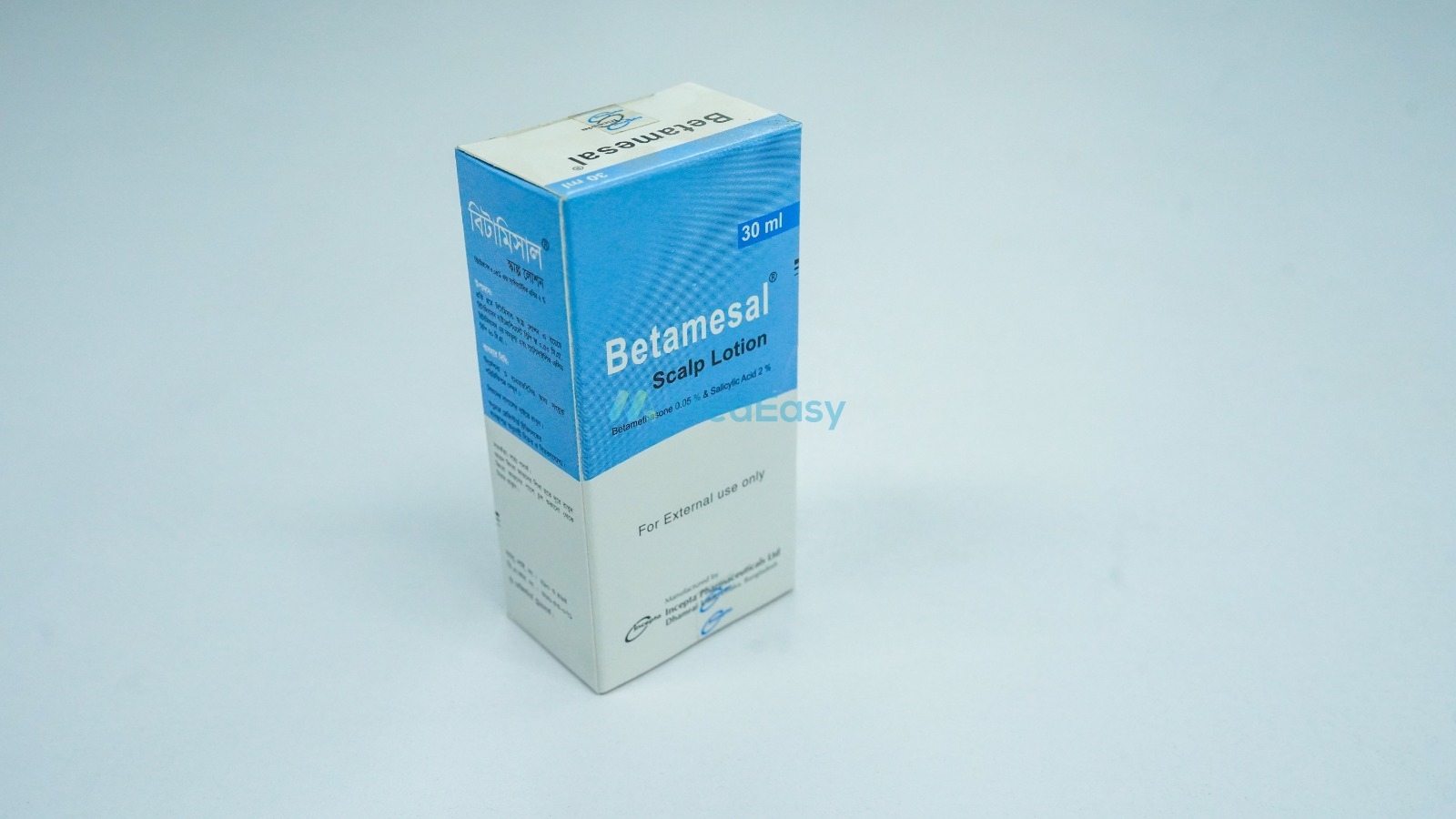
Betamesal0.05%+2%
Incepta Pharmaceuticals Ltd.
৳135.00
Add to cart
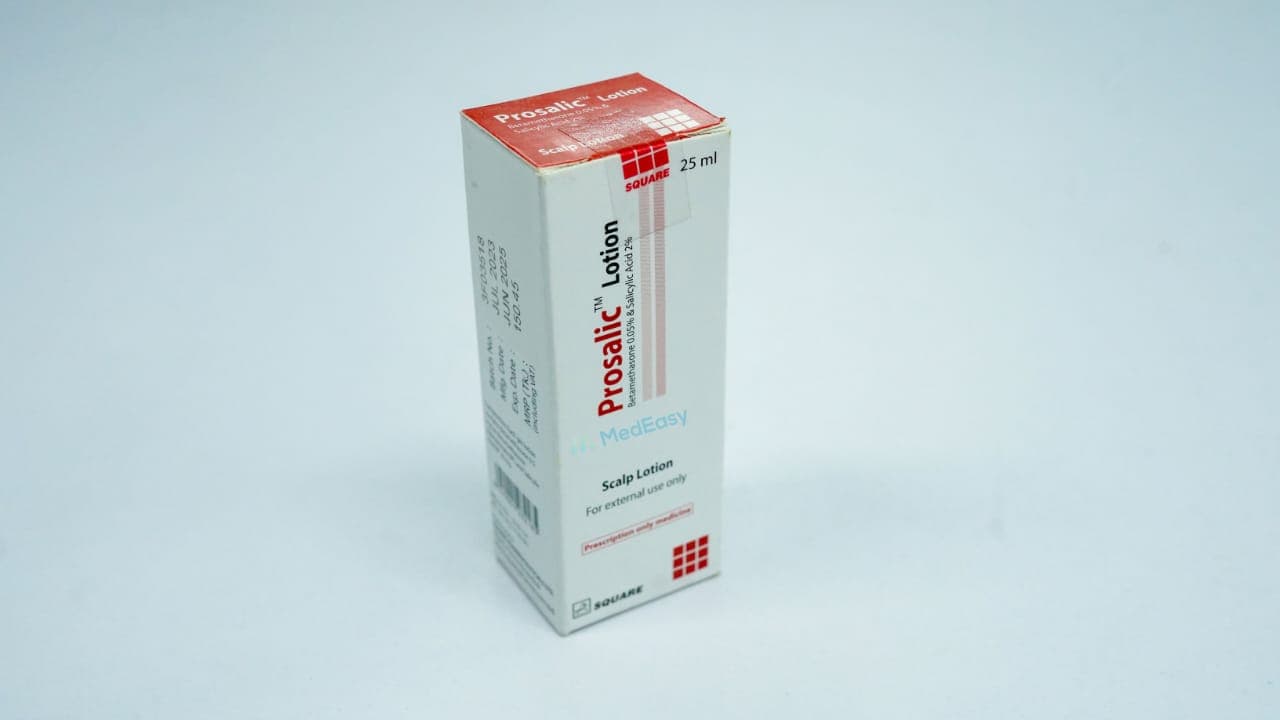
Prosalic 0.05%+2% Scalp Lotion is available on MedEasy for ৳135.41 per 25 gm tube, with home delivery anywhere in Bangladesh. It is manufactured by Square Pharmaceuticals PLC. Its generic name is Betamethasone + Salicylic Acid.

Prosalic is a topical combination of a potent corticosteroid (betamethasone) and a keratolytic agent (salicylic acid), used for chronic, dry, thickened, and scaly skin disorders that respond to both anti-inflammatory and scale-removing action.
The salicylic acid component softens and removes thickened, scaly skin (keratolysis), which also enhances penetration of betamethasone into the affected skin. Prosalic is intended for short-term, corticosteroid-responsive conditions and is not indicated for routine long-term or maintenance therapy.
Each unit of Betamethasone + Salicylic Acid topical preparation (ointment/lotion/cream) typically contains:
Exact strengths vary by brand and dosage form; check the product label/pack insert for the specific concentrations of the marketed brand.
Prosalic combines two complementary topical agents in a single formulation:
Together they are formulated as an ointment or lotion for external use on chronic, scaly, inflamed skin lesions such as psoriasis and eczema, most often on the scalp or thickened plaques elsewhere on the body.
Prosalic belongs to the class of topical corticosteroid + keratolytic combinations, used in dermatology for hyperkeratotic, inflammatory skin conditions.
Betamethasone + Salicylic Acid works through two complementary mechanisms:
The combination in Betamethasone + Salicylic Acid is therefore synergistic: salicylic acid improves steroid delivery while directly reducing scaling, and betamethasone controls the underlying inflammation.
| Formulation | Typical Regimen | Maximum Use |
|---|---|---|
| Scalp ointment | Apply a thin layer to affected scalp areas twice daily | Usually limited to about 2 weeks continuous use; not more than ~60 g per week |
| Scalp lotion | Apply a few drops to the affected area and massage gently, twice daily (morning and night) | Short courses; reassess if no improvement in 2–4 weeks |
| Body/skin ointment or cream | Apply a thin film to affected plaques once or twice daily | Shortest duration that controls symptoms |
Use for the shortest effective duration, generally no more than about 5 days, and only under medical supervision, on the smallest area necessary (see Use in Special Populations).
Prosalic is for external (topical) use only. Apply a thin layer/few drops directly to the affected skin or scalp area and gently massage or rub in until absorbed. Do not swallow. Avoid application on broken skin, open wounds, or near the eyes. Wash hands thoroughly after use unless treating the hands.
Clinically significant interactions with Prosalic are uncommon because systemic absorption from topical use is normally low, but the following are recognized concerns:
Betamethasone + Salicylic Acid is contraindicated in:
Most side effects of Prosalic are local and related to the application site:
With prolonged use, use over large areas, or use under occlusion, systemic effects can occur (see Precautions and Warnings), including HPA-axis suppression and salicylate toxicity.
Pregnancy: There are no adequate, well-controlled studies of Prosalic in pregnant women. Topical corticosteroids can be absorbed systemically and may carry a risk to the fetus with extensive or prolonged use; salicylic acid absorbed systemically has also been associated with fetal risk in high doses. Prosalic should be used during pregnancy only if clearly needed and the potential benefit justifies the potential risk to the fetus — consult a physician before use.
Lactation: It is not known whether topical betamethasone or salicylic acid are excreted in human breast milk in clinically significant amounts. Caution is advised; avoid applying Prosalic directly to the breast/nipple area before breastfeeding, and use the lowest effective amount for the shortest duration. Consult a physician before use while breastfeeding.
Use Prosalic with caution and under medical supervision, particularly regarding the following:
Topical overdose or excessive/prolonged application of Prosalic over large areas can lead to systemic absorption of both components, causing corticosteroid effects (HPA-axis suppression, Cushingoid features, hyperglycemia) and/or salicylate toxicity (ringing in the ears, rapid breathing, nausea, confusion, or in severe cases metabolic disturbance). If accidental ingestion occurs, or if signs of systemic toxicity develop, seek immediate medical attention or contact a poison control center/emergency services right away. Do not attempt to manage significant overdose or ingestion at home.
Store at room temperature (below 30°C), away from light and moisture. Keep out of reach of children. Keep the container tightly closed.
Children are more susceptible than adults to both corticosteroid-induced HPA-axis suppression and salicylate systemic toxicity because of their larger skin-surface-area-to-body-weight ratio. Prosalic should be used in children only under medical supervision, on the smallest affected area, for the shortest effective duration (commonly no more than about 5 days), and occlusive dressings should not be used. Safety and efficacy in young children and infants have not been well established, and use in this group should be avoided unless specifically directed by a physician.
Elderly patients may have thinner skin and increased susceptibility to skin atrophy and bruising; use the lowest effective dose and monitor the skin regularly.
Patients with renal or hepatic impairment are at greater risk of systemic salicylate accumulation and toxicity if Prosalic is applied over large areas; use cautiously and avoid extensive application in these patients.
Treatment with Prosalic should be limited to the shortest duration needed to control the condition — typically up to about 2 weeks for scalp/body application in adults, and no more than about 5 days in children — followed by reassessment by a physician. Long-term continuous use should be avoided in all patients due to the risk of skin atrophy, HPA-axis suppression, and salicylate toxicity.
Topical corticosteroid (betamethasone) combined with a keratolytic agent (salicylic acid); dermatological combination product.
Betamethasone + Salicylic Acid acts through the combined effect of a corticosteroid and a keratolytic agent: betamethasone suppresses local inflammatory and immune responses in the skin by inhibiting phospholipase A2 and downstream inflammatory mediator synthesis, while salicylic acid dissolves the intercellular cement of the stratum corneum to shed thickened, scaly skin and enhance corticosteroid penetration. The result is faster resolution of both the scaling and the underlying inflammation compared with either agent alone.
C
Prosalic may be used in children for corticosteroid-responsive, hyperkeratotic skin conditions, but only under close medical supervision because children are more prone to both corticosteroid-related HPA-axis suppression and salicylate systemic toxicity. Use should be limited to the smallest affected area and the shortest effective duration (generally not more than about 5 days), avoiding occlusive dressings and use on the face, groin, or axillae. Safety and efficacy in infants and very young children have not been well established, and use in this age group should be avoided unless specifically directed by a pediatrician.
Q: What is Prosalic 0.05%+2% Scalp Lotion used for?
A: Prosalic 0.05%+2% Scalp Lotion is a topical treatment used for chronic, dry, and scaly skin conditions such as psoriasis (including scalp psoriasis), chronic eczema, and lichen planus. The corticosteroid component reduces inflammation and itching, while the salicylic acid softens and removes thickened scale.
Q: How should I apply Prosalic 0.05%+2% Scalp Lotion?
A: Apply a thin layer or a few drops of Prosalic 0.05%+2% Scalp Lotion to the affected skin or scalp area, usually once or twice daily, and gently massage it in. Use only on the affected area, avoid the eyes and mucous membranes, and do not cover the area with airtight (occlusive) dressings unless your doctor tells you to.
Q: Can I use Prosalic 0.05%+2% Scalp Lotion on my face?
A: No. Prosalic 0.05%+2% Scalp Lotion should not be used on the face, groin, or armpits for prolonged periods, because these areas absorb the medicine more readily and are at higher risk of skin thinning and other side effects. Discuss alternative treatment for these areas with your physician.
Q: Is Prosalic 0.05%+2% Scalp Lotion safe during pregnancy or breastfeeding?
A: Prosalic 0.05%+2% Scalp Lotion has not been thoroughly studied in pregnant or breastfeeding women. Because both components can be absorbed into the bloodstream with extensive use, it should be used during pregnancy or breastfeeding only if clearly needed and if your physician determines the benefit outweighs the potential risk. Always consult your doctor before use in these situations.
Q: What are the common side effects of Prosalic 0.05%+2% Scalp Lotion?
A: Common side effects of Prosalic 0.05%+2% Scalp Lotion include burning, stinging, itching, dryness, and irritation at the application site. With prolonged use, thinning of the skin, stretch marks, lightening of skin color, and, rarely, systemic effects such as adrenal suppression or salicylate toxicity can occur, especially if used on large areas or under occlusive dressings.
Q: How long can I use Prosalic 0.05%+2% Scalp Lotion?
A: Prosalic 0.05%+2% Scalp Lotion should be used for the shortest time needed to control your condition — typically up to about 2 weeks in adults (and no more than about 5 days in children) — and long-term continuous use should be avoided. Follow up with your physician if your condition does not improve or if you feel you need to use it longer.
Disclaimer
The information provided is accurate to the best of our knowledge, but it does not replace professional medical advice. We cannot guarantee its completeness or accuracy, and the absence of specific information about a drug should not be taken as an endorsement. We are not responsible for any consequences arising from this information, so please consult a healthcare professional for any concerns or questions.