
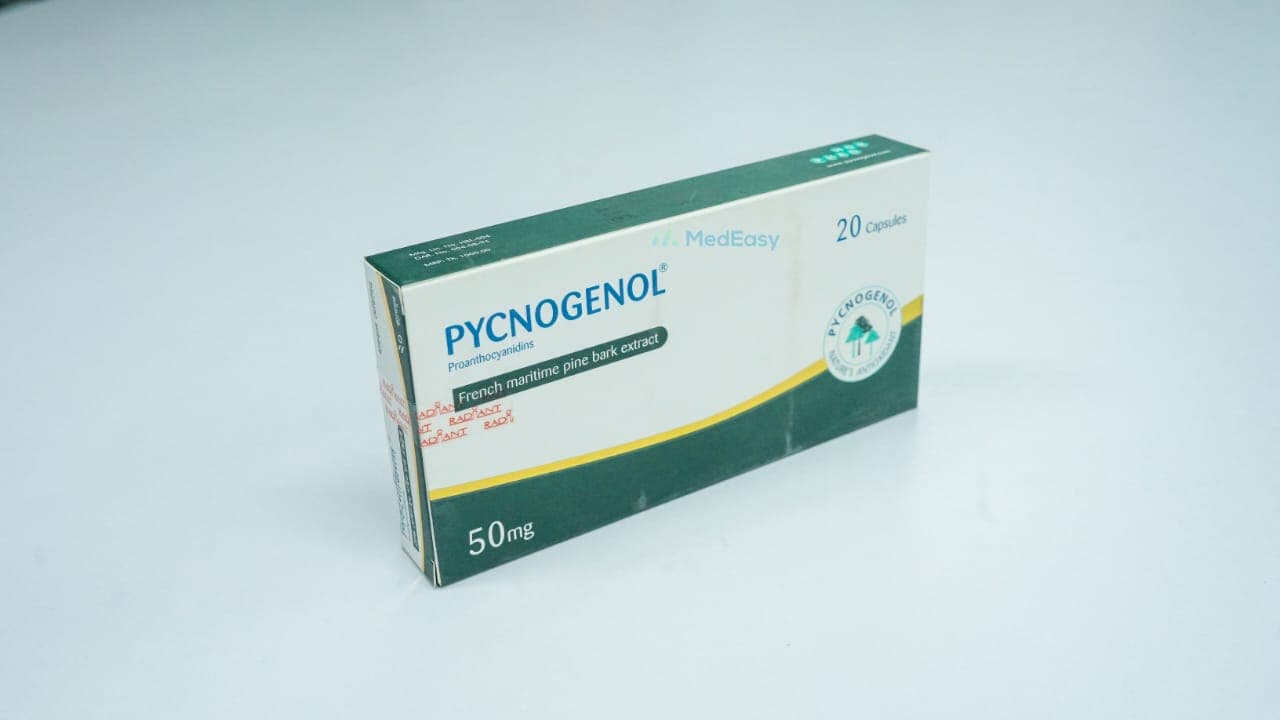

Medicine overview
Indications of Pycnogenol
Pycnogenol are a class of plant-derived polyphenolic antioxidant compounds (oligomeric Pycnogenol, OPCs), commonly obtained from grape seed extract or pine bark (maritime pine) extract. They are marketed as a dietary/nutritional supplement rather than as an FDA-approved prescription drug, so indications below reflect common supplement use and the strength of supporting evidence, not formal regulatory approval.
- General antioxidant support (widely used, preliminary-to-modest evidence): Pycnogenol are used to provide antioxidant support against oxidative stress from free radicals.
- Vascular/circulatory health support (guideline-adjacent, modest evidence): Pycnogenol are commonly used as an adjunct to help support symptoms of chronic venous insufficiency such as leg heaviness, tingling, and mild edema, and to support capillary strength in individuals prone to easy bruising.
- Skin and connective tissue support (preliminary evidence): Pycnogenol are sometimes used for general skin antioxidant support, though robust clinical outcome data are limited.
- Adjunct/general wellness use: Pycnogenol are frequently included as one ingredient within multi-ingredient antioxidant or vascular-support supplement combinations rather than used as a stand-alone therapy for a diagnosed disease.
Pycnogenol are not a substitute for medically prescribed treatment of diagnosed vascular, cardiovascular, or other disease. A physician should be consulted for diagnosis and treatment of any medical condition.
Composition
Proanthocyanidins are typically supplied as standardized extract capsules or tablets containing oligomeric proanthocyanidins derived from grape seed (Vitis vinifera) or pine bark (Pinus pinaster/maritime pine) extract, standardized to a defined percentage of proanthocyanidin content per unit dose. Actual strength and standardization vary by product/brand.
Description
Pycnogenol belong to the flavonoid family of plant polyphenols and consist of oligomers and polymers of flavan-3-ol units (such as catechin and epicatechin). They occur naturally in grape seeds, grape skin, pine bark, cranberries, and various other fruits, and are extracted and concentrated for use as a dietary supplement.
Pycnogenol are recognized for potent free-radical scavenging activity and have been studied for effects on vascular endothelial function, capillary permeability, and connective tissue integrity.
Therapeutic Class
Pycnogenol belong to the bioflavonoid/polyphenolic antioxidant class of dietary supplements. They are classified as a nutraceutical/herbal antioxidant agent rather than a conventional pharmaceutical drug class.
Pharmacology
Mechanism of Action
Proanthocyanidins act primarily as potent antioxidants, scavenging reactive oxygen and nitrogen free radicals and reducing oxidative stress at the cellular level. Proposed additional actions include:
- Stabilization of collagen and elastin fibers, which may help maintain capillary and connective tissue integrity.
- Support of vascular endothelial function, potentially improving microcirculation.
- Mild anti-inflammatory activity via modulation of inflammatory mediators.
- Mild inhibition of platelet aggregation at higher intakes, contributing to a potential antiplatelet effect (see Interactions and Precautions).
Pharmacokinetics
Proanthocyanidins are absorbed in the gastrointestinal tract in relatively low proportion; larger oligomers undergo partial breakdown by gut microbiota into smaller phenolic acid metabolites before absorption. Bioavailability of intact Proanthocyanidins is generally low, and clinical effects are thought to result from both the parent compounds and their microbial metabolites. Elimination occurs mainly via renal and biliary routes as conjugated metabolites.
Dosage & Administration of Pycnogenol
Pycnogenol are marketed as a dietary supplement, so there is no single FDA- or globally-standardized therapeutic dose; the dose depends on the specific product, its standardization, and the manufacturer's labeling. The ranges below reflect commonly used amounts reported in clinical studies and product labeling, and the product label or a physician's advice should always take precedence.
| Use | Typical Adult Dose |
|---|---|
| General antioxidant/wellness support | 50-100 mg once daily, with food |
| Vascular/circulatory support (e.g., chronic venous insufficiency symptoms) | 150-300 mg per day, in 1-3 divided doses, with food |
Administration: Take orally with a meal or a glass of water to reduce the chance of stomach upset. Swallow capsules/tablets whole; do not exceed the dose stated on the product label unless directed by a physician.
Pycnogenol are not intended for injectable or intravenous use.
Administration of Pycnogenol
Pycnogenol are administered orally, generally taken with food or a full glass of water to minimize gastrointestinal upset. Capsules or tablets should be swallowed whole and not crushed or chewed unless the product labeling specifically allows it.
Interaction of Pycnogenol
Pycnogenol have mild antiplatelet/blood-thinning activity, which can be clinically significant in combination with certain medicines:
- Anticoagulants (e.g., warfarin) and antiplatelet agents (e.g., aspirin, clopidogrel): Concurrent use with Pycnogenol may additively increase the risk of bleeding or bruising due to combined effects on platelet function/coagulation. Use together only under medical supervision, with monitoring for signs of bleeding.
- NSAIDs (e.g., ibuprofen, diclofenac): Combined use may modestly increase bleeding risk through overlapping antiplatelet effects; use with caution.
- Other herbal supplements with antiplatelet activity (e.g., ginkgo, garlic, fish oil): Concomitant use may compound bleeding risk.
Patients should inform their physician about Pycnogenol use before any scheduled surgery or dental procedure, as temporary discontinuation may be advised (see Precautions and Warnings).
Contraindications
Proanthocyanidins are contraindicated in individuals with known hypersensitivity to grape, grape seed, pine bark, or related proanthocyanidin-containing plant derivatives.
Side Effects of Pycnogenol
Pycnogenol are generally well tolerated at typical supplement doses. Reported side effects are usually mild and may include:
- Gastrointestinal upset (nausea, stomach discomfort, or diarrhea), particularly at higher doses
- Headache
- Dizziness
- Itchy scalp or mild skin reactions (uncommon)
Bruising or unusual bleeding may occur, especially at high doses or when combined with anticoagulant/antiplatelet medicines (see Interactions). Patients should seek medical attention if they experience signs of an allergic reaction (rash, swelling, difficulty breathing) or unusual bleeding while taking Pycnogenol.
Pregnancy & Lactation
Data on the safety of Pycnogenol during pregnancy and breastfeeding are limited. As a precaution, Pycnogenol should be used during pregnancy or lactation only if clearly needed and after consulting a physician, who can weigh the potential benefit against any potential, though not well-characterized, risk. Routine supplement use without a documented need is not generally advised in pregnant or breastfeeding women.
Precautions & Warnings
- Bleeding risk: Pycnogenol may have a mild antiplatelet/anticoagulant-potentiating effect. Use with caution in patients with bleeding disorders or those taking anticoagulant/antiplatelet medicines (see Interactions).
- Perioperative use: Discontinue Pycnogenol at least 1-2 weeks before any scheduled surgical or dental procedure, per physician guidance, due to the potential bleeding risk.
- Gastrointestinal tolerance: High doses may cause gastrointestinal upset; take with food and stay within labeled dosing.
- Not a substitute for medical treatment: Pycnogenol should not replace physician-directed treatment for a diagnosed medical condition.
- Product quality: Because Pycnogenol are regulated as a dietary supplement, potency and purity can vary between brands; choose a reputable, quality-tested product.
Overdose Effects of Pycnogenol
There is no well-established toxic dose or specific antidote for Pycnogenol overdose. Excessive intake may increase the likelihood of gastrointestinal upset or bleeding-related effects. If an overdose of Pycnogenol is suspected, or if severe symptoms (such as significant bleeding, severe stomach pain, or an allergic reaction) occur, seek immediate medical attention or contact a poison control center/emergency services rather than attempting home treatment.
Storage Conditions
Store at room temperature (below 30°C), away from light and moisture. Keep out of reach of children.
Use In Special Populations
- Pregnant women: Use only if clearly needed and under medical guidance, given limited safety data (see Pregnancy and Lactation).
- Breastfeeding women: Use only if clearly needed and under medical guidance, given limited safety data.
- Elderly patients: No specific dose adjustment is well established; caution is warranted given the higher likelihood of concurrent anticoagulant/antiplatelet medicine use in this age group.
- Patients with bleeding disorders or on anticoagulant/antiplatelet therapy: Use Pycnogenol only under medical supervision due to potential additive bleeding risk.
- Renal or hepatic impairment: No well-established dose adjustment data exist; use with caution and medical guidance.
Duration Of Treatment
There is no fixed, universally established duration of use for Pycnogenol, as it is used as a dietary supplement rather than a course-based medication. Duration should follow the product label or a physician's/pharmacist's recommendation, and long-term use should be periodically reviewed with a healthcare provider, particularly if used for a specific health concern.
Drug Classes
Proanthocyanidins fall under the plant-derived bioflavonoid/polyphenolic antioxidant supplement class (nutraceutical), not a conventional prescription drug class.
Mode Of Action
Proanthocyanidins exert their effects mainly through potent free-radical scavenging (antioxidant activity), stabilization of collagen/elastin in blood vessel walls, support of vascular endothelial function, and mild anti-inflammatory and antiplatelet effects. See Pharmacology for detail.
Pediatric Uses
Safety and efficacy of Pycnogenol have not been well established in children. Pycnogenol are not generally recommended for pediatric use except under specific medical/dietary guidance, and should not be given to children without consulting a physician.
Frequently Asked Questions
Q: What is Pycnogenol 50 mg Capsule used for?
A: Pycnogenol 50 mg Capsule are a plant-derived antioxidant supplement, most often used for general antioxidant support and to help support vascular/circulatory health, such as symptoms of chronic venous insufficiency and easy bruising. Evidence for specific clinical benefits is preliminary to modest, and Pycnogenol 50 mg Capsule are not a substitute for prescribed medical treatment.
Q: Can I take Pycnogenol 50 mg Capsule with blood thinners like warfarin or aspirin?
A: Pycnogenol 50 mg Capsule may have a mild antiplatelet/anticoagulant-potentiating effect, so combining them with warfarin, aspirin, clopidogrel, or other blood-thinning medicines can additively increase the risk of bleeding or bruising. Use this combination only under medical supervision.
Q: Is Pycnogenol 50 mg Capsule safe during pregnancy or breastfeeding?
A: Safety data for Pycnogenol 50 mg Capsule in pregnancy and breastfeeding are limited. It should only be used if clearly needed, and after consulting a physician who can weigh the potential benefit against any uncertain risk.
Q: What are the common side effects of Pycnogenol 50 mg Capsule?
A: Pycnogenol 50 mg Capsule are generally well tolerated. Reported side effects include mild gastrointestinal upset, headache, dizziness, and occasionally an itchy scalp or mild skin reaction. Bruising or unusual bleeding can occur, particularly at high doses or when combined with blood-thinning medicines.
Q: Should I stop taking Pycnogenol 50 mg Capsule before surgery?
A: Yes. Because Pycnogenol 50 mg Capsule may modestly increase bleeding risk, it is generally advised to discontinue Pycnogenol 50 mg Capsule about 1-2 weeks before a scheduled surgery or dental procedure, based on physician guidance.
Q: What should I do if I take too much Pycnogenol 50 mg Capsule?
A: There is no well-established specific antidote for Pycnogenol 50 mg Capsule overdose. If excessive intake occurs, or if symptoms such as significant bleeding, severe stomach pain, or signs of an allergic reaction develop, seek immediate medical attention or contact a poison control center/emergency services.
Disclaimer
The information provided is accurate to the best of our knowledge, but it does not replace professional medical advice. We cannot guarantee its completeness or accuracy, and the absence of specific information about a drug should not be taken as an endorsement. We are not responsible for any consequences arising from this information, so please consult a healthcare professional for any concerns or questions.
