
10% Off
Finix HP20 mg+500
Opsonin Pharma Ltd.
৳348.77
Add to cart
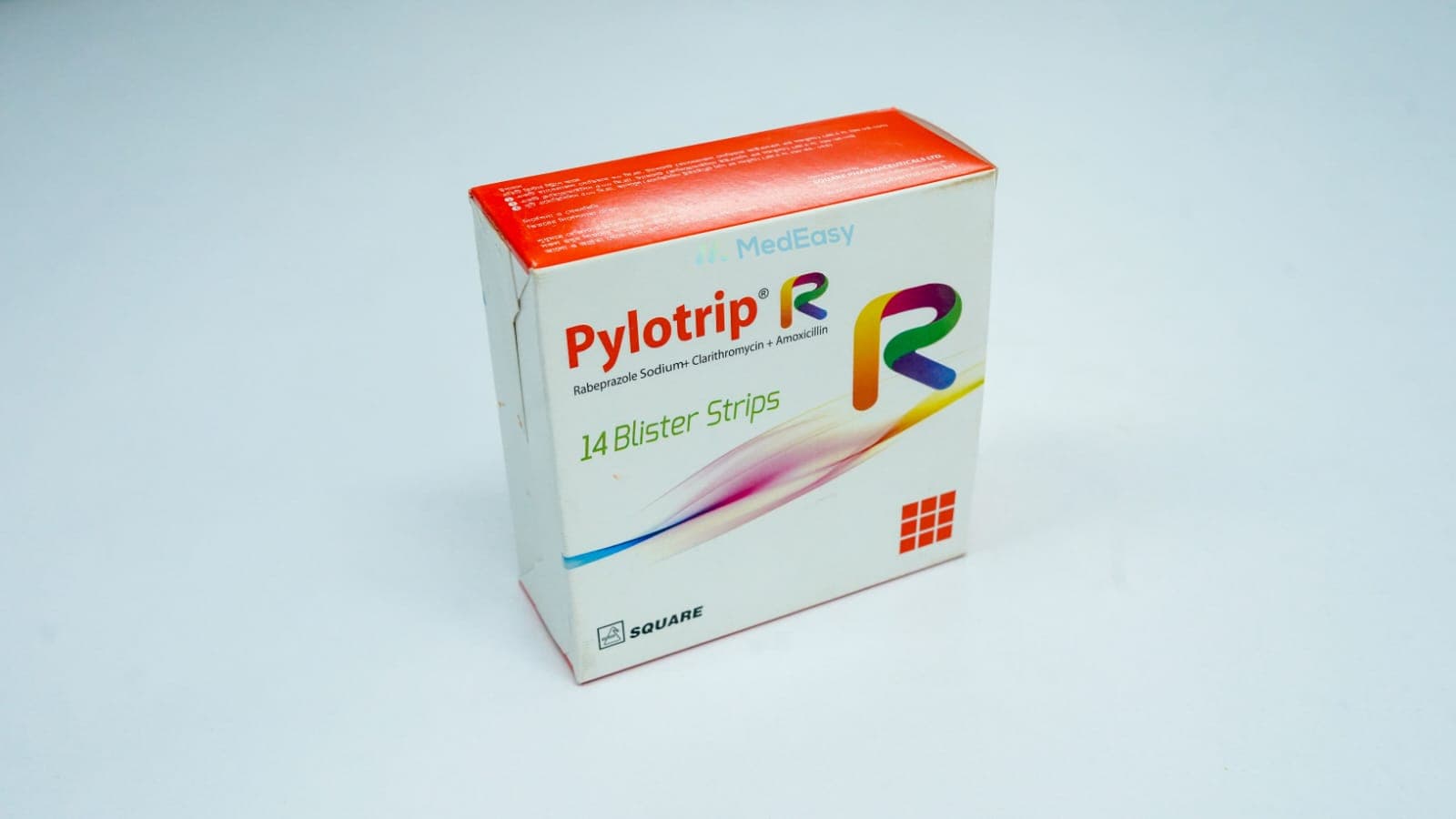

Pylotrip R is a co-packaged fixed combination (proton pump inhibitor plus two antibiotics) indicated for the eradication of Helicobacter pylori (H. pylori) infection, typically prescribed together with confirmed or strongly suspected active or past peptic ulcer disease (gastric or duodenal ulcer). Its use is classified below by strength of evidence:
Pylotrip R is not intended for use as acid-suppression monotherapy, for uninvestigated dyspepsia without confirmed H. pylori infection, or for treatment of infections other than H. pylori.
Rabeprazole + Amoxicillin + Clarithromycin is supplied as a co-packaged combination (kit/blister pack) containing three separate medicines to be taken together at each dosing time:
Exact strengths and pack configuration may vary by manufacturer; the prescribing physician's instructions and the product label should always be followed.
Pylotrip R is a fixed triple-therapy regimen combining a proton pump inhibitor with two antibiotics, co-packaged for the specific purpose of eradicating Helicobacter pylori infection of the stomach, a major cause of peptic ulcer disease and a recognized risk factor for gastric cancer. Rabeprazole suppresses gastric acid secretion, creating an environment that supports ulcer healing and enhances antibiotic activity, while amoxicillin and clarithromycin act together to kill H. pylori bacteria. All three components of Pylotrip R must be taken together, at the prescribed doses and for the full prescribed duration, to achieve successful eradication and to reduce the risk of antibiotic resistance.
Pylotrip R is a fixed combination/co-packaged triple-therapy anti-Helicobacter pylori regimen consisting of a Proton Pump Inhibitor (rabeprazole) together with an Aminopenicillin Antibiotic (amoxicillin) and a Macrolide Antibiotic (clarithromycin).
Rabeprazole + Amoxicillin + Clarithromycin combines three complementary mechanisms:
| Component | Dose | Frequency | Duration |
|---|---|---|---|
| Rabeprazole | 20 mg | Twice daily | Per physician, typically 7–14 days |
| Amoxicillin | 1000 mg (1 g) | Twice daily | Per physician, typically 7–14 days |
| Clarithromycin | 500 mg | Twice daily | Per physician, typically 7–14 days |
All three components of Pylotrip R are taken together at approximately the same two times each day (e.g., morning and evening), generally before meals for the rabeprazole component, as directed by the prescribing physician. The exact duration (commonly 7, 10, or 14 days depending on local resistance patterns and physician judgment) should follow the prescriber's instructions and local treatment guidelines.
No dose adjustment of rabeprazole or clarithromycin is generally required in mild-to-moderate renal impairment; amoxicillin dosing interval may need adjustment in significant renal impairment (see Use in Special Populations).
Pylotrip R should be used with caution and under close physician supervision in hepatic impairment; it is not recommended in severe hepatic impairment (see Contraindications and Use in Special Populations).
Patients must take Pylotrip R exactly as prescribed by their physician; do not stop, extend, skip doses, or share this medicine with others without medical advice, as incomplete courses reduce the chance of successful eradication and promote antibiotic resistance.
All three components of Pylotrip R should be taken together, twice daily (approximately every 12 hours), generally shortly before a meal. Tablets and capsules should be swallowed whole with a full glass of water and should not be crushed or chewed unless the product labeling specifically permits it. Pylotrip R should be taken at around the same times each day to maintain consistent drug levels, and the complete course must be finished even if symptoms improve before the course ends.
Pylotrip R (via its clarithromycin and, to a lesser extent, rabeprazole components) is associated with several well-established, clinically significant interactions:
| Interacting drug/class | Mechanism | Clinical consequence |
|---|---|---|
| Pimozide, ergot alkaloids, certain statins (e.g., lovastatin, simvastatin), colchicine (in renal/hepatic impairment) | Clarithromycin inhibits CYP3A4, raising plasma levels of these drugs | Serious toxicity (arrhythmia, ergotism, rhabdomyolysis, colchicine toxicity) – concurrent use is contraindicated (see Contraindications) |
| Other QT-prolonging drugs (e.g., certain antiarrhythmics, antipsychotics) | Additive QT-prolongation with clarithromycin | Increased risk of ventricular arrhythmia (e.g., torsades de pointes); avoid combination or use with caution and ECG monitoring |
| Oral anticoagulants (e.g., warfarin) | Clarithromycin/amoxicillin may potentiate anticoagulant effect | Increased INR/bleeding risk; monitor INR closely during and after therapy |
| Drugs requiring acidic gastric pH for absorption (e.g., ketoconazole, atazanavir, certain iron salts) | Rabeprazole markedly reduces gastric acidity | Reduced absorption/efficacy of the interacting drug; separate dosing or alternative therapy may be needed |
| Methotrexate (high-dose) | Reduced renal clearance with concomitant amoxicillin | Increased methotrexate toxicity; avoid or monitor closely |
| Other CYP3A4 substrates (e.g., certain benzodiazepines, cyclosporine, tacrolimus) | Clarithromycin-mediated CYP3A4 inhibition | Increased levels/toxicity of the interacting drug; dose adjustment or monitoring often needed |
Patients should inform their physician of all other medicines, supplements, and herbal products before starting Pylotrip R, particularly the interactions above requiring a medication review.
Rabeprazole + Amoxicillin + Clarithromycin is contraindicated in:
Common side effects reported with Pylotrip R include:
Less common but serious effects requiring prompt medical attention:
Patients should seek immediate medical attention for severe or persistent diarrhea, signs of an allergic reaction, palpitations/fainting, or yellowing of the skin or eyes while taking Pylotrip R.
Pregnancy: Pylotrip R should be used during pregnancy only if clearly needed and if the potential benefit justifies the potential risk to the fetus. Amoxicillin is generally considered to have a well-established safety profile in pregnancy when indicated, but clarithromycin and rabeprazole have more limited pregnancy safety data, and clarithromycin in particular should be avoided unless no safer alternative antibiotic is suitable. A physician must weigh the risks and benefits and, where possible, consider alternative eradication regimens in pregnant patients.
Lactation: All three components of Pylotrip R pass into breast milk in small amounts. Pylotrip R should be used during breastfeeding only on a physician's advice, with the infant monitored for diarrhea, thrush, or allergic-type reactions.
Overdose of Pylotrip R may cause exaggerated gastrointestinal effects (severe nausea, vomiting, diarrhea, abdominal pain), and in severe cases, effects related to the individual components such as electrolyte disturbance, cardiac rhythm changes, or crystalluria. There is no specific antidote. If an overdose is suspected, seek immediate medical attention or contact a poison control center/emergency services right away; treatment is supportive and symptom-directed under medical supervision.
Store Pylotrip R at room temperature (below 30°C), away from light and moisture. Keep out of reach of children. Do not use beyond the expiry date printed on the pack.
No dose adjustment of rabeprazole is generally needed. The amoxicillin dosing interval should be adjusted in patients with significant renal impairment (e.g., creatinine clearance below 30 mL/min), per physician judgment. Clarithromycin dose/frequency may also need reduction in severe renal impairment. Colchicine co-administration is contraindicated in renal impairment (see Contraindications).
Pylotrip R should be used with caution in mild-to-moderate hepatic impairment and is contraindicated in severe hepatic impairment (see Contraindications).
No specific dose adjustment is generally required based on age alone, but elderly patients may be at higher risk of QT prolongation, renal impairment, and C. difficile-associated diarrhea, warranting closer monitoring.
See Pediatric Uses section.
See Pregnancy and Lactation section.
The typical course of Pylotrip R for H. pylori eradication lasts 7 to 14 days, with many current treatment guidelines favoring 14-day courses to maximize eradication rates, depending on local antibiotic resistance patterns and physician judgment. The complete prescribed duration must be finished even if symptoms resolve earlier; stopping early risks treatment failure and antibiotic resistance.
Proton Pump Inhibitor (Rabeprazole) + Aminopenicillin Antibiotic (Amoxicillin) + Macrolide Antibiotic (Clarithromycin) – fixed combination anti-Helicobacter pylori triple therapy.
Rabeprazole + Amoxicillin + Clarithromycin works through three complementary actions taken together: rabeprazole profoundly and durably suppresses gastric acid secretion by irreversibly inhibiting the parietal cell proton pump, which both promotes healing of the gastric/duodenal mucosa and creates conditions that enhance antibiotic activity against Helicobacter pylori; amoxicillin kills actively dividing H. pylori bacteria by inhibiting bacterial cell-wall synthesis; and clarithromycin inhibits bacterial protein synthesis at the ribosomal level, providing a second, complementary antibacterial mechanism. Using all three agents together reduces the likelihood that resistant bacteria will survive and allows successful eradication of the infection.
Not formally assigned as a fixed-combination product. Individual legacy FDA pregnancy categories: Amoxicillin - B; Clarithromycin - C; Rabeprazole - B.
Safety and efficacy of Pylotrip R as a fixed triple-therapy combination have not been established in pediatric patients. Where H. pylori eradication therapy is required in children, it is generally undertaken using individually selected, weight-based dosing of a proton pump inhibitor and appropriate antibiotics under the supervision of a pediatric gastroenterology specialist, rather than this adult-dose combination pack.
Q: What is Pylotrip R 20 mg+500 mg+1000 mg Tablet used for?
A: Pylotrip R 20 mg+500 mg+1000 mg Tablet is a combination pack used to eradicate Helicobacter pylori (H. pylori) infection, a bacterium commonly associated with peptic ulcer disease. It combines an acid-reducing medicine with two antibiotics that must all be taken together.
Q: How long do I need to take Pylotrip R 20 mg+500 mg+1000 mg Tablet?
A: Your physician will usually prescribe Pylotrip R 20 mg+500 mg+1000 mg Tablet for 7 to 14 days. It is essential to complete the full course exactly as prescribed, even if you start feeling better, to fully clear the infection and avoid antibiotic resistance.
Q: Can I stop Pylotrip R 20 mg+500 mg+1000 mg Tablet early if my stomach pain goes away?
A: No. You should never stop Pylotrip R 20 mg+500 mg+1000 mg Tablet early, skip doses, or share it with others without medical advice, even if symptoms improve, because an incomplete course can allow the infection to persist and promotes antibiotic resistance.
Q: What are the most important side effects of Pylotrip R 20 mg+500 mg+1000 mg Tablet to watch for?
A: Common effects include diarrhea, nausea, abdominal discomfort, and a metallic taste. Seek immediate medical attention for severe or bloody diarrhea (which can indicate a serious intestinal infection), signs of an allergic reaction such as rash, swelling, or difficulty breathing, or palpitations/fainting, which can rarely relate to heart rhythm effects of the clarithromycin component.
Q: Can Pylotrip R 20 mg+500 mg+1000 mg Tablet be taken with other medicines?
A: Pylotrip R 20 mg+500 mg+1000 mg Tablet has several serious drug interactions, particularly with certain statins, ergot medicines, pimozide, and colchicine (in kidney or liver disease), due to its clarithromycin component. Always tell your physician about every medicine and supplement you take before starting Pylotrip R 20 mg+500 mg+1000 mg Tablet.
Q: Is Pylotrip R 20 mg+500 mg+1000 mg Tablet safe during pregnancy or breastfeeding?
A: Pylotrip R 20 mg+500 mg+1000 mg Tablet should be used in pregnancy or while breastfeeding only if clearly needed and advised by a physician, since some of its components have more limited safety data in pregnancy than others; your doctor may consider an alternative regimen if you are pregnant.
Disclaimer
The information provided is accurate to the best of our knowledge, but it does not replace professional medical advice. We cannot guarantee its completeness or accuracy, and the absence of specific information about a drug should not be taken as an endorsement. We are not responsible for any consequences arising from this information, so please consult a healthcare professional for any concerns or questions.
