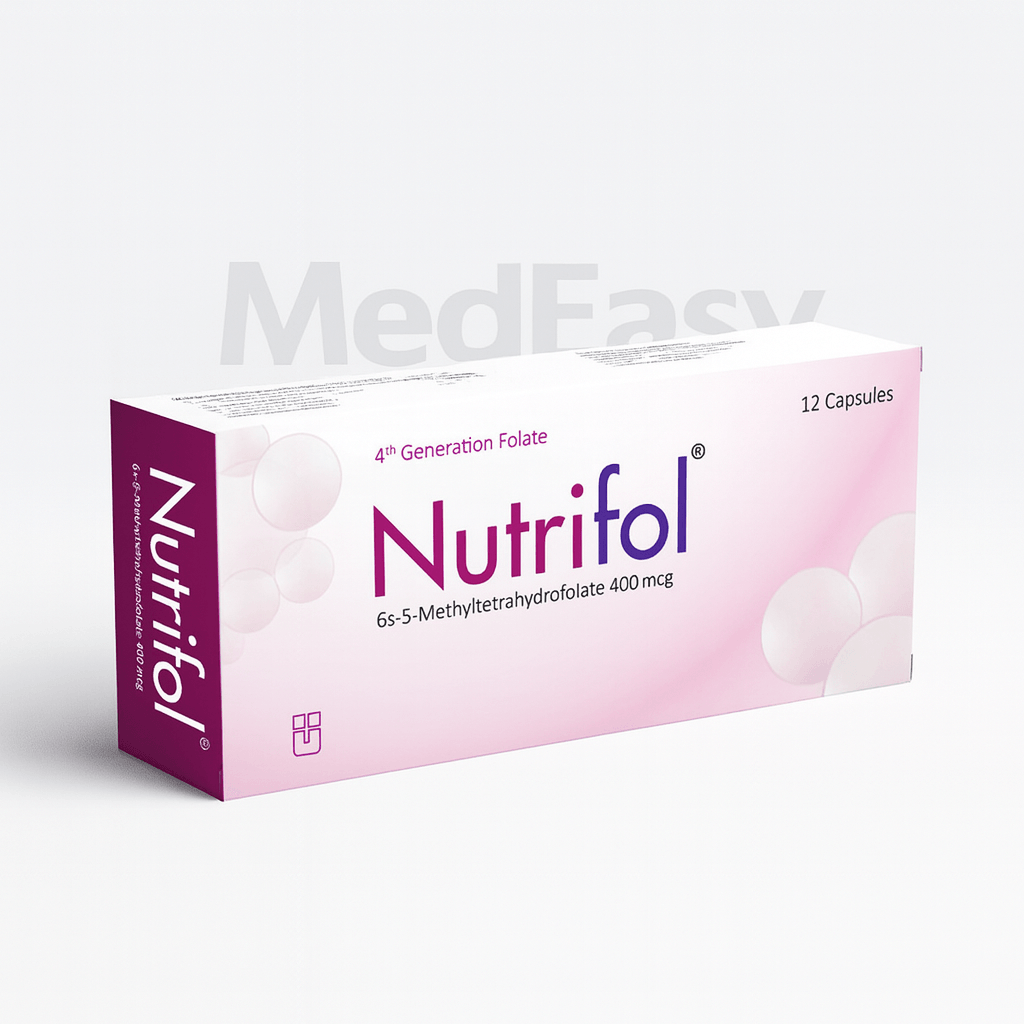
8% Off
Folive400 mcg
ACME Laboratories Ltd.
৳276.00
Add to cart
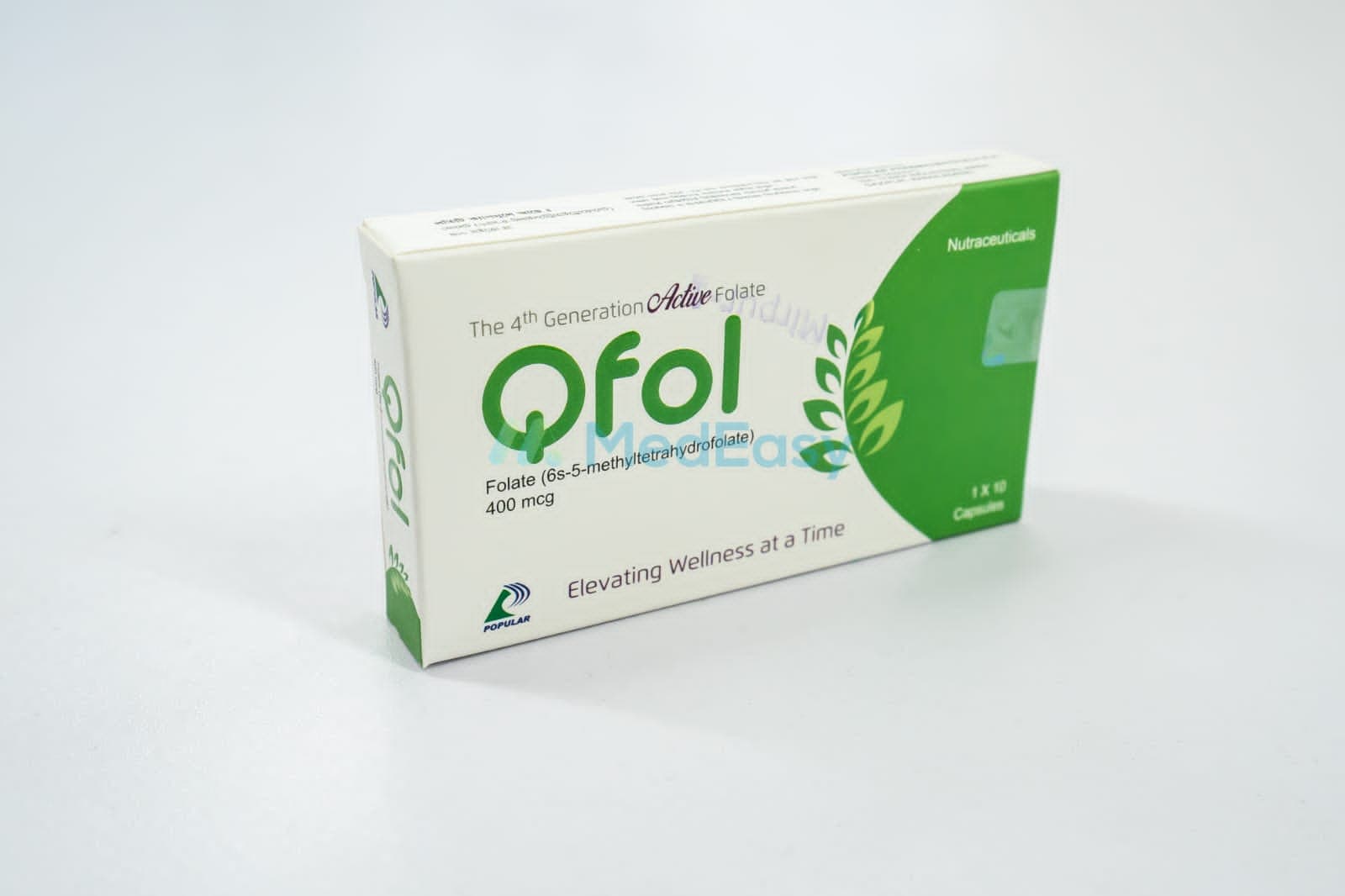

Qfol is the naturally occurring, biologically active form of folate (vitamin B9). Unlike synthetic folic acid, it does not require enzymatic reduction by dihydrofolate reductase or the MTHFR enzyme before it can be used by the body, so it can be absorbed and utilized directly.
Evidence for superiority of Qfol over standard folic acid in the general population (outside genetic-variant or malabsorption contexts) is limited, and such use should be viewed as a nutritional/supportive measure rather than a proven outcome-altering therapy.
6s-5-Methyltetrahydrofolate [Bio-Active Folate] is typically supplied as an oral capsule or tablet containing L-methylfolate (as a calcium or glucosamine salt) in strengths such as 400 mcg and 1000 mcg for general dietary supplementation, and higher prescription strengths (e.g., 7.5 mg and 15 mg) in certain medical-food products intended for adjunctive psychiatric use. Each product's label should be checked for the exact strength and salt form.
Qfol (also known as L-methylfolate or levomefolate) is the predominant, biologically active circulating form of folate in the human body. It functions as the direct methyl donor required for the conversion of homocysteine to methionine and supports one-carbon metabolism, DNA/RNA synthesis, and cell division. Because it bypasses the enzymatic reduction steps needed to activate synthetic folic acid, it is marketed as a folate source suitable for individuals who convert folic acid less efficiently.
Vitamins and minerals — active folate (vitamin B9) derivative / medical food and dietary supplement.
6s-5-Methyltetrahydrofolate [Bio-Active Folate] is absorbed intact in the small intestine via folate transporters (reduced folate carrier and proton-coupled folate transporter) without requiring conversion by dihydrofolate reductase or 5,10-methylenetetrahydrofolate reductase (MTHFR). It circulates in plasma and enters cells, where it donates a methyl group in the vitamin B12-dependent conversion of homocysteine to methionine, catalyzed by methionine synthase. This reaction regenerates tetrahydrofolate, which is required for purine and thymidylate synthesis (essential for DNA replication and cell division) and for the methylation cycle that produces S-adenosylmethionine, an important methyl donor for numerous biological reactions, including neurotransmitter synthesis.
| Population | Typical Dose |
|---|---|
| Adults | 400 mcg to 1000 mcg orally once daily, or as directed by the physician |
| Pregnant/lactating women | As recommended by the treating physician as part of prenatal nutritional supplementation |
Usual adult dose is 7.5 mg to 15 mg orally once daily, used together with an existing antidepressant and under psychiatric supervision.
Dosing individualized by the treating physician alongside stabilized antipsychotic therapy.
There is no well-established need for renal or hepatic dose adjustment for standard dietary-supplement strengths, but patients with significant renal or hepatic impairment should use Qfol only under physician guidance.
Take Qfol by mouth, with or without food, at approximately the same time each day. Swallow capsules/tablets whole with a glass of water unless the product labeling states otherwise. Do not increase the dose beyond what is prescribed or labeled without consulting a physician.
Qfol has the following clinically relevant interactions:
6s-5-Methyltetrahydrofolate [Bio-Active Folate] is contraindicated in patients with known hypersensitivity to this ingredient or to any component of the specific product formulation.
Qfol is generally very well tolerated. Reported adverse effects are uncommon and include:
Folate, including Qfol, is a recognized nutritional requirement during pregnancy and is widely used to support normal fetal development, but it should be used at the dose recommended by the treating physician rather than self-adjusted. As with any supplement in pregnancy, use only as advised, with the understanding that potential benefit is weighed against any theoretical risk of the specific product's dose or formulation. Qfol is excreted in breast milk; it is generally considered compatible with breastfeeding at recommended nutritional doses, but a physician should be consulted before use, particularly at higher (medical-food) strengths.
Masking of vitamin B12 deficiency: Folate supplementation, including with Qfol, can correct the megaloblastic anemia caused by vitamin B12 deficiency without correcting the underlying B12 deficiency. This can allow progressive and potentially irreversible neurological damage from B12 deficiency to continue unrecognized. Vitamin B12 status should be assessed before or during folate supplementation whenever clinically indicated, particularly in older adults, strict vegetarians/vegans, and patients with unexplained anemia or neurological symptoms; Qfol is not adequate treatment for pernicious anemia or confirmed B12 deficiency on its own.
Psychiatric caution: When used adjunctively in patients with major depressive disorder who are on antidepressants, caution is advised in individuals with a personal or family history of bipolar disorder, as antidepressant therapy (of which this is an adjunct) can be associated with precipitation of manic/hypomanic episodes.
General: Marketing claims of superiority over standard folic acid for general-population use should be interpreted cautiously, as high-quality outcome data supporting broad superiority (outside specific genetic-variant, malabsorption, or medical-food indications) remain limited. Excess folate is generally excreted and is not typically associated with toxicity at recommended doses.
Significant toxicity from Qfol overdose is unlikely given that excess folate is generally excreted in urine; however, very high intakes may theoretically worsen gastrointestinal upset or, in susceptible individuals, further mask vitamin B12 deficiency. If a substantial overdose is suspected or the patient develops concerning symptoms, seek immediate medical attention or contact a poison control center; do not attempt unsupervised home treatment.
Store at room temperature (below 30°C), away from light and moisture. Keep out of reach of children.
Elderly: Use with attention to concurrent vitamin B12 status, as age increases the risk of unrecognized B12 deficiency (see Precautions).
Renal impairment (including dialysis patients): May have increased folate requirements; Qfol is commonly used as nutritional support in this setting under physician supervision, though formal dose-adjustment data are limited.
Hepatic impairment: No well-established dose adjustment; use under medical guidance.
Pregnancy and lactation: See Pregnancy and Lactation section.
Pediatric use: See Pediatric Uses section.
Duration depends on the indication: correction of documented folate deficiency is typically continued for several weeks to a few months, guided by repeat folate levels; supplementation for pregnancy is generally continued through preconception, pregnancy, and lactation as advised by the physician; adjunctive use in depression or schizophrenia is continued for as long as the underlying condition and treatment plan require, under ongoing medical supervision. Long-term, low-dose nutritional supplementation may be continued indefinitely in individuals with an ongoing indication (e.g., malabsorption, MTHFR-related reduced conversion).
Vitamin/nutritional supplement; active (reduced) folate — vitamin B9 derivative.
6s-5-Methyltetrahydrofolate [Bio-Active Folate] acts as the immediately usable, biologically active form of folate, serving directly as the methyl donor for the vitamin B12-dependent conversion of homocysteine to methionine and for regeneration of tetrahydrofolate needed in DNA/RNA synthesis, bypassing the need for enzymatic activation of folic acid via dihydrofolate reductase and MTHFR.
Safety and efficacy of Qfol for indications beyond routine dietary intake have not been formally established in children. It may be used under pediatric medical supervision to address documented folate deficiency or specific metabolic/genetic indications, with dosing individualized by the treating physician based on age, weight, and clinical context; it is not intended for unsupervised pediatric self-medication.
Q: What is Qfol 400 mcg Capsule used for?
A: Qfol 400 mcg Capsule is used to prevent and treat folate deficiency, to support normal fetal development during pregnancy, and as an alternative to folic acid for people whose bodies convert folic acid less efficiently, such as those with certain MTHFR gene variants. In specialist settings it is also used as an adjunct alongside antidepressants or antipsychotics.
Q: How is Qfol 400 mcg Capsule different from folic acid?
A: Qfol 400 mcg Capsule is already in the biologically active form of folate, so it does not need to be converted by the body's enzymes before use, unlike synthetic folic acid. This can be helpful for people with reduced conversion capacity, though for most people ordinary folic acid remains an effective and well-studied option.
Q: Can Qfol 400 mcg Capsule be taken during pregnancy?
A: Folate, including Qfol 400 mcg Capsule, is important during pregnancy for fetal neural tube development. It should be taken at the dose recommended by your physician, since supplementation in pregnancy should be individualized and used only as clinically advised.
Q: Does Qfol 400 mcg Capsule have any serious risks?
A: It is generally well tolerated. The main safety concern is that folate supplementation, including with Qfol 400 mcg Capsule, can mask the blood-related signs of vitamin B12 deficiency while allowing nerve damage from B12 deficiency to continue unnoticed. Your physician may check your vitamin B12 status, especially if you are older or have risk factors for B12 deficiency. It should not be taken by anyone with a known allergy to it.
Q: What should I do if I take too much Qfol 400 mcg Capsule?
A: Serious harm from excess folate intake is unlikely since the body excretes what it does not need, but if a large overdose is taken or you feel unwell, seek immediate medical attention or contact a poison control center rather than treating it at home.
Q: How should Qfol 400 mcg Capsule be stored?
A: Store at room temperature (below 30°C), away from light and moisture, and keep it out of reach of children.
Disclaimer
The information provided is accurate to the best of our knowledge, but it does not replace professional medical advice. We cannot guarantee its completeness or accuracy, and the absence of specific information about a drug should not be taken as an endorsement. We are not responsible for any consequences arising from this information, so please consult a healthcare professional for any concerns or questions.