8% Off
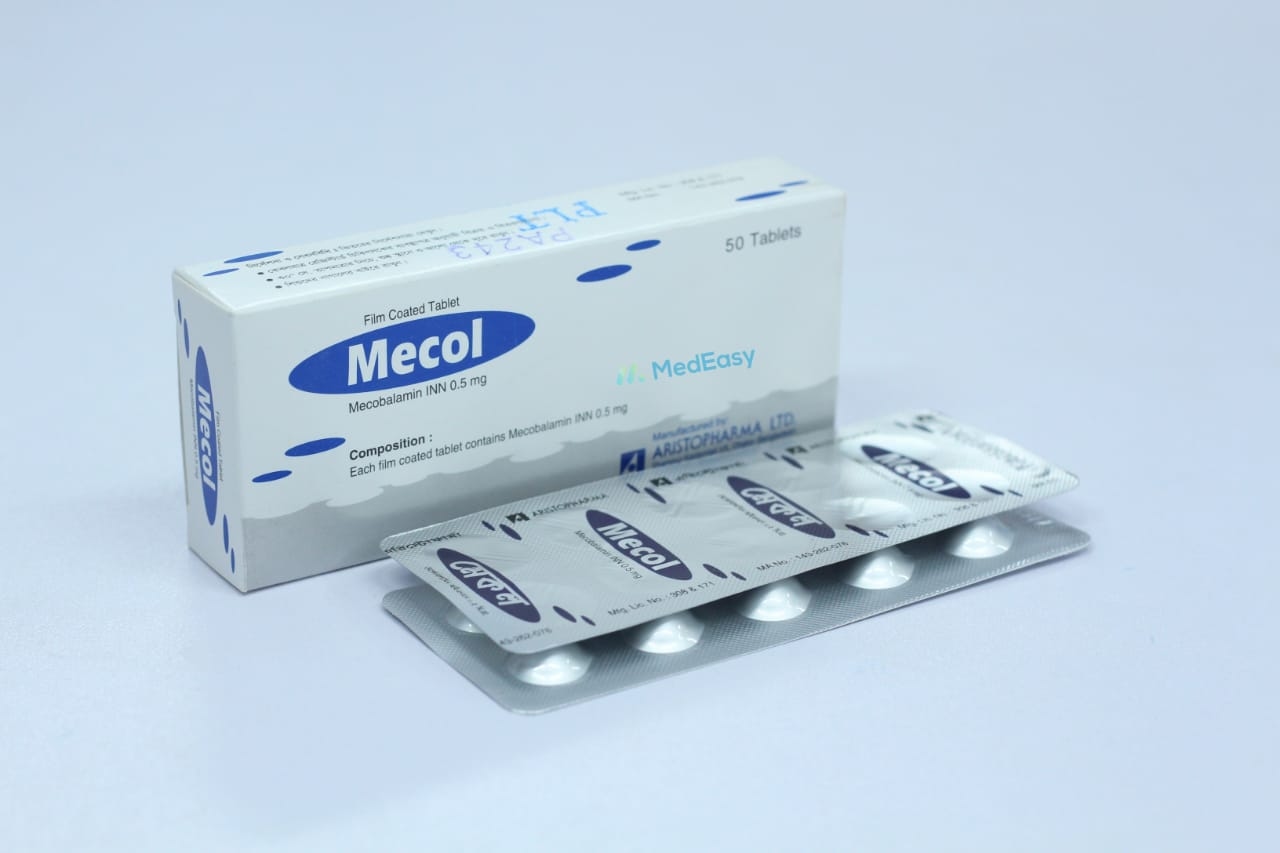
Mecol500 mcg
Aristopharma Ltd.
৳36.80
Add to cart


Remylin is the active coenzyme form of vitamin B12 (methylcobalamin) used mainly to treat vitamin B12 deficiency and its neurological consequences.
Remylin does not replace investigation and treatment of the underlying cause of B12 deficiency (see Precautions).
Each formulation contains Mecobalamin (methylcobalamin), an active coenzyme form of vitamin B12, as the sole active ingredient. It is available as tablets (commonly 500 microgram/0.5 mg strength) and as an injectable solution (commonly 500 microgram/mL ampoules) for intramuscular or intravenous use.
Remylin is one of the two naturally occurring coenzyme forms of vitamin B12 (the other being adenosylcobalamin), distinguished from cyanocobalamin by a methyl group attached to the cobalt center instead of a cyano group. Because it is already in an active coenzyme form, Remylin does not require additional enzymatic conversion in the body before it can participate in vitamin B12-dependent reactions.
Remylin plays a central role in the methionine synthase reaction, supporting DNA synthesis, red blood cell maturation, and the maintenance of myelin sheaths around nerve fibers. It is used clinically for vitamin B12 deficiency states, particularly those presenting with peripheral nerve involvement.
Remylin belongs to the therapeutic class of Vitamin B12 (cobalamin) preparations, also classified as neurotropic vitamins / hematinics used in the management of vitamin B12 deficiency and related peripheral neuropathies.
Mecobalamin acts as an essential cofactor for the enzyme methionine synthase, which converts homocysteine to methionine and, in the process, regenerates tetrahydrofolate needed for DNA synthesis and cell division. This makes Mecobalamin essential for normal maturation of red blood cells in the bone marrow.
In the nervous system, Mecobalamin is incorporated into neuronal cells more efficiently than other forms of vitamin B12 and supports the synthesis of components of the myelin sheath, promotes axonal transport, and is believed to have direct neuroprotective and nerve-regenerative effects, which is the basis for its use in peripheral neuropathy.
Pharmacokinetics: Oral Mecobalamin is absorbed in the terminal ileum via an intrinsic-factor-mediated active transport mechanism (saturable, limiting absorption of large oral doses) as well as by passive diffusion at higher doses. Parenteral (intramuscular/intravenous) administration bypasses gastrointestinal absorption entirely and is preferred when rapid or reliable correction of deficiency is needed. Mecobalamin is stored mainly in the liver and excreted primarily in urine and bile.
| Form | Adult dose |
|---|---|
| Tablet | 500 micrograms (0.5 mg) taken orally three times daily, after meals; dose may be adjusted according to age and severity of symptoms. |
| Injection | 500 micrograms given by intramuscular or intravenous injection, three times weekly; frequency may be adjusted based on clinical response. |
500 micrograms by intramuscular or intravenous injection, three times weekly. After approximately 2 months, the dose is usually reduced to a maintenance regimen of 500 micrograms once every 1 to 3 months, depending on clinical and hematologic response.
Remylin tablets are taken orally, generally after meals, exactly as prescribed. Remylin injections are given intramuscularly or intravenously by a trained healthcare provider under appropriate aseptic technique; the injection should not be self-administered unless specifically instructed and trained by a physician.
The following interactions with Remylin are clinically relevant:
No other major, well-established clinically significant drug interactions have been identified for Remylin at typical therapeutic doses.
Mecobalamin is contraindicated in patients with known hypersensitivity to Mecobalamin, cobalamin (vitamin B12) or cobalt, or to any excipient in the formulation.
Remylin is generally very well tolerated. Reported side effects include:
Pregnancy: Vitamin B12 is an essential nutrient required in pregnancy, but formal clinical safety data specifically for Remylin in pregnant women are limited. Remylin should be used during pregnancy only if clearly needed, at doses appropriate to correct a documented deficiency, and the potential benefit should justify any potential risk; use should be under medical supervision.
Lactation: Vitamin B12 is naturally excreted into breast milk, and vitamin B12/Remylin supplementation at recommended doses is generally considered usually compatible with breastfeeding by pediatric authorities. As with any medicine, a physician should be consulted before use while breastfeeding.
Remylin has a wide margin of safety because excess vitamin B12 is generally excreted in urine, and significant toxicity from oral or standard-dose overdose is uncommon. However, if a substantial overdose is suspected or if symptoms such as severe allergic reaction, breathing difficulty, or unusual symptoms occur, seek immediate medical attention or contact emergency services/a poison control center. Do not attempt to manage a suspected overdose at home without medical guidance.
Store at room temperature (below 30°C), protected from light and moisture. Keep out of reach of children.
The duration of Remylin therapy depends on the indication and clinical response. For peripheral neuropathy, response is typically reviewed after about one month, and treatment is discontinued if there is no improvement. For megaloblastic anemia due to B12 deficiency, an initial course of about 2 months is usually followed by long-term maintenance dosing (every 1–3 months) if the underlying cause of deficiency persists, under continued physician supervision.
Mecobalamin belongs to the vitamin B12 (cobalamin) analog class, and is grouped therapeutically with neurotropic vitamins and hematinic (anti-anemia) agents.
Mecobalamin is a direct, biologically active coenzyme form of vitamin B12 that serves as a cofactor for methionine synthase, enabling conversion of homocysteine to methionine and supporting folate-dependent DNA synthesis. This underlies its role in red blood cell maturation. In neurons, Mecobalamin additionally supports myelin sheath synthesis and axonal transport, contributing to nerve repair and function, which is why it is used in peripheral neuropathy.
Remylin is not generally recommended for use in children, and well-controlled clinical data establishing safety and efficacy in the pediatric population are lacking for the doses and indications used in adults. Vitamin B12 deficiency in children (e.g. due to malabsorption, strict vegetarian/vegan maternal or infant diet, or inherited metabolic disorders) should be managed by a pediatrician or pediatric specialist, who will select an appropriate form, dose, and route based on the child's age, weight, and the cause of deficiency; Remylin should not be given to children except under specific medical direction.
Q: What is Remylin 500 mcg Tablet used for?
A: Remylin 500 mcg Tablet is the active coenzyme form of vitamin B12. It is mainly used to treat peripheral neuropathy (nerve damage/pain, such as diabetic, alcoholic, or drug-induced neuropathy) and megaloblastic anemia caused by vitamin B12 deficiency, and is sometimes used as an adjunct in other nerve-related conditions.
Q: How should I take Remylin 500 mcg Tablet?
A: Remylin 500 mcg Tablet tablets are usually taken orally, three times a day after meals, at a dose of 500 micrograms (0.5 mg) each, unless your doctor prescribes differently. Remylin 500 mcg Tablet injections are given by a healthcare professional into a muscle or vein, typically several times a week. Always follow your physician's specific instructions.
Q: Is Remylin 500 mcg Tablet safe during pregnancy and breastfeeding?
A: Vitamin B12 is an essential nutrient needed during pregnancy, but formal safety data on Remylin 500 mcg Tablet specifically in pregnant women are limited, so it should be used in pregnancy only if clearly needed and under medical supervision. During breastfeeding, vitamin B12/Remylin 500 mcg Tablet at recommended doses is generally considered compatible with breastfeeding by pediatric authorities, but you should still consult your physician before use.
Q: Can Remylin 500 mcg Tablet be given to children?
A: Remylin 500 mcg Tablet is not generally recommended for children, and safety and efficacy in children have not been well established for typical adult doses and indications. If a child is suspected of having vitamin B12 deficiency, they should be evaluated and treated by a pediatrician, who will decide on an appropriate form and dose.
Q: What side effects can Remylin 500 mcg Tablet cause?
A: Remylin 500 mcg Tablet is generally very well tolerated. Possible side effects include rash, loss of appetite, nausea, vomiting, diarrhea, headache, and injection-site pain or warmth. Rarely, allergic (anaphylactoid) reactions with low blood pressure or breathing difficulty can occur, mainly with injections; seek immediate medical attention if this happens.
Q: What should I do if I miss a dose or take too much Remylin 500 mcg Tablet?
A: If you miss a dose, take it as soon as you remember unless it is close to the next dose, in which case skip the missed dose; do not double up. Remylin 500 mcg Tablet has a wide margin of safety, but if a significant overdose is suspected or unusual symptoms occur, seek immediate medical attention or contact a poison control center rather than trying to manage it at home.
Disclaimer
The information provided is accurate to the best of our knowledge, but it does not replace professional medical advice. We cannot guarantee its completeness or accuracy, and the absence of specific information about a drug should not be taken as an endorsement. We are not responsible for any consequences arising from this information, so please consult a healthcare professional for any concerns or questions.