8% Off
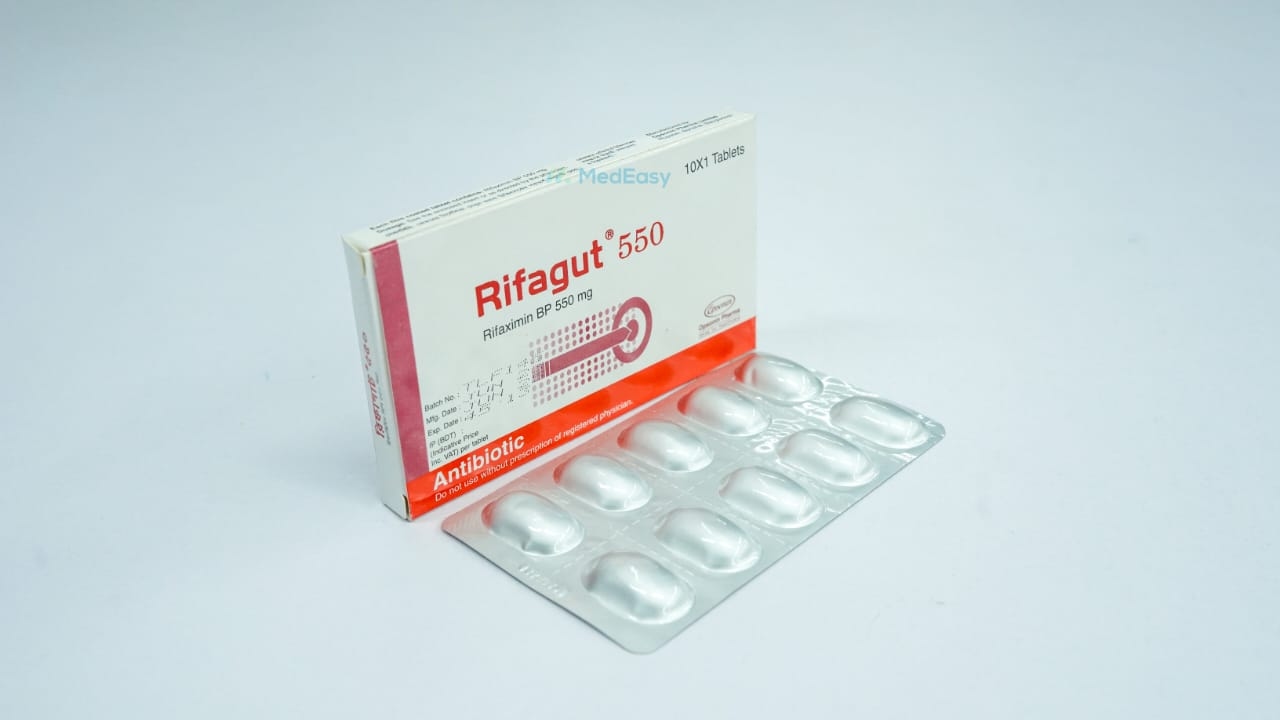
Rifagut550 mg
Opsonin Pharma Ltd.
৳460.00
Add to cart
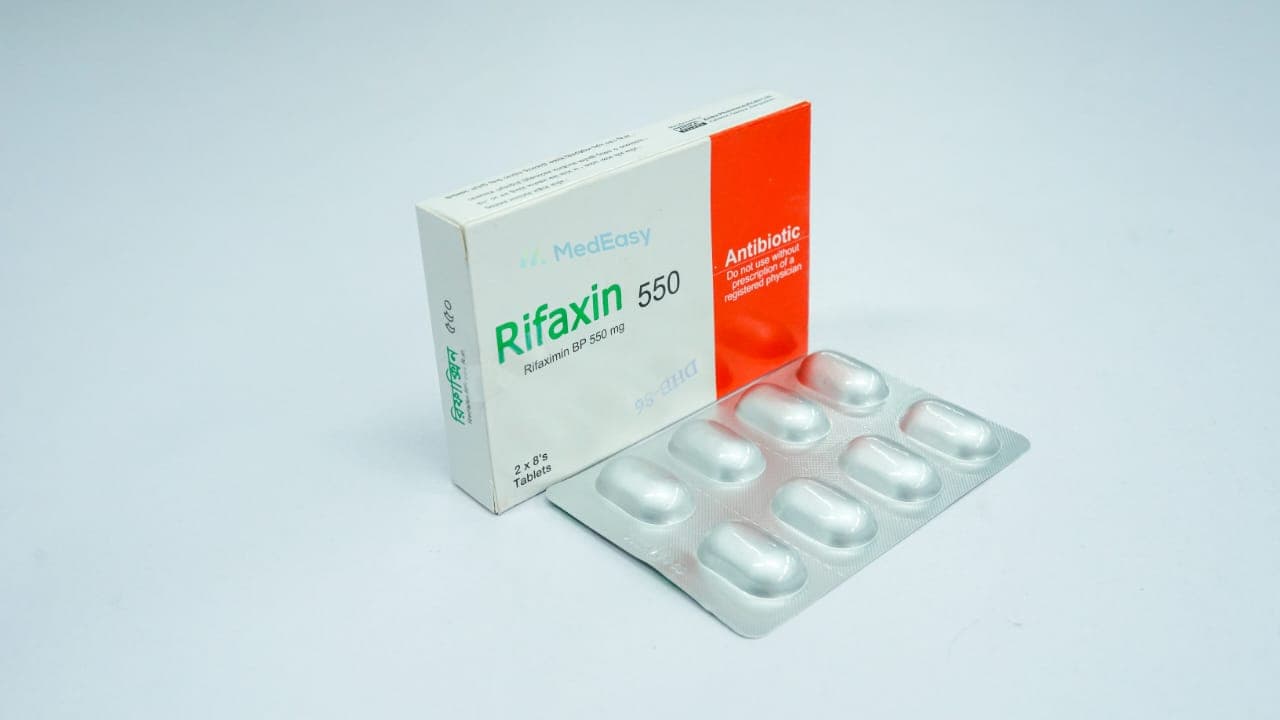
Rifaxin 550 mg Tablet is available on MedEasy for ৳324.00 per 8's Strip, with home delivery anywhere in Bangladesh. It is manufactured by Ziska Pharmaceuticals Ltd. Its generic name is Rifaximin.

Rifaxin is a gut-selective (minimally absorbed) antibiotic with evidence-based indications that vary in strength:
Rifaxin is not effective for diarrhea complicated by fever or blood in the stool, or diarrhea caused by pathogens other than E. coli; a physician should confirm the diagnosis before use.
Each film-coated tablet of Rifaximin generally contains Rifaximin INN 200 mg or 550 mg. An oral suspension formulation may also be available in some markets. Strengths and available dosage forms should be confirmed against the specific product label.
Rifaxin is a semi-synthetic, non-systemic antibiotic derived from rifamycin. It acts almost exclusively within the gastrointestinal lumen because less than 1% of an oral dose is absorbed into the bloodstream, which limits systemic side effects and drug interactions compared with absorbed antibiotics.
Rifaxin is used to treat traveler's diarrhea caused by certain strains of E. coli, to reduce the risk of recurrent episodes of hepatic encephalopathy, and to manage diarrhea-predominant irritable bowel syndrome.
Antibiotic - non-systemic (gut-selective) rifamycin derivative
Rifaximin inhibits bacterial DNA-dependent RNA synthesis by binding to the beta-subunit of bacterial RNA polymerase, thereby blocking transcription and protein synthesis. This gives it broad-spectrum activity against many gram-positive and gram-negative aerobic and anaerobic enteric bacteria.
Because Rifaximin is structurally modified to minimize absorption, more than 99% of an oral dose remains within the gastrointestinal tract and is excreted largely unchanged in the feces, so its antibacterial action is essentially local rather than systemic.
| Indication | Adult Dose | Duration |
|---|---|---|
| Traveler's diarrhea (age ≥12 years) | 200 mg by mouth 3 times daily | 3 days |
| Reduction of hepatic encephalopathy recurrence (age ≥18 years) | 550 mg by mouth 2 times daily | Long-term, as directed by physician (usually with lactulose) |
| IBS-D (age ≥18 years) | 550 mg by mouth 3 times daily | 14 days; up to 2 repeat courses may be given if symptoms recur |
| SIBO-associated symptoms (locally used, off-label) | 400 mg 3 times daily, or 550 mg 3 times daily | 10-14 days, per physician's advice |
Rifaxin tablets may be taken with or without food. Swallow tablets whole; do not crush or chew unless directed. Take exactly as prescribed by your physician; do not stop, extend, skip doses, or share this medicine with others without medical advice. If diarrhea symptoms worsen or persist beyond 24-48 hours, or if fever/blood in stool develop, contact a physician - a different antibiotic may be needed.
Take Rifaxin tablets by mouth, with or without food, at evenly spaced intervals. Swallow the tablet whole with a glass of water. Complete the full prescribed course even if symptoms improve early, unless a physician advises otherwise.
Rifaxin has few clinically significant interactions because of its minimal systemic absorption, but the following are well documented:
Clinically significant induction of CYP3A4 by Rifaxin is unlikely at recommended doses in patients with normal liver function, but exposure may be higher and interaction risk greater in patients with hepatic impairment.
Rifaximin is contraindicated in patients with known hypersensitivity to Rifaximin or to any rifamycin antimicrobial agent (e.g., rifampin, rifabutin), due to the risk of cross-reactivity. Reported hypersensitivity reactions have included anaphylaxis, angioedema, and exfoliative dermatitis.
Side effects of Rifaxin vary somewhat by indication.
Seek prompt medical attention for signs of a severe allergic reaction, severe or persistent diarrhea, or unusual bruising/bleeding.
Pregnancy: Animal reproduction studies have shown teratogenic effects at certain dose levels; there are no adequate, well-controlled studies of Rifaxin in pregnant women. Rifaxin should be used during pregnancy only if clearly needed and the potential benefit justifies the potential risk to the fetus. Consult a physician before use in pregnancy.
Lactation: It is not known whether Rifaxin is excreted in human breast milk. Because of minimal systemic absorption, transfer into milk is expected to be limited, but caution is advised; a physician should weigh the benefits of treatment against any potential risk to the breastfeeding infant.
Rifaxin is not effective for diarrhea complicated by fever or blood in the stool, or diarrhea caused by pathogens other than E. coli; if symptoms of invasive disease appear, an alternative antibiotic should be considered.
If diarrhea worsens or persists beyond 24-48 hours despite treatment, contact a physician - this may indicate an alternative pathogen or the development of C. difficile-associated diarrhea, which requires discontinuation of Rifaxin and appropriate treatment.
Hepatic impairment: Systemic absorption of Rifaxin is increased in patients with hepatic impairment, most markedly in severe (Child-Pugh Class C) disease. Use with caution in patients with severe liver impairment and monitor for adverse effects.
Antibiotic stewardship: Take exactly as prescribed by your physician; do not stop, extend, skip doses, or share this medicine with others without medical advice, to reduce the risk of antibiotic resistance and treatment failure.
There is no specific antidote for Rifaxin overdose. In case of suspected overdose, seek immediate medical attention or contact a poison control center/emergency services. Treatment is symptomatic and supportive; discontinue Rifaxin and manage symptoms under medical supervision.
Store at room temperature (below 30°C), away from light and moisture. Keep out of reach of children.
Renal impairment: No dose adjustment is generally required, as Rifaxin is minimally absorbed and predominantly eliminated in the feces; however, use with caution and physician guidance in significant renal impairment.
Hepatic impairment: See Precautions and Warnings - systemic exposure increases substantially with worsening hepatic function, especially Child-Pugh Class C; use with caution.
Elderly: No overall differences in safety or effectiveness have been observed between elderly and younger adult patients, but age-related decreases in hepatic, renal, or cardiac function should be considered.
Pregnancy and lactation: See Pregnancy and Lactation section.
Pediatric use: See Pediatric Uses section.
Duration of Rifaxin treatment depends on the indication: 3 days for traveler's diarrhea; long-term, physician-directed use for reducing hepatic encephalopathy recurrence; and 14 days per course for IBS-D (with up to 2 repeat courses if symptoms recur). Always follow the prescribing physician's instructions on duration.
Antibiotics > Rifamycins > Non-systemic (gut-selective) antimicrobials
Rifaximin binds to the beta-subunit of bacterial DNA-dependent RNA polymerase, blocking bacterial transcription and protein synthesis. Its chemical structure limits absorption from the gut, so this antibacterial action occurs mainly within the gastrointestinal lumen rather than systemically.
C
Rifaxin is approved for traveler's diarrhea in children 12 years of age and older, using the same 200 mg three times daily, 3-day regimen as adults.
Safety and efficacy for reduction of hepatic encephalopathy recurrence and for IBS-D have not been established in patients younger than 18 years; use in these indications in children and adolescents is not recommended outside specialist guidance.
Q: What is Rifaxin 550 mg Tablet used for?
A: Rifaxin 550 mg Tablet is used to treat traveler's diarrhea caused by certain strains of E. coli, to reduce the risk of recurrent hepatic encephalopathy episodes, and to manage diarrhea-predominant irritable bowel syndrome (IBS-D).
Q: Is Rifaxin 550 mg Tablet absorbed into the bloodstream?
A: No, more than 99% of an oral dose of Rifaxin 550 mg Tablet stays within the gastrointestinal tract, which is why it causes fewer systemic side effects than many other antibiotics.
Q: Can I take Rifaxin 550 mg Tablet during pregnancy?
A: Rifaxin 550 mg Tablet should be used during pregnancy only if clearly needed and the potential benefit justifies the potential risk to the fetus, since animal studies have shown some risk and human data are limited. Always consult a physician before use in pregnancy.
Q: Who should not take Rifaxin 550 mg Tablet?
A: Rifaxin 550 mg Tablet should not be taken by anyone with a known hypersensitivity to Rifaxin 550 mg Tablet or to any rifamycin antibiotic (such as rifampin), due to the risk of a cross-reaction, including severe allergic reactions.
Q: What should I do if my diarrhea gets worse while taking Rifaxin 550 mg Tablet?
A: If diarrhea worsens or persists beyond 24-48 hours, or if you develop fever or blood in the stool while taking Rifaxin 550 mg Tablet, contact your physician promptly, as this may indicate a different infection that needs alternative treatment.
Q: Can children take Rifaxin 550 mg Tablet?
A: Rifaxin 550 mg Tablet is approved for traveler's diarrhea in children aged 12 years and older. Its safety and effectiveness for other uses, such as hepatic encephalopathy or IBS-D, have not been established in patients under 18 years.
Disclaimer
The information provided is accurate to the best of our knowledge, but it does not replace professional medical advice. We cannot guarantee its completeness or accuracy, and the absence of specific information about a drug should not be taken as an endorsement. We are not responsible for any consequences arising from this information, so please consult a healthcare professional for any concerns or questions.