8% Off
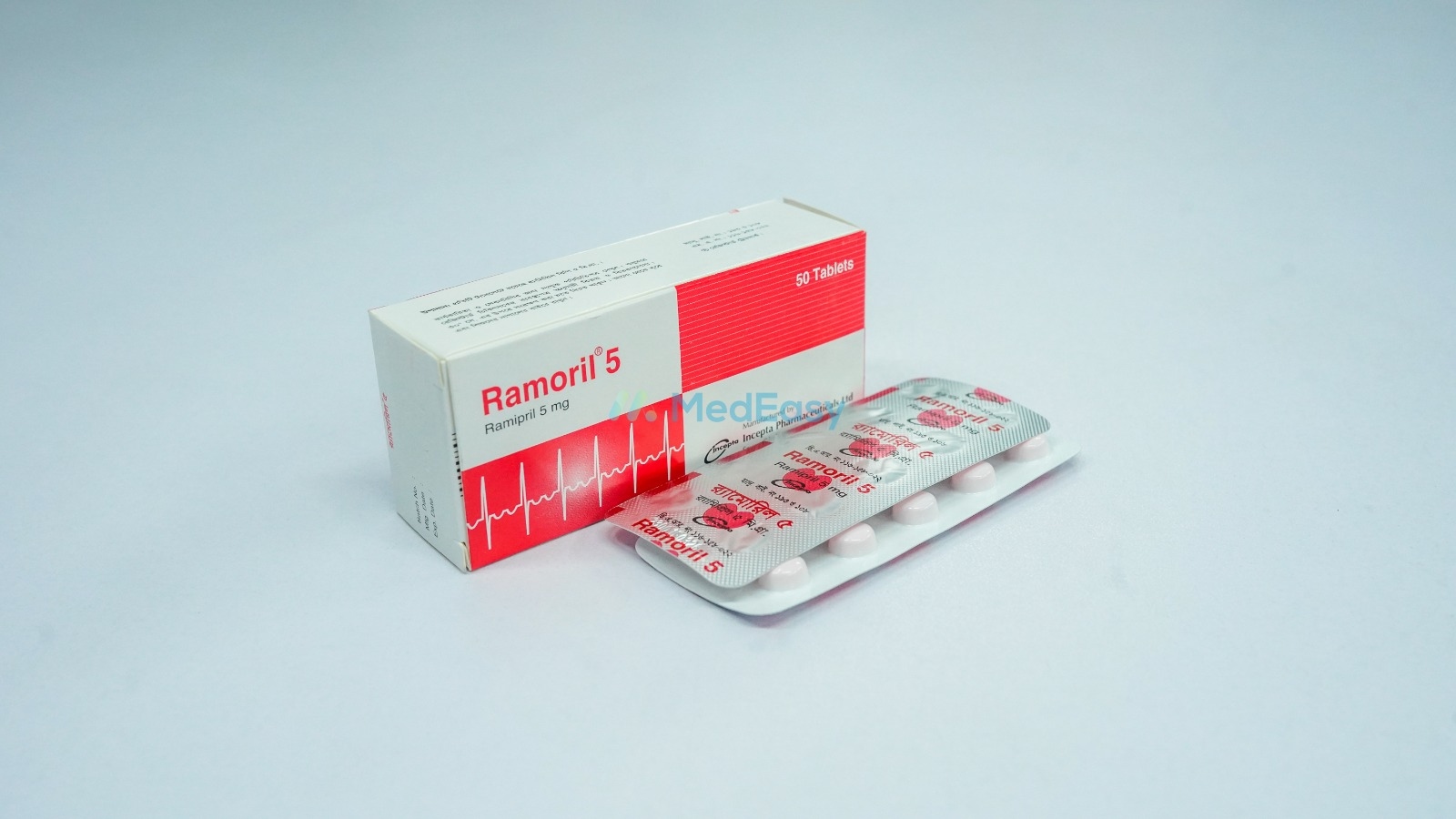
Ramoril5 mg
Incepta Pharmaceuticals Ltd.
৳73.60
Add to cart
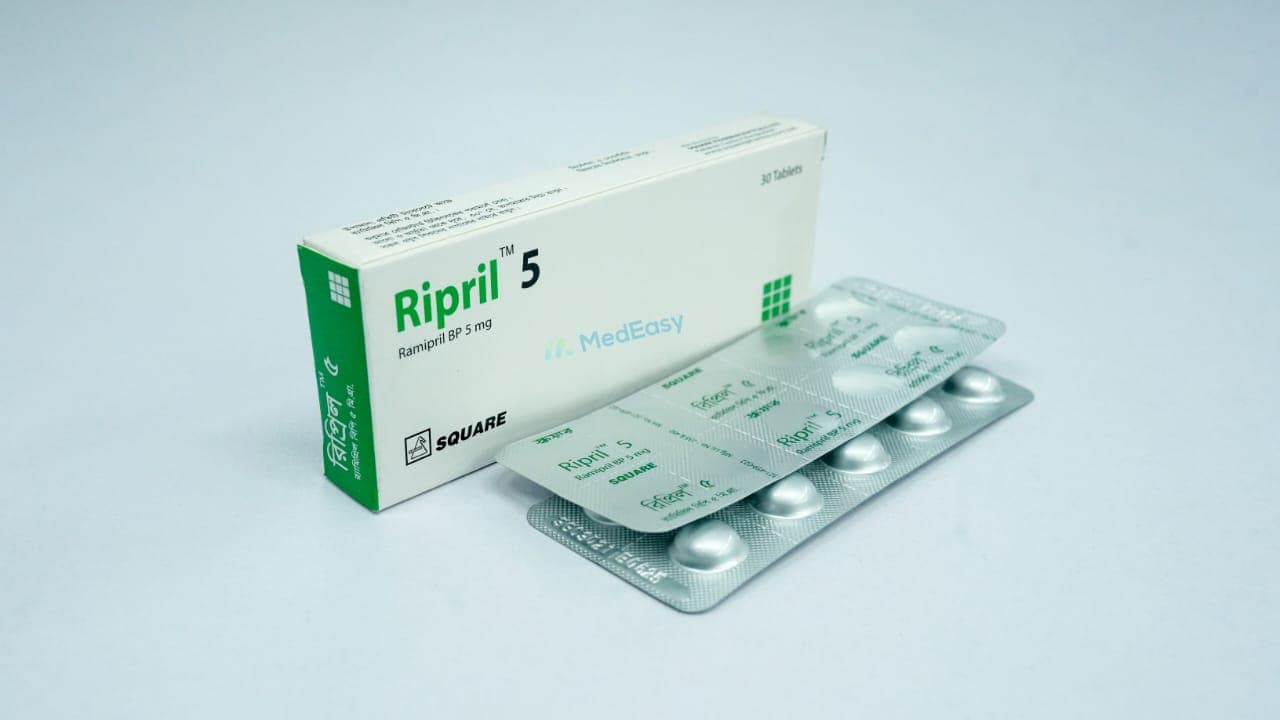
Ripril 5 mg Tablet is available on MedEasy for ৳73.60 per 10's Strip, with home delivery anywhere in Bangladesh. It is manufactured by Square Pharmaceuticals PLC. Its generic name is Ramipril.

A physician determines the appropriate indication and treatment plan for each patient based on individual clinical evaluation.
Each tablet/capsule contains Ramipril as the active pharmaceutical ingredient, commonly available in strengths of 1.25 mg, 2.5 mg, 5 mg, and 10 mg, along with pharmaceutically acceptable excipients.
Ripril is an angiotensin-converting enzyme (ACE) inhibitor used in the management of hypertension, heart failure following a heart attack, and for reducing the risk of major cardiovascular events in high-risk patients. It works by relaxing blood vessels, which helps lower blood pressure and reduces the workload on the heart.
Ripril is taken orally, usually once or twice daily depending on the indication, and is available in multiple strengths to allow individualized dosing. It is often used alone or in combination with other antihypertensive or heart failure medications.
Angiotensin-Converting Enzyme (ACE) Inhibitor; Cardiovascular / Antihypertensive Agent.
Ramipril is a prodrug that is hydrolyzed in the liver to its active metabolite, ramiprilat, a potent and long-acting inhibitor of angiotensin-converting enzyme (ACE).
By inhibiting ACE, Ramipril blocks the conversion of angiotensin I to angiotensin II, a potent vasoconstrictor. This results in:
After oral administration, Ramipril is rapidly absorbed and converted to ramiprilat. Peak plasma concentrations of ramiprilat occur within 2-4 hours. Ramiprilat is highly protein-bound and is eliminated primarily via renal excretion, with a prolonged effective half-life allowing once- or twice-daily dosing.
Ripril may be taken with or without food, at approximately the same time each day. Doses should be individualized based on indication, blood pressure response, and renal function. Do not stop taking Ripril abruptly without consulting a physician.
| Indication | Initial Dose | Maintenance / Titration |
|---|---|---|
| Hypertension | 2.5 mg once daily (1.25 mg once daily if on a diuretic or with renal impairment) | Usual range 2.5-20 mg/day, given once daily or in two divided doses |
| Heart Failure Post-MI | 2.5 mg twice daily (1.25 mg twice daily if hypotension occurs) | Titrate as tolerated to a target of 5 mg twice daily |
| Cardiovascular Risk Reduction | 2.5 mg once daily for 1 week | 5 mg once daily for 3 weeks, then increased as tolerated to a maintenance dose of 10 mg once daily |
Dose reduction is required in renal impairment (see Use in Special Populations for details); the starting dose is typically reduced and titration is done cautiously with monitoring of renal function and potassium.
Take Ripril orally, with or without food, at the same time each day. Swallow tablets/capsules whole with water. Do not discontinue without medical advice, even if feeling well, as abrupt discontinuation can affect blood pressure control.
Patients should seek prompt medical attention for facial/throat swelling, difficulty breathing or swallowing, or signs of infection (fever, sore throat).
Pregnancy: Ripril is contraindicated during pregnancy. Drugs acting on the renin-angiotensin system can cause injury and death to the developing fetus when used during the second and third trimesters, including fetal hypotension, renal failure, skull hypoplasia, and death. When pregnancy is detected, Ripril should be discontinued as soon as possible unless continued use is considered lifesaving for the mother.
Lactation: There is limited information on the presence of Ripril in human milk. Because of the potential for serious adverse effects in a nursing infant, a decision should be made whether to discontinue breastfeeding or discontinue Ripril, taking into account the importance of the drug to the mother; consult a physician before use while breastfeeding.
Overdose with Ripril may cause pronounced hypotension, shock, electrolyte disturbances, and renal impairment. If an overdose of Ripril is suspected, seek immediate medical attention or contact a poison control center right away. Do not attempt to manage an overdose at home. Management is supportive and should be carried out by qualified medical personnel, typically involving close monitoring of blood pressure, fluid and electrolyte status, and renal function in a medical facility.
Store at room temperature (below 30°C), away from light and moisture. Keep out of reach of children.
Dose reduction of Ripril is recommended in patients with renal impairment. For creatinine clearance less than 40 mL/min/1.73m², initial dose should be reduced (e.g., 1.25 mg once daily) with careful up-titration and monitoring of renal function and potassium; maximum daily dose may need to be limited.
Since Ripril requires hepatic activation to Riprilat, patients with significant liver impairment may have altered response; use with caution and close monitoring.
Elderly patients may be more sensitive to the blood-pressure-lowering effects of Ripril and may have age-related decreases in renal function; a lower starting dose and careful monitoring are generally recommended.
Safety and efficacy of Ripril in pediatric patients have not been established; use in children is generally not recommended.
Ripril is generally used long-term for chronic conditions such as hypertension and heart failure, as directed by a physician. Duration is individualized based on the treated condition, response, and ongoing medical evaluation; treatment should not be stopped abruptly without medical advice.
ACE Inhibitors; Antihypertensives; Cardiovascular Agents.
Ramipril is metabolized to ramiprilat, which inhibits angiotensin-converting enzyme, thereby reducing formation of angiotensin II. This leads to vasodilation, decreased aldosterone secretion, and reduced peripheral vascular resistance, lowering blood pressure and reducing cardiac workload.
Category D (FDA legacy pregnancy category; contraindicated in the second and third trimesters, and generally in pregnancy overall due to risk of fetal injury and death).
The safety and efficacy of Ripril in pediatric patients (under 18 years) have not been established. Ripril is therefore generally not recommended for use in children, and no established pediatric dosing regimen is available.
Q: What is Ripril 5 mg Tablet used for?
A: Ripril 5 mg Tablet is used to treat high blood pressure, to reduce the risk of death or worsening heart failure after a heart attack, and to lower the risk of heart attack, stroke, and cardiovascular death in high-risk patients. It is also used to help slow kidney damage in certain patients with diabetic or non-diabetic kidney disease.
Q: How should I take Ripril 5 mg Tablet?
A: Ripril 5 mg Tablet should be taken exactly as prescribed by a physician, usually once or twice daily, with or without food, at the same time each day. Do not stop taking it suddenly without consulting your doctor, even if you feel well.
Q: Can I take Ripril 5 mg Tablet if I am pregnant?
A: No. Ripril 5 mg Tablet is contraindicated during pregnancy because it can cause serious injury or death to the developing fetus. If you become pregnant while taking Ripril 5 mg Tablet, contact your physician immediately so the medication can be discontinued and switched to a safer alternative.
Q: What side effects should I watch for with Ripril 5 mg Tablet?
A: Common side effects of Ripril 5 mg Tablet include dry cough, dizziness, headache, and low blood pressure. Seek emergency medical care immediately if you experience swelling of the face, lips, tongue, or throat, or difficulty breathing or swallowing, as this may indicate angioedema, a rare but serious reaction.
Q: Can Ripril 5 mg Tablet be taken with potassium supplements?
A: Ripril 5 mg Tablet can raise blood potassium levels, so combining it with potassium supplements, salt substitutes containing potassium, or potassium-sparing diuretics can increase the risk of dangerously high potassium (hyperkalemia). Inform your doctor about all supplements and medications you are taking.
Q: What should I do if I miss a dose or take too much Ripril 5 mg Tablet?
A: If you miss a dose of Ripril 5 mg Tablet, take it as soon as you remember unless it is close to your next dose; do not double up. If you suspect an overdose of Ripril 5 mg Tablet, seek immediate medical attention or contact a poison control center, as overdose can cause severe low blood pressure and kidney problems.
Disclaimer
The information provided is accurate to the best of our knowledge, but it does not replace professional medical advice. We cannot guarantee its completeness or accuracy, and the absence of specific information about a drug should not be taken as an endorsement. We are not responsible for any consequences arising from this information, so please consult a healthcare professional for any concerns or questions.