10% Off
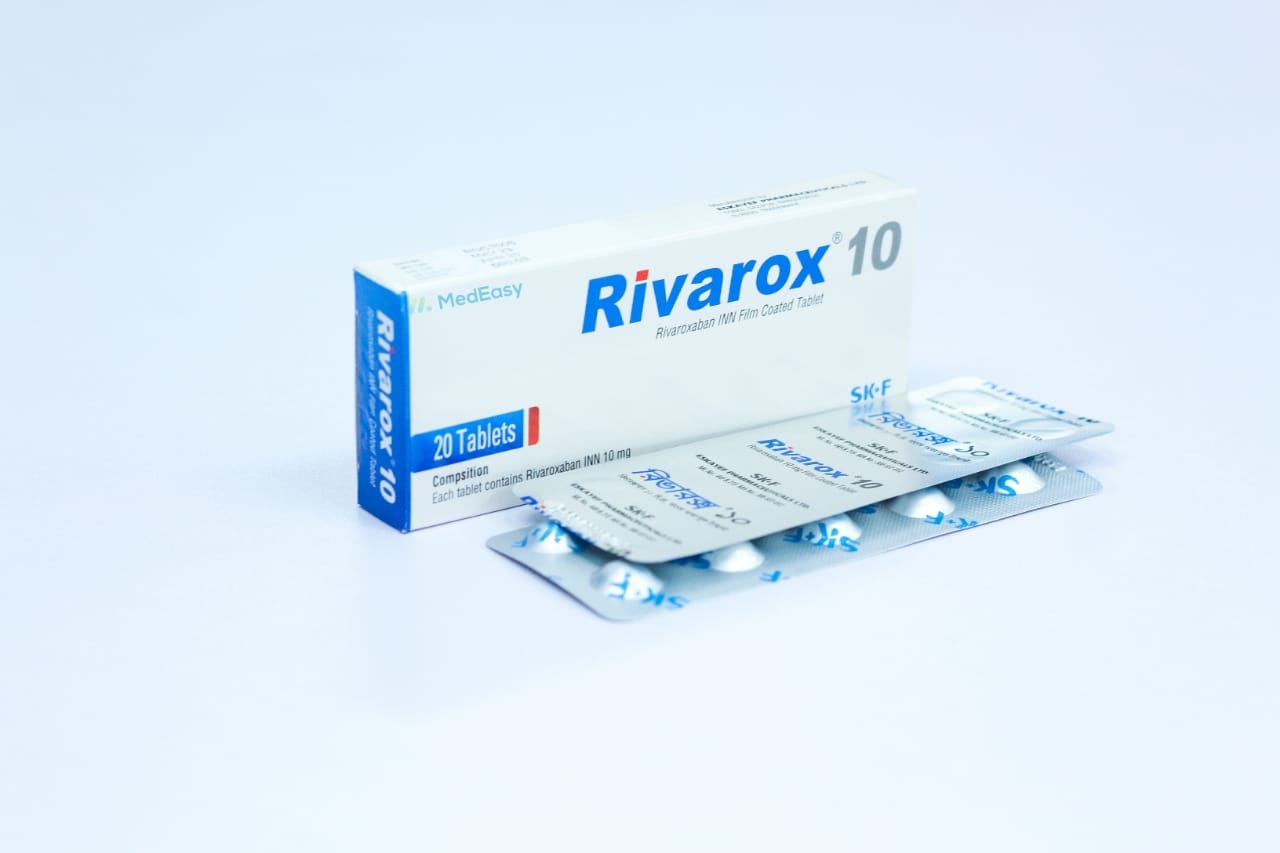
Rivarox10 mg
Eskayef Bangladesh Ltd.
৳225.00
Add to cart
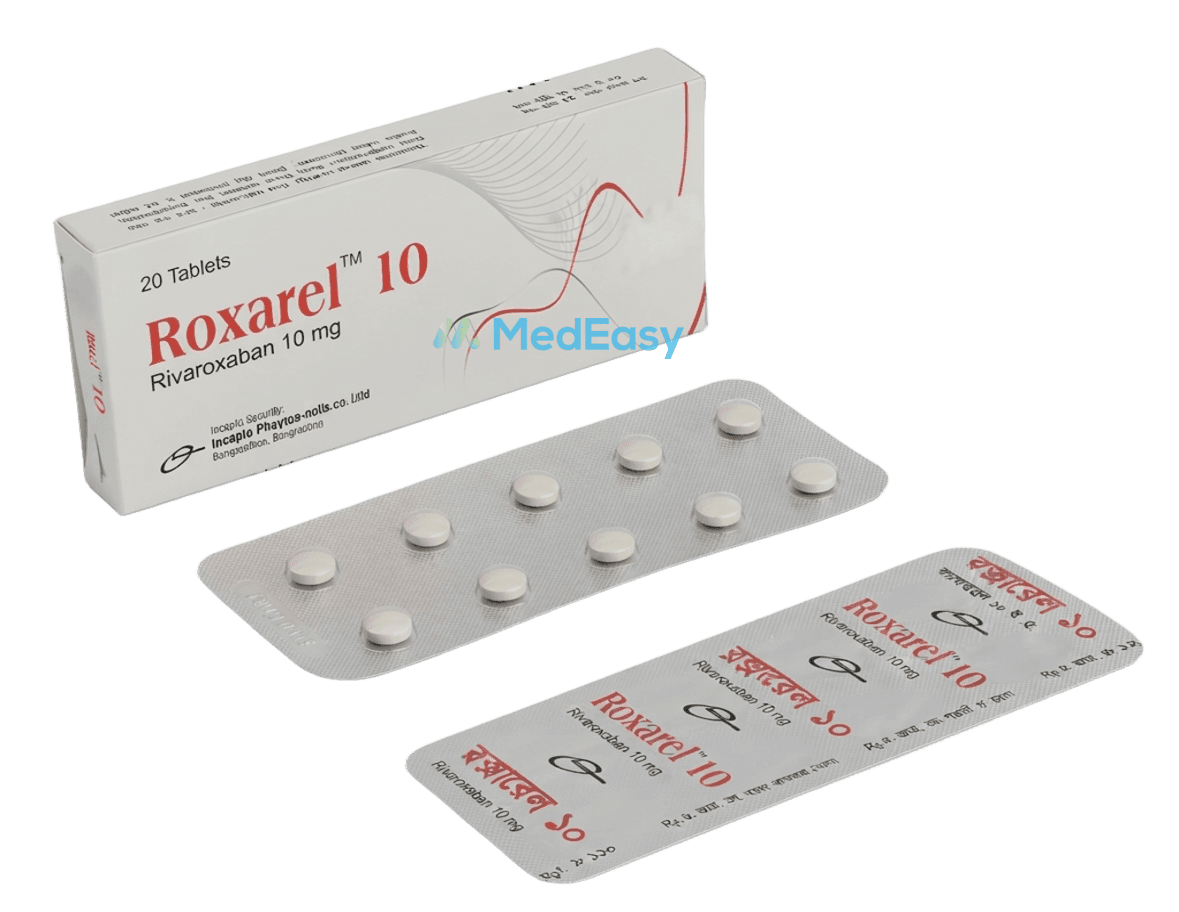
Roxarel 10 mg Tablet is available on MedEasy for ৳22.50 per piece, with home delivery anywhere in Bangladesh. It is manufactured by Incepta Pharmaceuticals Ltd. Its generic name is Rivaroxaban.

Roxarel is a direct-acting oral anticoagulant (a Factor Xa inhibitor) approved for the following indications:
Use of Roxarel for any indication should be guided by a qualified physician based on individual risk assessment.
Each film-coated tablet contains Rivaroxaban INN as the active ingredient, commonly available in strengths of 2.5 mg, 10 mg, 15 mg, and 20 mg. Tablets also contain standard pharmaceutical excipients such as microcrystalline cellulose, croscarmellose sodium, lactose monohydrate, hypromellose, sodium lauryl sulfate, magnesium stearate, and film-coating agents.
Roxarel is an orally administered, direct-acting inhibitor of activated Factor X (Factor Xa), a key enzyme in the blood coagulation cascade. Unlike vitamin K antagonists such as warfarin, Roxarel has a predictable anticoagulant effect, a rapid onset of action, fewer food and drug interactions, and does not require routine coagulation monitoring. It is widely used for the prevention and treatment of thromboembolic disorders, including stroke prevention in atrial fibrillation and treatment/prevention of venous thromboembolism.
Roxarel belongs to the class of Direct Oral Anticoagulants (DOACs), specifically the Factor Xa inhibitors. It is classified therapeutically as an antithrombotic/anticoagulant agent.
Rivaroxaban is a selective, direct inhibitor of Factor Xa. By inhibiting Factor Xa, Rivaroxaban interrupts the intrinsic and extrinsic pathways of the coagulation cascade, preventing thrombin generation and thrombus formation, without directly inhibiting thrombin (Factor IIa) or requiring antithrombin as a cofactor.
| Indication | Recommended Dose |
|---|---|
| Stroke/systemic embolism prevention in non-valvular atrial fibrillation | 20 mg once daily with the evening meal; 15 mg once daily if creatinine clearance (CrCl) is 15-50 mL/min |
| Treatment of DVT/PE | 15 mg twice daily with food for the first 21 days, then 20 mg once daily with food for the remaining treatment duration |
| Reduction in risk of recurrent DVT/PE (after ≥6 months treatment) | 10 mg once daily; 20 mg once daily may be considered in patients at high risk of recurrence |
| DVT prophylaxis after hip replacement surgery | 10 mg once daily for 35 days, starting 6-10 hours after surgery |
| DVT prophylaxis after knee replacement surgery | 10 mg once daily for 12 days, starting 6-10 hours after surgery |
| VTE prophylaxis in acutely ill medical patients | 10 mg once daily for 31-39 days |
| Chronic CAD or PAD (with low-dose aspirin 75-100 mg/day) | 2.5 mg twice daily |
Dose adjustment or avoidance of Roxarel is required depending on indication and creatinine clearance (CrCl); see the table above. Use is generally avoided when CrCl is below 15 mL/min due to lack of clinical data. Renal function should be assessed before starting Roxarel and monitored periodically, especially in elderly or renally impaired patients.
Roxarel is not recommended in patients with moderate (Child-Pugh B) or severe (Child-Pugh C) hepatic impairment, or any hepatic disease associated with coagulopathy, due to increased bleeding risk.
If a dose of Roxarel is missed, it should be taken as soon as possible on the same day; the missed dose should not be doubled the next day. Patients should consult their physician if unsure.
Roxarel tablets should be swallowed whole with water. The 15 mg and 20 mg doses must be taken with food to ensure optimal absorption; the 10 mg and 2.5 mg doses may be taken with or without food.
Patients unable to swallow whole tablets may, for certain strengths, have the tablet crushed and mixed with soft food (such as applesauce) or suspended in water and administered orally or via nasogastric tube, immediately followed by food, only as advised by a physician — never alter the dosage form without medical guidance.
Roxarel should be taken at approximately the same time each day. Do not stop taking Roxarel without first talking to the prescribing physician, as premature discontinuation increases the risk of thrombotic events (see Precautions and Warnings).
Concomitant use of Roxarel with the following agents should be avoided or requires caution, as they significantly affect Roxarel exposure through CYP3A4 and P-glycoprotein (P-gp) pathways, or additively increase bleeding risk:
Always inform the prescribing physician and pharmacist about all medicines, supplements, and herbal products being taken before starting Roxarel.
Renal impairment, concurrent use with other anticoagulants, and other bleeding-risk conditions are important precautions for Rivaroxaban rather than absolute contraindications — see Precautions and Warnings.
Patients taking Roxarel should seek immediate medical attention for signs of serious bleeding (unusual bruising, pink/brown urine, red/black stools, coughing or vomiting blood, severe headache, dizziness, or weakness).
Roxarel is generally not recommended during pregnancy because adequate anticoagulant effect cannot be monitored with standard coagulation tests, and it may carry a risk of bleeding in the mother and fetus/neonate, as well as potential fetal harm based on its mechanism of action. Roxarel should be used during pregnancy only if the potential benefit clearly justifies the potential risk to the mother and fetus, and only under close physician supervision. Women of childbearing potential should discuss pregnancy planning with their physician while on Roxarel.
It is not known whether Roxarel is excreted in human breast milk in clinically significant amounts; limited data suggest some transfer into breast milk. Because of the potential for serious adverse reactions, including bleeding, in a breastfed infant, a decision should be made to discontinue breastfeeding or discontinue Roxarel, taking into account the importance of the drug to the mother — consult a physician before use while breastfeeding.
Roxarel, like all anticoagulants, increases the risk of bleeding, which can be serious and, rarely, fatal. Promptly evaluate any signs or symptoms of blood loss. There is no routinely available reversal agent in many settings; management of serious bleeding may require specialist consultation and supportive measures.
Roxarel should generally be discontinued at least 24 hours before elective surgery or invasive procedures with a moderate-to-high bleeding risk, and restarted only once adequate hemostasis has been achieved, as determined by the treating physician. Patients must inform all healthcare providers, including surgeons and dentists, that they are taking Roxarel before any procedure.
Unlike warfarin, Roxarel does not require routine coagulation monitoring (e.g., INR) under normal circumstances, but renal and hepatic function should be assessed before starting therapy and periodically thereafter.
Roxarel is not recommended in patients with triple-positive antiphospholipid syndrome due to a possible increased risk of recurrent thrombotic events.
For contraindications, see the Contraindications section; for pregnancy/lactation guidance, see Pregnancy and Lactation.
Overdose of Roxarel may result in excessive bleeding due to its anticoagulant effect. Signs of overdose may include unusual bruising, prolonged bleeding from cuts, blood in urine or stool, or symptoms of internal bleeding such as severe headache, dizziness, or weakness. There is no specific reversal agent widely available in routine clinical practice for most bleeding events, and due to high protein binding, Roxarel is not significantly removed by dialysis. In case of suspected overdose or serious bleeding with Roxarel, seek immediate medical attention or contact a hospital emergency department/poison control center without delay. Do not attempt to manage a suspected overdose at home.
Store at room temperature (below 30°C), away from light and moisture. Keep out of reach of children.
Dose adjustment of Roxarel is required in several indications based on creatinine clearance (see Dosage and Administration). Use is generally avoided in severe renal impairment (CrCl <15 mL/min) due to insufficient clinical data. Renal function should be monitored periodically, especially in elderly patients or those with declining renal function.
Roxarel is not recommended in moderate-to-severe hepatic impairment (Child-Pugh B or C) or in any hepatic disease associated with coagulopathy.
No dose adjustment of Roxarel is required based on age alone, but elderly patients may have reduced renal function and should be monitored closely for bleeding.
Extremes of body weight (very low or very high) may affect drug exposure; use Roxarel with caution and clinical monitoring in such patients.
See also Pediatric Uses and Pregnancy and Lactation sections.
Duration of Roxarel therapy is individualized based on indication: DVT/PE treatment typically requires at least 3 months (21 days at the higher treatment dose followed by the maintenance dose), with longer or extended therapy for recurrence prevention as determined by the physician. Stroke prevention in atrial fibrillation is typically long-term/indefinite, guided by ongoing risk assessment. Post-surgical VTE prophylaxis is short-term (12-35 days depending on the procedure). The treating physician determines the appropriate duration of Roxarel based on the underlying condition, bleeding risk, and response to therapy; Roxarel should not be stopped early without medical advice (see Precautions and Warnings).
Most Roxarel tablet formulations do not require reconstitution. However, the pediatric oral suspension formulation of Roxarel (granules for oral suspension) must be reconstituted with water by a pharmacist or caregiver according to the manufacturer's instructions before use, producing a 1 mg/mL suspension. Once reconstituted, the suspension should be stored at room temperature, used within the manufacturer-specified period (typically up to 60 days), and shaken well before each dose. This formulation may not be widely available in all markets; consult your pharmacist for local availability.
Rivaroxaban belongs to the Direct Oral Anticoagulants (DOACs) / Factor Xa Inhibitors drug class, also referred to as non-vitamin K antagonist oral anticoagulants (NOACs).
Rivaroxaban works by selectively and directly inhibiting Factor Xa, a central enzyme in both the intrinsic and extrinsic coagulation pathways. By blocking Factor Xa, Rivaroxaban prevents the conversion of prothrombin to thrombin, thereby reducing thrombin generation and inhibiting the formation of fibrin clots, without requiring antithrombin as a cofactor.
Roxarel is approved for use in pediatric patients for specific indications, with dosing based on body weight and formulation (oral suspension or tablets):
Safety and efficacy of Roxarel have not been established for other pediatric indications or in preterm neonates. Pediatric dosing of Roxarel must be individualized and supervised by a specialist physician, with careful attention to renal function and body weight.
Q: What is Roxarel 10 mg Tablet used for?
A: Roxarel 10 mg Tablet is an anticoagulant (blood thinner) used to prevent stroke in people with atrial fibrillation, and to treat and prevent blood clots such as deep vein thrombosis (DVT) and pulmonary embolism (PE). It is also used after hip or knee replacement surgery to prevent blood clots, and in combination with low-dose aspirin to reduce the risk of heart attack, stroke, and cardiovascular death in people with chronic coronary or peripheral artery disease.
Q: Can I stop taking Roxarel 10 mg Tablet if I feel fine?
A: No. Do not stop taking Roxarel 10 mg Tablet without first talking to your physician. Stopping Roxarel 10 mg Tablet suddenly, especially in atrial fibrillation, significantly increases the risk of stroke and other blood clot-related events. If your doctor needs you to stop Roxarel 10 mg Tablet for a reason other than bleeding, they may switch you to another anticoagulant to keep you protected during the transition.
Q: Do I need regular blood tests while taking Roxarel 10 mg Tablet?
A: Unlike warfarin, Roxarel 10 mg Tablet does not require routine coagulation (INR) monitoring. However, your physician may periodically check your kidney and liver function, and complete blood count, to ensure the medicine remains safe for you.
Q: Is it safe to take Roxarel 10 mg Tablet if I need surgery or a dental procedure?
A: You must inform every healthcare provider, including your surgeon, dentist, or anesthesiologist, that you are taking Roxarel 10 mg Tablet before any procedure. Roxarel 10 mg Tablet is usually stopped at least 24 hours before elective surgery to reduce bleeding risk, and particular caution is needed around spinal or epidural anesthesia because of a risk of spinal or epidural hematoma, which can rarely cause long-term or permanent paralysis. Only restart Roxarel 10 mg Tablet after surgery when your doctor confirms it is safe to do so.
Q: Can I take Roxarel 10 mg Tablet during pregnancy or while breastfeeding?
A: Roxarel 10 mg Tablet is generally not recommended during pregnancy because its safety has not been established and it may increase bleeding risk for both mother and baby; it should be used only if your physician determines the benefit clearly outweighs the risk. Whether Roxarel 10 mg Tablet passes into breast milk in significant amounts is not fully known, so breastfeeding mothers should consult their physician, who may recommend avoiding breastfeeding or avoiding Roxarel 10 mg Tablet while nursing.
Q: What should I do if I miss a dose or think I've taken too much Roxarel 10 mg Tablet?
A: If you miss a dose of Roxarel 10 mg Tablet, take it as soon as you remember on the same day; do not double the dose the next day. If you suspect you have taken too much Roxarel 10 mg Tablet or notice signs of serious bleeding (such as blood in urine or stool, black stools, severe headache, or unusual bruising), seek immediate medical attention or contact emergency services right away.
Disclaimer
The information provided is accurate to the best of our knowledge, but it does not replace professional medical advice. We cannot guarantee its completeness or accuracy, and the absence of specific information about a drug should not be taken as an endorsement. We are not responsible for any consequences arising from this information, so please consult a healthcare professional for any concerns or questions.