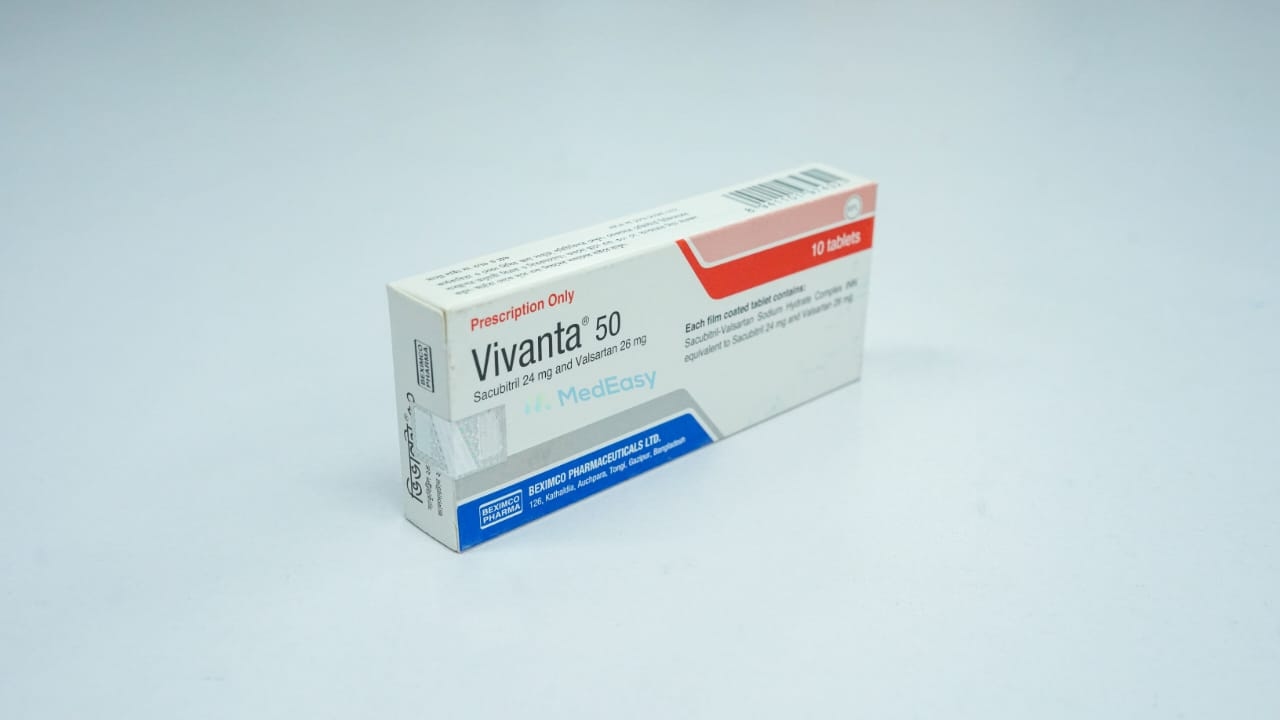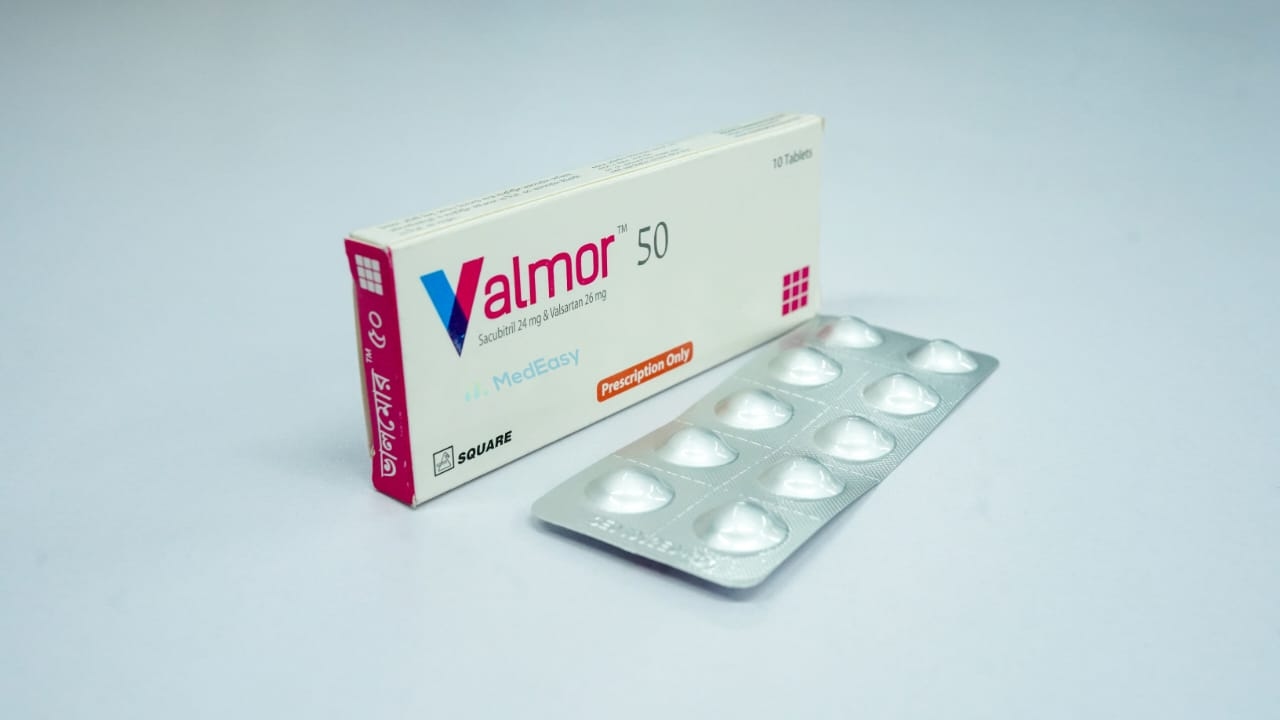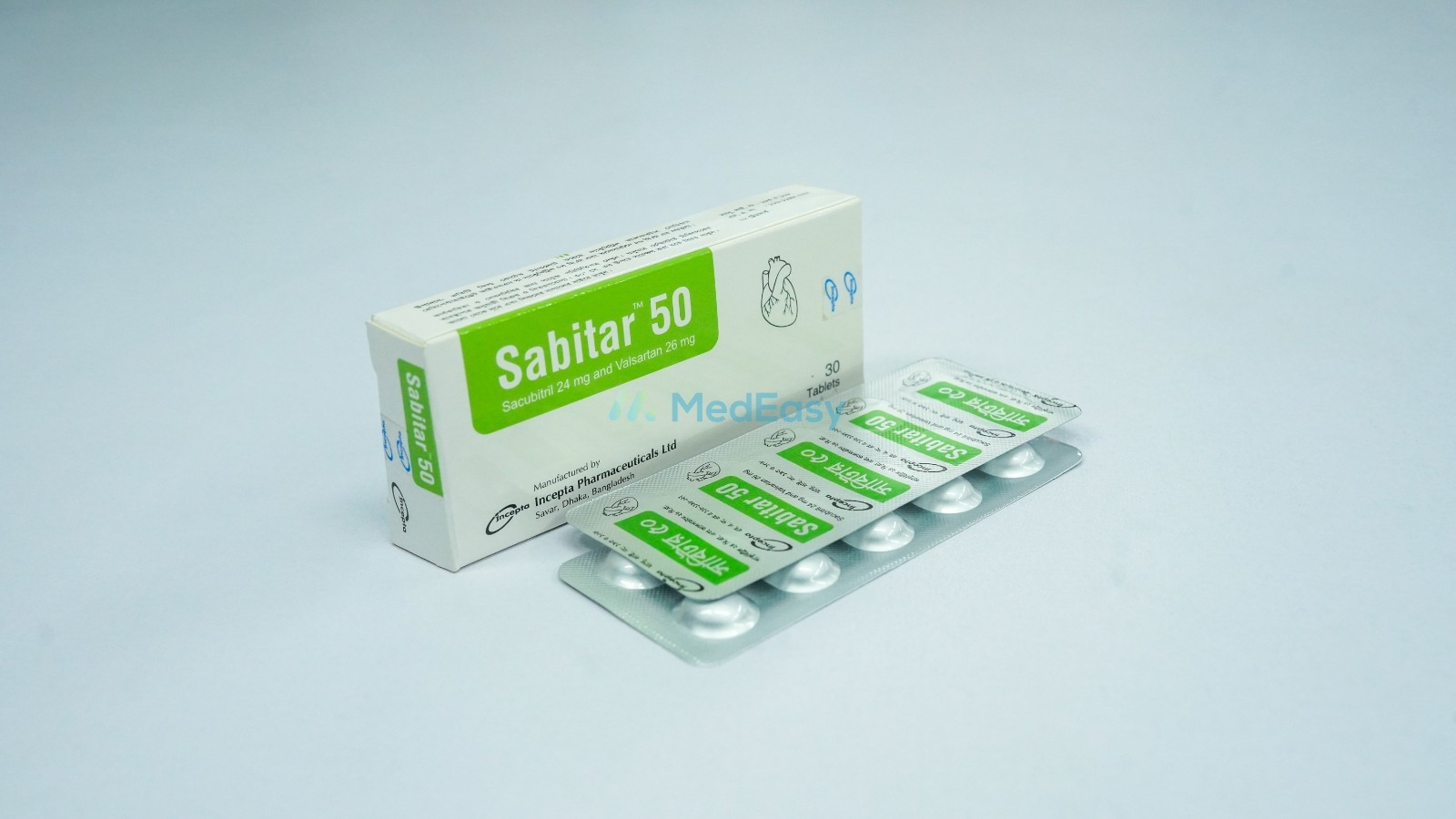
10% Off
Sabitar50 mg
Incepta Pharmaceuticals Ltd.
৳225.00
Add to cart
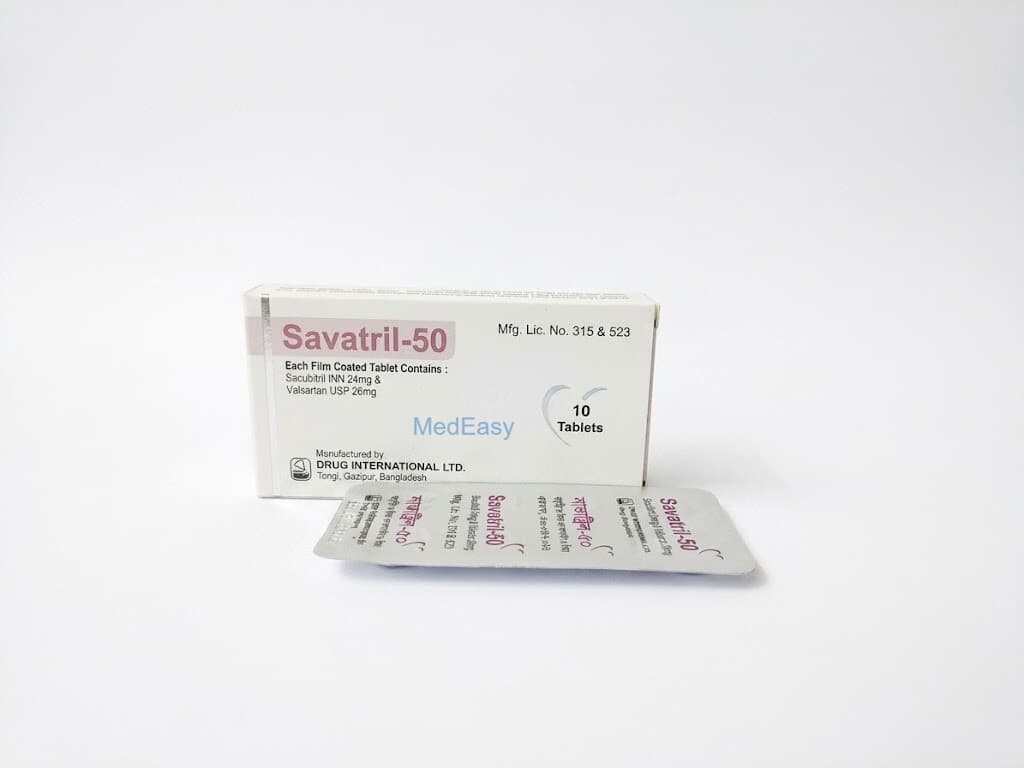
Savatril 50 mg Tablet is available on MedEasy for ৳257.60 per 10's pack, with home delivery anywhere in Bangladesh. It is manufactured by Drug International Ltd. Its generic name is Sacubitril + Valsartan.

Savatril is a fixed-dose combination of a neprilysin inhibitor (sacubitril) and an angiotensin II receptor blocker (valsartan), classified as an angiotensin receptor-neprilysin inhibitor (ARNI).
Savatril is not indicated in patients who are unable to tolerate an ACE inhibitor or ARB due to a history of angioedema, or in patients with severe hepatic impairment.
Sacubitril + Valsartan is available as film-coated tablets containing sacubitril and valsartan in fixed ratios (approximately 1:1 by molar equivalence), typically supplied as sacubitril/valsartan 24/26 mg, 49/51 mg, and 97/103 mg tablets. Pediatric oral pellet (sprinkle) formulations of lower strengths are also available in some markets for weight-based dosing in children.
Each tablet strength is designed for twice-daily oral dosing, with the two active moieties (sacubitril, a prodrug that is converted to the active neprilysin inhibitor sacubitrilat, and valsartan, an angiotensin II receptor blocker) acting complementarily on the neurohormonal pathways involved in heart failure.
Savatril is a first-in-class angiotensin receptor-neprilysin inhibitor (ARNI) used in the management of chronic heart failure. It combines two mechanisms of action in a single molecule complex: inhibition of neprilysin, an enzyme that degrades natriuretic peptides, and blockade of the angiotensin II type 1 (AT1) receptor.
By simultaneously enhancing the beneficial natriuretic peptide system and suppressing the harmful renin-angiotensin-aldosterone system (RAAS), Savatril produces greater reductions in the risk of cardiovascular death and heart failure hospitalization compared with ACE inhibitor therapy alone, as demonstrated in large randomized controlled trials.
Savatril is taken orally, twice daily, and dosing is individualized based on prior ACE inhibitor/ARB use, blood pressure, and renal/hepatic function.
Savatril belongs to the Angiotensin Receptor-Neprilysin Inhibitor (ARNI) class, a combination of a neprilysin inhibitor (sacubitril) and an angiotensin II receptor blocker (valsartan). It is used primarily in cardiology for the management of heart failure with reduced ejection fraction.
Sacubitril + Valsartan works through two complementary mechanisms:
Combining neprilysin inhibition with an ARB (rather than an ACE inhibitor) avoids the excessive bradykinin-mediated angioedema risk that would occur if neprilysin inhibition were combined with an ACE inhibitor. Peak plasma concentrations of sacubitril and valsartan occur within 0.5-1 hour and 1.5-4 hours respectively; both components are highly protein bound and have half-lives of approximately 1.4 hours (sacubitril) and 9.9 hours (valsartan), supporting twice-daily dosing.
| Indication / Population | Dosing |
|---|---|
| Adults with heart failure - ACEI/ARB naive or on a low dose | Starting dose 24/26 mg (sacubitril/valsartan) orally twice daily; double the dose every 2-4 weeks as tolerated to the target maintenance dose of 97/103 mg twice daily. |
| Adults with heart failure - already on an established ACE inhibitor or ARB dose | Starting dose 49/51 mg orally twice daily (after the required washout period from an ACE inhibitor, see below); titrate every 2-4 weeks to the target of 97/103 mg twice daily as tolerated. |
| Switching from an ACE inhibitor | Discontinue the ACE inhibitor and wait at least 36 hours before starting Savatril, due to the risk of angioedema. |
| Severe renal impairment (eGFR <30 mL/min/1.73m²) | Starting dose 24/26 mg twice daily; titrate cautiously. |
| Moderate hepatic impairment (Child-Pugh B) | Starting dose 24/26 mg twice daily; titrate cautiously. |
| Pediatric patients (1 year and older) with symptomatic heart failure | Weight-based, individualized starting dose using tablets or oral pellet (sprinkle) formulation, with stepwise titration approximately every 2 weeks as tolerated, up to the maximum recommended dose for body weight, under specialist supervision. |
Savatril may be taken with or without food. Tablets should be swallowed whole with water.
Savatril is administered orally, twice daily, approximately 12 hours apart, with or without food. Tablets should be swallowed whole; the pediatric oral pellet (sprinkle) formulation may be mixed with a small amount of soft food or liquid immediately before administration, per product-specific instructions. Do not administer Savatril together with an ACE inhibitor, and observe the required 36-hour washout period when switching to or from an ACE inhibitor.
The following are well-documented, clinically significant interactions with Savatril:
The most commonly reported adverse reactions with Savatril (observed in large controlled trials) include:
Serious but less common: angioedema (potentially life-threatening; discontinue immediately if symptoms of swelling of the face, lips, tongue, glottis, larynx, or airway obstruction occur - see Precautions and Warnings), acute kidney injury, and severe hypotension leading to syncope.
Pregnancy: Savatril is contraindicated in pregnancy. Drugs that act directly on the renin-angiotensin system, including the valsartan component of Savatril, can cause fetal and neonatal injury or death when used during the second and third trimesters, including oligohydramnios, fetal renal impairment, skull hypoplasia, and fetal/neonatal death. When pregnancy is detected, Savatril should be discontinued as soon as possible and the patient switched to an alternative therapy under physician guidance. Use only if clearly needed and no safer alternative exists, and only under close physician supervision; women of childbearing potential should be counseled on the risks and use of effective contraception.
Lactation: There is insufficient data on the presence of Savatril in human milk; breastfeeding is generally not recommended during treatment due to the potential for serious adverse effects in a nursing infant. A physician should be consulted to weigh the benefits of breastfeeding against the mother's need for Savatril therapy.
The following precautions apply to the use of Savatril:
Limited data are available on overdosage with Savatril. Based on its pharmacology, the most likely effect of overdose is symptomatic hypotension; other possible effects include dizziness, bradycardia or tachycardia, renal impairment, and hyperkalemia. In case of suspected overdose, seek immediate medical attention or contact emergency services / a poison control center. Treatment is supportive, typically involving intravenous fluids to correct hypotension and monitoring of vital signs, renal function, and electrolytes. Due to high protein binding, Savatril is not expected to be effectively removed by hemodialysis. Do not attempt to manage an overdose at home without medical guidance.
Store at room temperature (below 30°C), protected from light and moisture. Keep out of reach of children.
Savatril is generally intended for long-term, often lifelong, use in patients with chronic heart failure, as part of ongoing guideline-directed medical therapy. Duration of treatment should be determined by the treating physician based on clinical response, tolerability, and overall heart failure management goals. Savatril should not be stopped abruptly without medical advice, as this may worsen heart failure symptoms; if discontinuation is needed (e.g., due to intolerable side effects or pregnancy), this should be done under physician guidance with appropriate alternative therapy arranged.
Angiotensin Receptor-Neprilysin Inhibitor (ARNI); Neprilysin Inhibitor + Angiotensin II Receptor Blocker (ARB) combination
Sacubitril + Valsartan acts through dual inhibition of two counter-regulatory neurohormonal systems involved in heart failure. The sacubitril component inhibits neprilysin, preventing the breakdown of natriuretic peptides and other vasoactive substances, which enhances natriuresis, diuresis, vasodilation, and reduces cardiac remodeling. The valsartan component blocks the AT1 receptor, inhibiting the vasoconstrictive and sodium-retaining actions of angiotensin II. Together, these actions reduce cardiac preload and afterload, and counteract the maladaptive neurohormonal activation that drives heart failure progression, resulting in reduced risk of cardiovascular death and heart failure hospitalization.
Savatril is approved for the treatment of symptomatic heart failure due to systemic left ventricular systolic dysfunction in pediatric patients aged 1 year and older. Dosing is individualized based on body weight, using either tablet or oral pellet (sprinkle) formulations, with stepwise up-titration approximately every 2 weeks as tolerated, under the supervision of a pediatric cardiologist or heart failure specialist. Safety and efficacy have not been established in children younger than 1 year of age. As with adults, Savatril must not be combined with an ACE inhibitor, and the 36-hour washout rule applies when switching between the two.
Q: What is Savatril 50 mg Tablet used for?
A: Savatril 50 mg Tablet is used to treat chronic heart failure in adults, especially those with reduced ejection fraction, to lower the risk of cardiovascular death and hospitalization for heart failure. It is also approved for symptomatic heart failure in children aged 1 year and older.
Q: Can I take Savatril 50 mg Tablet together with an ACE inhibitor?
A: No. Savatril 50 mg Tablet must never be taken together with an ACE inhibitor because this combination significantly increases the risk of life-threatening angioedema (severe swelling that can block the airway). If switching from an ACE inhibitor to Savatril 50 mg Tablet, a waiting period of at least 36 hours is required between stopping the ACE inhibitor and starting Savatril 50 mg Tablet, and vice versa.
Q: Is Savatril 50 mg Tablet safe during pregnancy?
A: No. Savatril 50 mg Tablet is contraindicated during pregnancy because it can cause serious harm or death to the developing fetus, particularly in the second and third trimesters. If pregnancy occurs or is suspected while taking Savatril 50 mg Tablet, stop the medicine and contact your physician immediately to switch to a safer alternative.
Q: What are the most common side effects of Savatril 50 mg Tablet?
A: The most common side effects include low blood pressure (hypotension), high potassium levels (hyperkalemia), cough, dizziness, and changes in kidney function. Most of these are more likely when starting or increasing the dose and should be reported to your physician, who may adjust your dose.
Q: What should I do if I notice swelling of my face, lips, tongue, or throat while taking Savatril 50 mg Tablet?
A: Swelling of the face, lips, tongue, or throat (angioedema) can be a medical emergency. Stop Savatril 50 mg Tablet immediately and seek emergency medical care, as this reaction can be life-threatening if it affects the airway. Do not take Savatril 50 mg Tablet again after such a reaction.
Q: Can I take Savatril 50 mg Tablet with potassium supplements or salt substitutes?
A: Caution is needed. Savatril 50 mg Tablet can raise blood potassium levels, and combining it with potassium supplements, potassium-sparing diuretics, or potassium-containing salt substitutes can further increase this risk. Your physician should monitor your blood potassium levels periodically and advise you on safe use of these products.
Disclaimer
The information provided is accurate to the best of our knowledge, but it does not replace professional medical advice. We cannot guarantee its completeness or accuracy, and the absence of specific information about a drug should not be taken as an endorsement. We are not responsible for any consequences arising from this information, so please consult a healthcare professional for any concerns or questions.