10% Off
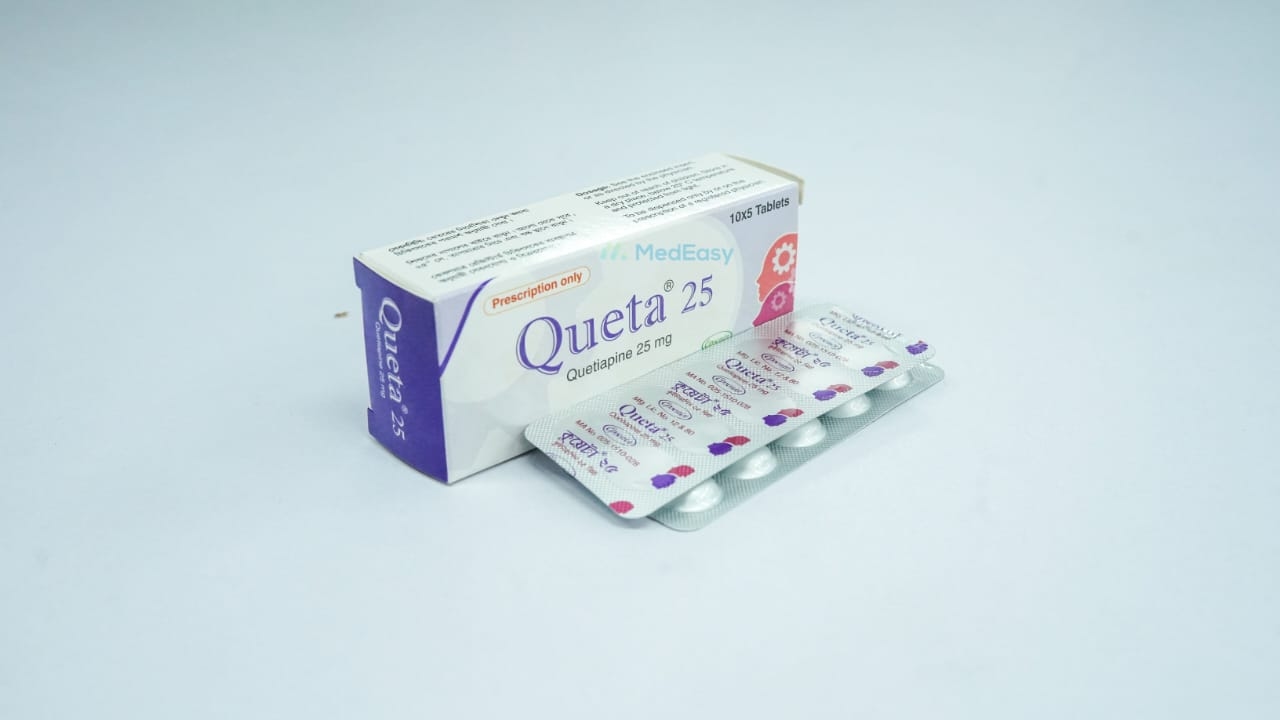
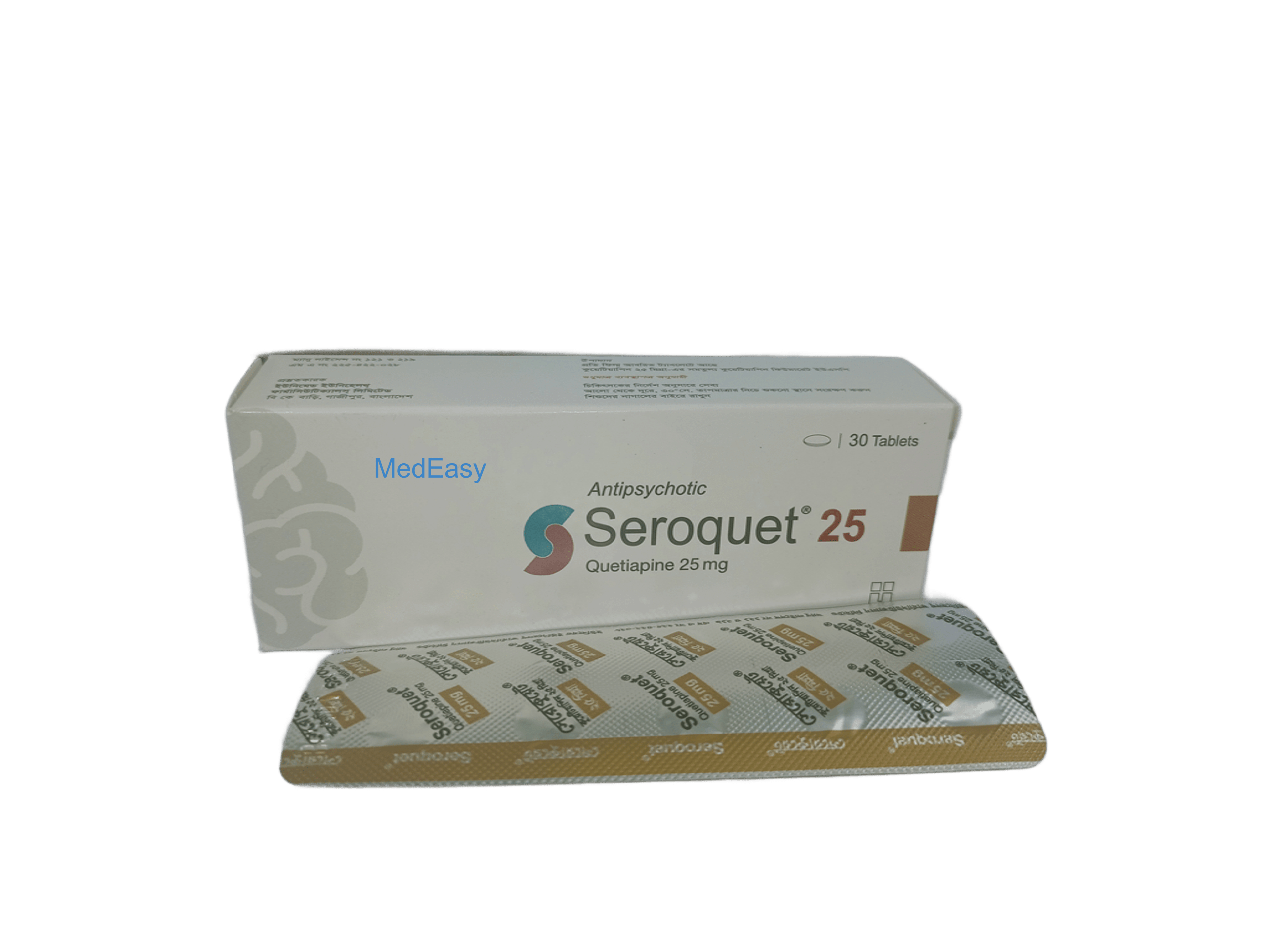
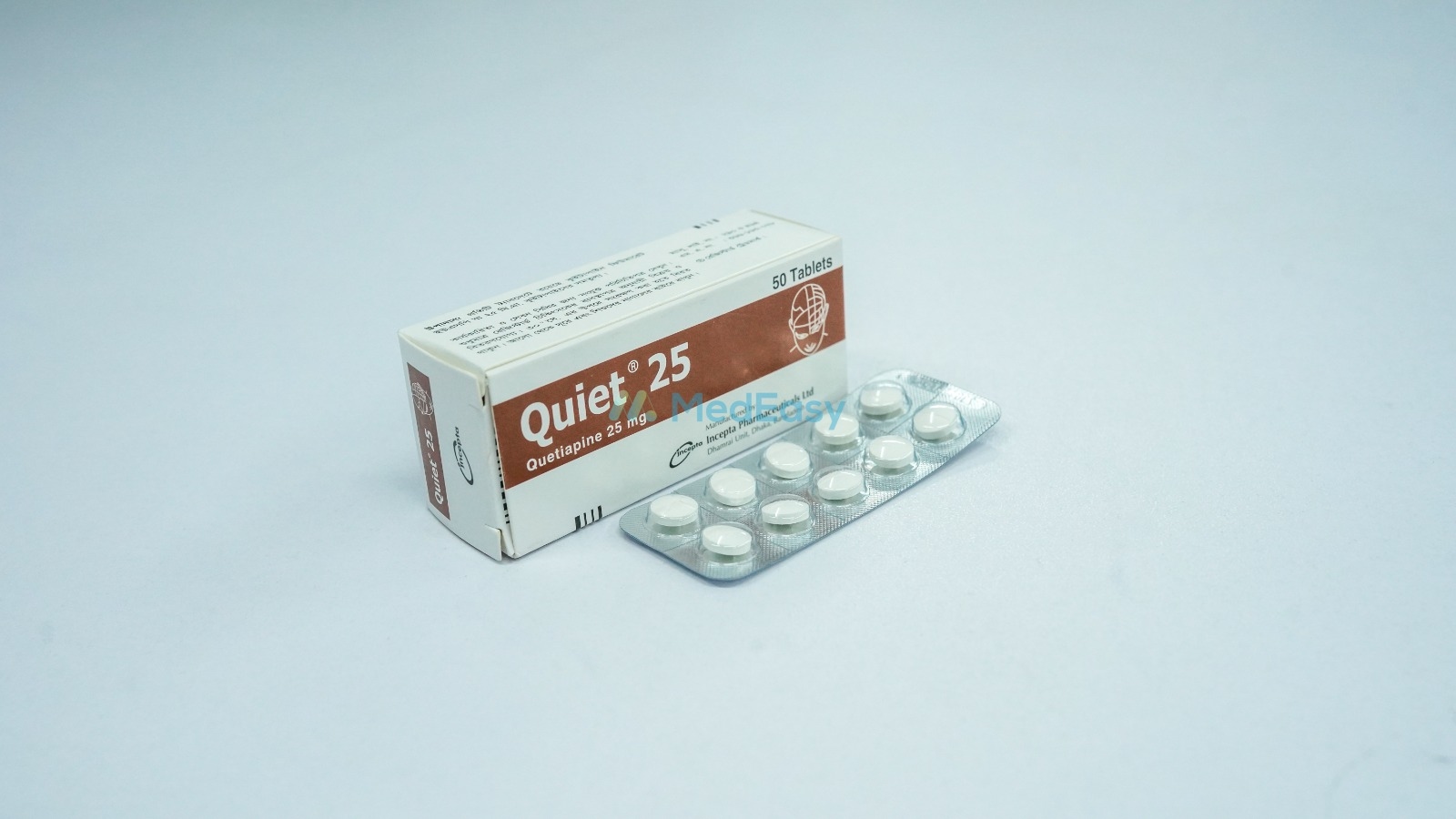
Quiet25 mg
Incepta Pharmaceuticals Ltd.
৳27.00
Add to cart

Seropin 25 mg Tablet is available on MedEasy for ৳2.70 per piece, with home delivery anywhere in Bangladesh. It is manufactured by Eskayef Bangladesh Ltd. Its generic name is Quetiapine Fumarate.

Seropin is not approved for the treatment of dementia-related psychosis in elderly patients (see Boxed Warning under Precautions and Warnings).
Low-dose Seropin is sometimes used off-label (by physician judgment) for insomnia, generalized anxiety disorder, or agitation in certain settings; such use is not FDA-approved and should only be undertaken under close medical supervision.
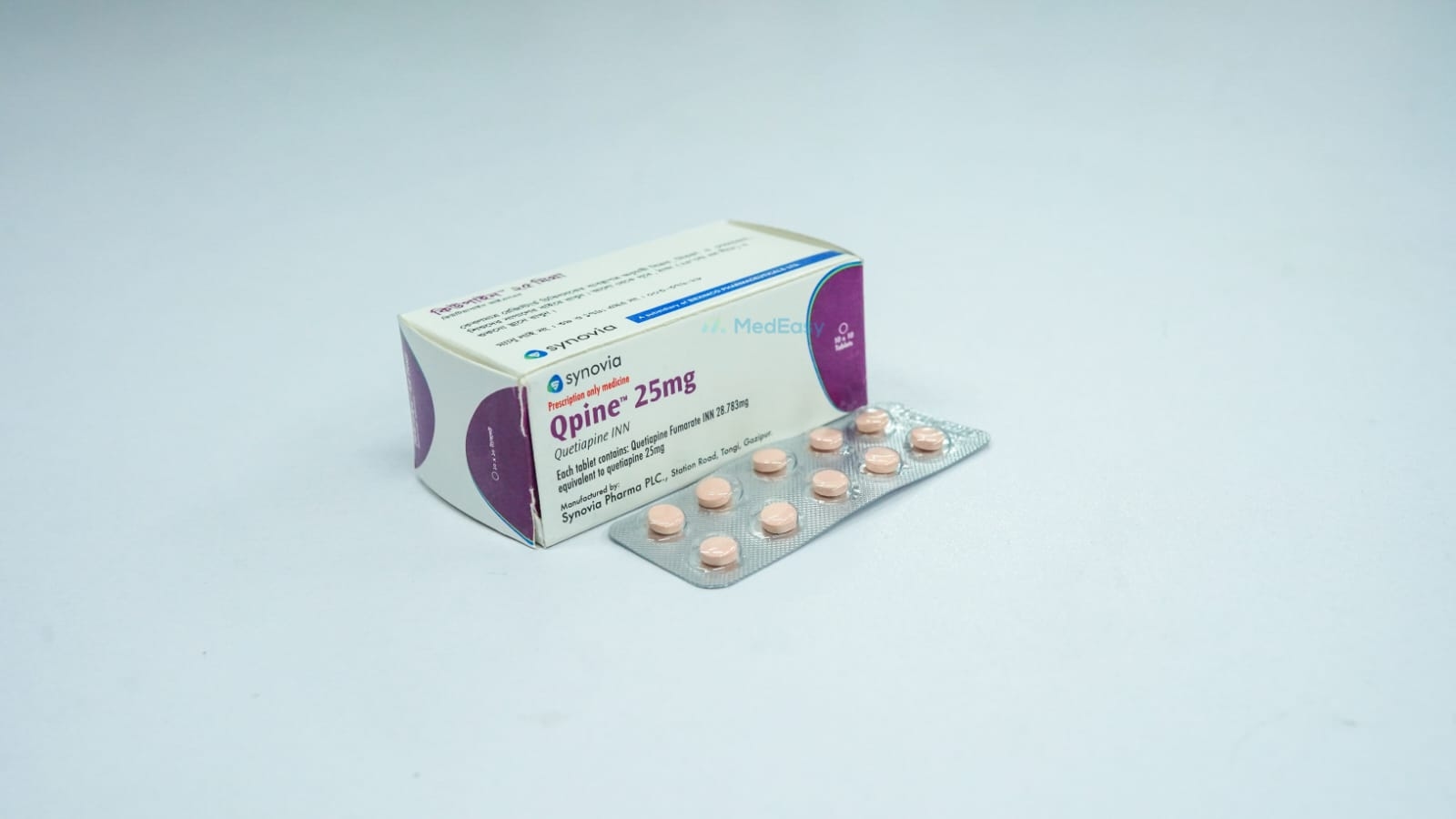
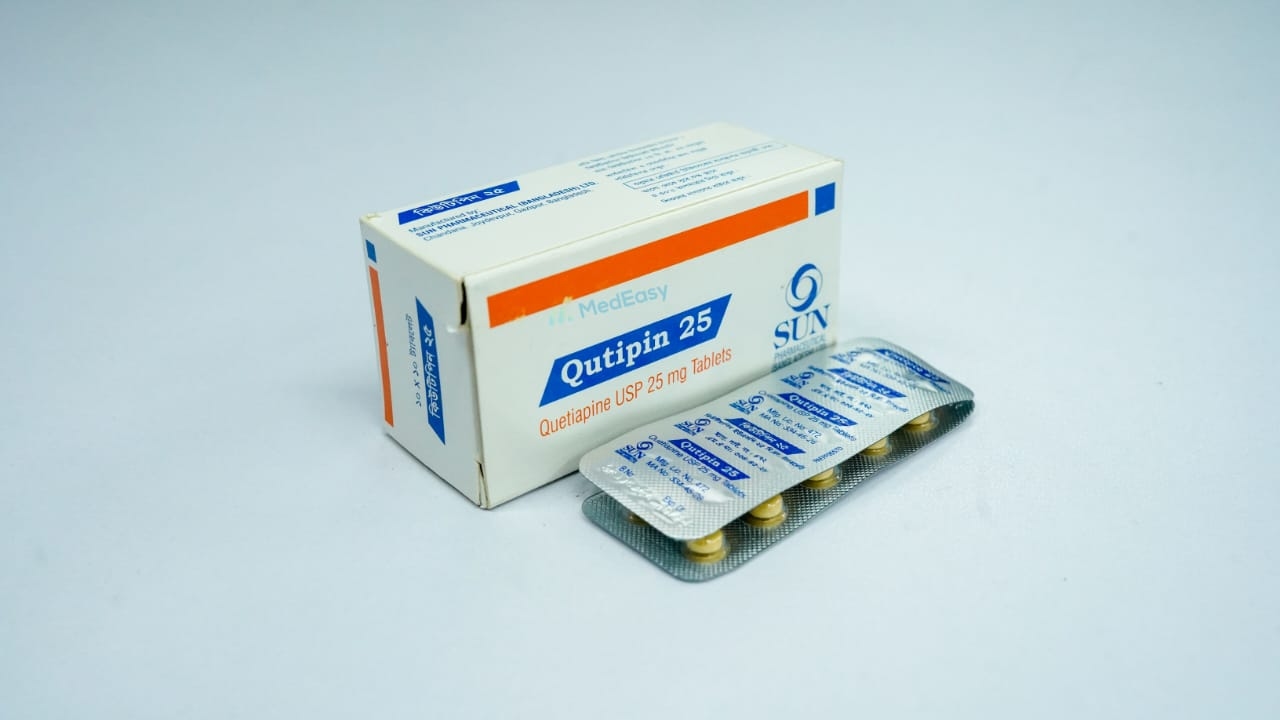
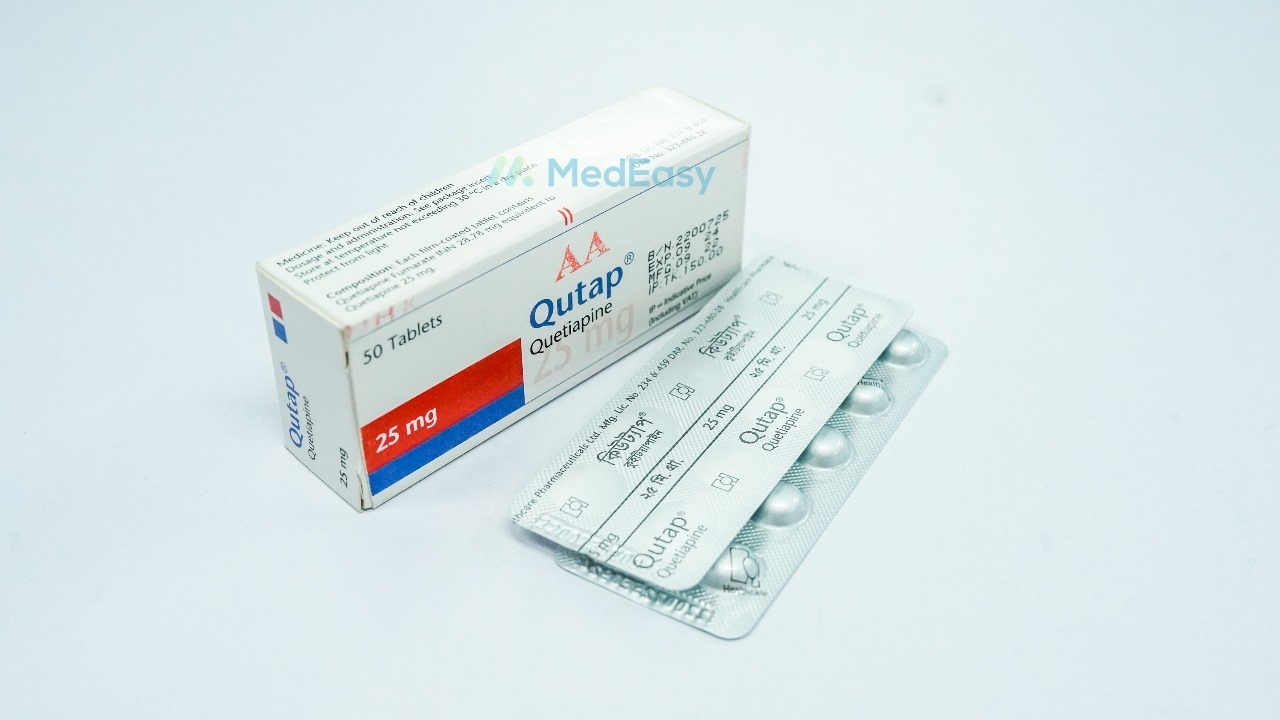
Each tablet contains Quetiapine Fumarate equivalent to a stated quantity of quetiapine base (commonly available as immediate-release tablets of 25 mg, 100 mg, 200 mg, 300 mg and extended-release tablets of 50 mg, 150 mg, 200 mg, 300 mg, 400 mg). Quetiapine Fumarate is the fumarate salt of quetiapine, a dibenzothiazepine-derivative atypical (second-generation) antipsychotic. Excipients vary by manufacturer and formulation (immediate-release vs. extended-release).
Seropin is an atypical (second-generation) antipsychotic medicine belonging to the dibenzothiazepineclass. It is used to treat certain serious mental health conditions, including schizophrenia and the manic anddepressive episodes of bipolar disorder, and, in its extended-release form, as an add-on treatment for majordepressive disorder that has not responded adequately to an antidepressant alone.
Seropin is available as immediate-release tablets (usually taken twice daily) and extended-release tablets(usually taken once daily, typically in the evening). It works by modulating several brain neurotransmitterreceptors rather than a single pathway, which helps reduce symptoms such as hallucinations, delusions, disorganizedthinking, mood instability, mania, and depression associated with these conditions.
Atypical (second-generation/novel) Antipsychotic Agent — Dibenzothiazepine derivative.
Quetiapine Fumarate is metabolized to an active metabolite, norquetiapine, and both compounds are believed tocontribute to its therapeutic effect. Its precise mechanism of action in schizophrenia and bipolar disorder is notfully understood, but is thought to be mediated through a combination of central dopamine type 2 (D2) andserotonin type 2 (5-HT2A) receptor antagonism.
Quetiapine Fumarate and norquetiapine also have affinity for histamine H1 receptors (contributing to sedation), alpha-1 andalpha-2 adrenergic receptors (contributing to orthostatic hypotension), and, to a lesser extent, additionalserotonergic (5-HT1A) and dopaminergic (D1) receptors. It has minimal affinity for muscarinic cholinergic orbenzodiazepine receptors.
| Indication | Starting Dose | Usual Target / Range |
|---|---|---|
| Schizophrenia | 25 mg twice daily (IR) | Titrate over ~4 days to 300–400 mg/day in divided doses (IR) or once daily (XR); usual range 150–750 mg/day |
| Bipolar Mania (mono or adjunct) | 100 mg on Day 1 | Titrate to 400 mg/day by Day 4; usual range 400–800 mg/day |
| Bipolar Depression | 50 mg at bedtime (Day 1) | Titrate to 300 mg/day at bedtime by Day 4 |
| Bipolar I Maintenance (adjunct) | Continue dose that controlled acute episode | Individualized, typically 400–800 mg/day |
| MDD, Adjunctive (XR only) | 50 mg once daily in the evening | Usual range 150–300 mg/day |
| Indication | Age | Dosing |
|---|---|---|
| Schizophrenia | 13–17 years | Start 25 mg twice daily; titrate to a target of 400–800 mg/day |
| Bipolar Mania | 10–17 years | Start 25 mg twice daily; titrate to a target of 400–600 mg/day |
Safety and efficacy of Seropin have not been established in children below 10 years of age for any indication.
Immediate-release tablets may be taken with or without food, usually in divided doses. Extended-release tabletsshould be taken once daily, preferably in the evening, without food or with a light meal (a high-fat mealsignificantly increases absorption and should be avoided at the same time each day for consistency), and must beswallowed whole — not split, crushed, or chewed. Do not stop Seropin abruptly; dose should betapered gradually under medical supervision when discontinuing.
Immediate-release tablets: with or without food, in divided doses. Extended-release tablets: once daily in the evening, on an empty stomach or with a light meal, swallowed whole without crushing, splitting, or chewing.
Quetiapine Fumarate is contraindicated in patients with known hypersensitivity to quetiapine, quetiapine fumarate, or any component of the formulation.
See Precautions and Warnings for full detail on the boxed warnings and major risks associated with Seropin.
Pregnancy: Seropin should be used during pregnancy only if the potential benefit to the motherclearly justifies the potential risk to the fetus. Neonates exposed to antipsychotic drugs, including Seropin, duringthe third trimester are at risk of extrapyramidal and/or withdrawal symptoms after delivery (agitation, abnormalmuscle tone, tremor, somnolence, respiratory distress, feeding difficulty); monitor newborns accordingly. Anydecision to use Seropin in pregnancy should be made in consultation with a physician, weighing the risks of untreatedpsychiatric illness against potential fetal risk.
Lactation: Seropin and its metabolites are excreted into human breast milk. Because of thepotential for serious adverse reactions in a nursing infant, a decision should be made whether to discontinuenursing or discontinue Seropin, taking into account the importance of the drug to the mother; this should be decidedin consultation with a physician.
Overdose of Seropin may cause exaggeration of its known pharmacological effects, including drowsiness, sedation, tachycardia, hypotension, and impaired airway/consciousness (in severe cases). Overdose is a medical emergency: seek immediate medical attention or contact emergency services/a poison control center. Treatment is supportive — establishing and maintaining a clear airway, ensuring adequate oxygenation and ventilation, and cardiovascular monitoring; there is no specific antidote. Do not attempt to manage a suspected Seropin overdose at home.
Store at room temperature (below 30°C), away from light and moisture. Keep out of reach of children.
Seropin is approved for schizophrenia in adolescents (13–17 years) and for bipolar mania in children andadolescents (10–17 years). Safety and efficacy have not been established below these age ranges or for otherindications in pediatric patients. Pediatric patients may be more susceptible to somnolence, extrapyramidalsymptoms, elevated prolactin, and weight/metabolic changes; monitor growth, weight, and metabolic parametersclosely.
Elderly patients, particularly those with dementia-related psychosis, are at increased risk of death withantipsychotic use (see Boxed Warning); Seropin is not approved for this population/indication. Elderly patients alsohave increased susceptibility to orthostatic hypotension and sedation; use a lower starting dose and slowertitration.
Clearance of Seropin is reduced in hepatic impairment; use a lower starting dose and slower titration, with closeclinical monitoring.
No specific dose adjustment is generally required, but caution is advised as clinical experience is limited.
Duration of treatment with Seropin is individualized based on the indication, clinical response, and physician judgment. Acute episodes (mania, depression, psychotic exacerbation) are typically treated for several weeks to assess response, while maintenance treatment for schizophrenia or bipolar disorder may continue for months to years. Seropin should not be stopped abruptly; any change in duration or discontinuation should be directed by the prescribing physician.
Atypical (Second-Generation) Antipsychotics; Dibenzothiazepine Derivatives.
Quetiapine Fumarate and its active metabolite norquetiapine act primarily as antagonists at central dopamine D2 and serotonin 5-HT2A receptors, with additional activity at histamine H1, adrenergic alpha-1/alpha-2, and serotonin 5-HT1A receptors, and minimal affinity for muscarinic or benzodiazepine receptors. This multi-receptor antagonism is believed to underlie its antipsychotic, mood-stabilizing, and antidepressant adjunctive effects, though the precise mechanism in humans is not fully established.
C
Seropin is approved for schizophrenia in adolescents 13–17 years and for acute treatment of bipolar I manic episodes in children and adolescents 10–17 years, using weight/response-guided titration as described in Dosage and Administration. Safety and efficacy have not been established for children below 10 years of age, or for any indication other than these two in patients under 18. Close monitoring for suicidal thoughts/behavior, sedation, weight gain, metabolic changes, and extrapyramidal symptoms is required in pediatric patients.
Q: What is Seropin 25 mg Tablet used for?
A: Seropin 25 mg Tablet is an atypical antipsychotic used to treat schizophrenia, manic and depressive episodes of bipolar disorder, and (as an extended-release add-on) major depressive disorder that has not responded fully to an antidepressant alone. Your physician will determine the appropriate use for your condition.
Q: Does Seropin 25 mg Tablet carry any serious warnings?
A: Yes. Seropin 25 mg Tablet carries two boxed warnings: an increased risk of death in elderly patients with dementia-related psychosis (it is not approved for this use), and an increased risk of suicidal thoughts and behavior in children, adolescents, and young adults, especially early in treatment. Report any worsening mood or new suicidal thoughts to your physician immediately.
Q: Can I stop taking Seropin 25 mg Tablet suddenly if I feel better?
A: No. Seropin 25 mg Tablet should never be stopped abruptly, as this can cause withdrawal symptoms such as nausea, vomiting, and insomnia, or a relapse of your underlying condition. Always consult your physician, who will guide a gradual dose taper if discontinuation is appropriate.
Q: What side effects should I watch for with Seropin 25 mg Tablet?
A: Common side effects of Seropin 25 mg Tablet include drowsiness, dizziness, dry mouth, constipation, and weight gain. Seek immediate medical attention for signs of a serious reaction such as high fever with muscle stiffness (possible neuroleptic malignant syndrome), fainting, an irregular heartbeat, seizures, or new/worsening suicidal thoughts.
Q: Is Seropin 25 mg Tablet safe during pregnancy or breastfeeding?
A: Seropin 25 mg Tablet should be used in pregnancy only if the potential benefit clearly justifies the potential risk to the fetus, and babies exposed in the third trimester should be monitored for withdrawal or extrapyramidal symptoms after birth. The drug also passes into breast milk, so a decision about breastfeeding versus continuing treatment should be made together with your physician.
Q: Can Seropin 25 mg Tablet affect my weight or blood sugar?
A: Yes. Seropin 25 mg Tablet is associated with weight gain, increased appetite, elevated blood sugar (including new-onset diabetes), and abnormal cholesterol/triglyceride levels. Your physician should monitor your weight, blood glucose, and lipid profile periodically during treatment.
Disclaimer
The information provided is accurate to the best of our knowledge, but it does not replace professional medical advice. We cannot guarantee its completeness or accuracy, and the absence of specific information about a drug should not be taken as an endorsement. We are not responsible for any consequences arising from this information, so please consult a healthcare professional for any concerns or questions.