8% Off
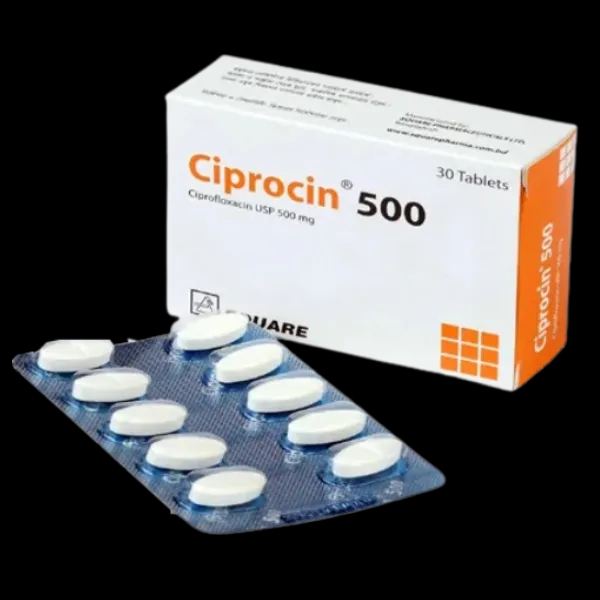
Ciprocin500 mg
Square Pharmaceuticals PLC.
৳138.46
Add to cart
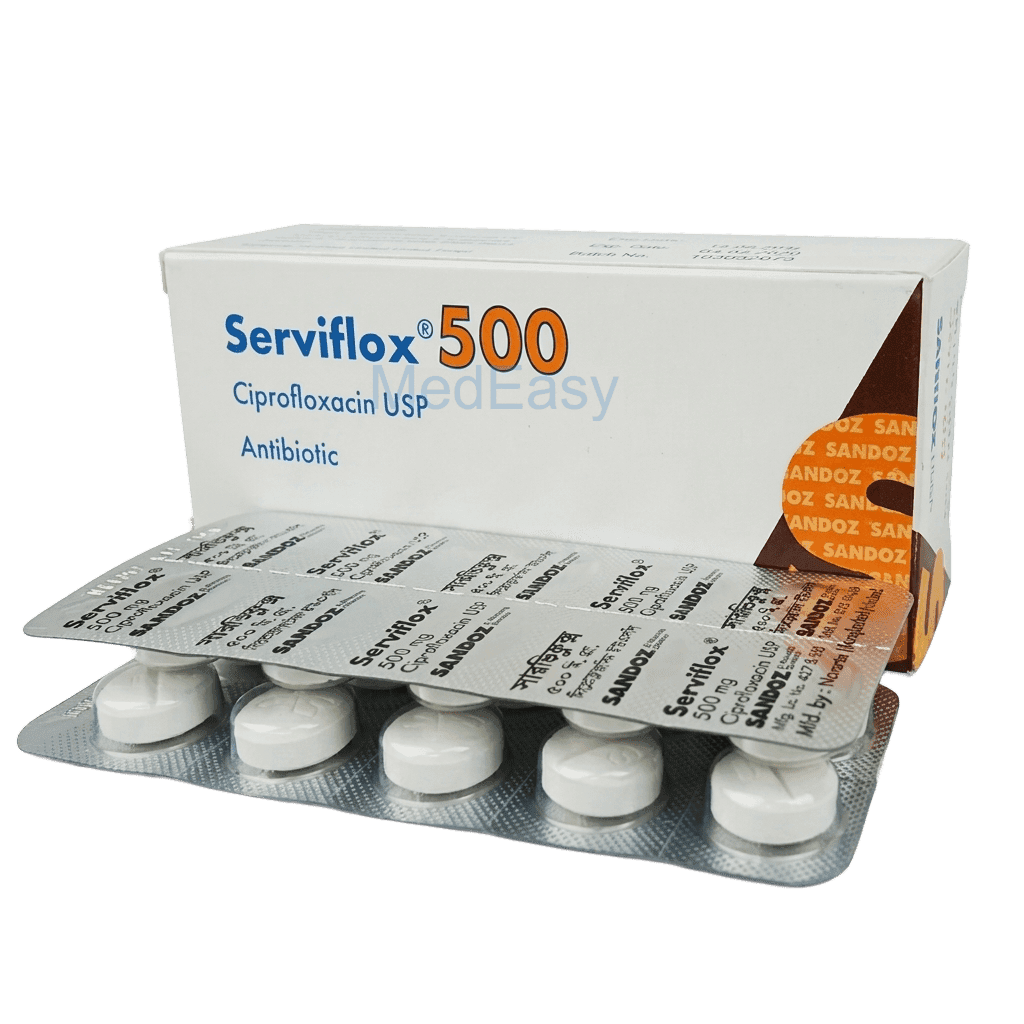
Serviflox 500 mg Tablet is available on MedEasy for ৳13.07 per piece, with home delivery anywhere in Bangladesh. It is manufactured by SANDOZ (A Novartis Division). Its generic name is Ciprofloxacin.

Serviflox is a fluoroquinolone antibiotic used to treat a range of bacterial infections caused by susceptible organisms. Indications vary in the strength of supporting evidence, and fluoroquinolones should generally be reserved for infections with no other treatment option due to safety concerns (see Precautions and Warnings).
Serviflox should be reserved for infections proven or strongly suspected to be caused by susceptible bacteria, and should not be used for infections that are typically self-limiting or non-bacterial (e.g., most acute bronchitis) unless no other treatment option is suitable.
Each film-coated tablet of Ciprofloxacin contains Ciprofloxacin Hydrochloride equivalent to 250 mg, 500 mg, or 750 mg of ciprofloxacin base. Extended-release tablets (500 mg and 1000 mg) are also available for once-daily dosing in specific indications. An oral suspension and an intravenous infusion (200 mg/100 mL and 400 mg/200 mL) formulation of Ciprofloxacin are available where parenteral or liquid dosing is required. Strengths and available forms may vary by manufacturer.
Serviflox is a second-generation synthetic fluoroquinolone antibiotic with broad-spectrum activity against many Gram-negative and some Gram-positive bacteria. It is available as immediate-release and extended-release oral tablets, an oral suspension, and an intravenous infusion for the treatment of a wide range of susceptible bacterial infections. Due to a class-wide risk of serious, potentially irreversible adverse effects, Serviflox should be used only when the benefits of therapy outweigh the risks, particularly when safer alternative antibiotics are not suitable.
Fluoroquinolone antibiotic
Ciprofloxacin exerts its bactericidal effect by inhibiting bacterial DNA gyrase (topoisomerase II) and topoisomerase IV, enzymes required for bacterial DNA replication, transcription, repair, and recombination. Inhibition of these enzymes causes breakage of bacterial DNA strands, leading to rapid bacterial cell death.
Ciprofloxacin is well absorbed after oral administration, with bioavailability of approximately 70–80%. It is widely distributed into body tissues and fluids, including bone, prostate, and lung tissue, with relatively low plasma protein binding. It undergoes partial hepatic metabolism and is eliminated primarily via renal excretion (both glomerular filtration and tubular secretion), with a smaller portion eliminated in feces. The elimination half-life is approximately 4 hours in patients with normal renal function, necessitating twice-daily dosing for most indications (or once daily for extended-release formulations).
Serviflox dosing is indication-specific and depends on infection severity and renal function. Representative adult and pediatric regimens are summarized below; the prescribing physician's instructions should always take precedence.
| Indication | Adult Dose | Typical Duration |
|---|---|---|
| Acute uncomplicated cystitis (UTI) | 250 mg orally every 12 hours | 3 days |
| Complicated UTI / acute pyelonephritis | 500 mg orally every 12 hours, or 400 mg IV every 12 hours | 7–14 days |
| Chronic bacterial prostatitis | 500 mg orally every 12 hours | 28 days |
| Lower respiratory tract infections | 500–750 mg orally every 12 hours, or 400 mg IV every 8–12 hours | 7–14 days |
| Acute sinusitis | 500 mg orally every 12 hours | 10 days |
| Skin/skin-structure infections | 500–750 mg orally every 12 hours | 7–14 days |
| Bone and joint infections | 500–750 mg orally every 12 hours | 4–6 weeks |
| Complicated intra-abdominal infections (with metronidazole) | 500 mg orally every 12 hours, or 400 mg IV every 12 hours | 7–14 days |
| Infectious diarrhea | 500 mg orally every 12 hours | 5–7 days |
| Typhoid (enteric) fever* | 500 mg orally every 12 hours | 10 days |
| Inhalational anthrax (post-exposure prophylaxis/treatment) | 500 mg orally every 12 hours, or 400 mg IV every 12 hours (combination therapy for active infection) | Up to 60 days |
| Plague | 500–750 mg orally every 12 hours, or 400 mg IV every 12 hours | 14 days |
*Where used for typhoid fever, treatment should be guided by local antimicrobial susceptibility patterns and physician judgment, as resistance is increasingly reported.
| Creatinine Clearance | Dose Adjustment |
|---|---|
| >50 mL/min | No adjustment needed |
| 30–50 mL/min | 250–500 mg every 12 hours |
| 5–29 mL/min | 250–500 mg every 18 hours |
| Hemodialysis/peritoneal dialysis | 250–500 mg every 24 hours, after dialysis on dialysis days |
Serviflox tablets may be taken with or without food, but should not be taken with dairy products or calcium-fortified juices alone, as this reduces absorption. Antacids, sucralfate, and multivitamins/minerals containing iron, zinc, or calcium should be avoided within 2 hours before or 6 hours after a dose of Serviflox (see Interactions). Patients should drink plenty of fluids while taking Serviflox.
Antibiotic stewardship: Take Serviflox exactly as prescribed by your physician; do not stop, extend, skip doses, or share this medicine with others without medical advice, even if symptoms improve before the course is completed.
Serviflox tablets should be swallowed whole with a full glass of water; extended-release tablets must not be crushed, split, or chewed. Serviflox oral suspension should be shaken gently before use and measured with an accurate dosing device (avoid using with a straight-tipped feeding tube due to the microcapsule formulation). Serviflox may be taken with food to reduce stomach upset, but not with milk, yogurt, or calcium-fortified products alone. Antacids, iron or zinc supplements, sucralfate, and calcium-containing products should be separated from Serviflox dosing by at least 2 hours before or 6 hours after. Intravenous Serviflox is administered by slow infusion over 60 minutes into a large vein. If a dose is missed, it should be taken as soon as remembered unless it is almost time for the next dose, in which case the missed dose should be skipped; doses should never be doubled.
The following interactions with Serviflox are well-established and clinically significant:
Always inform the physician or pharmacist of all other medicines, supplements, and antacids being used before starting Serviflox.
Ciprofloxacin is contraindicated in:
Most adverse effects associated with Serviflox are mild to moderate, but the drug carries a boxed warning for certain serious, potentially irreversible reactions (see Precautions and Warnings).
Pregnancy: Serviflox crosses the placenta. Animal studies have shown effects on developing cartilage (arthropathy) in juvenile animals, and although human data have not conclusively confirmed this risk, Serviflox should generally be avoided during pregnancy and reserved for situations where no safer alternative antibiotic is suitable and the potential benefit justifies the potential risk to the fetus. A physician should always be consulted before use in pregnancy.
Lactation: Serviflox is excreted into breast milk in concentrations similar to plasma. Because of the potential risk of arthropathy and gastrointestinal disturbance in the nursing infant, Serviflox should be used during breastfeeding only if clearly needed and no safer alternative is appropriate; consult a physician before use while breastfeeding.
Boxed Warning — Serious Adverse Reactions: Serviflox is associated with disabling and potentially irreversible serious adverse reactions, including tendinitis and tendon rupture, peripheral neuropathy, and central nervous system effects, that can occur together. Fluoroquinolones such as Serviflox should be reserved for patients who have no alternative treatment options for the specific infection being treated.
Tendinitis and Tendon Rupture: The risk (particularly of the Achilles tendon) is increased in patients over 60 years of age, those taking corticosteroids, and organ transplant recipients. Serviflox should be discontinued immediately if pain, swelling, or inflammation of a tendon occurs.
Peripheral Neuropathy: Rapid onset of sensory or sensorimotor axonal polyneuropathy has been reported; discontinue Serviflox immediately if symptoms of neuropathy (pain, burning, tingling, numbness, weakness) occur.
Central Nervous System Effects: Serviflox may cause seizures, increased intracranial pressure, confusion, hallucinations, anxiety, depression, and (rarely) suicidal thoughts. Use with caution in patients with known or suspected CNS disorders.
QT Prolongation: Serviflox can prolong the QT interval; use with caution in patients with known QT prolongation, uncorrected electrolyte abnormalities, or concomitant use of other QT-prolonging drugs.
Aortic Aneurysm and Dissection: Fluoroquinolones including Serviflox may increase the risk of aortic aneurysm and dissection, particularly in elderly patients and those with pre-existing aortic disease or risk factors; avoid use in these patients unless no other treatment options are available.
Clostridioides difficile-Associated Diarrhea: May occur during or up to several weeks after therapy with Serviflox; evaluate if persistent or severe diarrhea develops.
Myasthenia Gravis: Serviflox is contraindicated in patients with myasthenia gravis due to risk of exacerbating muscle weakness (see Contraindications).
Photosensitivity: Moderate to severe phototoxicity reactions can occur with sun/UV exposure; patients should avoid excessive sunlight and use sun protection while taking Serviflox.
Blood Glucose Disturbances: Serviflox has been associated with disturbances of blood glucose, including symptomatic hypoglycemia and hyperglycemia, particularly in diabetic patients on oral hypoglycemic agents or insulin.
Chelation with Multivalent Cations: Concurrent use of antacids, dairy products, or calcium/iron/zinc-containing products reduces absorption of Serviflox (see Interactions); doses must be separated appropriately.
Antibiotic stewardship: Take Serviflox exactly as prescribed by your physician; do not stop, extend, skip doses, or share this medicine with others without medical advice.
Overdose of Serviflox may cause nausea, vomiting, abdominal pain, diarrhea, dizziness, confusion, tremor, and, rarely, seizures or acute renal failure. If an overdose of Serviflox is suspected, seek immediate medical attention or contact a poison control center/emergency services. Management is general and supportive, including maintenance of adequate hydration; there is no specific antidote. Hemodialysis removes only a small amount of the drug.
Store Serviflox tablets at room temperature (below 30°C), away from light and moisture. Keep out of reach of children. Reconstituted Serviflox oral suspension should be stored at room temperature as directed on the label and discarded after 14 days; do not refrigerate the suspension. Intravenous Serviflox infusion bags should be stored as per manufacturer's label and protected from light and freezing.
Renal impairment: Dose adjustment of Serviflox is required based on creatinine clearance (see Dosage and Administration); monitor renal function during therapy.
Hepatic impairment: No specific dose adjustment is generally required for mild-to-moderate hepatic impairment; use Serviflox with caution and monitor liver function in significant hepatic disease.
Elderly: Patients over 60 years of age are at increased risk of tendon rupture, aortic aneurysm/dissection, and QT prolongation with Serviflox; use with caution and consider age-related decline in renal function when dosing.
Diabetic patients: Closely monitor blood glucose in patients taking oral hypoglycemic agents or insulin together with Serviflox due to the risk of disturbed glucose control.
G6PD deficiency: Use Serviflox with caution; hemolytic reactions have been reported.
Duration of treatment with Serviflox is indication-specific, ranging from a single 3-day course for uncomplicated cystitis, 7–14 days for most complicated infections, 28 days for chronic bacterial prostatitis, 4–6 weeks for bone and joint infections, and up to 60 days for inhalational anthrax post-exposure prophylaxis. The exact duration of Serviflox therapy should always follow the prescribing physician's instructions and should not be shortened or extended without medical advice.
Where supplied as a dry powder for oral suspension, Serviflox should be reconstituted by adding the specified amount of water to the bottle as indicated on the label, then shaking to form a uniform suspension. The reconstituted suspension of Serviflox should be shaken gently (not vigorously, to avoid damaging the microcapsules) before each dose, stored at room temperature, and any unused portion discarded after 14 days. It should not be administered through a nasogastric or feeding tube due to the microencapsulated formulation.
Fluoroquinolone antibiotics
Ciprofloxacin is bactericidal, acting by inhibiting bacterial DNA gyrase (topoisomerase II) and topoisomerase IV, two type II topoisomerase enzymes essential for bacterial DNA supercoiling, replication, transcription, and repair. By blocking these enzymes, Ciprofloxacin causes double-strand breaks in bacterial DNA, which are not efficiently repaired, resulting in rapid bacterial cell death. This mechanism gives Ciprofloxacin broad-spectrum activity against many Gram-negative organisms (including Pseudomonas aeruginosa) and certain Gram-positive organisms.
C
Because of the risk of arthropathy (joint/cartilage damage) observed in juvenile animal studies, Serviflox is generally avoided in children and adolescents under 18 years of age and should be reserved for specific approved pediatric indications where the benefit clearly outweighs this risk: complicated urinary tract infections and pyelonephritis (children 1–17 years, weight-based dosing, typically 6–10 mg/kg every 8 hours, maximum 500 mg/dose), and inhalational anthrax or plague post-exposure prophylaxis/treatment (weight-based dosing, typically 15 mg/kg every 12 hours, maximum 500 mg/dose). Safety and efficacy of Serviflox for other pediatric indications have not been established. Pediatric dosing of Serviflox must always be calculated and supervised by a physician.
Q: What is Serviflox 500 mg Tablet used for?
A: Serviflox 500 mg Tablet is a fluoroquinolone antibiotic used to treat bacterial infections of the urinary tract, respiratory tract, skin, bones and joints, gastrointestinal tract, and certain serious infections such as typhoid fever, anthrax, and plague, as directed by a physician.
Q: How should I take Serviflox 500 mg Tablet?
A: Serviflox 500 mg Tablet should be taken exactly as prescribed, at evenly spaced times each day, with plenty of fluids. Avoid taking it at the same time as dairy products, calcium-fortified juices, antacids, or iron/zinc supplements — separate these by at least 2 hours before or 6 hours after your dose. Complete the full course even if you feel better before finishing it.
Q: Can I take Serviflox 500 mg Tablet during pregnancy?
A: Serviflox 500 mg Tablet should generally be avoided during pregnancy because of potential effects on fetal cartilage development, and used only if no safer alternative antibiotic is suitable and a physician determines the benefit outweighs the risk. Always consult your physician before use during pregnancy.
Q: What are the common side effects of Serviflox 500 mg Tablet?
A: The most common side effects of Serviflox 500 mg Tablet include nausea, diarrhea, headache, dizziness, and abdominal discomfort. However, Serviflox 500 mg Tablet also carries a boxed warning for rare but serious effects including tendon rupture, nerve damage (peripheral neuropathy), and central nervous system effects — contact your physician immediately if you notice tendon pain, tingling/numbness, or confusion.
Q: Who should not take Serviflox 500 mg Tablet?
A: Serviflox 500 mg Tablet should not be taken by anyone with a known allergy to it or other fluoroquinolone antibiotics, anyone taking tizanidine, or anyone with myasthenia gravis, since it may worsen muscle weakness in this condition.
Q: Can children take Serviflox 500 mg Tablet?
A: Serviflox 500 mg Tablet is generally avoided in children due to a potential risk to developing joints and cartilage, but it may be used in specific situations such as complicated urinary tract infections or anthrax/plague exposure, only under close physician supervision with weight-based dosing.
Q: What should I do if I miss a dose or take too much Serviflox 500 mg Tablet?
A: If you miss a dose of Serviflox 500 mg Tablet, take it as soon as you remember unless it is almost time for the next dose — do not double the dose. If you suspect an overdose of Serviflox 500 mg Tablet, seek immediate medical attention or contact a poison control center right away.
Disclaimer
The information provided is accurate to the best of our knowledge, but it does not replace professional medical advice. We cannot guarantee its completeness or accuracy, and the absence of specific information about a drug should not be taken as an endorsement. We are not responsible for any consequences arising from this information, so please consult a healthcare professional for any concerns or questions.