10% Off
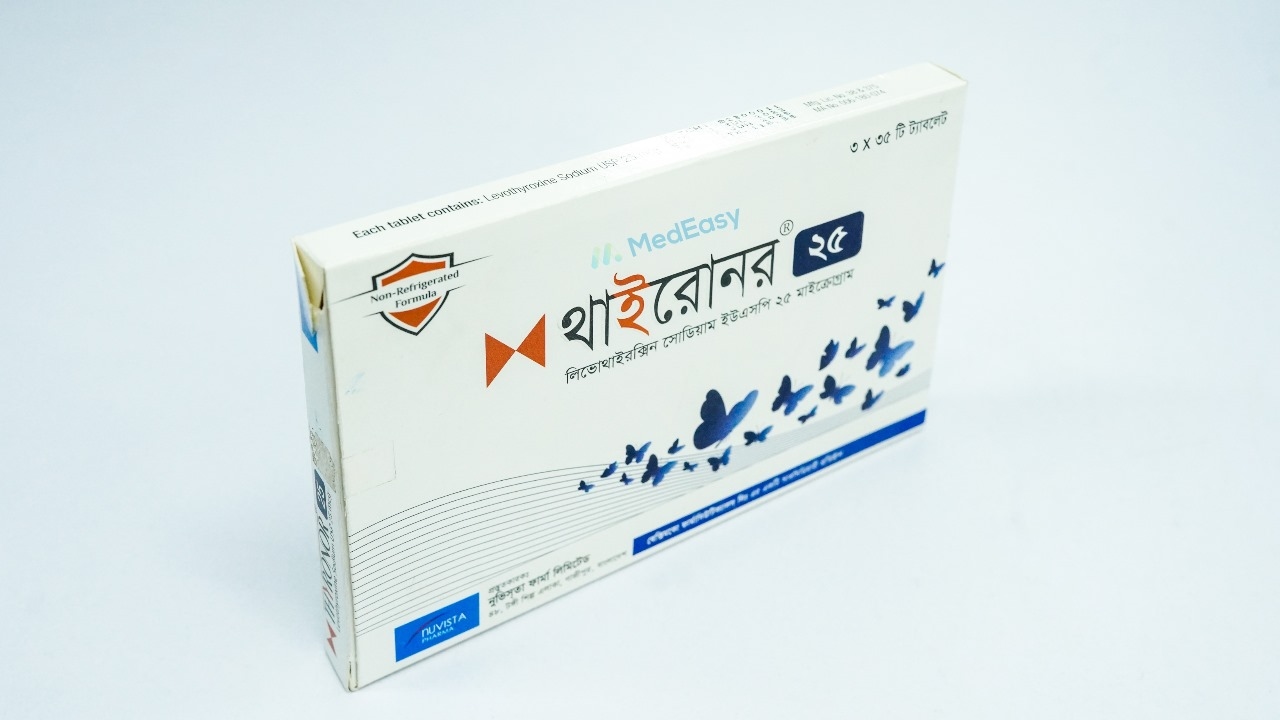
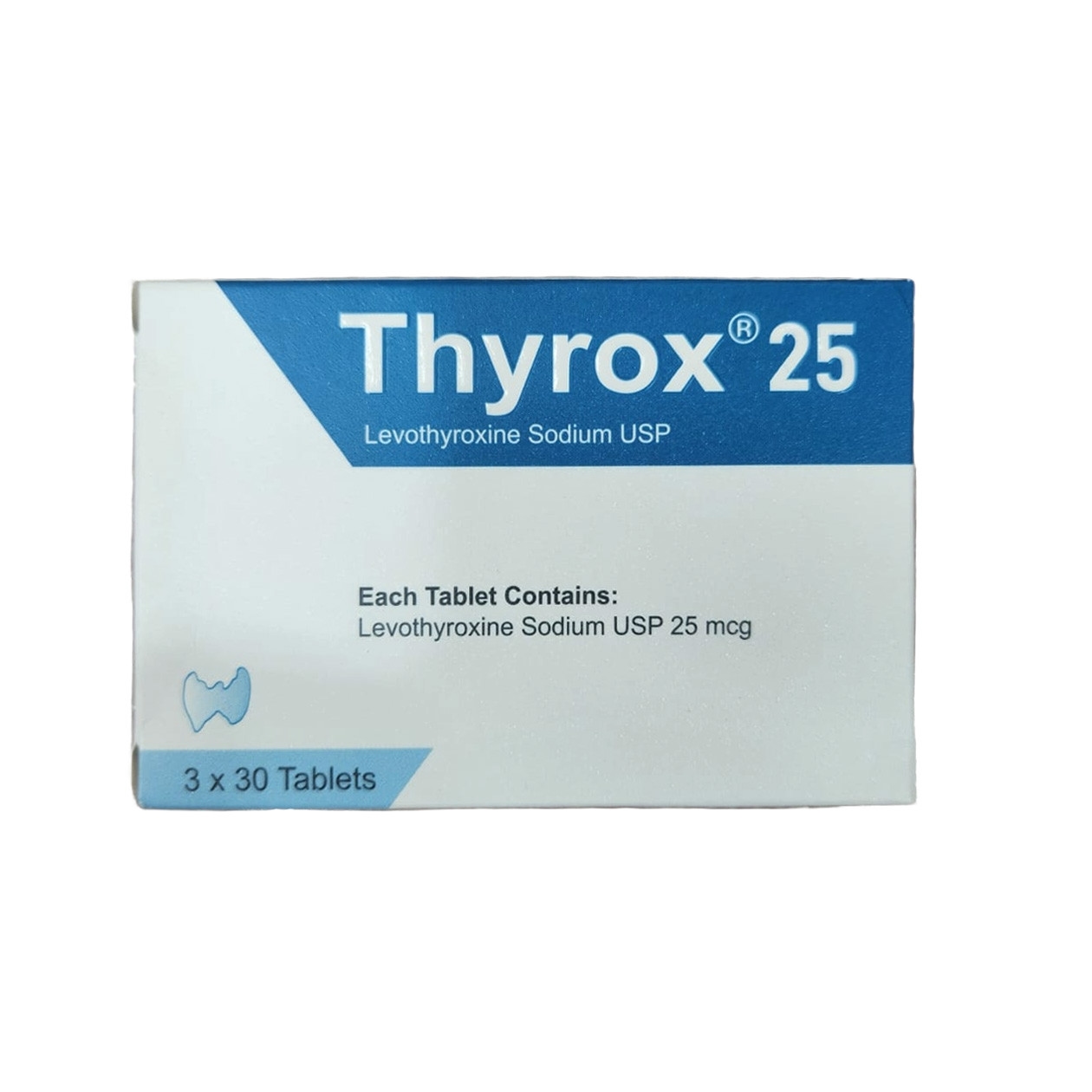
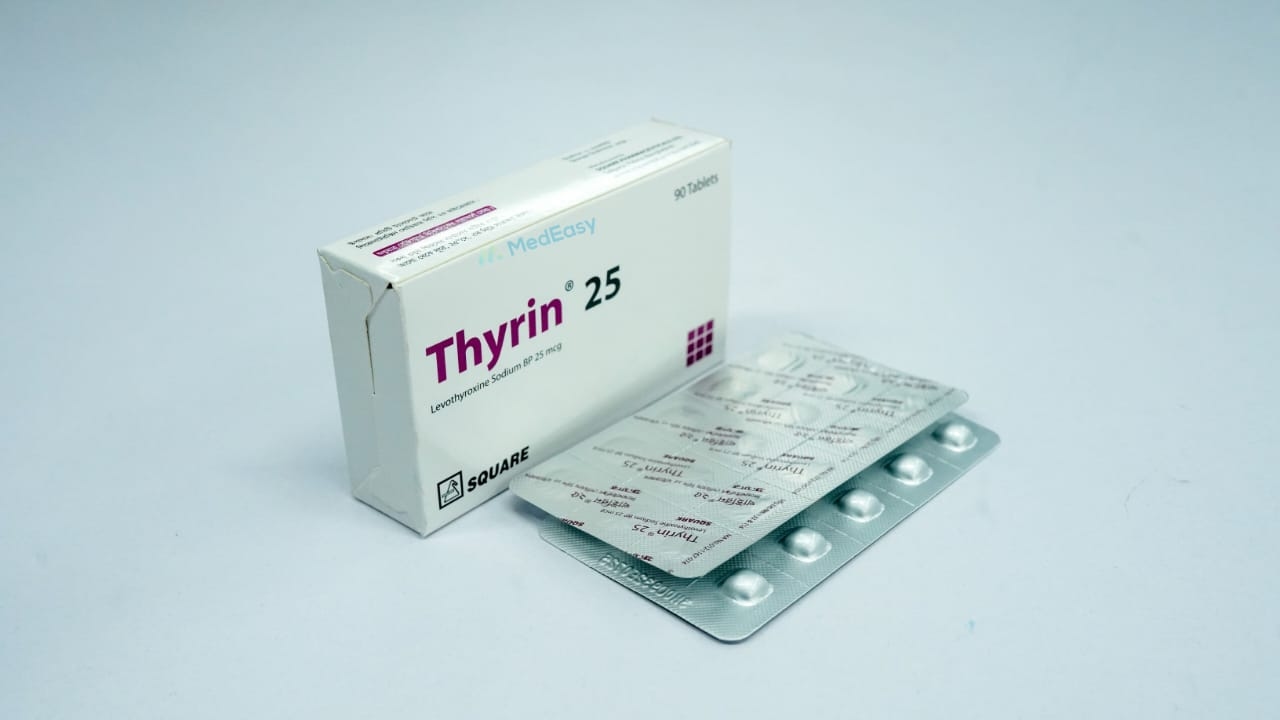
Thyrin25 mcg
Square Pharmaceuticals PLC.
৳14.98
Add to cart


Thyrolar is a synthetic thyroid hormone (T4) used for the following indications:
Each tablet contains Levothyroxine Sodium as the active pharmaceutical ingredient, available in a range of microgram (mcg) strengths (commonly 12.5 mcg to 200 mcg, depending on the brand) to allow precise dose titration. Inactive ingredients vary by manufacturer and typically include fillers, binders, and colorants; patients should avoid switching brands/formulations without physician awareness because bioavailability can differ between products.
Thyrolar is the sodium salt of synthetic levothyroxine (T4), a thyroid hormone chemically and biologically identical to the thyroxine produced naturally by the human thyroid gland. It has a narrow therapeutic index, meaning small differences in dose or absorption can lead to significant clinical effects. Thyrolar is used lifelong in most patients with permanent hypothyroidism and requires periodic laboratory monitoring for safe, effective use.
Thyrolar belongs to the therapeutic class of thyroid hormones, specifically synthetic levothyroxine (T4) preparations used for thyroid hormone replacement and TSH-suppressive therapy.
Levothyroxine Sodium is converted peripherally to triiodothyronine (T3), which binds to thyroid hormone nuclear receptors and regulates gene transcription, thereby controlling metabolic rate, growth, and development in nearly every tissue in the body.
Physiological actions include stimulation of oxygen consumption, body temperature regulation, protein, carbohydrate, and lipid metabolism, and enzyme activity, which together increase basal metabolic rate. Levothyroxine Sodium has a plasma half-life of approximately 6-7 days in euthyroid individuals, and peak clinical effect after starting or changing a dose is typically seen after 4-6 weeks, reflecting the slow equilibration of thyroid hormone stores.
| Indication | Population | Typical dose |
|---|---|---|
| Hypothyroidism, full replacement | Healthy adults <50-60 years | Approx. 1.6 mcg/kg/day orally, once daily; started at full dose if otherwise healthy |
| Hypothyroidism | Adults >50 years or with known/suspected cardiac disease | Initiate at 12.5-25 mcg/day; increase in increments of 12.5-25 mcg every 6-8 weeks, guided by TSH and clinical response |
| Hypothyroidism, severe/long-standing | Adults | Start at 12.5-25 mcg/day with slower up-titration (every 2-4 weeks) to avoid rapid metabolic changes |
| Congenital hypothyroidism | Neonates/infants 0-3 months | 10-15 mcg/kg/day |
| Hypothyroidism | Children (weight-based, decreasing with age) | Ranges from approximately 4-6 mcg/kg/day (older children) down to 1.7 mcg/kg/day (adolescents with growth/puberty complete); see pediatric section |
| TSH suppression in thyroid cancer | Adults | Individualized, generally higher than replacement dose, to suppress TSH per oncology treatment goals; guided by an endocrinologist/oncologist |
No well-established specific dose adjustment is required for renal or hepatic impairment; however, dosing should still be individualized and guided by periodic TSH monitoring, as with all patients.
Serum TSH (and free T4 where relevant) should be checked approximately 6-8 weeks after initiation or any dose change, and periodically thereafter (typically every 6-12 months once stable), to guide dose titration.
Thyrolar should be taken orally, once daily, on an empty stomach 30-60 minutes before breakfast, at a consistent time each day, and separated by at least 4 hours from calcium, iron, antacids, and other interfering agents (see Dosage and Administration and Interaction).
Thyrolar has a narrow therapeutic index and is subject to clinically significant interactions:
Foods and supplements such as soybean-based infant formula, walnuts, high-fiber foods, and grapefruit juice may also reduce absorption of Thyrolar, and coffee taken close to dosing time can reduce absorption as well.
Levothyroxine Sodium is contraindicated in:
Adverse effects of Thyrolar are generally dose-related and reflect iatrogenic hyperthyroidism from excessive dosing rather than a direct drug toxicity at therapeutic doses:
Most of these effects resolve with dose reduction and represent overtreatment rather than a true idiosyncratic adverse reaction. Rare hypersensitivity reactions (rash, urticaria) can occur, generally related to inactive ingredients rather than the hormone itself.
Pregnancy: Thyrolar is essential for normal fetal neurological development and is not withheld during pregnancy when clinically indicated; treated hypothyroidism should be continued and, in many patients, dose requirements increase during pregnancy (often by 25-50%). TSH should be checked upon confirmation of pregnancy and approximately every 4 weeks through mid-pregnancy, with dose adjusted as needed and dose typically returned to the pre-pregnancy level immediately postpartum, with TSH re-checked 6-8 weeks later. As with any medication in pregnancy, Thyrolar should be used at the lowest effective dose to maintain euthyroidism, and patients should consult their physician for individualized monitoring.
Lactation: Thyrolar is considered compatible with breastfeeding, since it replaces a hormone normally present in breast milk; the amounts excreted in breast milk at properly dosed replacement therapy are not expected to affect the nursing infant. Maintaining maternal euthyroidism is important, and mothers should consult their physician for dose monitoring during lactation.
Overdose of Thyrolar produces signs and symptoms of hyperthyroidism, which may be delayed in onset given its long half-life: tachycardia, arrhythmias, chest pain, palpitations, tremor, headache, nervousness, irritability, insomnia, hyperthermia, sweating, heat intolerance, diarrhea, vomiting, menstrual irregularities, and, in severe cases, seizures, cardiac failure, or coma.
If overdose is suspected, seek immediate medical attention or contact emergency services/a poison control center right away. Management is supportive and may include temporarily withholding Thyrolar, monitoring cardiac status, and treating specific symptoms (e.g., beta-blockers for cardiovascular symptoms) under medical supervision; do not attempt to manage a suspected overdose at home without professional guidance.
Store at room temperature (below 30°C), away from light and moisture. Keep out of reach of children.
Start Thyrolar at a lower dose (12.5-25 mcg/day) with slower up-titration due to increased risk of cardiac adverse effects (see Precautions and Warnings).
Initiate at a reduced dose with close monitoring for angina or arrhythmia (see Precautions and Warnings).
No well-established specific dose adjustment; individualize based on TSH monitoring.
No well-established specific dose adjustment; individualize based on TSH monitoring.
See Pregnancy and Lactation section - dose often needs to be increased during pregnancy, and use is compatible with breastfeeding when properly dosed.
See Pediatric Uses section for weight-based dosing by age group.
For most patients with permanent hypothyroidism (e.g., after thyroidectomy, radioiodine ablation, or Hashimoto's thyroiditis), Thyrolar is required lifelong. In some cases of transient or subclinical hypothyroidism, a physician may periodically reassess the ongoing need for therapy. Do not stop Thyrolar without consulting a physician, as abrupt discontinuation can lead to symptomatic hypothyroidism over several weeks given its long half-life.
Thyroid hormones (synthetic levothyroxine/T4 preparations)
Levothyroxine Sodium is converted in peripheral tissues to triiodothyronine (T3), which binds nuclear thyroid hormone receptors to regulate gene transcription, thereby controlling basal metabolic rate, oxygen consumption, thermogenesis, and growth/development across body tissues, replacing the action of endogenous thyroid hormone in deficient patients.
A
Thyrolar is indicated for congenital and acquired hypothyroidism in pediatric patients, including neonates, with dosing weight-based and adjusted by age:
| Age | Dose |
|---|---|
| 0-3 months | 10-15 mcg/kg/day |
| 3-6 months | 8-10 mcg/kg/day |
| 6-12 months | 6-8 mcg/kg/day |
| 1-5 years | 5-6 mcg/kg/day |
| 6-12 years | 4-5 mcg/kg/day |
| >12 years (growth/puberty complete) | 1.7 mcg/kg/day |
In congenital hypothyroidism, early and adequate treatment with Thyrolar is critical (ideally starting within the first weeks of life) to prevent irreversible neurodevelopmental impairment. Overtreatment in children has been associated with craniosynostosis (infants), pseudotumor cerebri, and premature epiphyseal closure/accelerated bone age with resultant compromised adult height; dosing should be carefully individualized and monitored with periodic TSH/free T4 testing.
Q: How should I take Thyrolar 25 mcg Tablet for the best effect?
A: Take Thyrolar 25 mcg Tablet once daily on an empty stomach, 30-60 minutes before breakfast, with a full glass of water, at the same time each day. Wait at least 4 hours before taking calcium, iron supplements, or antacids, since these reduce absorption of Thyrolar 25 mcg Tablet.
Q: Can I switch to a different brand of Thyrolar 25 mcg Tablet?
A: Do not switch brands or formulations of Thyrolar 25 mcg Tablet without your physician's knowledge. Because Thyrolar 25 mcg Tablet has a narrow therapeutic index, different products can have different bioavailability, and your doctor may need to re-check your TSH and adjust your dose after any switch.
Q: Is Thyrolar 25 mcg Tablet safe during pregnancy?
A: Thyrolar 25 mcg Tablet is necessary and safe to continue during pregnancy when clinically indicated, and dose requirements often increase (frequently by 25-50%). TSH should be monitored regularly during pregnancy with dose adjusted by your physician; do not stop or change your dose of Thyrolar 25 mcg Tablet without medical advice.
Q: What should I do if I miss a dose of Thyrolar 25 mcg Tablet?
A: Take the missed dose of Thyrolar 25 mcg Tablet as soon as you remember that day. If you do not remember until the next day, skip the missed dose and resume your normal schedule the next day - do not double the dose. If you miss doses frequently, discuss this with your physician.
Q: Why does my doctor start me on a low dose of Thyrolar 25 mcg Tablet even though I am significantly hypothyroid?
A: In older adults and people with heart disease, starting Thyrolar 25 mcg Tablet at a high dose or increasing it too quickly can trigger chest pain, abnormal heart rhythms, or even a heart attack. Your doctor starts at a low dose and increases it gradually with monitoring to avoid these cardiac risks.
Q: What are the signs that my dose of Thyrolar 25 mcg Tablet is too high?
A: Symptoms of too much Thyrolar 25 mcg Tablet include a fast or irregular heartbeat, palpitations, tremor, excessive sweating, heat intolerance, anxiety, insomnia, and unintended weight loss. If you notice these symptoms, contact your physician - do not adjust your dose on your own.
Disclaimer
The information provided is accurate to the best of our knowledge, but it does not replace professional medical advice. We cannot guarantee its completeness or accuracy, and the absence of specific information about a drug should not be taken as an endorsement. We are not responsible for any consequences arising from this information, so please consult a healthcare professional for any concerns or questions.