8% Off
Afun1%
Square Pharmaceuticals PLC.
৳32.30
Add to cart

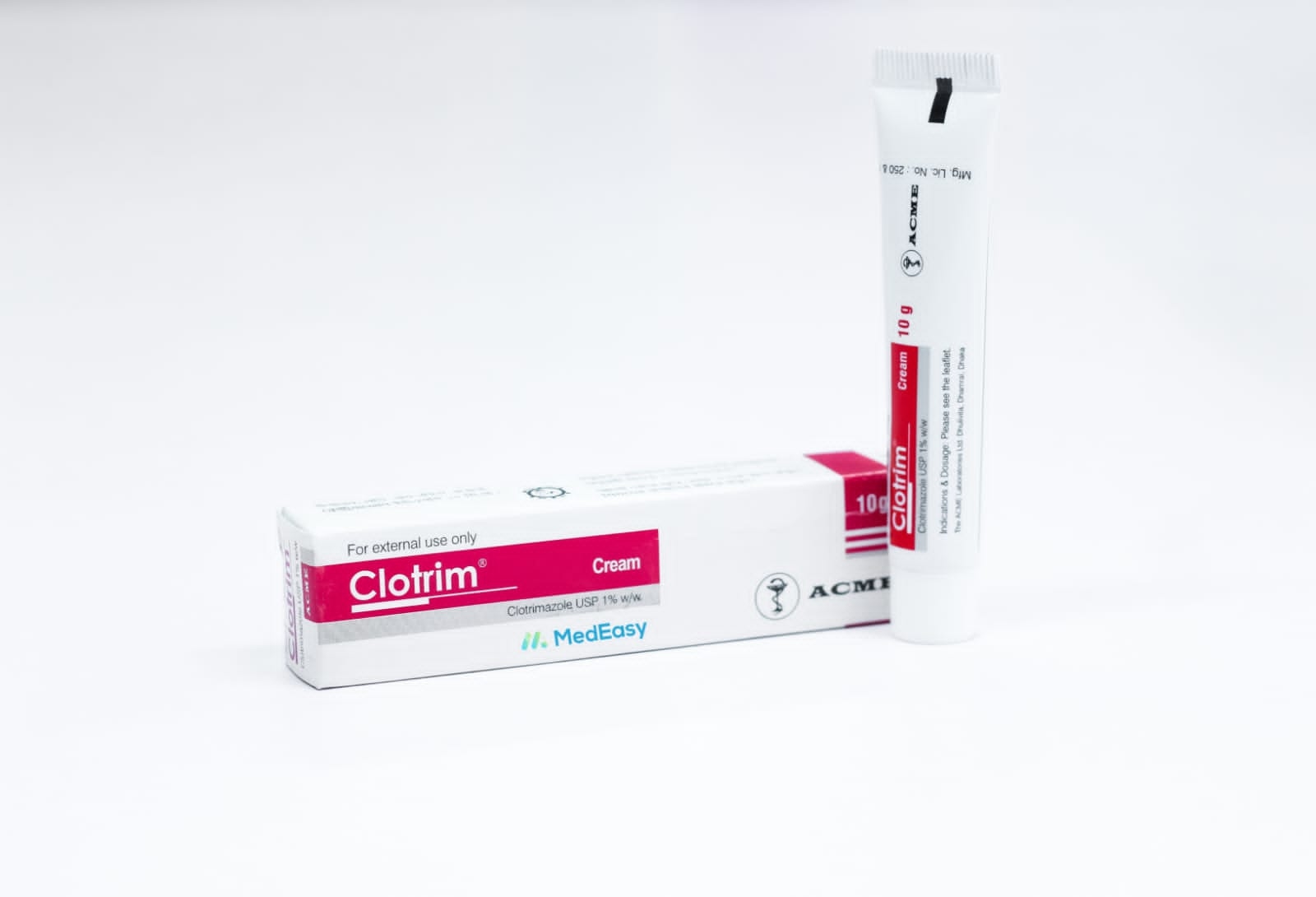
Triderm 1% Cream is available on MedEasy for ৳32.20 per 10 gm tube, with home delivery anywhere in Bangladesh. It is manufactured by Healthcare Pharmaceuticals Ltd. Its generic name is Clotrimazole.

Triderm cream and topical solution are established treatments for dermatomycoses caused by dermatophytes, yeasts, and moulds, including athlete's foot (tinea pedis), jock itch (tinea cruris), ringworm (tinea corporis), skin-fold (cutaneous) candidiasis, pityriasis (tinea) versicolor, and erythrasma. Triderm is applied only to the skin for these uses.
The vaginal tablet formulation of Triderm is an established treatment for vaginal itching, burning, and discharge caused by vulvovaginal candidiasis (vaginal yeast infection) and vaginitis due to Candida species. This formulation is intended for adult and adolescent women and is not used in children.
The oral troche (lozenge) form of Triderm, dissolved slowly in the mouth, is an established treatment for oropharyngeal candidiasis (oral thrush) confirmed by laboratory testing, and is also used as prophylaxis against oral candidiasis in immunocompromised patients (for example, during chemotherapy, radiotherapy, or high-dose steroid therapy). Availability of this formulation may be limited in the local market; confirm with a pharmacist.
Triderm ear drops are used for fungal infections of the outer ear (otomycosis) caused by susceptible fungi and yeasts, as an adjunct to appropriate ear care.
Triderm eye ointment is used, under ophthalmologist supervision only, for fungal keratitis caused by filamentous fungi and Candida species. This is a specialist-directed use and Triderm eye ointment should never be self-administered without an eye examination and diagnosis.
Topical cream/solution: Clotrimazole 1% w/w.
Vaginal tablet: Clotrimazole 100 mg, 200 mg, or 500 mg per tablet.
Ear drop: Clotrimazole 1% w/v.
Eye ointment: Clotrimazole 1% w/w.
Oral troche: Clotrimazole 10 mg per troche (where available).
The dose, strength, and duration of Triderm treatment are not the same for every formulation — a skin cream, vaginal tablet, ear drop, eye ointment, and oral troche each follow a different regimen. A doctor or pharmacist should confirm the correct formulation, strength, and duration for the specific infection being treated before Triderm is used.
Clotrimazole is contraindicated in individuals with known hypersensitivity to Clotrimazole or to any other component of the specific product formulation.
Local application-site reactions are the most frequently reported effects and vary somewhat by formulation: mild burning, stinging, itching, redness, or irritation at the site of application (skin, vagina, ear canal, or eye, as applicable); with the oral troche, an unpleasant taste or mouth sensation, nausea, or vomiting may occur.
Stop Triderm and seek medical attention if signs of an allergic reaction occur, such as hives, rash, itching all over, swelling of the face/lips/tongue/throat, or difficulty breathing. With the oral troche specifically, elevated liver enzymes have been reported in some patients during treatment, so a doctor may periodically check liver function during extended courses. Severe blistering, peeling, or worsening irritation at the application site should also be reported to a doctor.
For topical and vaginal Triderm, systemic absorption is low (topical: negligible; vaginal: roughly 3-10%), and available human data — largely from second- and third-trimester vaginal use — have not shown an increased risk of birth defects at recommended doses. Data specific to first-trimester use are more limited, so topical or vaginal Triderm should be used in pregnancy only when a doctor considers it necessary, and a pregnant woman should always inform her doctor before starting treatment. For the oral troche, which has higher systemic exposure, animal studies have shown adverse effects at doses far exceeding the human dose and adequate controlled human studies are lacking; the oral troche should be used in pregnancy only if a doctor determines the benefit justifies the potential risk.
Only small amounts of Triderm are expected to pass into breastmilk after topical or vaginal use, and it is not expected to cause harm to a nursing infant; if Triderm is applied near the breast/nipple area, any residue should be wiped away before breastfeeding. Data on the oral troche during breastfeeding are limited; a doctor should be consulted before use while breastfeeding.
For topical, vaginal, ear, and eye formulations of Triderm, systemic toxicity from accidental overdose or ingestion of a small amount is considered unlikely because systemic absorption from these routes is low; local irritation may occur if excessive amounts are applied. If Triderm cream, tablets, drops, or ointment are swallowed in a larger-than-expected amount, especially by a child, a doctor or the national poison information service should be contacted for advice. For the oral troche, specific overdose data are not established in prescribing information, but supportive medical care and observation are recommended, and excessive or prolonged use has been associated with elevated liver enzymes and gastrointestinal symptoms such as nausea and vomiting; a doctor should be contacted if a much larger number of troches than prescribed has been taken.
Children: Topical skin Triderm (cream/solution) may be used in children as directed by a doctor for confirmed fungal skin infections. The vaginal tablet is not intended for use in children. Ear drops and eye ointment should only be used in children under medical/specialist supervision. The oral troche is not recommended in children under 3 years of age, and pediatric prophylactic use has not been established; see Pediatric Use for details.
Elderly: No specific dose adjustment is established for elderly patients using topical, vaginal, ear, or troche Triderm; general precautions regarding skin fragility and correct application technique apply.
Renal impairment: Because systemic absorption of topical, vaginal, ear, and eye formulations is low, specific dose adjustment for renal impairment has not been established as necessary; the oral troche has not been specifically studied in renal impairment, so a doctor should be consulted.
Hepatic impairment: Specific dose adjustment for hepatic impairment has not been established for topical, vaginal, ear, or eye Triderm. Because the oral troche has been associated with elevated liver enzymes in some patients, it should be used with caution and periodic liver function monitoring in patients with existing liver disease, under a doctor's guidance.
Pregnant/breastfeeding women: See Pregnancy and Lactation for details.
Duration depends on the formulation and the infection being treated. Topical skin infections generally require 1-4 weeks of continuous application depending on the type of infection (see Dosage table); if there is no improvement within about 4 weeks, a doctor should reassess the diagnosis. Vaginal tablet regimens range from a single dose to a 6-day course depending on the product and whether the infection is a first episode or recurrent. Ear drop treatment typically continues for at least 2 weeks after signs of infection resolve. The oral troche treatment course is typically 14 days for active infection, while prophylactic use continues for the duration of the period of increased risk (for example, through a course of chemotherapy), as directed by a doctor. In all cases, the full course prescribed should be completed even if symptoms improve earlier.
Use of Triderm in children depends on the formulation. Topical skin cream/solution has established safety and effectiveness in children when used for confirmed fungal skin infections at the recommended dose and applied by or under the supervision of a caregiver, following the same regimens as in adults (see Dosage table); a doctor should confirm the diagnosis and appropriate duration. The vaginal tablet formulation is not used in children. Ear drops and eye ointment should be used in children only under a doctor's or specialist's direction, as pediatric dosing data for these forms are limited. The oral troche is contraindicated in children under 3 years old (who cannot reliably dissolve a troche without chewing or choking risk), and its safety and effectiveness for prophylactic use in children have not been established; treatment use in older children should be directed by a doctor.
Triderm 1% Cream is an antifungal medicine used to treat fungal and yeast infections. Depending on the formulation, Triderm 1% Cream treats fungal skin infections (like athlete's foot, ringworm, and jock itch), vaginal yeast infections, fungal ear infections, and, under specialist care, fungal eye infections and oral thrush.
Many people notice improvement in symptoms within about a week of starting topical or vaginal Triderm 1% Cream, but the full prescribed course (which can range from a single vaginal dose to several weeks of topical treatment) should still be completed to fully clear the infection and reduce the chance of it returning.
Vaginal Triderm 1% Cream tablets are generally best used outside the menstrual period, since menstrual flow can reduce how long the medicine stays in contact with the vaginal tissue and may lower its effectiveness; tampons should be avoided during treatment as they can absorb the medicine. A doctor or pharmacist can advise on timing if a period is expected during treatment.
Yes. Vaginal Triderm 1% Cream preparations may weaken latex condoms and diaphragms, making them less reliable as contraception or barrier protection during and shortly after treatment; see Drug Interactions for details and speak with a doctor about additional precautions.
Topical and vaginal Triderm 1% Cream have low systemic absorption, and available data, mainly from later pregnancy, have not shown an increased risk of birth defects at recommended doses, though first-trimester data are more limited; the oral troche has higher systemic exposure and less human safety data. Triderm 1% Cream should only be used in pregnancy on a doctor's advice — see Pregnancy and Lactation for full details.
Whether children can use Triderm 1% Cream depends on the formulation. Topical Triderm 1% Cream cream/solution can be used in children for confirmed fungal skin infections as directed by a doctor. The vaginal tablet is not used in children, and the oral troche is contraindicated under 3 years of age. See Pediatric Use for full details.
The most common effects are mild local reactions at the site of application — burning, stinging, itching, or redness of the skin, vagina, ear, or eye depending on the formulation used. See Side Effects for the full list, including signs that need medical attention.
Topical, vaginal, ear, and eye formulations of Triderm 1% Cream have low systemic absorption, so accidental ingestion of a small amount is unlikely to cause serious harm, but a doctor or poison control service should be contacted for advice, especially if a child has swallowed the product. See Overdose Effects for more information.
Using other vaginal medicines, douches, or tampons at the same time as vaginal Triderm 1% Cream tablets is not recommended, as this may reduce its effectiveness or increase local irritation; a doctor or pharmacist should be asked before combining products.
Disclaimer
The information provided is accurate to the best of our knowledge, but it does not replace professional medical advice. We cannot guarantee its completeness or accuracy, and the absence of specific information about a drug should not be taken as an endorsement. We are not responsible for any consequences arising from this information, so please consult a healthcare professional for any concerns or questions.