8% Off
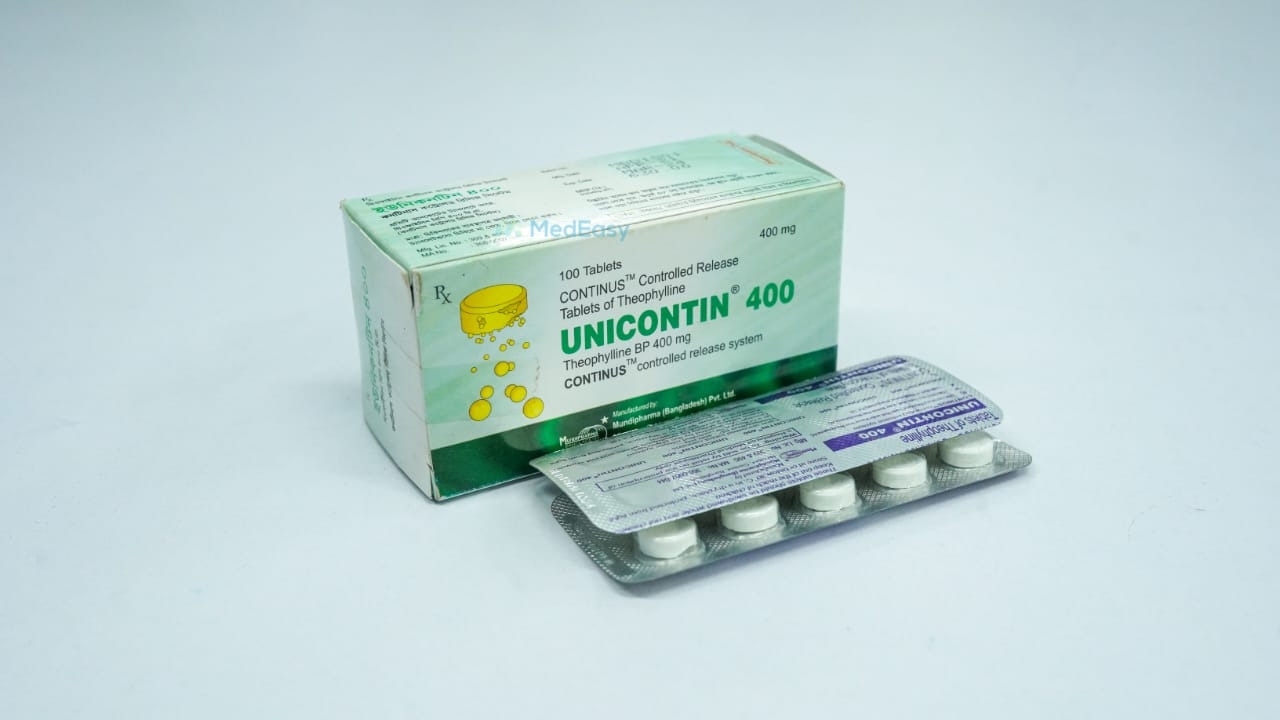
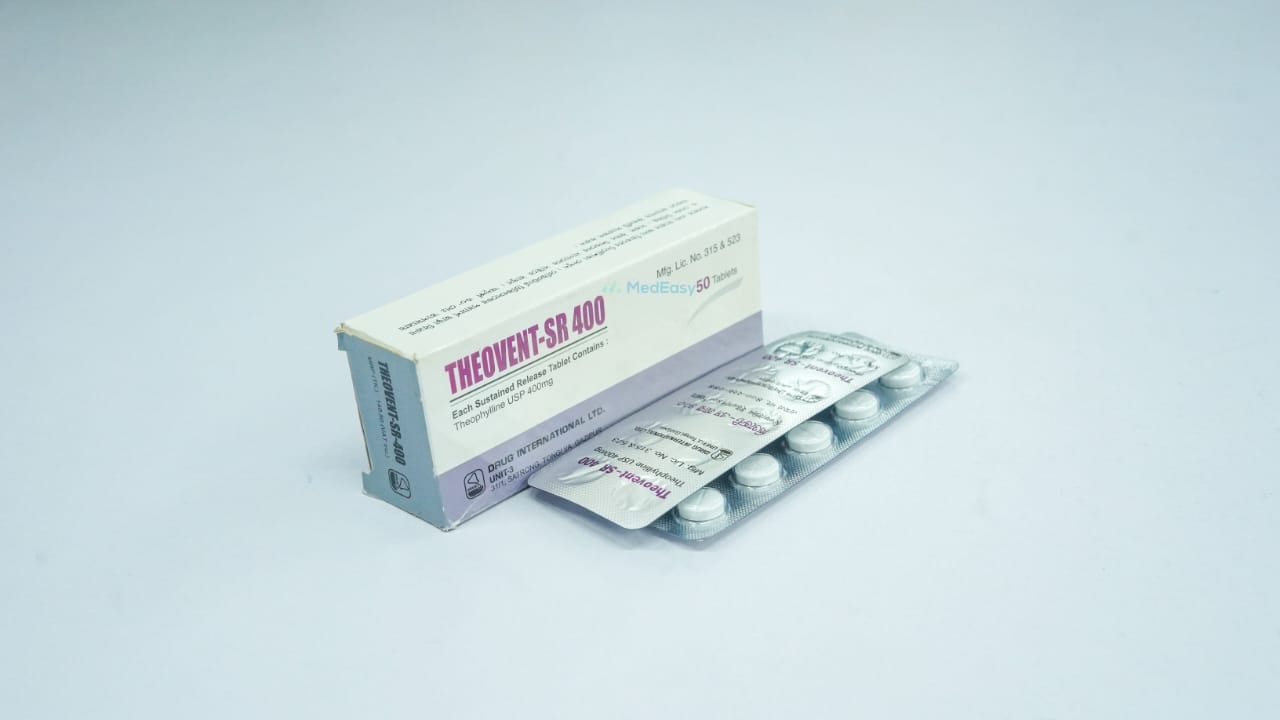
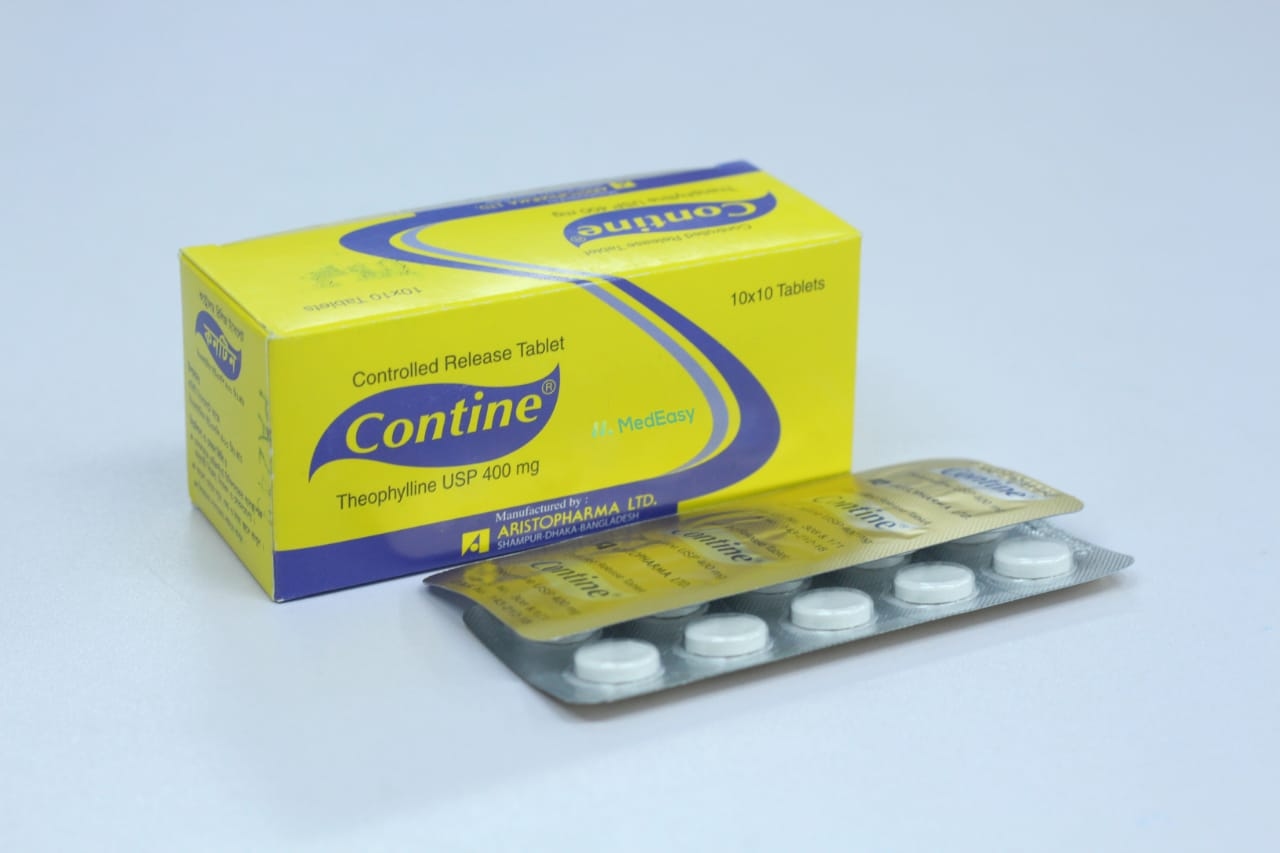
Contine400 mg
Aristopharma Ltd.
৳27.42
Add to cart


Unikon SR is a methylxanthine bronchodilator used mainly as a second- or third-line option, generally added when preferred inhaled therapies are insufficient. Indications are classified below by evidence strength.
Unikon SR is not a rescue medicine for acute breathlessness and does not replace fast-acting inhalers.
Theophylline is available in multiple pharmaceutical forms depending on brand and market, including immediate-release tablets, sustained-release/extended-release tablets or capsules, oral liquid (syrup/elixir), and injectable solutions. Common strengths include Theophylline 100 mg, 200 mg, 300 mg, and 400 mg tablets/capsules, and Theophylline oral liquid formulations such as 120 mg/5 mL. Exact composition and inactive ingredients vary by brand/manufacturer; refer to the specific product label for the precise formulation of Theophylline being dispensed.
Unikon SR is a methylxanthine-derivative bronchodilator that has been used for decades in the management of asthma and chronic obstructive pulmonary disease (COPD). It relaxes bronchial smooth muscle, reduces airway responsiveness to stimuli, and modestly improves diaphragmatic contractility, thereby easing airflow obstruction. Because Unikon SR has a narrow therapeutic index — the difference between an effective dose and a toxic dose is small — its use requires individualized, often weight-based dosing with periodic monitoring of serum Unikon SR levels. In current asthma and COPD treatment guidelines, Unikon SR is generally reserved as a second- or third-line option after inhaled bronchodilators and corticosteroids.
Methylxanthine bronchodilator (xanthine derivative); anti-asthmatic/anti-COPD agent.
Theophylline relaxes airway smooth muscle and suppresses the response of the airways to stimuli, producing bronchodilation. Proposed mechanisms include non-selective inhibition of phosphodiesterase enzymes (raising intracellular cyclic AMP), antagonism of adenosine receptors, and anti-inflammatory/immunomodulatory effects at higher concentrations. Theophylline also stimulates the central respiratory drive and enhances diaphragmatic muscle contractility, which contributes to its historical use in apnea of prematurity. It is metabolized in the liver mainly via the CYP1A2 enzyme (with lesser involvement of CYP2E1 and CYP3A), giving it a large potential for drug interactions. Elimination half-life varies widely — roughly 3 to 9 hours in healthy adult non-smokers — but is prolonged in neonates, the elderly, and patients with hepatic impairment, heart failure, or febrile illness, and shortened in smokers and children.
Because Unikon SR has a narrow therapeutic index, dosing must be individualized based on body weight, age, clinical response, and periodic serum Unikon SR concentration monitoring. The generally accepted therapeutic serum range is approximately 10–15 mcg/mL; levels above this range substantially increase the risk of toxicity. Therapy is typically started at a lower dose and increased gradually (for example, by no more than about 25% of the previous daily dose at a time), with serum levels checked before further increases. See the Dosage and Administration sections below for indication-specific detail; do not adjust or stop Unikon SR dosing without medical supervision.
Take Unikon SR exactly as prescribed and at consistent times each day, since food and timing can affect absorption of some formulations. Extended-release/sustained-release tablets and capsules must be swallowed whole and must not be crushed, chewed, or split unless the specific product is scored for that purpose, as doing so can cause rapid release of the full dose and toxicity. Take doses either consistently with food or consistently without food, according to the specific product's instructions, rather than switching back and forth. If a dose is missed, take it as soon as remembered unless it is close to the next scheduled dose; do not double the dose. Do not change brands of Unikon SR without consulting the prescriber, since bioavailability can differ between products.
Unikon SR is metabolized mainly by the hepatic CYP1A2 enzyme and has numerous clinically significant drug interactions. The table below summarizes major interactions; this list is not exhaustive, and any new medicine (including over-the-counter products) should be discussed with a physician or pharmacist.
| Interacting substance | Effect on Unikon SR | Clinical significance |
|---|---|---|
| Ciprofloxacin | Increases Unikon SR levels | Raises risk of toxicity; dose reduction and monitoring needed |
| Erythromycin, clarithromycin | Increases Unikon SR levels | Raises risk of toxicity; monitor serum levels |
| Cimetidine | Increases Unikon SR levels | Substantial increase reported; avoid or monitor closely |
| Fluvoxamine | Increases Unikon SR levels | Marked CYP1A2 inhibition; avoid combination or reduce dose |
| Oral contraceptives (estrogen-containing) | Increases Unikon SR levels | May require dose adjustment |
| Allopurinol (high dose) | Increases Unikon SR levels | Monitor for toxicity |
| Phenytoin | Decreases Unikon SR levels (phenytoin levels may also fall) | May reduce Unikon SR efficacy; monitor both drug levels |
| Rifampin | Decreases Unikon SR levels | May need Unikon SR dose increase |
| Carbamazepine | Decreases Unikon SR levels | May need Unikon SR dose increase |
| Cigarette/tobacco smoking (and stopping smoking) | Smoking increases clearance (lowers levels); stopping smoking decreases clearance (raises levels) | Any change in smoking status requires dose reassessment; inform the prescriber before quitting or resuming |
| Other xanthine-containing products, stimulants, or high caffeine intake | Additive stimulant effect | Increased risk of nervousness, tremor, palpitations; limit caffeine intake |
| Beta-agonists, corticosteroids, diuretics | No major change in Unikon SR levels | May increase risk of hypokalemia when combined with Unikon SR |
Theophylline is contraindicated in patients with known hypersensitivity to Theophylline or to any component of the specific product formulation. It should not be used together with other Theophylline-containing or xanthine-derivative products, as this increases the risk of additive toxicity. Use is not appropriate outside of medical supervision given the need for individualized, monitored dosing.
Side effects are generally dose-related and more likely as serum Unikon SR concentrations approach or exceed the therapeutic range. Common side effects include:
Signs of more serious toxicity — persistent or repeated vomiting, marked tachycardia, irregular heartbeat, or seizures — require immediate medical attention (see Overdose Effects and Precautions and Warnings).
Pregnancy: Unikon SR crosses the placenta. Some animal reproduction studies have shown adverse fetal effects at high doses, and human data are limited; safety in pregnancy has not been firmly established. Unikon SR should be used in pregnancy only if the potential benefit to the mother justifies the potential risk to the fetus, and only under a physician's guidance, generally with closer monitoring of serum levels as pregnancy can alter clearance.
Lactation: Unikon SR passes into breast milk at concentrations similar to maternal serum levels. Breastfed infants may experience irritability, feeding difficulty, or, rarely, signs of mild toxicity. Use during breastfeeding should occur only under medical supervision, with the infant observed for irritability or poor feeding; if the mother's Unikon SR level is within the toxic range, additional caution is warranted.
Unikon SR is a narrow therapeutic index drug: the difference between a therapeutic and a toxic dose is small, and toxicity (including serious arrhythmias and seizures) can occur even at levels only slightly above the therapeutic range. Periodic monitoring of serum Unikon SR concentration is essential, especially at treatment initiation, after any dose change, when signs of toxicity appear, or when a condition or medicine that affects Unikon SR clearance changes.
Use with particular caution in patients with:
Any change in smoking status (starting, stopping, or significant change in amount smoked) alters Unikon SR clearance and requires dose reassessment by the prescriber — do not change smoking habits without informing the physician. Patients should limit caffeine and other xanthine-containing beverages or medicines, as these can add to Unikon SR's stimulant side effects. Whenever nausea, vomiting (especially repeated), rapid or irregular heartbeat, or other signs of toxicity occur, further doses should be withheld and medical advice sought immediately, ideally with a serum Unikon SR level check. Do not switch between Unikon SR brands or formulations without medical advice, as bioavailability can differ.
Unikon SR overdose or toxicity can be serious and, in severe cases, life-threatening. Early symptoms may include nausea, vomiting (often repeated), abdominal pain, headache, restlessness, and insomnia. As serum levels rise further, more severe effects can occur, including significant tachycardia, cardiac arrhythmias, marked hypotension, hyperglycemia, low blood potassium, seizures (which may occur without earlier warning symptoms, particularly with acute large overdoses), and, rarely, death. Because toxicity can progress rapidly and seizures can occur even without milder warning signs, any suspected Unikon SR overdose or signs of significant toxicity require immediate emergency medical attention. Treatment is supportive and may include activated charcoal (if appropriate and given promptly), cardiac monitoring, seizure management, and, in severe cases, measures to enhance Unikon SR removal under hospital care. Do not attempt to manage a suspected overdose at home.
Store at room temperature (below 30°C), away from light and moisture. Keep out of reach of children.
Pediatric patients: Unikon SR has a long history of approved use in pediatric asthma, but clearance varies greatly with age (highest relative doses often needed in young children, and reduced clearance in neonates and infants under one year), so pediatric dosing requires careful, individualized calculation and serum level monitoring; see Pediatric Uses.
Elderly patients: Unikon SR clearance is reduced in patients over 60 years, increasing the risk of toxicity at doses tolerated by younger adults; lower starting doses and closer monitoring are recommended.
Hepatic impairment: Unikon SR clearance can be reduced substantially in liver disease; dose reduction and more frequent serum level monitoring are needed.
Renal impairment: Unikon SR is primarily hepatically metabolized, so dose adjustment for renal impairment alone is generally not required, but caution is still advised in significant renal disease, especially with concurrent illness.
Smokers: Smokers metabolize Unikon SR faster and often need higher doses; conversely, if a patient stops smoking, clearance falls and the dose usually needs to be reduced to avoid toxicity.
Pregnancy and breastfeeding: See Pregnancy and Lactation.
Unikon SR is generally used as a long-term maintenance therapy for chronic asthma or COPD, with duration determined by the treating physician based on ongoing symptom control, lung function, tolerability, and periodic serum level monitoring. It is not intended for short-term relief of acute breathlessness. Any decision to continue, adjust, or stop Unikon SR therapy — including step-down as asthma/COPD control improves with other therapies — should be made in consultation with the prescribing physician, and should not be stopped or restarted abruptly without medical advice, since this can affect clearance and dosing needs.
Methylxanthines / Xanthine derivatives; Anti-asthmatic and anti-COPD bronchodilators.
Theophylline produces bronchodilation mainly by relaxing airway smooth muscle and reducing airway hyperresponsiveness to stimuli. Proposed cellular mechanisms include non-selective inhibition of phosphodiesterase enzymes (increasing intracellular cyclic AMP in smooth muscle), antagonism of adenosine receptors, and, at higher concentrations, anti-inflammatory and immunomodulatory actions. It also stimulates the central respiratory drive and improves contractility of the diaphragm, supporting its historical use in apnea of prematurity. Onset and duration of effect depend on the formulation (immediate- versus extended-release) and on individual metabolic clearance via hepatic CYP1A2.
C
Unikon SR has an established history of use in pediatric chronic asthma, historically approved for symptomatic and prophylactic management in children who require ongoing bronchodilator therapy, and it has also been used under specialist supervision for apnea of prematurity. However, because of Unikon SR's narrow therapeutic index and highly age-dependent, unpredictable clearance in infants and young children, pediatric use requires careful individualized, typically weight-based dosing together with regular serum Unikon SR level monitoring. Neonates and infants under one year have reduced and variable clearance and are at higher risk of toxicity; use in this age group should occur only under close specialist (pediatric/neonatal) supervision. Parents/caregivers should watch for early signs of toxicity — persistent vomiting, unusual restlessness, rapid heartbeat — and seek prompt medical advice if these occur.
Q: What is Unikon SR 400 mg Tablet used for?
A: Unikon SR 400 mg Tablet is a bronchodilator used for the long-term maintenance treatment of chronic asthma and chronic obstructive pulmonary disease (COPD). It is usually added when inhaled bronchodilators and corticosteroids are not enough to control symptoms, and it is not meant for quick relief of a sudden asthma attack.
Q: Why do I need blood tests while taking Unikon SR 400 mg Tablet?
A: Unikon SR 400 mg Tablet has a narrow therapeutic index, meaning the effective dose and the toxic dose are close together. Periodic blood tests measure your serum Unikon SR 400 mg Tablet level so your doctor can keep it in the safe, effective range and adjust your dose if needed.
Q: Can I drink coffee or tea while taking Unikon SR 400 mg Tablet?
A: You should limit caffeine-containing drinks (coffee, tea, energy drinks) and other stimulants while taking Unikon SR 400 mg Tablet, because caffeine can add to side effects such as nervousness, tremor, and a fast heartbeat.
Q: I am a smoker on Unikon SR 400 mg Tablet — does that matter?
A: Yes. Smoking speeds up how quickly your body clears Unikon SR 400 mg Tablet, so smokers often need higher doses. If you stop smoking, your Unikon SR 400 mg Tablet level can rise and cause toxicity unless your dose is reduced, so always tell your doctor before you change your smoking habits.
Q: What should I do if I miss a dose of Unikon SR 400 mg Tablet?
A: Take the missed dose as soon as you remember, unless it is almost time for your next dose — in that case, skip the missed dose and continue your normal schedule. Never take a double dose to make up for a missed one, as this increases the risk of toxicity.
Q: What are the warning signs of Unikon SR 400 mg Tablet toxicity?
A: Watch for persistent or repeated vomiting, unusual restlessness, a fast or irregular heartbeat, or seizures. These can signal a Unikon SR 400 mg Tablet level that is too high, and you should seek immediate medical attention if they occur.
Disclaimer
The information provided is accurate to the best of our knowledge, but it does not replace professional medical advice. We cannot guarantee its completeness or accuracy, and the absence of specific information about a drug should not be taken as an endorsement. We are not responsible for any consequences arising from this information, so please consult a healthcare professional for any concerns or questions.