8% Off
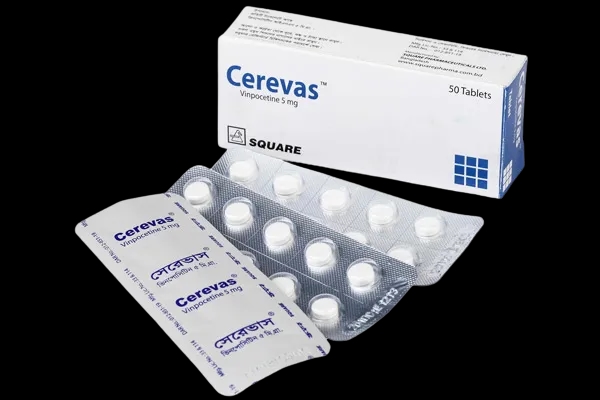
Cerevas5 mg
Square Pharmaceuticals PLC.
৳37.08
Add to cart
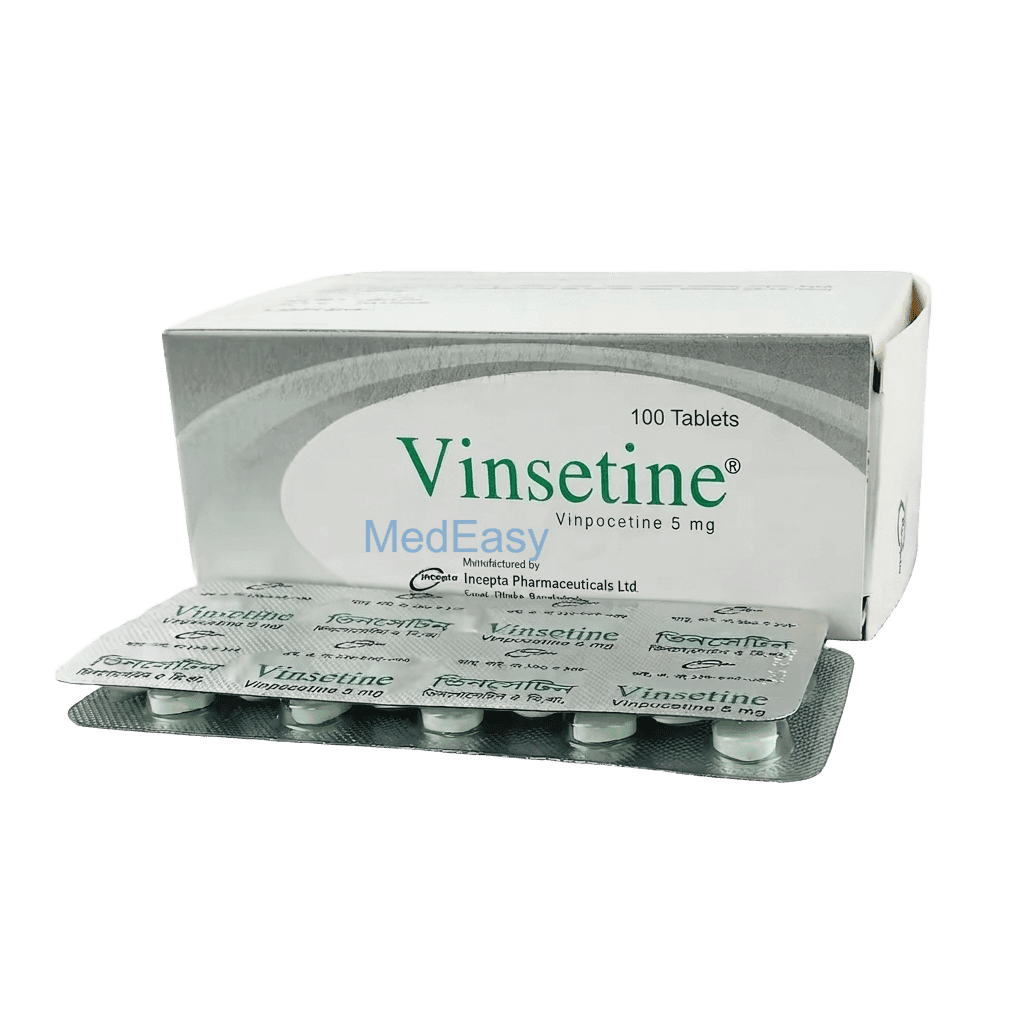
Vinsetine 5 mg Tablet is available on MedEasy for ৳3.60 per piece, with home delivery anywhere in Bangladesh. It is manufactured by Incepta Pharmaceuticals Ltd. Its generic name is Vinpocetine.

Vinsetine is used as an adjunct in the management of symptoms related to chronic cerebrovascular insufficiency and its cognitive consequences. Evidence for its efficacy is moderate/limited compared to major, first-line drug classes for these conditions, so it is generally used as a supportive or add-on therapy rather than as monotherapy for a diagnosed neurological disease.
Note: Vinsetine is not an FDA-approved prescription drug in the United States (its US regulatory status is that of an unapproved/unauthorized dietary-supplement ingredient with an active FDA safety warning); the indications above reflect its status as a registered prescription medicine in markets such as Bangladesh.
Each tablet of Vinpocetine contains Vinpocetine USP/BP as the sole active pharmaceutical ingredient, commonly available in strengths of 5 mg and 10 mg for oral use. Tablets also contain standard pharmaceutical excipients (e.g., binders, fillers, disintegrants, coating agents) that do not affect the therapeutic action of Vinpocetine.
Vinsetine is a semisynthetic derivative of vincamine, an alkaloid originally extracted from the leaves of the lesser periwinkle plant (Vinca minor). It is classified pharmacologically as a nootropic agent and cerebral vasodilator with phosphodiesterase-1 (PDE1) inhibitory activity.
Vinsetine is used clinically to improve cerebral blood flow and oxygen/glucose utilization in brain tissue, and is marketed in a number of countries, including Bangladesh, as a prescription oral tablet for cognitive and cerebrovascular symptoms. It is not approved as a drug by the US FDA; in the United States its sale has instead been the subject of an FDA safety warning, chiefly because of teratogenicity signals seen in animal studies.
Nootropic agent / Cerebral vasodilator (Phosphodiesterase-1 [PDE1] inhibitor)
Vinpocetine selectively inhibits calcium/calmodulin-dependent phosphodiesterase type 1 (PDE1), leading to increased intracellular cyclic GMP levels in vascular smooth muscle, which produces cerebral-selective vasodilation and improves regional cerebral blood flow. Vinpocetine also blocks voltage-sensitive sodium channels, which is thought to contribute to a neuroprotective effect during ischemia, and it has been shown to modestly inhibit platelet aggregation and reduce blood viscosity, further supporting microcirculatory flow.
Oral bioavailability of Vinpocetine is low (approximately 7%) and is increased when taken with food. Peak plasma concentration is reached roughly 1 hour after an oral dose. Vinpocetine is extensively metabolized in the liver, predominantly to apovincaminic acid (AVA), an active metabolite. The elimination half-life of Vinpocetine is approximately 4-5 hours, and metabolites are excreted mainly via the kidneys.
Dosage of Vinsetine should be individualized by the prescribing physician based on indication, response, and tolerability. A typical regimen is summarized below.
| Indication | Adult dose | Notes |
|---|---|---|
| Cognitive impairment associated with cerebrovascular insufficiency (adjunct) | 5 mg three times daily initially, may be increased to 10 mg three times daily (15-30 mg/day total) based on response and tolerability | Reassess need for continued therapy after several weeks |
| Post-stroke cognitive sequelae (adjunct) | 5-10 mg three times daily, as directed by physician | Used alongside standard stroke rehabilitation/secondary prevention, not as a replacement |
Tablets of Vinsetine should be swallowed whole with a glass of water, preferably after meals, to improve absorption and reduce gastrointestinal upset. Treatment with Vinsetine should only be started, adjusted, or stopped under medical supervision.
Vinsetine tablets should be taken orally with food or immediately after a meal to enhance absorption and minimize stomach upset. Swallow the tablet whole with water; do not crush or chew unless the product labeling specifically permits it. Doses should be spaced evenly through the day (e.g., three times daily) as advised by the physician, and Vinsetine should not be stopped or the dose changed abruptly without medical advice.
| Interacting drug/class | Effect / mechanism | Clinical recommendation |
|---|---|---|
| Antihypertensive and antiarrhythmic drugs | Theoretical additive blood-pressure-lowering and cardiac-rhythm effects when combined with Vinsetine | Use with caution; monitor blood pressure and heart rhythm |
| Anticoagulants and antiplatelet agents (e.g., warfarin, aspirin, clopidogrel) | Theoretical mild additive effect on platelet function/bleeding tendency with Vinsetine, based on limited data | Use with caution; monitor for signs of bleeding, especially at treatment initiation |
| CNS depressants | Limited theoretical potential for additive sedation | Use with caution; monitor for excessive drowsiness |
Overall, published high-quality clinical interaction data for Vinsetine are limited; the interactions above are largely theoretical or based on mechanism, and patients should inform their physician of all other medicines and supplements they are taking before starting Vinsetine.
Vinsetine is generally well tolerated at recommended doses. Reported adverse effects are usually mild and transient.
Patients should seek medical advice if side effects with Vinsetine are severe or persistent.
Pregnancy: Vinsetine is contraindicated during pregnancy. Animal reproduction studies have shown teratogenic effects (fetal harm) with Vinsetine, and it should not be used by women who are pregnant or planning pregnancy.
Lactation: It is not established whether Vinsetine passes into human breast milk. Given the pregnancy safety signal and limited data, Vinsetine should be avoided during breastfeeding; a physician should be consulted if use is being considered in a breastfeeding mother.
Use Vinsetine with caution in patients with a history of hypotension, cardiac arrhythmia, or unstable cardiovascular disease, as noted under Contraindications. Caution is also advised in patients with hepatic or renal impairment, as clinical experience in these groups is limited.
Because robust, high-quality clinical trial evidence supporting Vinsetine is more limited than for major, guideline-endorsed drug classes, it should be used as an adjunct under medical supervision rather than as a substitute for established therapies for stroke, dementia, or cardiovascular disease. Patients should be reassessed periodically to confirm continued benefit.
In the United States, Vinsetine is not an FDA-approved drug; regulatory status varies by country, and patients should only use Vinsetine products obtained through legitimate, regulated pharmaceutical channels on a physician's advice.
Data on deliberate overdose with Vinsetine are limited. Based on its known pharmacology, overdose may be expected to cause exaggerated side effects such as pronounced hypotension, dizziness, and cardiac rhythm disturbances. If overdose with Vinsetine is suspected, seek immediate medical attention or contact a poison control center/emergency services; do not attempt to manage a suspected overdose at home. Supportive and symptomatic treatment should be provided by medical professionals as needed.
Store Vinsetine at room temperature (below 30°C), away from light and moisture. Keep out of reach of children.
Elderly: Vinsetine is commonly used in older adults for its labeled indications; no specific dose adjustment is generally required, but caution is advised given a higher likelihood of concurrent cardiovascular disease and polypharmacy.
Renal impairment: Data on dose adjustment of Vinsetine in renal impairment are limited; use with caution and medical supervision.
Hepatic impairment: Since Vinsetine is extensively metabolized by the liver, use with caution in patients with hepatic impairment; dose reduction or closer monitoring may be warranted.
Pediatric population: See Pediatric Uses.
Treatment with Vinsetine is typically trialed for several weeks (commonly 4-12 weeks) before the physician reassesses whether meaningful benefit is being achieved. If benefit is seen, Vinsetine may be continued longer-term under periodic medical review; if no benefit is apparent, continued use should be reconsidered.
Nootropic agents; Cerebral vasodilators; Phosphodiesterase-1 (PDE1) inhibitors
Vinpocetine acts primarily by selectively inhibiting phosphodiesterase type 1 (PDE1), raising intracellular cyclic GMP in cerebral vascular smooth muscle and producing selective cerebral vasodilation, which increases cerebral blood flow and improves oxygen and glucose delivery to brain tissue. Vinpocetine also blocks voltage-sensitive sodium channels (contributing to neuroprotection under ischemic conditions) and mildly inhibits platelet aggregation, together supporting its use as an adjunct for cerebrovascular and cognitive symptoms.
Safety and efficacy of Vinsetine in children and adolescents (under 18 years) have not been established. Vinsetine is not recommended for use in the pediatric population outside of a physician-directed clinical context, and it should not be given to children without specific medical advice.
Q: What is Vinsetine 5 mg Tablet used for?
A: Vinsetine 5 mg Tablet is used as an adjunct treatment to help with memory and cognitive symptoms linked to poor blood flow to the brain (cerebrovascular insufficiency), including some cognitive symptoms after a stroke and in age-related cognitive decline. It is typically used alongside, not instead of, standard treatments for these conditions.
Q: Can Vinsetine 5 mg Tablet be taken during pregnancy?
A: No. Vinsetine 5 mg Tablet is contraindicated during pregnancy because animal studies have shown it can cause harm to a developing fetus. Women who are pregnant, may become pregnant, or are trying to conceive should not take Vinsetine 5 mg Tablet and should discuss alternative options with their physician.
Q: Is Vinsetine 5 mg Tablet safe while breastfeeding?
A: Vinsetine 5 mg Tablet should be avoided while breastfeeding because it is not known whether it passes into breast milk, and safety data in nursing mothers are limited. A physician should be consulted before use during breastfeeding.
Q: What are the common side effects of Vinsetine 5 mg Tablet?
A: Vinsetine 5 mg Tablet is usually well tolerated. The most common side effects include mild dizziness, headache, facial flushing, low blood pressure, nausea, dry mouth, and occasional sleep disturbances. Most of these are mild and improve with continued use or dose adjustment; severe or persistent side effects should be reported to a physician.
Q: Can Vinsetine 5 mg Tablet be taken with blood thinners?
A: Vinsetine 5 mg Tablet may have a mild additive effect on bleeding tendency when combined with anticoagulants or antiplatelet drugs such as warfarin, aspirin, or clopidogrel. This combination should only be used under medical supervision, with monitoring for unusual bruising or bleeding.
Q: What should I do if I miss a dose or take too much Vinsetine 5 mg Tablet?
A: If a dose of Vinsetine 5 mg Tablet is missed, take it as soon as remembered unless it is close to the next scheduled dose, in which case the missed dose should be skipped - do not double up. If an overdose of Vinsetine 5 mg Tablet is suspected, seek immediate medical attention or contact emergency/poison control services rather than trying to manage it at home.
Disclaimer
The information provided is accurate to the best of our knowledge, but it does not replace professional medical advice. We cannot guarantee its completeness or accuracy, and the absence of specific information about a drug should not be taken as an endorsement. We are not responsible for any consequences arising from this information, so please consult a healthcare professional for any concerns or questions.