
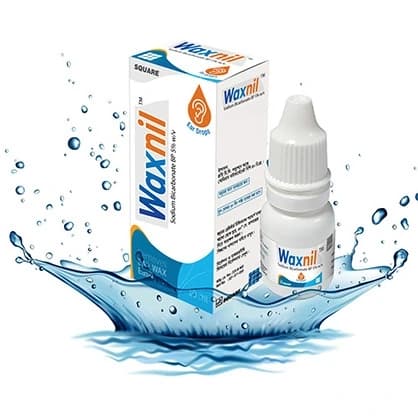

Medicine overview
Indications of Waxnil 5% w/v
Waxnil 5% w/v is an otic (ear) preparation used for the following indication:
- Softening of impacted earwax (cerumen): Waxnil 5% w/v is used to soften, loosen, and disperse hardened or impacted earwax that has accumulated in the external ear canal, facilitating its natural clearance or its removal by a healthcare professional (e.g. by ear irrigation/syringing).
This is an established, over-the-counter/pharmacist-recommended use supported by long-standing clinical practice and inclusion in national and hospital formularies as a cerumenolytic (wax-softening) agent. Waxnil 5% w/v is not an antibiotic and has no role in treating ear infections.
Composition
Sodium Bicarbonate [Ear Preparations] is formulated as an otic solution/ear drops typically containing sodium bicarbonate (commonly around 5% w/v) in a purified water or glycerin-based vehicle, intended solely for instillation into the external ear canal.
Description
Waxnil 5% w/v is an alkaline, aqueous or glycerin-based ear-drop preparation used to manage impacted earwax (cerumen). Sodium bicarbonate raises the local pH within the ear canal, which helps to soften, hydrate, and break down the keratin and lipid structure of hardened earwax.
Waxnil 5% w/v is applied directly into the external ear canal and is intended for short-term use before natural wax clearance or professional wax removal (e.g. ear irrigation/syringing by a doctor or nurse). It is available as an over-the-counter or pharmacist-dispensed product in many countries and is widely used as a first-line cerumenolytic.
Therapeutic Class
Waxnil 5% w/v belongs to the therapeutic class of Cerumenolytics (ear wax-softening agents), a subgroup of otological (ear) preparations used for local, non-antibiotic management of the external ear canal.
Pharmacology
Mechanism of action: Sodium Bicarbonate [Ear Preparations] works through a simple physicochemical mechanism rather than a pharmacological receptor-based one. Cerumen (earwax) is a mixture of keratin, lipids, and cellular debris that becomes hard and impacted over time. Sodium bicarbonate is alkaline (pH approximately 8); when instilled into the ear canal, it raises the local pH, hydrates the wax, and disrupts the keratin structure, causing the wax to swell, soften, and emulsify.
This softening allows impacted cerumen to break apart and clear naturally, or makes it substantially easier to remove by irrigation, microsuction, or manual extraction performed by a healthcare provider. Sodium Bicarbonate [Ear Preparations] has no systemic pharmacological activity when used topically in the ear as directed, because systemic absorption from the ear canal is minimal.
Dosage & Administration of Waxnil 5% w/v
Softening of impacted earwax
| Population | Recommended use |
|---|---|
| Adults | Instill 2-3 drops of Waxnil 5% w/v into the affected ear canal, 2-3 times daily, for up to 3-7 days, or as directed by a physician or pharmacist. |
| Children | Use only under the guidance of a physician or pharmacist; the same general instillation technique applies but duration and frequency should be individualized, especially in young children. |
| Elderly | No dose adjustment is generally required; use as for adults, with attention to any pre-existing ear conditions. |
If earwax does not clear, or if the ear canal remains blocked after a course of Waxnil 5% w/v, a physician or audiologist should perform professional removal (e.g. irrigation, microsuction).
Administration of Waxnil 5% w/v
To administer Waxnil 5% w/v:
- Tilt the head to the side so the affected ear faces upward, or lie down with the affected ear up.
- Gently pull the outer ear (pinna) up and back (for adults) to straighten the ear canal.
- Instill the prescribed number of drops of Waxnil 5% w/v into the ear canal without letting the dropper tip touch the ear.
- Keep the head tilted, or gently press/massage the small flap in front of the ear (tragus), for a few minutes to allow the drops to penetrate the wax.
- Use a clean tissue to wipe away any excess solution. Do not insert cotton buds or other objects into the ear canal.
Waxnil 5% w/v is for external ear (otic) use only and must never be taken orally, applied to the eyes, or used in the middle ear.
Interaction of Waxnil 5% w/v
No clinically significant drug-drug interactions are well established for topically applied Waxnil 5% w/v when used as directed, because systemic absorption from the ear canal is minimal.
- Other otic (ear) preparations: Concurrent use of other ear drops (e.g. antibiotic or steroid otic preparations) should only be done on the advice of a physician or pharmacist, since simultaneous instillation of multiple products may reduce the effectiveness of either product or wash one out before it acts.
There are no known clinically significant interactions between Waxnil 5% w/v and oral or systemic medications when the ear canal and eardrum are intact.
Contraindications
Sodium Bicarbonate [Ear Preparations] is contraindicated in the following situations:
- Known or suspected perforated eardrum (tympanic membrane perforation): Instilling Sodium Bicarbonate [Ear Preparations] into an ear with a perforated eardrum may allow the solution to enter the middle ear, risking irritation, infection, or ototoxic-type effects.
- Active ear discharge or ear infection (otitis externa/otitis media): Use of Sodium Bicarbonate [Ear Preparations] in the presence of ear discharge or a suspected infection should be avoided unless specifically directed by a physician, as it may mask, worsen, or complicate the underlying condition.
- Known hypersensitivity to sodium bicarbonate or any component of the Sodium Bicarbonate [Ear Preparations] formulation.
- Recent ear surgery: Sodium Bicarbonate [Ear Preparations] should not be used following recent ear surgery (e.g. tympanoplasty, grommet/tube insertion) except under the explicit direction of the treating surgeon or physician.
Side Effects of Waxnil 5% w/v
Waxnil 5% w/v is generally well tolerated when used as directed. Reported side effects are usually local and mild:
- Mild stinging, burning, or itching sensation in the ear canal immediately after instillation.
- Transient dizziness or a feeling of fullness in the ear.
- Local irritation or redness of the ear canal skin, particularly with prolonged or excessive use.
- Rarely, allergic/hypersensitivity reactions (e.g. rash, itching, swelling) at the site of application.
If ear pain, discharge, worsening dizziness, ringing in the ears (tinnitus), or hearing changes occur, Waxnil 5% w/v should be stopped and a physician consulted promptly (see Precautions and Warnings).
Pregnancy & Lactation
Waxnil 5% w/v is applied topically to the external ear canal, and systemic absorption of sodium bicarbonate from this route is minimal. Based on this low systemic exposure, Waxnil 5% w/v is generally considered to carry a low risk when used as directed during pregnancy and breastfeeding.
Nonetheless, as with any medicine, Waxnil 5% w/v should be used during pregnancy or lactation only if clearly needed, and a physician or pharmacist should be consulted before use to confirm it is appropriate for the individual situation.
Precautions & Warnings
- Waxnil 5% w/v is for external ear (otic) use only. Do not swallow, and avoid contact with the eyes.
- Do not use if the eardrum is known or suspected to be perforated, or if there is any ear discharge, pain, or suspected infection (see Contraindications) — consult a physician first.
- Do not insert cotton swabs, ear buds, or any other objects into the ear canal, as this can push wax further in or injure the ear canal/eardrum.
- Discontinue use and seek medical attention if ear pain, discharge, dizziness, ringing in the ears, or any change in hearing develops during or after use of Waxnil 5% w/v.
- If earwax does not soften or clear after a full course of Waxnil 5% w/v, or if the ear canal remains blocked, consult a physician or audiologist for professional wax removal rather than continuing self-treatment indefinitely.
- Use with caution in people with diabetes, immunocompromise, or a history of recurrent ear infections; consult a physician before use.
- Keep out of reach of children; use in children only under the guidance of a physician or pharmacist.
Overdose Effects of Waxnil 5% w/v
Significant overdose or toxicity from topical otic use of Waxnil 5% w/v is unlikely because systemic absorption from the ear canal is minimal. Excessive or prolonged use may increase the likelihood of local irritation of the ear canal skin.
If Waxnil 5% w/v is accidentally swallowed in a large amount, or if it is instilled into an ear with a perforated eardrum and unusual symptoms (such as severe pain, dizziness, or hearing loss) occur, seek immediate medical attention or contact a poison control center. Do not attempt specific home treatment for a suspected overdose.
Storage Conditions
Store at room temperature (below 30°C), away from light and moisture. Keep the container tightly closed and out of reach of children.
Use In Special Populations
Pediatric patients: Waxnil 5% w/v may be used in children, but only under the guidance of a physician or pharmacist, as the ear canal in young children is smaller and more sensitive; safety and efficacy of self-directed use in infants and very young children have not been well established.
Elderly patients: No specific dose adjustment is required in elderly patients; however, elderly individuals are more prone to impacted earwax and may have more fragile ear canal skin, so gentle administration is advised.
Renal or hepatic impairment: No dose adjustment is necessary, as Waxnil 5% w/v has negligible systemic absorption when used as an otic preparation.
Patients with diabetes or a compromised immune system: Should consult a physician before using Waxnil 5% w/v, given a higher baseline risk of ear canal infection.
Duration Of Treatment
Waxnil 5% w/v is typically used for a short course of 3 to 7 days to soften impacted earwax before natural clearance or professional removal. It should not be used continuously beyond this period without re-assessment by a physician or pharmacist. If the ear canal remains blocked after this period, professional evaluation and wax removal are recommended rather than extended self-treatment.
Drug Classes
Cerumenolytics; Otological (ear) preparations; Ear wax-softening agents
Mode Of Action
Sodium Bicarbonate [Ear Preparations] acts locally within the external ear canal. Its alkaline pH hydrates and softens the keratin-lipid matrix of impacted cerumen, causing the wax to swell and break apart (emulsify). This physicochemical softening effect allows trapped wax to clear naturally along the ear canal or to be removed more easily and comfortably by irrigation or manual/professional extraction. Sodium Bicarbonate [Ear Preparations] does not act on any specific receptor or enzyme system and has no antimicrobial or anti-inflammatory activity.
Pediatric Uses
Waxnil 5% w/v may be used in children for softening impacted earwax, but only under the supervision of a physician or pharmacist, since the pediatric ear canal is smaller, more sensitive, and more easily injured. The safety and efficacy of unsupervised, self-directed use of Waxnil 5% w/v in infants and very young children have not been formally established, and parents/caregivers should seek professional guidance before use in this age group. Cotton swabs or other objects should never be used to clean a child's ear canal.
Frequently Asked Questions
Q: What is Waxnil 5% w/v 10 ml Ear Drop used for?
A: Waxnil 5% w/v 10 ml Ear Drop is an ear preparation used to soften impacted or hardened earwax (cerumen), making it easier for the wax to clear naturally or to be removed by a healthcare professional through ear irrigation or other methods.
Q: How should I use Waxnil 5% w/v 10 ml Ear Drop?
A: Tilt your head so the affected ear faces upward, instill the prescribed number of drops of Waxnil 5% w/v 10 ml Ear Drop into the ear canal, and keep the head tilted for a few minutes to let the solution penetrate the wax. Use it 2-3 times daily for up to 3-7 days, or as directed by a physician or pharmacist. Do not insert cotton swabs or other objects into the ear.
Q: Can I use Waxnil 5% w/v 10 ml Ear Drop if my ear is painful or discharging?
A: No. Waxnil 5% w/v 10 ml Ear Drop should not be used if there is ear pain, discharge, a suspected ear infection, or a known or suspected perforated eardrum, since it may worsen the condition or allow the solution to enter the middle ear. Consult a physician before use in these situations.
Q: Is Waxnil 5% w/v 10 ml Ear Drop safe to use during pregnancy or breastfeeding?
A: Waxnil 5% w/v 10 ml Ear Drop is applied topically to the ear with minimal absorption into the body, and is generally considered low risk during pregnancy and breastfeeding when used as directed. Still, it should only be used if clearly needed, and a physician or pharmacist should be consulted first.
Q: What side effects can Waxnil 5% w/v 10 ml Ear Drop cause?
A: Waxnil 5% w/v 10 ml Ear Drop is usually well tolerated. Some people experience mild stinging, itching, transient dizziness, or irritation in the ear canal. If ear pain, discharge, worsening dizziness, ringing in the ears, or hearing changes occur, stop using Waxnil 5% w/v 10 ml Ear Drop and see a physician promptly.
Q: What should I do if my earwax does not clear after using Waxnil 5% w/v 10 ml Ear Drop?
A: If the earwax does not soften or clear after a full course of Waxnil 5% w/v 10 ml Ear Drop (typically 3-7 days), or if the ear remains blocked, see a physician or audiologist for professional wax removal rather than continuing to self-treat.
Disclaimer
The information provided is accurate to the best of our knowledge, but it does not replace professional medical advice. We cannot guarantee its completeness or accuracy, and the absence of specific information about a drug should not be taken as an endorsement. We are not responsible for any consequences arising from this information, so please consult a healthcare professional for any concerns or questions.
