Product gallery

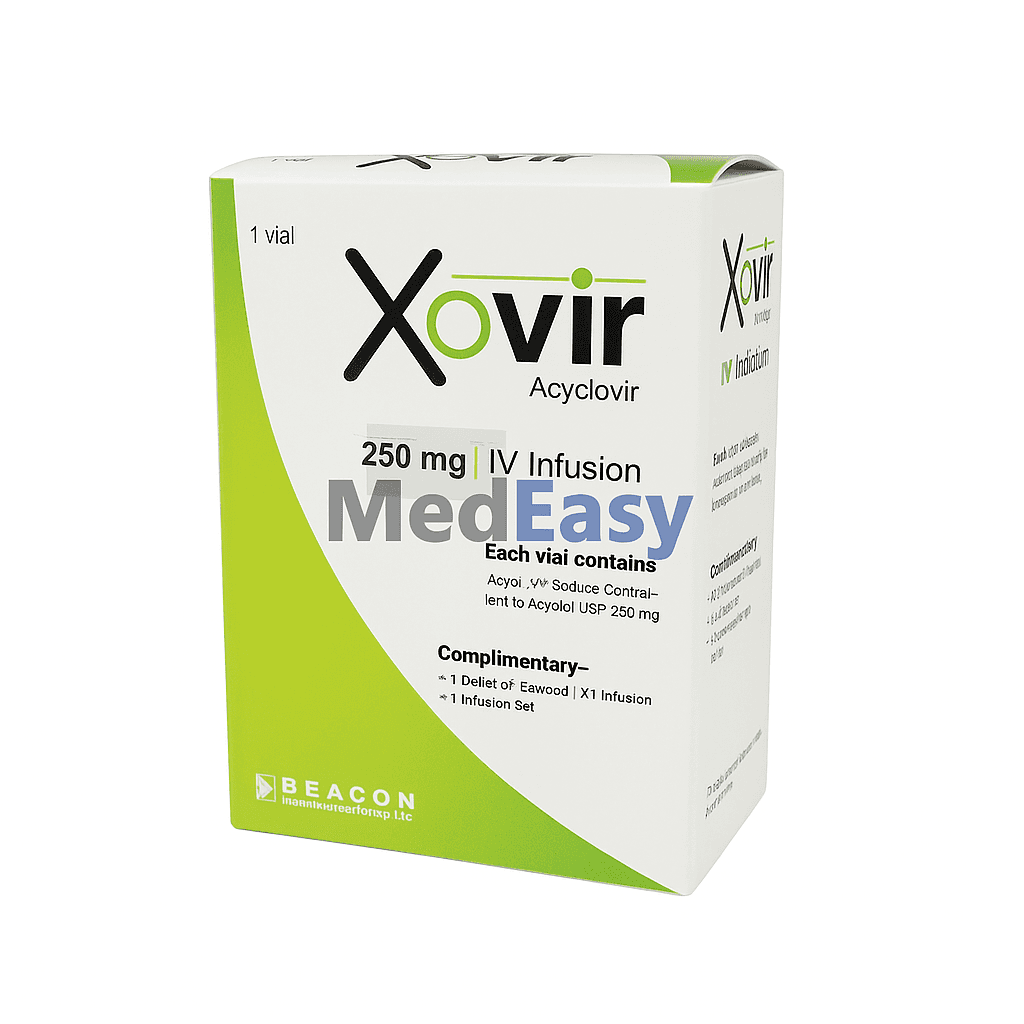
Xovir250 mg/vial

IV Infusion

Acyclovir

MRP 401.205% Off
Best PriceTk 381.14/250 mg vial
1
Section

Medicine overview

Indications of Xovir

Genital Herpes (Oral Xovir)

Xovir is an FDA-approved, guideline-supported (CDC) treatment for genital herpes caused by herpes simplex virus. It is indicated for:

  • Initial episode: treatment of the first clinical episode of genital herpes — established indication.
  • Recurrent (episodic) episodes: management of recurrent outbreaks when Xovir is started early, in the prodrome or at first sign of lesions — established indication.
  • Chronic suppressive therapy: daily Xovir reduces the frequency of recurrences in patients with frequent outbreaks — established, guideline-supported indication.

Herpes Zoster / Shingles (Oral Xovir)

Xovir is an established, FDA-approved treatment for acute herpes zoster (shingles) in immunocompetent adults, most effective when started within 72 hours of rash onset.

Chickenpox / Varicella (Oral Xovir)

Xovir is FDA-approved for treatment of chickenpox in patients 2 years and older. However, current CDC/AAP guidance does not recommend routine Xovir treatment for otherwise healthy children with typical, uncomplicated chickenpox; oral Xovir is guideline-supported specifically for higher-risk groups — healthy individuals older than 12 years, those with chronic skin or lung disease, patients on long-term salicylate or corticosteroid therapy, and secondary household cases — when Xovir is started within 24 hours of rash onset.

Herpes Labialis / Cold Sores (Topical Xovir Cream)

Xovir cream 5% is FDA-approved for treatment of recurrent herpes labialis (cold sores) on the lips and face in immunocompetent adults and adolescents 12 years and older, applied during the prodrome or as soon as lesions appear. Use of Xovir cream in immunocompromised patients has not been established.

Severe or Disseminated Herpesvirus Infections (IV Xovir)

Intravenous Xovir is an established, guideline-supported treatment for infections that are severe, disseminated, or occurring in patients who cannot tolerate oral therapy, including:

  • Mucosal and cutaneous herpes simplex virus infections in immunocompromised patients — established.
  • Severe initial episodes of genital herpes, particularly requiring hospitalization — established.
  • Herpes simplex encephalitis — established.
  • Neonatal herpes simplex virus infection — established, specialist-directed.
  • Varicella-zoster (chickenpox/shingles) infection in immunocompromised patients — established.

IV Xovir must be administered by, or under the direction of, a qualified healthcare professional in a hospital setting.

Composition

Acyclovir is available in Bangladesh in the following strengths and formulations: oral tablets containing Acyclovir 200 mg or 400 mg; oral suspension containing Acyclovir 200 mg/5 mL; topical cream containing Acyclovir 5% w/w; and Acyclovir sodium powder for IV infusion available in 250 mg, 500 mg, and 1 g vials.

Description

Xovir is an antiviral medicine used to treat infections caused by herpes simplex virus and varicella-zoster virus. Xovir works by slowing the growth and spread of the virus so the body's immune system can help control the infection, though Xovir does not cure or permanently eliminate the virus from the body. Xovir is available as tablets and oral suspension for genital herpes, cold sores, chickenpox, and shingles; as a topical cream for cold sores on the lips; and as an intravenous infusion for severe infections requiring hospital care. Starting Xovir as early as possible after symptoms begin usually gives the best results. Xovir should always be taken exactly as prescribed by a qualified healthcare professional.

Therapeutic Class

Antiviral (Nucleoside Analogue)

Pharmacology

Acyclovir is a synthetic purine nucleoside analogue. Inside cells infected with herpes simplex virus (HSV-1, HSV-2) or varicella-zoster virus (VZV), the viral enzyme thymidine kinase converts Acyclovir into Acyclovir monophosphate, which host cell enzymes further convert to Acyclovir triphosphate. This active form competitively inhibits viral DNA polymerase, is incorporated into the growing viral DNA chain causing chain termination, and inactivates the viral DNA polymerase, thereby halting viral replication. Because this activation step depends on a virus-specific enzyme, the antiviral action of Acyclovir is highly selective for virus-infected cells, with much less effect on uninfected host cells. After oral dosing, Acyclovir has variable, dose-dependent bioavailability of roughly 10-20%; food does not significantly affect absorption. Acyclovir is eliminated primarily by the kidneys, with an elimination half-life of approximately 2.5 to 3.3 hours in patients with normal renal function — this is why Acyclovir dosing must be adjusted in renal impairment (see Precautions & Warnings).

Dosage & Administration of Xovir

Xovir dosing is not one-size-fits-all — the strength, frequency, formulation (tablet, suspension, cream, or IV infusion), and duration of Xovir treatment all depend on the specific infection being treated, the patient's age, weight, kidney function, and immune status. The table below is a general reference; the exact dose and course of Xovir must always be determined and prescribed by a qualified healthcare professional.

Administration of Xovir

  • Tablets/suspension: Xovir may be taken with or without food; swallow tablets with a full glass of water; shake the oral suspension well and measure each dose with an accurate oral syringe or measuring cup.
  • Maintain adequate hydration while taking oral or IV Xovir, especially at higher doses, to help protect the kidneys (see Precautions & Warnings for the full explanation).
  • Topical cream: wash and dry hands before and after applying Xovir cream; apply a thin layer to the affected external lip/face area only — avoid the eyes, inside the mouth, and mucous membranes; do not cover with a bandage unless advised.
  • IV infusion: Xovir is administered only by a healthcare professional in a hospital or clinical setting, given as a slow infusion over at least 1 hour — never as a rapid or bolus injection.
  • Take or apply Xovir doses at evenly spaced times and complete the full prescribed course even if symptoms improve early.
  • Starting Xovir as early as possible after the first sign of symptoms (tingling, prodrome, or lesion) gives the best results for episodic use.

Interaction of Xovir

  • Probenecid: reduces renal excretion of Xovir, increasing Xovir plasma concentration and half-life, which may raise the risk of Xovir-related side effects.
  • Other nephrotoxic drugs (e.g., aminoglycosides, cyclosporine, tacrolimus, NSAIDs): coadministration with Xovir, especially IV or high-dose oral Xovir, may increase the risk of kidney dysfunction.
  • Mycophenolate mofetil: Xovir and the active metabolite of mycophenolate mofetil compete for renal tubular excretion, which can raise blood levels of both drugs when combined with Xovir, most relevant in transplant patients.
  • Zidovudine: concurrent use with Xovir has been associated with increased drowsiness and lethargy in some patients.
  • Theophylline: limited evidence suggests Xovir may affect theophylline levels; monitoring may be advised if combined with Xovir.

Always inform your healthcare professional or pharmacist about all other medicines, including over-the-counter drugs and supplements, before starting Xovir.

Contraindications

Acyclovir is contraindicated in patients with known hypersensitivity to Acyclovir or to valacyclovir (which is converted to Acyclovir in the body).

Side Effects of Xovir

Common Side Effects

Xovir can commonly cause nausea, vomiting, diarrhea, headache, and tiredness/malaise with oral or IV use, and mild rash or itching. With Xovir cream, local skin reactions such as dryness, burning, stinging, cracking, or flaking at the application site may occur. With IV Xovir, pain or inflammation at the infusion site is common.

Serious Side Effects — Seek Medical Attention

  • Signs of kidney problems — decreased urination, swelling, unusual tiredness (see Precautions & Warnings for full explanation).
  • Neurological effects — confusion, agitation, hallucinations, tremors, seizures, or unusual drowsiness, more common in elderly patients or those with renal impairment.
  • Signs of thrombotic thrombocytopenic purpura/hemolytic uremic syndrome (TTP/HUS) — unusual bruising or bleeding, severe fatigue, pallor — rare, reported mainly in immunocompromised patients receiving IV Xovir.
  • Severe allergic reaction — swelling of the face, lips, or throat, difficulty breathing, hives.
  • Severe skin reactions — blistering or peeling skin (Stevens-Johnson syndrome, toxic epidermal necrolysis) — rare.
  • Signs of liver problems — yellowing of the skin or eyes.

Pregnancy & Lactation

Pregnancy

Xovir crosses the placenta. Xovir has been used in pregnancy for many years, and a prospective pregnancy registry following 749 pregnancies with first-trimester exposure to Xovir found a rate of birth defects similar to that in the general population; however, the registry was not large enough to rule out risk for less common defects, and no formal, adequately controlled human studies of Xovir exist. Xovir should be used during pregnancy only if the potential benefit to the mother justifies the potential risk to the fetus, and only under the direction of a qualified healthcare professional — this applies to oral, topical, and IV Xovir alike.

Breastfeeding

Xovir passes into breast milk, at concentrations reported to range from about 0.6 to 4.1 times the corresponding maternal plasma level. A breastfed infant could be exposed to a small amount of Xovir through milk. Xovir should be given to a breastfeeding mother with caution and only when clearly indicated by a healthcare professional; Xovir cream applied to skin away from the breast, so it cannot transfer to the infant during feeding, carries minimal systemic absorption.

Precautions & Warnings

  • Kidney function and hydration (important): Xovir is eliminated from the body mainly by the kidneys, and can crystallize in kidney tubules when its solubility limit is exceeded, particularly with IV Xovir, high oral doses, or dehydration. This can cause acute kidney injury or, rarely, kidney failure, which has been fatal in some reported cases. To reduce this risk: maintain adequate fluid intake throughout treatment with Xovir, especially with IV therapy or high-dose oral regimens; IV Xovir must be infused slowly over at least 1 hour, never given as a rapid or bolus injection; and the dose of Xovir must be reduced in patients with reduced kidney function or in older adults, who often have lower kidney function than younger patients even with normal-appearing lab results. Report any decrease in urination, swelling, or unusual tiredness to a healthcare professional promptly.
  • Neurological effects: confusion, agitation, hallucinations, tremors, drowsiness, or seizures have been reported with Xovir, more often in elderly patients or those with underlying kidney impairment; use caution and seek medical advice if these occur.
  • Immunocompromised patients: rare but serious blood disorders (TTP/HUS) have been reported with IV Xovir in immunocompromised patients; these require prompt medical evaluation.
  • Topical Xovir cream — for external use only: avoid contact with the eyes, inside the mouth, nose, or genital mucous membranes; effectiveness and safety of Xovir cream have not been established in immunocompromised patients.
  • Not a cure: Xovir does not eliminate the herpes virus from the body and does not prevent transmission to others; appropriate precautions should still be followed during active lesions.
  • Elderly patients: may be more susceptible to the kidney and neurological side effects of Xovir; dose adjustment based on kidney function is often needed (see Use in Special Populations).

Overdose Effects of Xovir

Reported symptoms of Xovir overdose include agitation, confusion, drowsiness/lethargy, and seizures. Excess Xovir can crystallize in the kidney tubules, which may lead to acute kidney injury. If an overdose of Xovir is suspected, do not induce vomiting unless specifically directed to do so by a healthcare professional or poison control service, and seek emergency medical attention or contact a poison control center immediately. Maintaining adequate hydration is important, and hemodialysis may be used by treating physicians to help remove Xovir from the blood in cases of significant overdose with kidney impairment.

Storage Conditions

Store according to the product label. In general, keep Xovir tablets, suspension, and cream below 25°C, protected from light and moisture, and out of the reach of children. IV Xovir is prepared and stored according to hospital pharmacy protocols; once reconstituted or diluted, Xovir should be used within the timeframe specified on the product label (see Reconstitution).

Use In Special Populations

Children

The safety and effectiveness of oral Xovir tablets/suspension in children younger than 2 years have not been established for most indications. Xovir cream is approved only for immunocompetent patients 12 years and older with recurrent cold sores. IV Xovir is used in infants and children, including neonates, for serious infections such as neonatal herpes and encephalitis, with doses calculated by body weight and administered only under specialist hospital care. For chickenpox, routine Xovir treatment is not recommended for otherwise healthy children; oral Xovir is generally reserved for children older than 12 years or those with specific risk factors, as determined by a healthcare professional.

Elderly

Older adults may have reduced kidney function even when standard lab tests appear normal, and are more likely to experience neurological side effects from Xovir and require dose adjustment. See the renal/hydration precaution above.

Renal Impairment

Because Xovir is cleared mainly by the kidneys, patients with reduced kidney function require dose and/or interval adjustment for both oral and IV Xovir, as outlined in the Dosage table. Adequate hydration is essential (see Precautions & Warnings).

Hepatic Impairment

Specific dose adjustment data for Xovir in hepatic impairment are limited; Xovir should be used with caution in patients with significant liver disease, under the guidance of a healthcare professional.

Immunocompromised Patients

Higher doses and IV formulations of Xovir are often used for immunocompromised patients (e.g., transplant recipients, HIV-positive individuals) with herpes or varicella-zoster infections, and these patients should be monitored closely for renal and hematologic effects.

Duration Of Treatment

Duration of Xovir therapy depends on the indication: genital herpes (initial episode) 7-10 days; genital herpes (recurrent episodic therapy) 2-5 days depending on the regimen; genital herpes suppressive therapy up to 12 months before re-evaluation; herpes zoster (shingles) 7-10 days; chickenpox 5 days; herpes labialis (topical Xovir cream) 4 days; and IV Xovir for severe infections 5-21 days depending on the specific condition (see Dosage table). The prescribing healthcare professional determines the exact duration of Xovir treatment for each patient.

Reconstitution

Xovir sodium for IV infusion is supplied as a powder in vials and must be reconstituted and further diluted by a qualified healthcare professional before use — for example, a 500 mg vial of Xovir is reconstituted with Sterile Water for Injection to a concentration of approximately 50 mg/mL, then further diluted in an IV fluid to a concentration of 7 mg/mL or less before slow infusion over at least 1 hour. Reconstituted/diluted Xovir solution should be used within the timeframe specified by the manufacturer and never given as a rapid or bolus injection. This process must only be performed by trained healthcare personnel.

Drug Classes

Antiviral; Synthetic Purine Nucleoside Analogue; Herpesvirus DNA Polymerase Inhibitor

Mode Of Action

Acyclovir is converted inside virus-infected cells, first by viral thymidine kinase and then by host cell enzymes, into Acyclovir triphosphate. This active form of Acyclovir inhibits viral DNA polymerase, is incorporated into viral DNA to cause chain termination, and inactivates the viral DNA polymerase — together halting replication of herpes simplex virus and varicella-zoster virus DNA.

Pediatric Uses

Xovir is used in children for several herpesvirus infections, with the formulation, dose, and indication depending on age and condition:

  • Chickenpox (varicella): oral Xovir is not routinely recommended for healthy children with typical chickenpox; when indicated for higher-risk children (e.g., age over 12 years, chronic skin/lung disease, salicylate or corticosteroid therapy), Xovir dosing in children 2 years and older is generally 20 mg/kg per dose (up to a maximum of 800 mg per dose) four times daily for 5 days, started within 24 hours of rash onset.
  • Severe HSV or varicella-zoster infections, including neonatal herpes and encephalitis: treated with weight-based IV Xovir in a hospital setting under specialist supervision (see Dosage table).
  • Oral Xovir tablets/suspension for herpes simplex infections other than chickenpox: safety and effectiveness in children under 2 years have not been established.
  • Xovir cream: approved only for immunocompetent adolescents 12 years and older with recurrent cold sores.

Any use of Xovir in a child should be directed and monitored by a pediatrician or qualified healthcare professional.

Frequently Asked Questions

Q: What is Xovir 250 mg/vial IV Infusion used for?

A: Xovir 250 mg/vial IV Infusion is an antiviral medicine used to treat infections caused by herpes simplex virus and varicella-zoster virus. Depending on the formulation, Xovir 250 mg/vial IV Infusion is used for genital herpes, cold sores (herpes labialis), chickenpox (varicella), shingles (herpes zoster), and — as an IV infusion — severe or disseminated herpesvirus infections in hospitalized or immunocompromised patients.

Q: How is Xovir 250 mg/vial IV Infusion taken?

A: Xovir 250 mg/vial IV Infusion tablets or oral suspension are usually taken by mouth at evenly spaced intervals, with or without food, and swallowed with a full glass of water; the oral suspension should be shaken well and measured with an accurate device. Xovir 250 mg/vial IV Infusion cream is applied as a thin layer to the affected external skin only. IV Xovir 250 mg/vial IV Infusion is given only by a healthcare professional as a slow infusion in a hospital or clinic setting. The exact schedule of Xovir 250 mg/vial IV Infusion depends on the condition being treated.

Q: Can Xovir 250 mg/vial IV Infusion be taken with other medicines?

A: Xovir 250 mg/vial IV Infusion can interact with certain medicines, including probenecid, other drugs that can affect the kidneys, and mycophenolate mofetil. Always tell your healthcare professional or pharmacist about every medicine, supplement, or herbal product you are taking before starting Xovir 250 mg/vial IV Infusion.

Q: Is Xovir 250 mg/vial IV Infusion safe during pregnancy?

A: Xovir 250 mg/vial IV Infusion should be used in pregnancy only if a healthcare professional decides the benefit outweighs the potential risk. A large pregnancy registry with first-trimester exposure to Xovir 250 mg/vial IV Infusion did not find an increased overall rate of birth defects, but this does not guarantee complete safety, and Xovir 250 mg/vial IV Infusion should never be started or stopped during pregnancy without medical guidance.

Q: Can children take Xovir 250 mg/vial IV Infusion?

A: Yes, in certain situations. Xovir 250 mg/vial IV Infusion is not routinely recommended for otherwise healthy children with typical chickenpox, but it may be used in specific higher-risk children, and IV Xovir 250 mg/vial IV Infusion is used for serious herpesvirus infections in infants and children under specialist hospital care. Any use of Xovir 250 mg/vial IV Infusion in a child should be prescribed and supervised by a qualified healthcare professional.

Q: What are the common side effects of Xovir 250 mg/vial IV Infusion?

A: Common side effects of Xovir 250 mg/vial IV Infusion can include nausea, vomiting, diarrhea, headache, and tiredness with oral or IV use, and mild skin dryness, burning, or itching at the application site with the cream. Most of these are mild, but any severe or worsening symptoms should be reported to a healthcare professional.

Q: Does Xovir 250 mg/vial IV Infusion cure herpes permanently?

A: No. Xovir 250 mg/vial IV Infusion helps control outbreaks, reduce symptom severity and duration, and — with suppressive therapy — reduce how often outbreaks occur, but Xovir 250 mg/vial IV Infusion does not eliminate herpes simplex virus or varicella-zoster virus from the body, and the infection can recur after Xovir 250 mg/vial IV Infusion is stopped.

Q: Why is drinking enough water important while taking Xovir 250 mg/vial IV Infusion?

A: Xovir 250 mg/vial IV Infusion is cleared from the body mainly through the kidneys and can form crystals in the kidney tubules if fluid intake is inadequate, particularly with IV or high-dose oral Xovir 250 mg/vial IV Infusion. Staying well hydrated during treatment with Xovir 250 mg/vial IV Infusion helps reduce the risk of kidney problems.

Q: What should I do if I miss a dose of Xovir 250 mg/vial IV Infusion or think I've taken too much?

A: If a dose of Xovir 250 mg/vial IV Infusion is missed, take it as soon as remembered unless it is almost time for the next dose — do not double the dose of Xovir 250 mg/vial IV Infusion. If an overdose of Xovir 250 mg/vial IV Infusion is suspected, do not induce vomiting unless directed, and contact emergency medical services or a poison control center immediately.

Disclaimer

The information provided is accurate to the best of our knowledge, but it does not replace professional medical advice. We cannot guarantee its completeness or accuracy, and the absence of specific information about a drug should not be taken as an endorsement. We are not responsible for any consequences arising from this information, so please consult a healthcare professional for any concerns or questions.

Doctor
Cart
Account