
7% Off
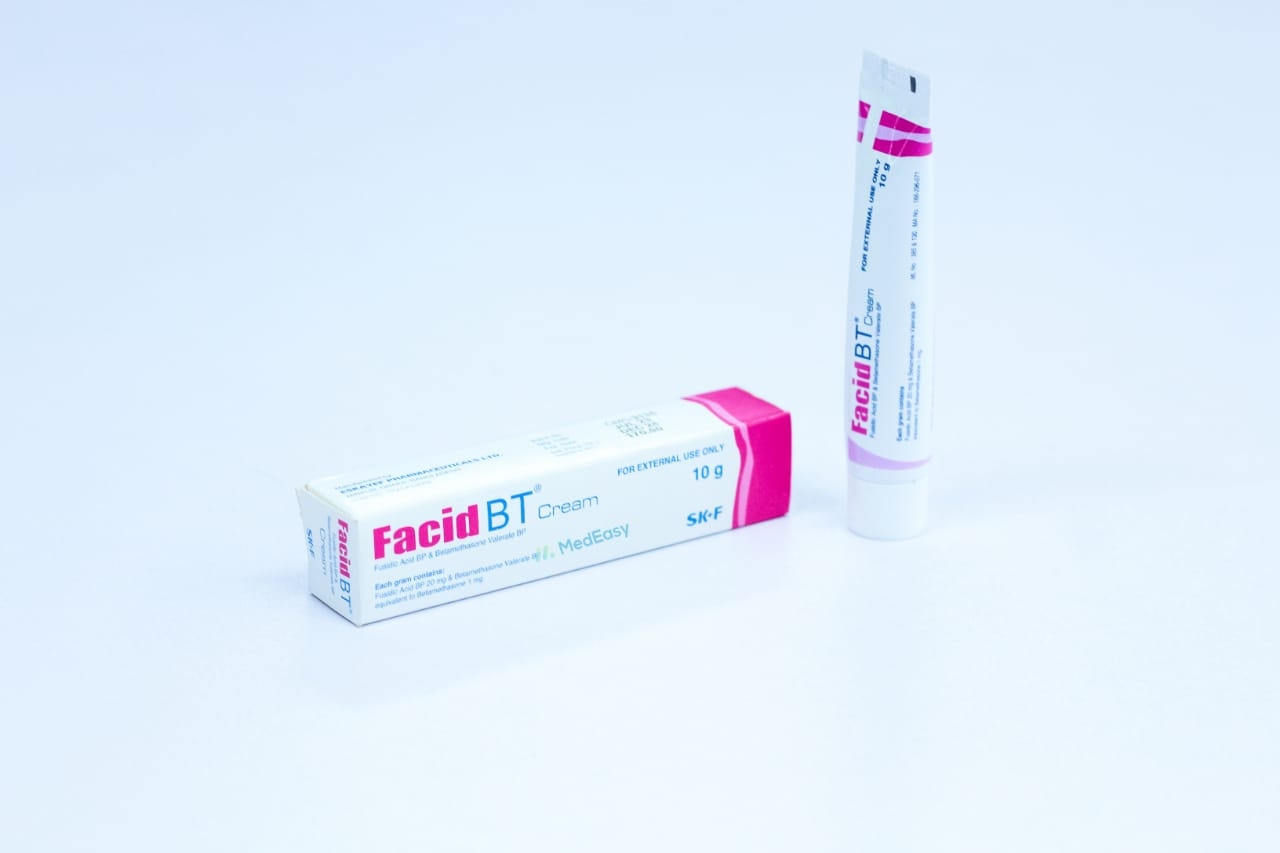
Facid BT2%+0.1%
Eskayef Bangladesh Ltd.
৳158.10
Add to cart
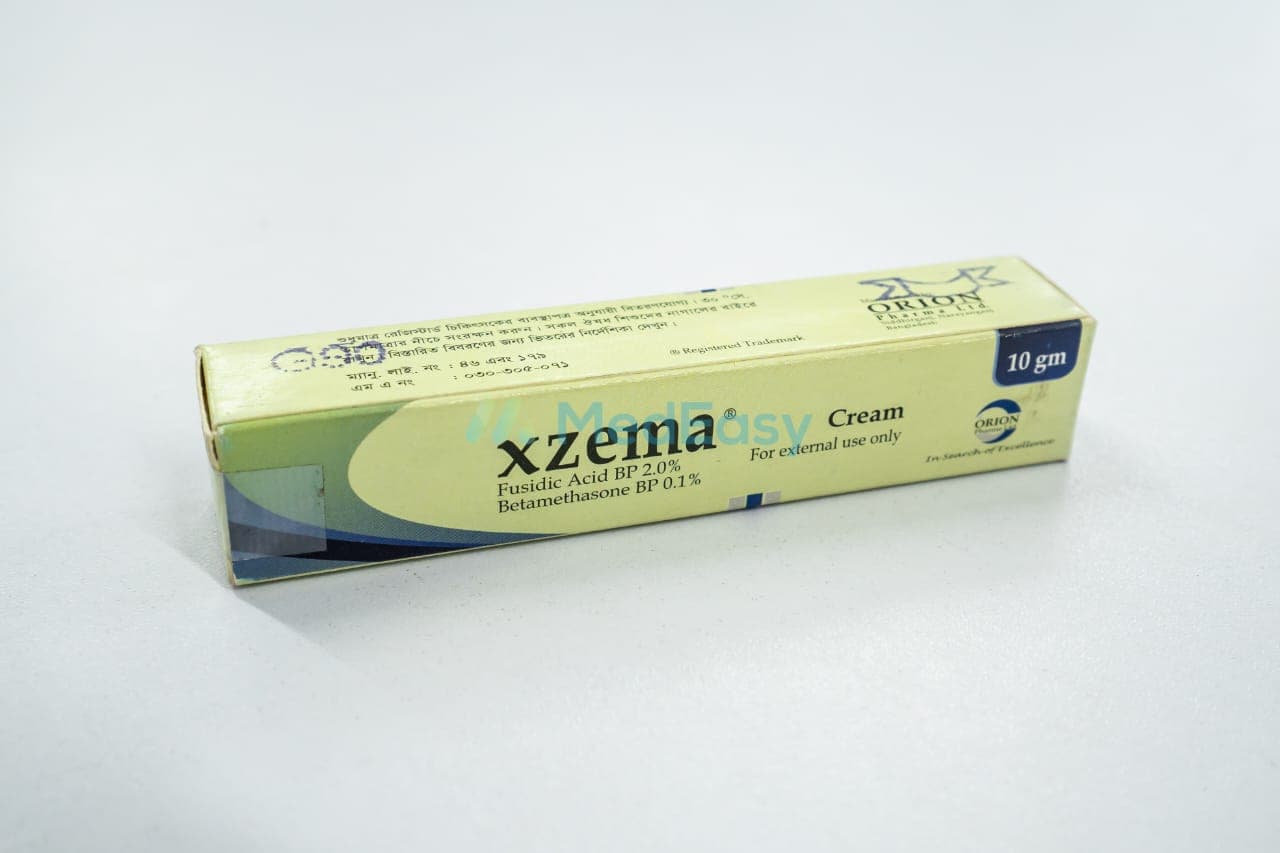

Xzema is a topical combination indicated for the short-term treatment of inflammatory skin conditions that are infected, or at risk of becoming infected, with susceptible bacteria (primarily Staphylococcus aureus).
Xzema is not intended as a first-line treatment for uncomplicated (non-infected) eczema or dermatitis, for acne, rosacea, perioral dermatitis, or for primary fungal or viral skin infections. It is not a substitute for a plain topical corticosteroid when no infection is present, and it is not for ophthalmic, oral, or extensive/prolonged use.
Each gram of Fucidic Acid + Betamethasone topical cream/ointment typically contains fusidic acid 20 mg (2% w/w) as the antibacterial component and betamethasone (as betamethasone valerate) 1 mg (0.1% w/w) as the corticosteroid component, in a suitable cream or ointment base.
Xzema is a fixed-dose topical combination of an antibiotic and a corticosteroid, formulated as a cream or ointment for application to the skin. It combines the antibacterial activity of fusidic acid, which is active against Staphylococcus aureus and other susceptible gram-positive bacteria, with the anti-inflammatory, antipruritic, and vasoconstrictive effects of betamethasone, a moderately potent corticosteroid. This combination is designed for short-term use in inflamed skin conditions where infection is present or likely, so that both the bacterial component and the associated inflammation/itching are addressed together.
Xzema belongs to the therapeutic class of topical antibacterial-corticosteroid combinations, used in dermatology for infected inflammatory skin disorders.
Fucidic Acid + Betamethasone combines two agents with complementary mechanisms:
Fusidic acid is a bacteriostatic (and at higher concentrations, bactericidal) antibiotic that inhibits bacterial protein synthesis by blocking the translocation of elongation factor G (EF-G) from the ribosome, preventing further peptide chain elongation. It is particularly active against Staphylococcus aureus, including many strains, and has activity against other gram-positive organisms.
Betamethasone (as valerate) is a synthetic corticosteroid with anti-inflammatory, antipruritic, and vasoconstrictive properties. It reduces inflammation by suppressing the migration of inflammatory cells, decreasing capillary permeability, and inhibiting the release of inflammatory mediators, thereby relieving redness, swelling, and itching associated with inflamed dermatoses.
When used topically as Fucidic Acid + Betamethasone, systemic absorption of both components is generally low but can increase with application to large areas, broken/inflamed skin, occlusive dressings, or prolonged use, particularly in infants and children.
| Indication | Dose/Frequency | Typical Duration |
|---|---|---|
| Infected eczema/dermatitis | Apply a thin layer to the affected area 2-3 times daily | Usually up to 2 weeks; not normally beyond 4 weeks |
Xzema may be used in children under medical supervision, generally for the shortest effective duration (often not exceeding 1-2 weeks), avoiding occlusive dressings and large body-surface areas because of a higher risk of systemic corticosteroid absorption. See Use in Special Populations.
No specific dose adjustment is established for topical use, as systemic absorption is minimal under normal use conditions; however, caution is advised with extensive application.
Take exactly as prescribed by your physician; do not stop, extend, skip doses, or share this medicine with others without medical advice. Xzema should be used for the shortest duration necessary to control the infected, inflamed lesion, as prolonged or repeated use of the fusidic acid component may promote bacterial resistance.
For external (topical) use only. Wash and dry the affected area before application. Apply a thin layer of Xzema and gently rub in. Wash hands after application unless the hands are the treated area. Avoid contact with the eyes, mouth, and mucous membranes. Do not cover with an occlusive (airtight/plastic) dressing unless specifically directed by a physician, as this increases systemic absorption.
Because Xzema is applied topically and systemic absorption is normally low, clinically significant drug interactions are uncommon. However, the following should be noted:
Fucidic Acid + Betamethasone is contraindicated in patients with:
Most adverse effects of Xzema are local and mild, typically related to the corticosteroid component with more prolonged use:
There is limited controlled data on the use of Xzema in human pregnancy. Topical corticosteroids should be used in pregnancy only if the potential benefit justifies the potential risk to the fetus, and treatment should be limited to the smallest effective amount for the shortest duration, avoiding application to large areas. It is not known whether topically applied fusidic acid or betamethasone is excreted in human breast milk in clinically significant amounts; if used during breastfeeding, avoid application to the breast area and use the minimum effective amount for the shortest duration. A physician should be consulted before use in pregnancy or lactation.
Use Xzema only on the skin, for the shortest duration necessary, and as directed by a physician.
Topical overdose of Xzema is unlikely to cause acute systemic toxicity, but excessive or prolonged application over large areas, especially under occlusion or in children, may lead to systemic corticosteroid effects. If accidental ingestion occurs, or if signs of systemic absorption (unusual weight gain, mood changes, worsening skin condition) appear, seek immediate medical attention or contact a poison control center; do not attempt unsupervised home treatment.
Store at room temperature (below 30°C), away from light and moisture. Do not freeze. Keep the tube tightly closed. Keep out of reach of children.
Xzema may be used in children under close medical supervision, generally for short durations, avoiding occlusive dressings and large-area application because of an increased risk of systemic corticosteroid absorption and adrenal suppression relative to adults. Safety and efficacy of prolonged use in infants and young children have not been established.
No specific dose adjustment is generally required in elderly patients; skin in this population may be thinner and more prone to atrophy, so shorter courses and close monitoring are advisable.
Not typically required to be adjusted for topical use, as systemic exposure is minimal under recommended use.
Xzema is intended for short-term use only, typically up to 2 weeks and generally not exceeding 4 weeks, unless a physician directs otherwise. Prolonged use increases the risk of skin atrophy and bacterial resistance; treatment should be reassessed if no improvement is seen within 1-2 weeks.
Topical antibacterial-corticosteroid combination (fusidic-acid-class topical antibiotic plus a moderately potent topical corticosteroid).
Fucidic Acid + Betamethasone works through two complementary mechanisms: fusidic acid inhibits bacterial protein synthesis by blocking elongation factor G (EF-G)-mediated ribosomal translocation, exerting bacteriostatic/bactericidal activity mainly against Staphylococcus aureus; betamethasone binds intracellular glucocorticoid receptors, suppressing inflammatory cell migration and mediator release, which reduces redness, swelling, and itching in the treated skin.
Xzema can be used in children only under medical supervision, generally for the shortest effective duration, avoiding occlusive dressings and use on large body-surface areas, since infants and young children absorb topical corticosteroids more readily and are at greater risk of adrenal suppression and growth effects with excessive use. Safety and efficacy of long-term or repeated use in this population have not been established; consult a pediatrician before use.
Q: What is Xzema 2%+0.1% Cream used for?
A: Xzema 2%+0.1% Cream is a topical cream/ointment used to treat inflamed skin conditions, such as infected eczema or dermatitis, that are infected or likely to become infected with bacteria susceptible to fusidic acid.
Q: How should I apply Xzema 2%+0.1% Cream?
A: Apply a thin layer to the clean, dry affected area, usually 2-3 times a day, or as directed by your physician. Do not use it under airtight dressings unless your doctor tells you to.
Q: How long can I use Xzema 2%+0.1% Cream?
A: It is meant for short-term use only, usually up to 2 weeks and generally no more than 4 weeks, because prolonged use raises the risk of skin thinning and bacterial resistance. Do not stop, extend, or skip doses without medical advice.
Q: Can I use Xzema 2%+0.1% Cream on my face or on a child?
A: Use on the face or in children should be limited and closely supervised by a physician, using the smallest amount for the shortest time, because these areas/ages are more prone to side effects like skin thinning and systemic absorption.
Q: Is Xzema 2%+0.1% Cream safe during pregnancy or breastfeeding?
A: Xzema 2%+0.1% Cream should be used in pregnancy or while breastfeeding only if a physician determines the benefit outweighs the potential risk, using the smallest effective amount for the shortest time; avoid applying it to the breast area if breastfeeding. Always consult your doctor first.
Q: When should I avoid Xzema 2%+0.1% Cream?
A: Avoid Xzema 2%+0.1% Cream if you are allergic to fusidic acid, betamethasone, or other corticosteroids, or if the affected skin has an untreated viral infection (such as herpes or chickenpox), an untreated fungal infection, or tuberculosis of the skin, since the steroid component can mask or worsen these conditions.
Disclaimer
The information provided is accurate to the best of our knowledge, but it does not replace professional medical advice. We cannot guarantee its completeness or accuracy, and the absence of specific information about a drug should not be taken as an endorsement. We are not responsible for any consequences arising from this information, so please consult a healthcare professional for any concerns or questions.

