
5% Off
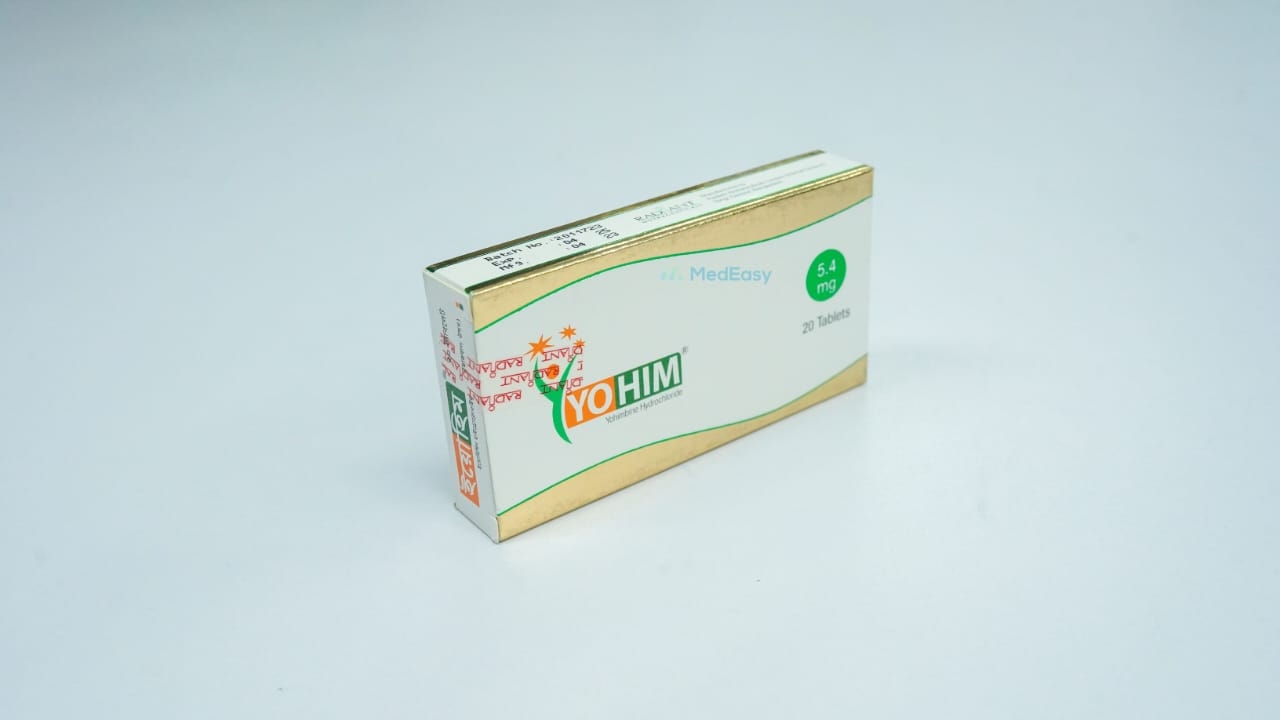
Yohim5.4 mg
Radiant Pharmaceuticals Ltd.
৳380.00
Add to cart
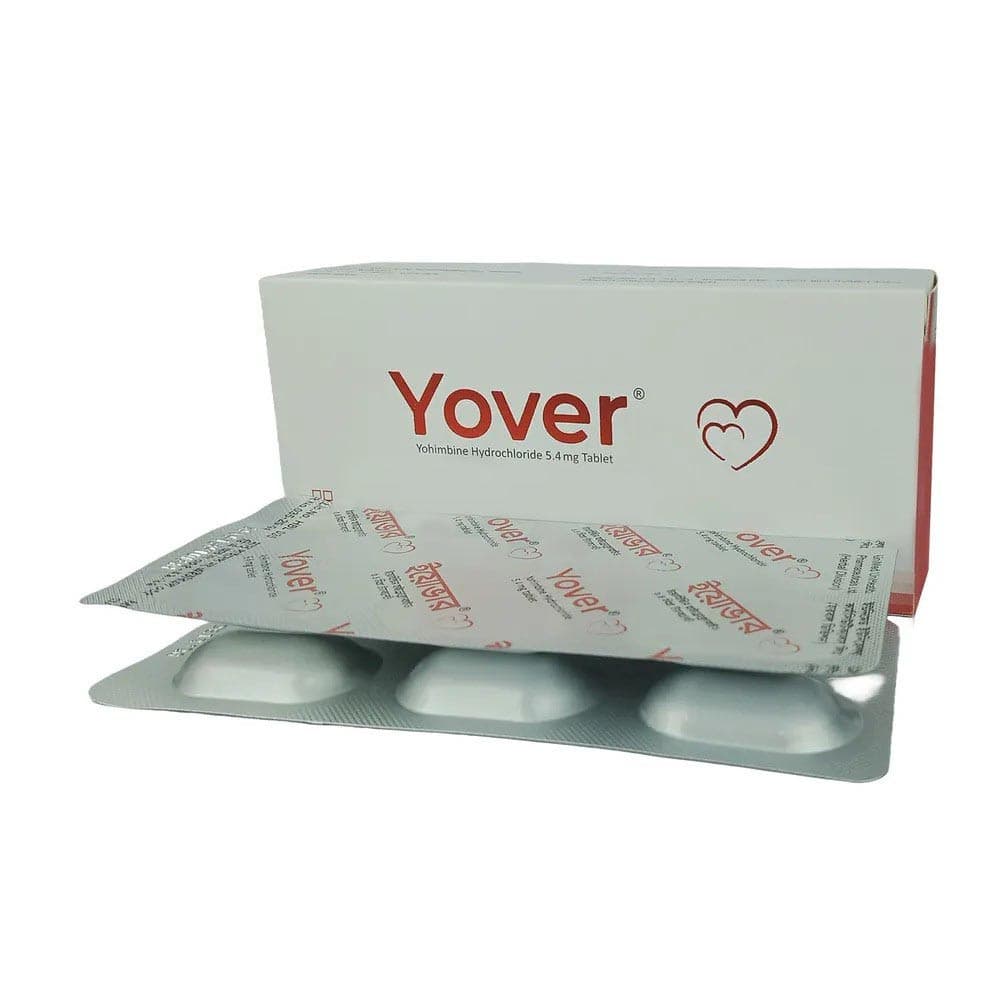

Yover is an alpha-2 adrenergic receptor antagonist that has been used both as a regulated prescription medicine (historically) and, more commonly today, as an ingredient in unregulated dietary supplements. The strength of evidence differs considerably between these uses.
Because Yover sold as an unregulated dietary/herbal supplement may have inconsistent potency and purity compared with a regulated pharmaceutical-grade product, any use for the above off-label or supplement-context purposes should only be undertaken with medical guidance.
Where formulated as a regulated oral tablet, each tablet typically contains Yohimbine Hydrochloride 5.4 mg as the active ingredient, together with standard pharmaceutical excipients suitable for oral administration. Strength and formulation (tablet or capsule) may vary between manufacturers. Note that dietary-supplement products labeled as containing "yohimbine" or "yohimbe bark extract" are not regulated as pharmaceuticals, and their actual Yohimbine Hydrochloride content may be inconsistent with, or unverified against, the labeled amount.
Yover is the hydrochloride salt of yohimbine, an indole alkaloid originally derived from the bark of the African tree Pausinystalia yohimbe (also produced synthetically). It was historically marketed as a prescription tablet for erectile dysfunction under brand names that are now largely discontinued in most regulated pharmaceutical markets.
Today, Yover (or yohimbe-derived extracts) is more commonly encountered as an ingredient in unregulated dietary/herbal supplements marketed for sexual performance, weight loss, or athletic performance, contexts in which the evidence base is weak and product quality/dosing can vary considerably. Use of Yover — whether as a regulated pharmaceutical product or a supplement — should be guided by a physician, given its narrow therapeutic window and dose-dependent cardiovascular and central nervous system effects.
Yover belongs to the alpha-2 adrenergic receptor antagonist class of agents, historically classified as an agent for erectile dysfunction/impotence.
Yohimbine Hydrochloride is a competitive antagonist at presynaptic alpha-2 adrenergic receptors. By blocking these receptors, it reduces the normal negative-feedback inhibition of norepinephrine release, increasing central and peripheral sympathetic (noradrenergic) outflow. Peripherally, this can increase blood flow, including to the corpus cavernosum, which was the rationale for its historical use in erectile dysfunction. It also has weak affinity for other receptor systems (e.g., serotonergic, dopaminergic), which may contribute to some of its central effects.
Yohimbine Hydrochloride is absorbed after oral administration, though bioavailability and effect can vary between individuals. It undergoes hepatic metabolism and is eliminated with a relatively short plasma half-life (on the order of a few hours), which is why it has historically been dosed multiple times per day. It is excreted primarily via the kidneys, which — together with its hepatic clearance — underlies why hepatic and renal disease are contraindications (see Contraindications).
| Indication | Population | Typical Dosing |
|---|---|---|
| Erectile dysfunction (historical prescription use) | Adult males | Where used under medical supervision as a regulated product, a commonly described regimen is 5.4 mg orally three times daily; some regimens start at a lower dose (e.g., a quarter to half tablet three times daily) and titrate upward over 1-3 weeks as tolerated, under physician guidance. This use has largely been replaced by PDE5 inhibitors. |
| Off-label / supplement-context uses (weight management, athletic performance) | Adults | No standard, medically-endorsed dose exists. Evidence for benefit is weak, and unregulated supplement products may not reliably reflect labeled Yover content; such use should only be considered with medical supervision, and self-directed escalation of dose is not recommended. |
Yover should be taken exactly as directed by a physician or pharmacist. Do not increase the dose or frequency on your own, particularly given the narrow margin between doses that are typically tolerated and doses associated with anxiety, hypertension, and tachycardia.
Yover is taken by mouth. When used for erectile dysfunction under medical supervision, it has typically been dosed multiple times daily rather than as a single pre-activity dose, given its short half-life. It may be taken with or without food, though taking it with food may reduce stimulant-type side effects such as jitteriness in some patients. Swallow tablets whole with water; do not crush or chew unless directed. Always follow the specific product labeling or your physician's instructions, since dosing conventions differ between a regulated pharmaceutical product and a dietary supplement.
The most clinically important interactions with Yover involve drugs that increase catecholamine or sympathetic activity:
Because unregulated supplement products may combine Yover/yohimbe with other stimulant ingredients, patients should disclose all supplements and medicines to their physician or pharmacist before use.
Yohimbine Hydrochloride is contraindicated in:
Because supplement-form products are not subject to the same quality control as regulated pharmaceuticals, side effects can be more frequent or severe if the actual Yover content is higher than labeled. Seek medical advice if side effects are severe or persistent.
Pregnancy: Yover is contraindicated in pregnancy (see Contraindications). Its sympathomimetic effects on blood pressure and heart rate pose a potential risk to both mother and fetus, and it should not be used by pregnant women, including in supplement form.
Lactation: There is insufficient reliable data on whether Yover passes into human breast milk or its effects on a nursing infant. Because of its pharmacologic activity and the risks described above, Yover should be avoided during breastfeeding unless a physician determines it is clearly needed and that the potential benefit justifies the potential risk to the infant; consult a physician before use.
Overdose or excessive dosing of Yover (which may occur more readily with inconsistently-dosed supplement products) can cause an initial period of weakness and low blood pressure, followed by elevated blood pressure, rapid heart rate, marked anxiety or agitation, flushing, dizziness, and in severe cases, more serious cardiovascular or central nervous system effects. If overdose or accidental ingestion of an excessive amount is suspected, seek immediate medical attention or contact a poison control center/emergency services without delay. Do not attempt to manage a suspected overdose at home; treatment should be supportive and directed by medical professionals, as there is no specific antidote.
Store at room temperature (below 30°C), away from light and moisture. Keep out of reach of children.
See Pediatric Uses for information regarding use in children.
When used under medical supervision for erectile dysfunction, a physician typically assesses response over a trial period of a few weeks before deciding whether to continue, adjust, or discontinue Yover. It is not intended for indefinite, unsupervised use, and long-term or repeated use as a dietary supplement (e.g., for weight loss or athletic performance) is not supported by strong evidence and should only be undertaken with medical guidance and periodic reassessment, given its cardiovascular effects.
Yohimbine Hydrochloride is classified as an alpha-2 adrenergic receptor antagonist, an indole alkaloid derived from (or structurally related to compounds found in) the bark of Pausinystalia yohimbe.
Yohimbine Hydrochloride works by competitively blocking presynaptic alpha-2 adrenergic receptors, which reduces feedback inhibition of norepinephrine release and increases sympathetic (noradrenergic) activity, including increased peripheral blood flow. See Pharmacology for further detail.
Q: What is Yover 5.4 mg Tablet used for?
A: Yover 5.4 mg Tablet was historically used as a prescription treatment for male erectile dysfunction, though this use has largely been replaced by newer medicines such as PDE5 inhibitors. It is also found today in dietary supplements marketed for weight loss or athletic performance, though evidence for these uses is weak and such use should only be considered with medical guidance.
Q: Is Yover 5.4 mg Tablet the same as an over-the-counter supplement?
A: Not necessarily. Yover 5.4 mg Tablet as a regulated pharmaceutical is quality-controlled and dosed precisely, while dietary/herbal supplements labeled as "yohimbine" or "yohimbe" are not regulated to the same standard and may contain inconsistent or unverified amounts of the active ingredient, which can increase the risk of side effects.
Q: Who should not take Yover 5.4 mg Tablet?
A: Yover 5.4 mg Tablet should not be used by people with kidney disease, liver disease, significant cardiovascular disease, a history of gastric or duodenal ulcer, known hypersensitivity to Yover 5.4 mg Tablet, or by pregnant women. It should also not be combined with MAOIs, tricyclic antidepressants, or other stimulant/mood-elevating drugs, due to the risk of a hypertensive crisis.
Q: What side effects can Yover 5.4 mg Tablet cause?
A: Common side effects include anxiety, nervousness, tremor, headache, dizziness, flushing, nausea, increased heart rate, and increased blood pressure. These effects are dose-dependent and may be more pronounced with inconsistently-dosed supplement products.
Q: Can Yover 5.4 mg Tablet be used during pregnancy or breastfeeding?
A: No. Yover 5.4 mg Tablet is contraindicated during pregnancy because of its effects on blood pressure and heart rate. It should also be avoided during breastfeeding unless a physician determines it is clearly needed, since there is not enough reliable data on its safety for a nursing infant.
Q: What should I do if I take too much Yover 5.4 mg Tablet?
A: Seek immediate medical attention or contact a poison control center/emergency services right away. Do not try to treat an overdose at home; excess Yover 5.4 mg Tablet can cause serious blood pressure and heart rate changes and there is no specific antidote.
Disclaimer
The information provided is accurate to the best of our knowledge, but it does not replace professional medical advice. We cannot guarantee its completeness or accuracy, and the absence of specific information about a drug should not be taken as an endorsement. We are not responsible for any consequences arising from this information, so please consult a healthcare professional for any concerns or questions.
