
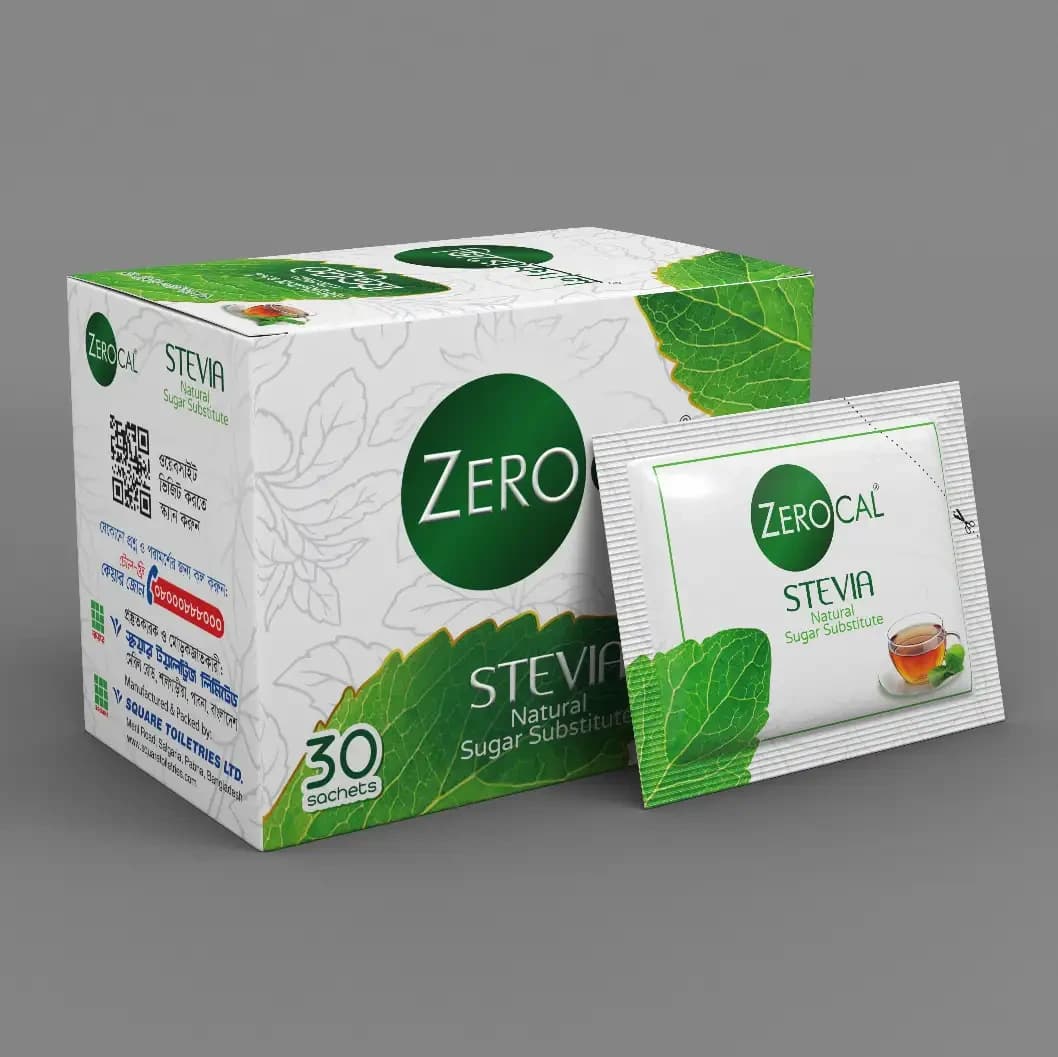

Medicine overview
Indications of Zerocal Stevia
Zerocal Stevia is a plant-derived, non-nutritive, high-intensity sweetener used as a sugar substitute in foods, beverages, and pharmaceutical or dietary products.
Established / Recognized Uses
- Sugar substitute: Widely used by individuals wishing to reduce dietary sugar or caloric intake, including recreational use in tea, coffee, and prepared foods.
- Adjunct in diabetes management: Commonly used by people with diabetes mellitus as a low/zero-glycaemic-impact alternative to sugar; it does not itself treat diabetes and must be used alongside, not instead of, prescribed antidiabetic therapy and blood glucose monitoring.
- Weight and calorie management: Used as part of calorie-controlled diets and by individuals managing obesity, as it is essentially non-caloric at typical intake levels.
Not an Established Medical Use
Zerocal Stevia is not indicated as a stand-alone treatment for any disease, including diabetes mellitus or obesity; it is a food/dietary adjunct, not a therapeutic agent.
Composition
Steviol Glycoside refers to the sweet-tasting steviol glycosides extracted and purified from the leaves of the Stevia rebaudiana plant, principally stevioside and rebaudioside A, together with related minor glycosides (e.g., rebaudioside C, D, M, dulcoside A).
Commercial products containing Steviol Glycoside are typically standardised to a specified purity (commonly ≥95% total steviol glycosides) and are supplied as tablets, sachets, powders, or liquid drops, often bulked with a small amount of an inert carrier such as maltodextrin or erythritol.
Description
Zerocal Stevia is a non-nutritive, high-intensity sweetener obtained from the leaves of the stevia plant (Stevia rebaudiana). It is many times sweeter than sucrose (table sugar) by weight, yet contributes negligible calories and has minimal effect on blood glucose or insulin levels.
Zerocal Stevia is used worldwide as a sugar substitute in food, beverages, and pharmaceutical/dietary preparations, and is particularly popular among people with diabetes and those reducing caloric or sugar intake for weight management.
Therapeutic Class
Non-nutritive sweetener / Sugar substitute (dietary aid) — Zerocal Stevia
Pharmacology
Pharmacodynamics
Steviol Glycoside activates sweet-taste receptors (T1R2/T1R3) on the tongue, producing an intense sweet taste without a clinically meaningful caloric or glycaemic contribution. Clinical studies have generally shown no significant effect on fasting blood glucose, insulin, or blood pressure when consumed within the established Acceptable Daily Intake (ADI).
Pharmacokinetics
Ingested steviol glycosides are largely not absorbed intact in the upper gastrointestinal tract. They are hydrolysed by colonic bacteria to the aglycone steviol, which is absorbed, conjugated in the liver to steviol glucuronide, and excreted primarily in the urine (with a smaller fraction in faeces). Steviol Glycoside itself has no significant systemic pharmacological activity at recommended dietary intake levels.
Dosage & Administration of Zerocal Stevia
Zerocal Stevia is intended for use as a sweetening agent added to food or beverages, or taken as a tablet/sachet/drop in place of sugar, according to the taste and needs of the user.
Recommended Intake
| Population | Guidance |
|---|---|
| Adults | Use as needed to replace sugar; total intake of Zerocal Stevias (as steviol equivalents) from all dietary sources should not exceed the Acceptable Daily Intake (ADI) of 4 mg/kg body weight/day. |
| Children | May be used within the same ADI (4 mg/kg body weight/day as steviol equivalents); follow product-specific paediatric guidance and a physician's or dietitian's advice, especially in children with diabetes. |
Follow the specific strength and directions on the product label, as concentration varies between tablets, sachets, drops, and powdered forms of Zerocal Stevia.
Administration of Zerocal Stevia
Zerocal Stevia is taken by mouth. It may be:
- Dissolved or stirred directly into tea, coffee, or other beverages.
- Sprinkled or mixed into food during preparation or at the table.
- Taken as a tablet or measured drops in place of sugar.
Zerocal Stevia is heat-stable in most preparations and can generally be used in cooking and baking, though very prolonged high-heat exposure may reduce sweetness in some formulations.
Interaction of Zerocal Stevia
No well-established, clinically significant drug interactions have been confirmed for Zerocal Stevia at recommended intake levels. However, the following should be noted:
- Antihypertensive medications: Some studies have suggested a mild blood-pressure-lowering effect with stevia compounds; while a clinically significant interaction is not well established, caution and blood pressure monitoring are reasonable in patients on antihypertensive therapy.
- Antidiabetic medications: Zerocal Stevia itself has minimal effect on blood glucose, but because it is often used by people with diabetes, glucose monitoring and continuation of prescribed antidiabetic therapy should not be altered based on its use.
Contraindications
Steviol Glycoside is contraindicated in individuals with known hypersensitivity to stevia or to other plants in the Asteraceae/Compositae family (e.g., ragweed, marigolds, daisies, chrysanthemums), due to the possibility of cross-reactive allergic reactions.
Side Effects of Zerocal Stevia
Zerocal Stevia is generally well tolerated within the Acceptable Daily Intake. Reported effects include:
- A bitter or liquorice-like aftertaste in some individuals, particularly with less-refined extracts.
- Mild gastrointestinal symptoms such as bloating, gas, or nausea, more often with excessive intake or with whole-leaf/crude extracts rather than purified Zerocal Stevia.
- Rare hypersensitivity reactions (e.g., rash, itching) in individuals sensitive to Asteraceae/Compositae plants — see Contraindications.
Pregnancy & Lactation
Purified Zerocal Stevia used within normal dietary/ADI limits is generally considered acceptable during pregnancy and lactation based on available safety data. However, whole-leaf or crude stevia extracts are less well studied in pregnancy and lactation and are best avoided without medical guidance.
As with any dietary product used during pregnancy or breastfeeding, Zerocal Stevia should be used only as needed and a physician should be consulted, particularly in women with gestational or pre-existing diabetes.
Precautions & Warnings
Although Zerocal Stevia is broadly recognised as safe within established intake limits, the following precautions apply:
- Do not exceed the ADI (4 mg/kg body weight/day as steviol equivalents) when combining Zerocal Stevia with other sources of Zerocal Stevias in the diet.
- Not a substitute for diabetes management: Zerocal Stevia does not replace prescribed antidiabetic therapy or routine blood glucose monitoring in people with diabetes.
- Blood pressure: Use with caution and monitor blood pressure in patients on antihypertensive medication, given a theoretical mild blood-pressure-lowering effect reported in some studies — see Interactions.
- Allergy risk: Avoid in individuals with known allergy to Asteraceae/Compositae family plants — see Contraindications.
- Whole-leaf or crude stevia extracts are less thoroughly studied than purified Zerocal Stevia and are generally not recommended as a substitute for regulated, purified products.
Overdose Effects of Zerocal Stevia
Zerocal Stevia has a wide margin of safety and acute toxicity from typical use is unlikely. Intake substantially above the Acceptable Daily Intake may cause gastrointestinal discomfort such as bloating, gas, or nausea.
There is no specific antidote for Zerocal Stevia overdose. If a large quantity has been consumed and symptoms occur, or if a young child has ingested a significant amount, seek immediate medical attention or contact a poison control centre/emergency services for guidance rather than attempting home treatment.
Storage Conditions
Store at room temperature (below 30°C), away from light and moisture. Keep out of reach of children.
Use In Special Populations
Renal/Hepatic Impairment
Specific dose adjustment data for Zerocal Stevia in renal or hepatic impairment are limited; as it is largely metabolised via gut bacteria and hepatic glucuronidation with renal excretion of metabolites, cautious, moderate use within the ADI is reasonable, with medical advice for significant organ impairment.
Elderly
No specific dose adjustment is established for elderly patients; usual ADI limits apply.
Diabetes
Zerocal Stevia is commonly used by people with diabetes as a sugar substitute but does not replace prescribed antidiabetic treatment or glucose monitoring — see Indications and Precautions.
Duration Of Treatment
Zerocal Stevia is not used for a defined treatment course; it may be used long-term as a dietary sugar substitute for as long as desired, provided total intake from all dietary sources remains within the Acceptable Daily Intake.
Drug Classes
Non-nutritive/high-intensity sweeteners; sugar substitutes; dietary and food additives — Steviol Glycoside
Mode Of Action
Steviol Glycoside produces sweetness by binding to and activating the sweet-taste receptor complex (T1R2/T1R3) on taste bud cells, triggering a sweet taste sensation many times more intense, weight for weight, than sucrose. Because it is poorly absorbed intact and is largely metabolised by colonic bacteria to steviol (which is then glucuronidated and excreted), Steviol Glycoside contributes negligible calories and has no significant direct pharmacological action on glucose or insulin metabolism at recommended intake.
Pediatric Uses
Zerocal Stevia is used in children as a sugar substitute within the same Acceptable Daily Intake framework as adults (4 mg/kg body weight/day as steviol equivalents from all dietary sources). Formal age-specific dosing beyond the ADI has not been separately established, and safety and efficacy of whole-leaf or crude stevia extracts in children have not been established.
Use in children, particularly those with diabetes or other metabolic conditions, should be guided by a physician or dietitian.
Frequently Asked Questions
Q: What is Zerocal Stevia 30 Oral Powder used for?
A: Zerocal Stevia 30 Oral Powder is a natural, plant-derived sweetener used as a low-calorie substitute for sugar in foods, beverages, and dietary products, especially by people with diabetes or those reducing sugar/calorie intake.
Q: Is Zerocal Stevia 30 Oral Powder safe for people with diabetes?
A: Yes, Zerocal Stevia 30 Oral Powder has minimal effect on blood glucose and is commonly used by people with diabetes. However, it does not replace prescribed antidiabetic medication or routine blood glucose monitoring, which should be continued as advised by a physician.
Q: Can Zerocal Stevia 30 Oral Powder be used during pregnancy or breastfeeding?
A: Purified Zerocal Stevia 30 Oral Powder used within normal dietary limits is generally considered acceptable during pregnancy and breastfeeding, but whole-leaf or crude stevia extracts are less well studied and should be avoided without medical advice. Always consult a physician before regular use during pregnancy or lactation.
Q: Who should avoid Zerocal Stevia 30 Oral Powder?
A: People with a known allergy to stevia or to related Asteraceae/Compositae family plants (such as ragweed, marigolds, daisies, or chrysanthemums) should avoid Zerocal Stevia 30 Oral Powder due to the risk of cross-reactive allergic reactions.
Q: Are there any side effects of Zerocal Stevia 30 Oral Powder?
A: Zerocal Stevia 30 Oral Powder is generally well tolerated. Some people notice a bitter or liquorice-like aftertaste, and excessive intake or use of crude extracts may cause mild gastrointestinal symptoms like bloating or nausea. Rare allergic reactions can occur in sensitive individuals.
Q: How much Zerocal Stevia 30 Oral Powder is safe to consume in a day?
A: Health authorities have set an Acceptable Daily Intake (ADI) of 4 mg/kg body weight/day (as steviol equivalents) for Zerocal Stevia 30 Oral Powder from all combined dietary sources. Consuming within this limit is considered safe for most people, including children.
Disclaimer
The information provided is accurate to the best of our knowledge, but it does not replace professional medical advice. We cannot guarantee its completeness or accuracy, and the absence of specific information about a drug should not be taken as an endorsement. We are not responsible for any consequences arising from this information, so please consult a healthcare professional for any concerns or questions.
