8% Off
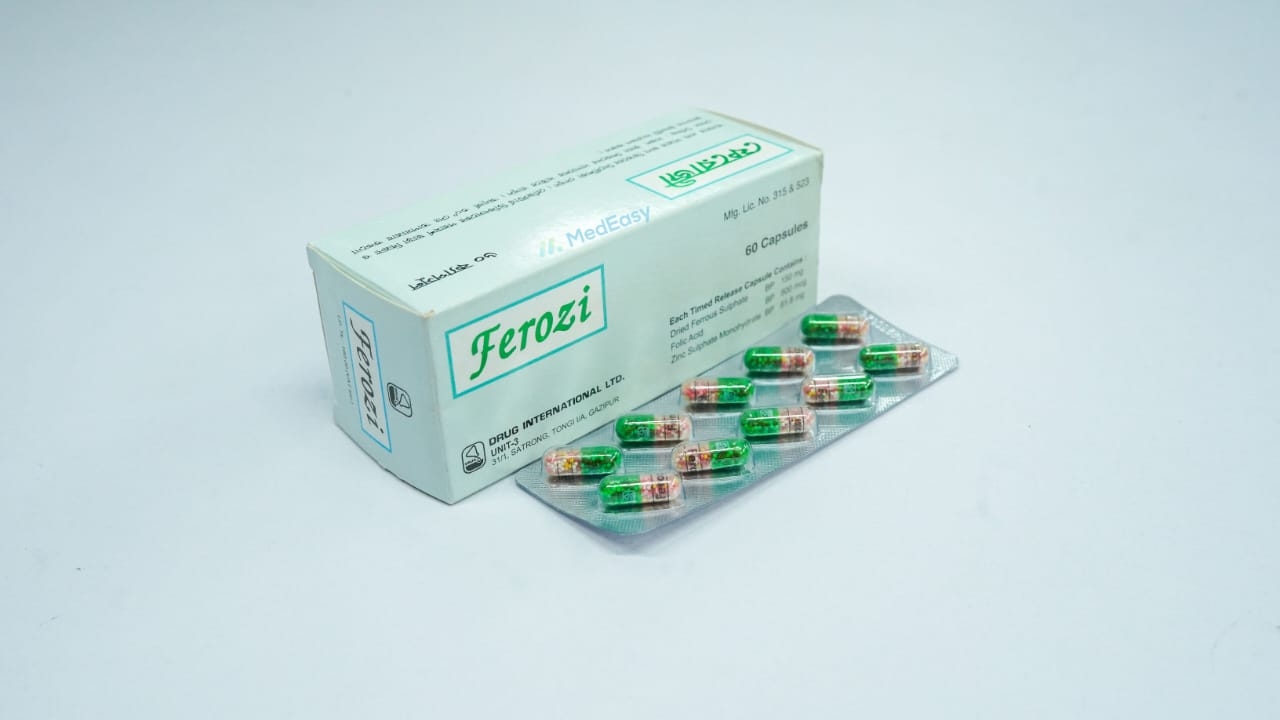
Ferozi150 mg+0.5
Drug International Ltd.
৳27.60
Add to cart

Zifa TR 150 mg+0.5 mg+61.8 mg Capsule is available on MedEasy for ৳2.61 per piece, with home delivery anywhere in Bangladesh. It is manufactured by Unimed Unihealth MFG. Ltd. Its generic name is Ferrous Sulfate + Folic Acid + Zinc Sulfate Monohydrate.

Zifa TR is a combined hematinic and mineral supplement in which ferrous sulfate supplies elemental iron for hemoglobin synthesis, folic acid supports red blood cell DNA synthesis and maturation, and zinc sulfate monohydrate supports immune function and growth. It is used for the following indications, classified by strength of evidence:
Zifa TR is a supplement intended to correct or prevent specific nutritional deficiencies; it does not treat anemia due to other causes (e.g. vitamin B12 deficiency, chronic disease, hemoglobinopathy) and is not a substitute for investigating the underlying cause of anemia. Use should be guided by a physician, ideally with confirmation of deficiency where practical.
Ferrous Sulfate + Folic Acid + Zinc Sulfate Monohydrate is typically formulated as a capsule or tablet containing Ferrous Sulfate BP (commonly around 150 mg, equivalent to approximately 47 mg elemental iron), Folic Acid BP (commonly around 500 mcg), and Zinc Sulfate Monohydrate USP (commonly around 61.8 mg, equivalent to approximately 22.5 mg elemental zinc) per unit dose. Exact strengths vary by brand and formulation (including timed-release/sustained-release preparations); refer to the specific product label for the precise elemental iron, folic acid, and elemental zinc content.
Zifa TR is an oral combination supplement of ferrous sulfate (an iron salt), folic acid (a B-group vitamin), and zinc sulfate monohydrate (a zinc salt). It is available as tablets or capsules, including timed-release formulations designed to release iron gradually and reduce gastrointestinal irritation.
Iron is an essential mineral required for hemoglobin synthesis and oxygen transport; folic acid is required for DNA synthesis and normal red blood cell maturation; zinc is an essential trace mineral involved in immune function, wound healing, growth, and numerous enzymatic processes. Zifa TR is widely used to prevent and correct combined deficiencies of these three nutrients, particularly in pregnancy, lactation, and states of poor dietary intake.
Zifa TR belongs to the therapeutic class of Iron, Vitamin and Mineral combined preparations (Hematinics), used as a nutritional supplement for the prevention and treatment of iron, folate, and zinc deficiency.
Ferrous Sulfate + Folic Acid + Zinc Sulfate Monohydrate combines three agents with complementary mechanisms:
Together, the components of Ferrous Sulfate + Folic Acid + Zinc Sulfate Monohydrate address overlapping and commonly co-occurring nutritional deficiencies, supporting normal hematopoiesis, immune function, and growth.
| Indication | Typical Adult Dosage |
|---|---|
| Iron, folic acid and zinc deficiency; nutritional anemia | One capsule/tablet of Zifa TR once daily |
| Severe deficiency (as assessed by a physician) | Up to two capsules/tablets of Zifa TR daily, in divided doses if tolerated |
| Pregnancy and lactation (as directed by physician) | One capsule/tablet of Zifa TR daily, generally starting after the first trimester unless proven deficiency justifies earlier use (see Pregnancy and Lactation) |
In children older than one year, Zifa TR is generally dosed as one capsule/tablet daily, using an age-appropriate formulation; the contents of a capsule may be opened and mixed with soft food if the child cannot swallow it whole, but pellets should not be chewed. Use in infants and children under one year should be guided by a pediatrician. See Use in Special Populations and Pediatric Uses.
Zifa TR should be used with caution in patients with renal impairment or renal failure, who are at increased risk of zinc accumulation; dosing should be individualized and monitored by the treating physician.
Zifa TR is best absorbed when taken on an empty stomach (e.g. one hour before or two hours after meals), but may be taken with food if gastrointestinal upset occurs, with some reduction in iron absorption. Swallow capsules/tablets whole with water; do not crush or chew timed-release formulations. Avoid taking with tea, coffee, milk, or calcium/antacid products, which can reduce iron and zinc absorption (see Interaction).
Zifa TR should be taken orally, ideally on an empty stomach for best absorption, or with a small amount of food if gastric irritation occurs. Doses should be spaced apart from tea, coffee, dairy products, antacids, and certain other medicines that reduce iron or zinc absorption (see Interaction). Timed-release capsules/tablets should be swallowed whole; if a capsule formulation permits, it may be opened and its contents mixed with soft food (not chewed) for patients who cannot swallow it whole.
Zifa TR has the following well-established, clinically significant interactions:
Ferrous Sulfate + Folic Acid + Zinc Sulfate Monohydrate is contraindicated in patients with:
Zifa TR is generally well tolerated at recommended doses, though gastrointestinal effects related to the iron component are common. Reported adverse effects include:
Zifa TR is commonly recommended and considered beneficial during pregnancy and lactation to prevent and treat pregnancy-associated iron, folate, and zinc deficiency, and folic acid supplementation supports fetal neural tube development. However, routine iron supplementation in the first trimester should generally be avoided unless deficiency has been proven and the potential benefit justifies the potential risk, since iron requirements are lower and gastrointestinal tolerance may be reduced in early pregnancy; folic acid and zinc supplementation are generally considered appropriate throughout pregnancy as directed by a physician. Zifa TR should be used only as directed by a physician, with the dose individualized to trimester and confirmed or likely deficiency. Iron, folic acid, and zinc are also compatible with breastfeeding at recommended supplemental doses, but a physician should be consulted before use during lactation.
The following precautions apply to use of Zifa TR:
Overdose of Zifa TR, particularly the iron component, is potentially serious and can be fatal, especially in young children who may ingest tablets/capsules accidentally. Symptoms of acute iron overdose can include nausea, vomiting (sometimes with blood), abdominal pain, diarrhea, lethargy, and, in severe cases, shock, metabolic acidosis, liver damage, and cardiovascular collapse, sometimes after a deceptive period of apparent improvement. Excessive zinc intake can cause nausea, vomiting, and, with chronic excess, copper deficiency. If overdose is suspected, seek immediate medical attention or contact a poison control center/emergency services right away, even if the person appears well; do not attempt specific home treatment or induce vomiting without medical advice. Management requires prompt medical evaluation and is directed by a healthcare professional.
Store at room temperature (below 30°C), protected from light and moisture. Keep out of reach of children.
Zifa TR may be used in children older than one year for treatment and prevention of combined iron, folic acid, and zinc deficiency, using age-appropriate dosing; capsule contents may be mixed with soft food (not chewed) if the child cannot swallow the capsule whole. Use in infants under one year should be individualized by a pediatrician. See Pediatric Uses.
Zifa TR is commonly used in elderly patients with nutritional anemia or dietary insufficiency; folic acid supplementation in this group can mask underlying vitamin B12 deficiency, which is more common with advancing age, so evaluation for B12 deficiency is advisable if anemia is present (see Precautions and Warnings).
Use with caution and under medical supervision, as renal impairment increases the risk of zinc accumulation; dose adjustment or closer monitoring may be needed.
No well-established dose adjustment is required for hepatic impairment, but patients with significant liver disease may have altered iron handling; use under medical supervision.
Duration of Zifa TR therapy depends on the indication: treatment of confirmed iron/folate/zinc deficiency anemia is typically continued for several months (often 3–6 months) after hemoglobin normalizes to replenish body iron stores, while use during pregnancy and lactation is usually continued for the relevant duration as directed by a physician, with periodic reassessment of blood counts and iron/zinc status.
Hematinic (iron salt); folate supplement; trace mineral (zinc) supplement; combined iron-vitamin-mineral preparation.
Ferrous Sulfate + Folic Acid + Zinc Sulfate Monohydrate acts by supplying elemental iron (from ferrous sulfate) for incorporation into hemoglobin and correction of iron-deficiency anemia, folic acid (converted to tetrahydrofolate) to support DNA synthesis and normal red blood cell maturation, and elemental zinc (from zinc sulfate monohydrate) as a cofactor for enzymes involved in immune function, growth, and tissue repair, together correcting combined nutritional deficiencies of these three micronutrients.
Zifa TR is used in children older than one year for the treatment and prevention of combined iron, folic acid, and zinc deficiency and associated nutritional anemia, at a dose of one capsule/tablet daily unless otherwise directed by a pediatrician; the capsule may be opened and its pellets mixed with soft food (not chewed) for children who cannot swallow it whole. Use in infants under one year of age should be individualized by a pediatrician, as safety and dosing in this age group are less well established. Because accidental ingestion of iron-containing products is a leading cause of pediatric poisoning, Zifa TR must be kept out of reach of children at all times.
Q: What is Zifa TR 150 mg+0.5 mg+61.8 mg Capsule used for?
A: Zifa TR 150 mg+0.5 mg+61.8 mg Capsule is used to treat and prevent nutritional anemia caused by combined iron and/or folate deficiency, and to supplement iron, folic acid, and zinc, particularly during pregnancy, lactation, and in people with dietary insufficiency.
Q: How should I take Zifa TR 150 mg+0.5 mg+61.8 mg Capsule?
A: Take Zifa TR 150 mg+0.5 mg+61.8 mg Capsule once daily, ideally on an empty stomach (one hour before or two hours after meals) for best absorption, or with a little food if it upsets your stomach. Swallow the capsule/tablet whole with water; avoid taking it with tea, coffee, milk, or antacids, which can reduce absorption. Follow the dose and duration advised by your physician.
Q: Can Zifa TR 150 mg+0.5 mg+61.8 mg Capsule be taken during pregnancy or while breastfeeding?
A: Zifa TR 150 mg+0.5 mg+61.8 mg Capsule is commonly recommended and considered beneficial during pregnancy to prevent and treat pregnancy-associated iron, folate, and zinc deficiency and to support fetal neural tube development, though routine iron supplementation in the first trimester should generally be avoided unless deficiency is proven. It is also generally compatible with breastfeeding at recommended doses. Use only as directed by a physician, who will individualize the dose to your stage of pregnancy or lactation.
Q: Who should not take Zifa TR 150 mg+0.5 mg+61.8 mg Capsule?
A: Zifa TR 150 mg+0.5 mg+61.8 mg Capsule should not be taken by people with hemochromatosis or other iron-overload disorders, hemolytic anemia not due to iron/folate/zinc deficiency, or known hypersensitivity to ferrous sulfate, folic acid, or zinc sulfate.
Q: Why are my stools dark after taking Zifa TR 150 mg+0.5 mg+61.8 mg Capsule?
A: Dark or black-colored stools are a very common and harmless effect of the iron component of Zifa TR 150 mg+0.5 mg+61.8 mg Capsule. Other common side effects include nausea, constipation, diarrhea, and stomach discomfort. If side effects are severe or persistent, consult your physician.
Q: What happens if too much Zifa TR 150 mg+0.5 mg+61.8 mg Capsule is taken, especially by a child?
A: Overdose of Zifa TR 150 mg+0.5 mg+61.8 mg Capsule, particularly its iron component, can be serious and even life-threatening, especially in young children who accidentally swallow tablets or capsules. Symptoms can include vomiting, abdominal pain, diarrhea, and, in severe cases, shock or organ damage, sometimes after a period of apparent improvement. If overdose is suspected, seek immediate medical attention or contact emergency/poison control services right away, even if the person seems fine, and always keep Zifa TR 150 mg+0.5 mg+61.8 mg Capsule out of reach of children.
Disclaimer
The information provided is accurate to the best of our knowledge, but it does not replace professional medical advice. We cannot guarantee its completeness or accuracy, and the absence of specific information about a drug should not be taken as an endorsement. We are not responsible for any consequences arising from this information, so please consult a healthcare professional for any concerns or questions.