8% Off
B-50 Forte
Square Pharmaceuticals PLC.
৳16.10
Add to cart
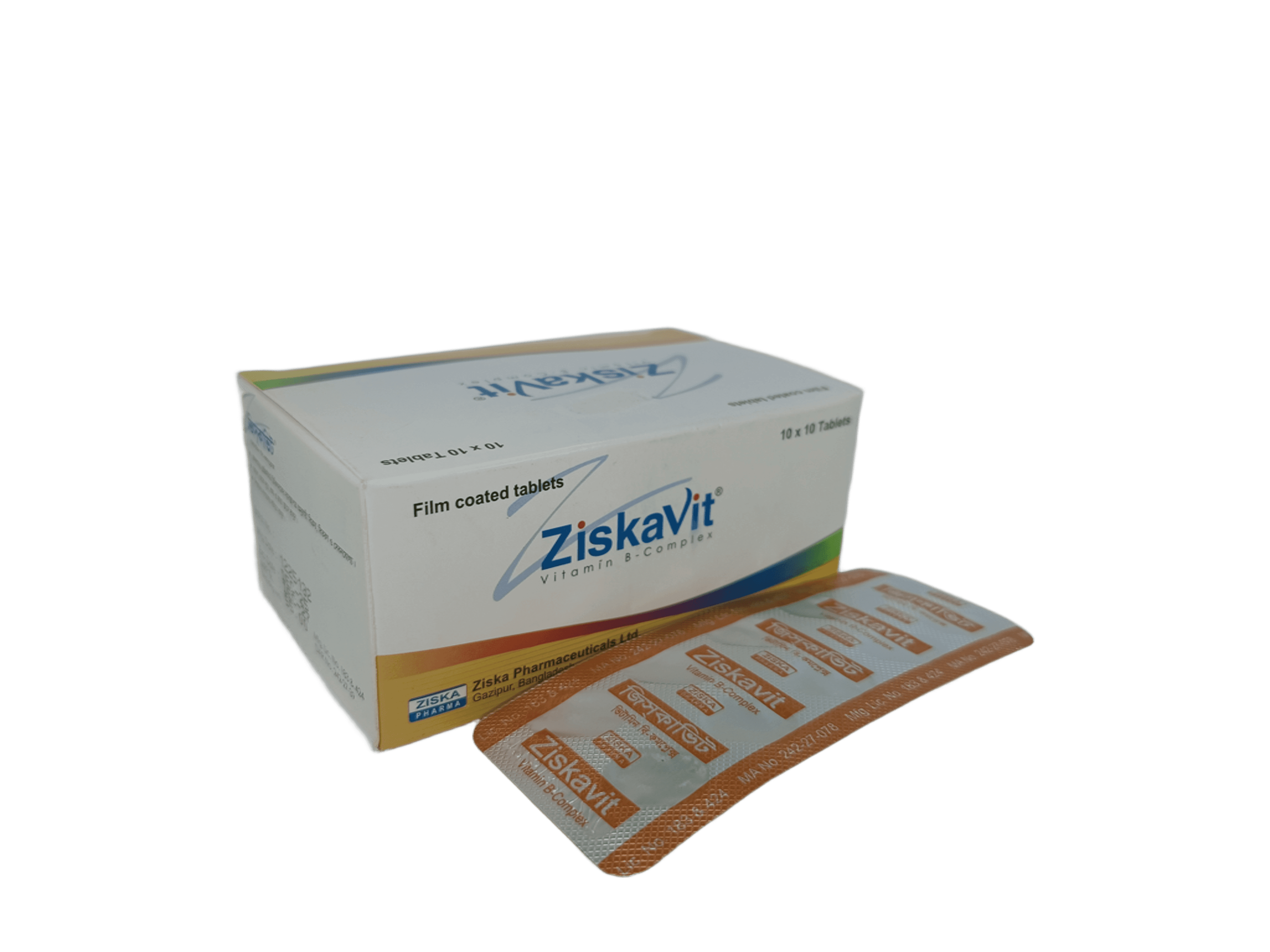
Ziskavit Capsule is available on MedEasy for ৳0.61 per piece, with home delivery anywhere in Bangladesh. It is manufactured by Ziska Pharmaceuticals Ltd. Its generic name is Vitamin B complex.

Ziskavit is indicated for:
Ziskavit is not a substitute for treatment of the underlying cause of a nutritional deficiency, and it does not treat conditions unrelated to B-vitamin status.
Vitamin B complex typically contains a combination of water-soluble B-vitamins, which commonly include:
Exact strengths and the specific vitamins included vary by brand and formulation (tablet, capsule, syrup, or injection); refer to the product label for the exact composition of a specific brand of Vitamin B complex.
Ziskavit is a multivitamin preparation combining several water-soluble B-group vitamins that function as essential cofactors in cellular energy metabolism, nervous system function, and red blood cell formation. The B-vitamins in Ziskavit are not stored in the body in large amounts and must be replenished regularly through diet or supplementation.
Ziskavit is available in various dosage forms including tablets, capsules, oral syrup, and injectable solutions, and is widely used both for treating diagnosed deficiency states and as general nutritional support.
Ziskavit belongs to the therapeutic class of Vitamin B-complex preparations / multivitamin (water-soluble vitamin) supplements.
Vitamin B complex supplies multiple B-group vitamins, each with a distinct physiological role:
Collectively, the vitamins in Vitamin B complex support energy metabolism, maintenance of the nervous system, and normal hematopoiesis (red blood cell formation).
| Indication/Form | Typical Adult Dose |
|---|---|
| Oral tablet/capsule (general deficiency/supplementation) | 1-2 tablets or capsules, 2-3 times daily, or as directed by a physician |
| Oral syrup | 2-3 teaspoonfuls (10-15 mL) daily, or as directed by a physician |
| Injection (IM/IV, for severe deficiency or malabsorption) | Usually 1-2 mL by intramuscular or slow intravenous injection daily, or as prescribed; to be administered by a healthcare professional |
Pediatric dose: See Use in Special Populations below for age-appropriate dosing; pediatric doses are generally lower and should be individualized by a physician.
Ziskavit should generally be taken with or after food to reduce the chance of stomach upset. The exact dose and duration depend on the indication, severity of deficiency, formulation, and physician's advice; do not exceed the recommended dose without medical supervision.
Oral forms of Ziskavit (tablets, capsules, syrup) should preferably be taken with or after meals to minimize gastrointestinal discomfort, and swallowed with a full glass of water. Syrup should be measured using a proper measuring device. Injectable forms of Ziskavit must be administered by a qualified healthcare professional via intramuscular or slow intravenous injection; rapid intravenous administration should be avoided, and undiluted injections should be given slowly to reduce injection-site pain.
Ziskavit has the following well-recognized clinically significant interactions:
Patients should inform their physician of all medications being taken before starting Ziskavit.
Vitamin B complex is contraindicated in patients with known hypersensitivity to any of its component vitamins or to any excipient in the specific formulation.
Ziskavit is generally well tolerated at standard supplement doses. Reported side effects include:
Standard supplemental doses of Ziskavit are generally considered safe during pregnancy and lactation and are often beneficial, particularly the folic acid component, which supports fetal neural tube development. However, Ziskavit should be used only as directed, and doses above the standard recommended supplemental amount should be used only if clearly needed and the potential benefit justifies the potential risk; a physician should be consulted before use, especially at higher-than-standard doses, to individualize therapy during pregnancy or breastfeeding.
The following precautions apply to the use of Ziskavit:
Ziskavit is not an antibiotic and does not require antimicrobial stewardship precautions; however, it should still be taken as directed by a physician or pharmacist.
Significant toxicity from oral Ziskavit at recommended doses is uncommon because most B-vitamins are water-soluble and excess amounts are excreted in urine; however, very high or prolonged doses (particularly of pyridoxine/B6 or niacin) may cause adverse effects such as peripheral neuropathy or flushing and liver effects, respectively. In case of a suspected overdose of Ziskavit, or if the patient develops symptoms such as severe nausea, numbness/tingling, or an allergic reaction after an injection, seek immediate medical attention or contact a poison control center; do not attempt specific home treatment.
Store at room temperature (below 30°C), away from light and moisture. Keep out of reach of children. Injectable forms should be protected from light and stored as per the specific product's labeling.
Pediatric use: Ziskavit may be used in children for prevention/treatment of B-vitamin deficiency using age-appropriate, weight-based dosing and formulations (typically syrup for younger children); dosing should be individualized by a pediatrician, and safety/efficacy of high-dose regimens or specific combination strengths in young children has not been formally established for all products.
Elderly: No specific dose adjustment is generally required, but elderly patients with renal impairment or those on multiple medications should use Ziskavit under medical supervision due to potential interactions and altered vitamin handling.
Renal impairment: Patients with significant renal impairment may have reduced clearance of water-soluble vitamins; use Ziskavit cautiously and under medical guidance in this population.
Hepatic impairment: No well-established dose adjustment is required for standard supplemental doses of Ziskavit, but high-dose niacin should be used cautiously in patients with liver disease.
The duration of treatment with Ziskavit depends on the indication. For correction of a diagnosed deficiency, treatment is usually continued for several weeks to a few months, or until deficiency is corrected and confirmed by clinical improvement or laboratory testing, as advised by a physician. For general nutritional supplementation, Ziskavit may be used for longer periods as part of a maintenance regimen, but prolonged high-dose use (especially of pyridoxine) should be avoided without medical supervision. Follow the physician's advice regarding how long to continue treatment.
Vitamin B-complex / multivitamin (water-soluble B-vitamin) supplement
Vitamin B complex works by replenishing the water-soluble B-group vitamins that act as essential coenzymes and cofactors in numerous metabolic pathways, including carbohydrate, fat, and amino acid metabolism (energy production), nucleic acid synthesis, and maintenance of nerve cell function and myelin integrity. By restoring adequate levels of these vitamins, Vitamin B complex helps normalize these metabolic processes in individuals who are deficient or at risk of deficiency, and supports normal red blood cell formation and nervous system function.
Ziskavit can be used in pediatric patients for prevention and treatment of B-vitamin deficiency, typically using oral syrup or age-appropriate low-strength tablet formulations dosed according to age and body weight, under the guidance of a pediatrician. Safety and efficacy of specific high-strength combination products or injectable forms in infants and young children have not been formally established for all brands, and such use should be individualized and supervised by a physician.
Q: What is Ziskavit Capsule used for?
A: Ziskavit Capsule is used to prevent and treat deficiencies of B-group vitamins (such as thiamine, riboflavin, niacin, pantothenic acid, pyridoxine, biotin, folic acid, and B12), and as general nutritional support for people with inadequate dietary intake, malabsorption, or increased vitamin needs such as during pregnancy or recovery from illness.
Q: Can I take Ziskavit Capsule every day?
A: Yes, at standard recommended supplemental doses, Ziskavit Capsule is generally safe for daily use. However, it is best to follow the dose on the product label or as advised by a physician, since high, prolonged doses of certain components such as pyridoxine (B6) can cause side effects like peripheral neuropathy.
Q: Is Ziskavit Capsule safe during pregnancy?
A: Standard doses of Ziskavit Capsule are generally considered safe and often beneficial during pregnancy, particularly for the folic acid component. However, Ziskavit Capsule should be used only as directed, and any dose above the standard recommended amount should be used only if clearly needed, with a physician's guidance, since the potential benefit must be weighed against potential risk.
Q: What are the side effects of Ziskavit Capsule?
A: Ziskavit Capsule is generally well tolerated. Possible side effects include mild stomach upset, harmless bright yellow discoloration of urine, and, rarely, peripheral neuropathy with high-dose prolonged pyridoxine use, or allergic reactions, particularly with injectable forms.
Q: Can Ziskavit Capsule be taken with other medicines?
A: Ziskavit Capsule can interact with certain medicines. For example, it may reduce the effectiveness of levodopa (used for Parkinson's disease) when levodopa is taken alone, and may lower blood levels of some anticonvulsants like phenytoin. Always inform your doctor or pharmacist about all medicines you are taking before starting Ziskavit Capsule.
Q: What should I do if I miss a dose or take too much Ziskavit Capsule?
A: If you miss a dose of Ziskavit Capsule, take it as soon as you remember, but skip it if it is almost time for the next dose; do not double the dose. Significant toxicity from oral Ziskavit Capsule is uncommon since B-vitamins are water-soluble, but if you suspect an overdose or notice unusual symptoms, seek immediate medical attention or contact a poison control center.
Disclaimer
The information provided is accurate to the best of our knowledge, but it does not replace professional medical advice. We cannot guarantee its completeness or accuracy, and the absence of specific information about a drug should not be taken as an endorsement. We are not responsible for any consequences arising from this information, so please consult a healthcare professional for any concerns or questions.