8% Off
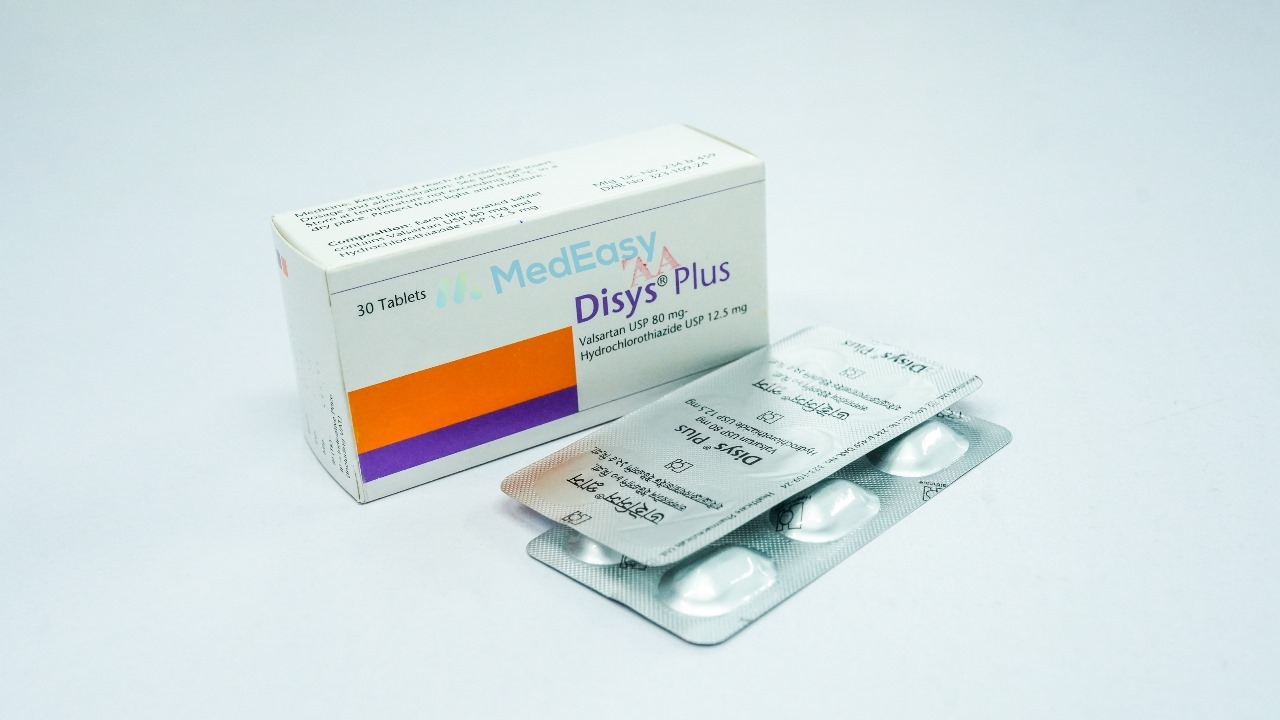
Disys Plus80 mg+12.5
Healthcare Pharmaceuticals Ltd.
৳55.20
Add to cart
Valsartan + Hydrochlorothiazide is a fixed-dose combination antihypertensive (an angiotensin receptor blocker plus a thiazide diuretic) indicated for: Hypertension: Treatment of high blood pressure…
Valsartan + Hydrochlorothiazide is a fixed-dose combination antihypertensive (an angiotensin receptor blocker plus a thiazide diuretic) indicated for:
Valsartan + Hydrochlorothiazide is not indicated for the initial treatment of hypertension in patients who are volume-depleted, nor as a substitute for the individual components when initiating therapy. It lowers blood pressure but has not been specifically studied to demonstrate reduction of cardiovascular morbidity or mortality; benefit is inferred from blood pressure lowering. Use should be individualized by a physician based on response to and tolerability of the individual components.
| Clinical scenario | Typical Adult Dose | Notes |
|---|---|---|
| Not controlled on monotherapy (add-on/substitution) | One tablet once daily; strength individualized (e.g., 80/12.5 mg, 160/12.5 mg, or 160/25 mg) | Titrate no sooner than 2-4 weeks after starting a given dose, based on blood pressure response |
| Initial therapy in patients likely to need multiple drugs | Lowest available strength once daily, titrated upward as needed | Not recommended as first-line therapy for volume-depleted patients |
| Maximum dose | Valsartan 320 mg/hydrochlorothiazide 25 mg once daily | Higher doses of hydrochlorothiazide are not usually associated with additional blood pressure benefit |
Safety and efficacy of Valsartan + Hydrochlorothiazide as a fixed-dose combination have not been established in children; it is not recommended for pediatric use (see Pediatric Uses).
Valsartan + Hydrochlorothiazide is not recommended in patients with severe renal impairment (estimated glomerular filtration rate below 30 mL/min/1.73m²) because thiazides may be ineffective and can precipitate azotemia in this population; the drug is contraindicated in anuria. Caution and monitoring of renal function are advised in mild-to-moderate renal impairment.
No dose adjustment of valsartan is generally required in mild-to-moderate hepatic impairment without cholestasis; Valsartan + Hydrochlorothiazide should be used cautiously in hepatic impairment because minor alterations in fluid and electrolyte balance may precipitate hepatic coma.
If a dose of Valsartan + Hydrochlorothiazide is missed, it should be taken as soon as remembered unless it is nearly time for the next dose, in which case the missed dose should be skipped; doses should not be doubled.
Side effects of Valsartan + Hydrochlorothiazide arise from its two components.
Patients should seek prompt medical advice for severe dizziness, fainting, muscle cramps or weakness, palpitations, marked reduction in urination, or swelling of the face/lips/tongue while taking Valsartan + Hydrochlorothiazide.
Valsartan + Hydrochlorothiazide is contraindicated in:
Disclaimer
The information provided is accurate to the best of our knowledge, but it does not replace professional medical advice. We cannot guarantee its completeness or accuracy, and the absence of specific information about a drug should not be taken as an endorsement. We are not responsible for any consequences arising from this information, so please consult a healthcare professional for any concerns or questions.