10% Off
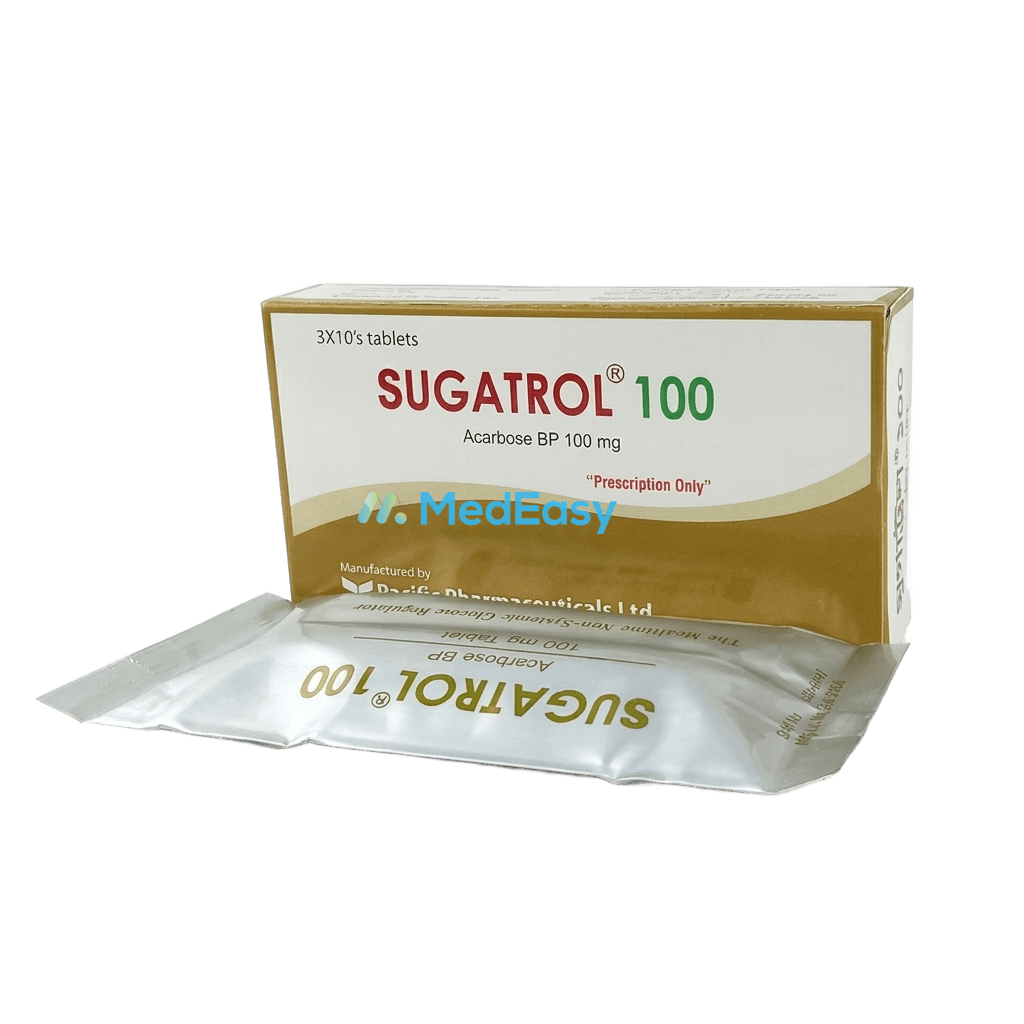
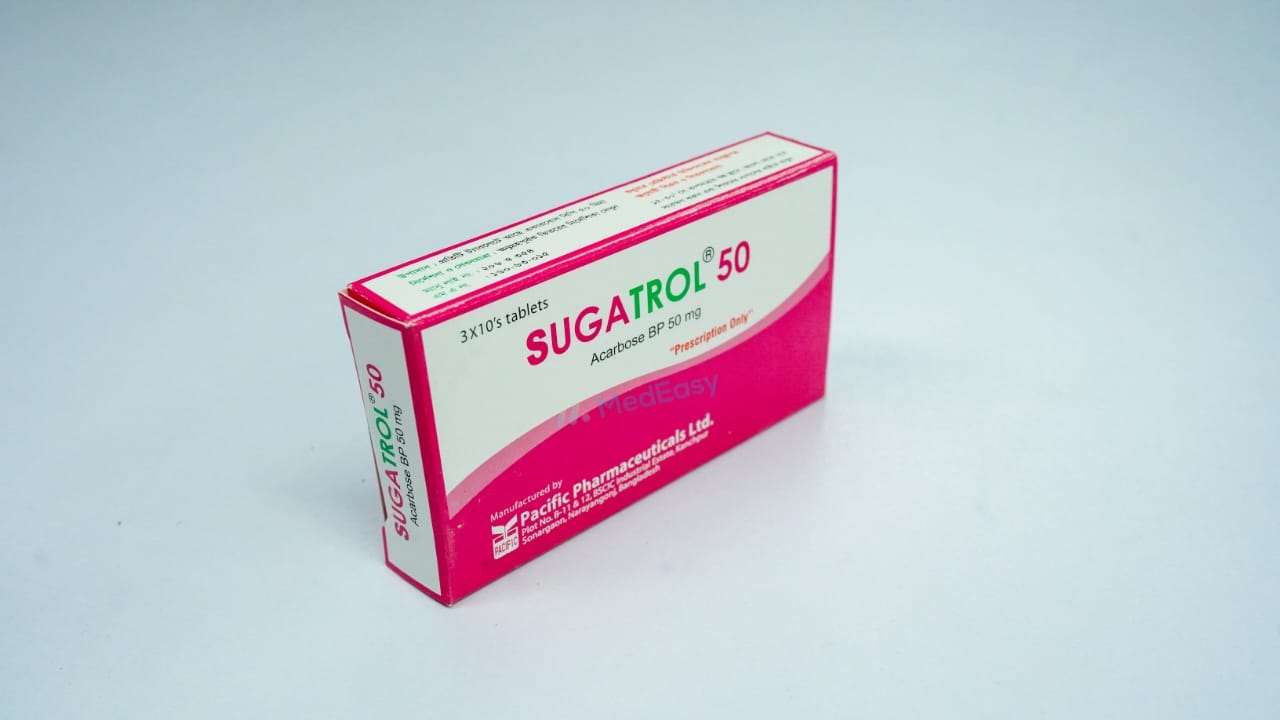
Sugatrol50 mg
Pacific Pharmaceuticals Ltd.
৳135.00
Add to cart
Acarbose is FDA-approved as an adjunct to diet and exercise to improve glycemic control in adults with type 2 diabetes mellitus .
Acarbose is FDA-approved as an adjunct to diet and exercise to improve glycemic control in adults with type 2 diabetes mellitus. It is used to reduce post-prandial (after-meal) blood glucose spikes by delaying the digestion and absorption of complex carbohydrates.
Acarbose is not indicated for the treatment of type 1 diabetes as a sole agent or for diabetic ketoacidosis.
Acarbose must be taken with the first bite of each main meal; it is not effective if taken between meals or on an empty stomach.
| Indication | Population | Dosing |
|---|---|---|
| Type 2 diabetes mellitus (monotherapy or combination) | Adults | Initial: 25 mg orally three times daily with the first bite of each main meal. Some patients may be started at 25 mg once daily to minimize gastrointestinal side effects, then gradually increased to three times daily. |
| Maintenance/titration | Adults | Increase dose gradually at 4-8 week intervals based on 1-hour post-prandial glucose levels and tolerability. Usual maintenance dose: 50-100 mg three times daily. |
| Maximum dose | Adults ≤60 kg | 50 mg three times daily |
| Maximum dose | Adults >60 kg | 100 mg three times daily |
| Type 2 diabetes mellitus | Pediatric | Safety and efficacy not established (see Use in Special Populations). |
Acarbose is contraindicated in severe renal impairment (creatinine clearance less than 25 mL/min); see Contraindications.
Acarbose is contraindicated in cirrhosis; in other hepatic conditions, periodic liver enzyme monitoring is advised (see Precautions and Warnings).
Because Acarbose delays the digestion of sucrose (table sugar), any hypoglycemia occurring during combination therapy with insulin or a sulfonylurea must be treated with oral glucose (dextrose) rather than sucrose, since sucrose absorption will be delayed by Acarbose.
Gastrointestinal effects are the most frequently reported, are related to undigested carbohydrate fermentation in the colon, and often lessen with continued use:
Acarbose alone does not typically cause hypoglycemia; hypoglycemia risk arises mainly when combined with insulin or sulfonylureas (see Interactions).
Acarbose is contraindicated in patients with:
Disclaimer
The information provided is accurate to the best of our knowledge, but it does not replace professional medical advice. We cannot guarantee its completeness or accuracy, and the absence of specific information about a drug should not be taken as an endorsement. We are not responsible for any consequences arising from this information, so please consult a healthcare professional for any concerns or questions.