
10% Off
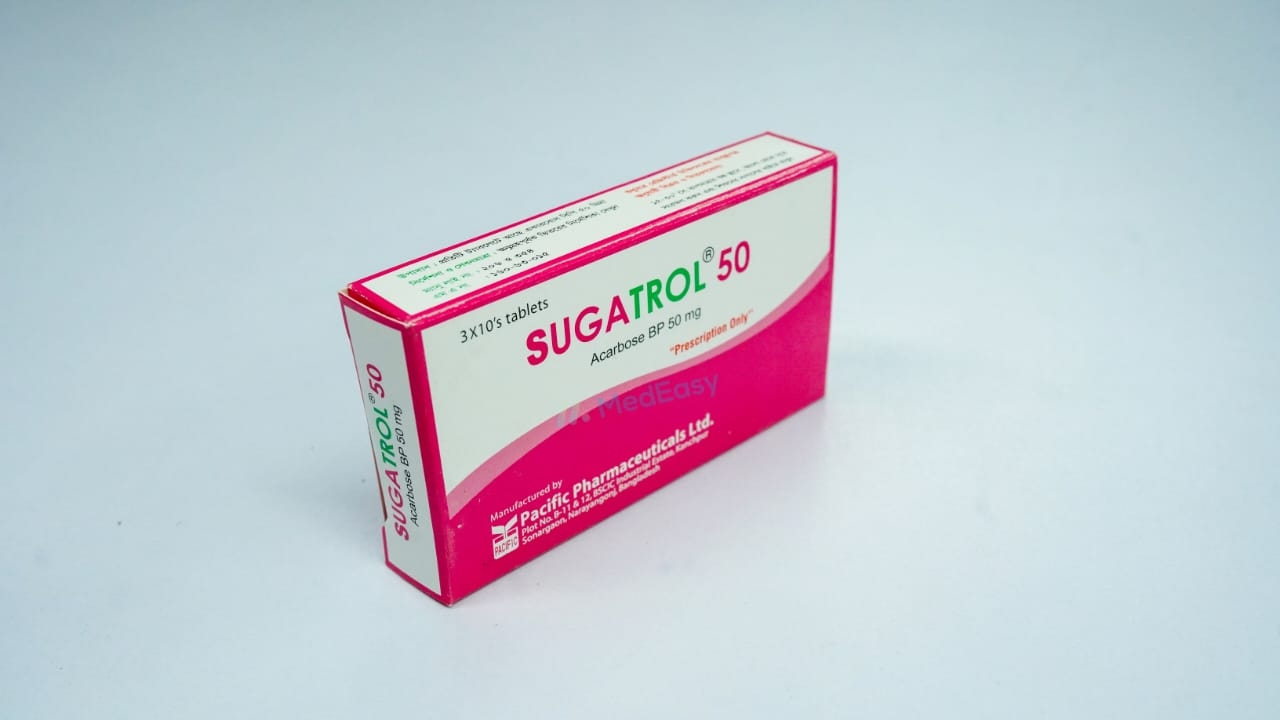
Sugatrol50 mg
Pacific Pharmaceuticals Ltd.
৳135.00
Add to cart


Acaril is FDA-approved as an adjunct to diet and exercise to improve glycemic control in adults with type 2 diabetes mellitus. It is used to reduce post-prandial (after-meal) blood glucose spikes by delaying the digestion and absorption of complex carbohydrates.
Acaril is not indicated for the treatment of type 1 diabetes as a sole agent or for diabetic ketoacidosis.
Each tablet of Acarbose contains Acarbose USP/BP as the active ingredient. It is commonly available in strengths of 25 mg, 50 mg, and 100 mg oral tablets, along with pharmaceutical excipients required for tablet formulation.
Acaril is an oral anti-diabetic medicine belonging to the alpha-glucosidase inhibitor class. It works locally within the small intestine to slow the breakdown of complex carbohydrates and sucrose into absorbable simple sugars, thereby blunting the rise in blood glucose that normally follows a meal. Less than 2% of an oral dose is absorbed as active drug, so its principal action is local, within the gut.
Acaril is used alongside diet and exercise, and sometimes together with other anti-diabetic medicines, to help people with type 2 diabetes mellitus achieve better overall blood glucose control.
Acaril belongs to the alpha-glucosidase inhibitor class of oral anti-diabetic (anti-hyperglycemic) medicines.
Acarbose competitively and reversibly inhibits intestinal brush-border alpha-glucosidase enzymes (glucoamylase, sucrase, maltase, and isomaltase) and, to a lesser extent, pancreatic alpha-amylase. These enzymes are normally responsible for breaking down complex carbohydrates and disaccharides (such as sucrose) into absorbable monosaccharides.
By delaying this enzymatic breakdown, Acarbose slows the digestion and absorption of dietary carbohydrates, which reduces and delays the rise in blood glucose that occurs after meals, without stimulating insulin release.
Less than 2% of an oral dose of Acarbose is absorbed as the active parent compound; the remainder acts locally within the gastrointestinal tract or is degraded by intestinal bacteria and digestive enzymes and eventually eliminated, largely in the feces. Because systemic absorption is minimal, Acarbose does not itself cause hypoglycemia when used alone.
Acaril must be taken with the first bite of each main meal; it is not effective if taken between meals or on an empty stomach.
| Indication | Population | Dosing |
|---|---|---|
| Type 2 diabetes mellitus (monotherapy or combination) | Adults | Initial: 25 mg orally three times daily with the first bite of each main meal. Some patients may be started at 25 mg once daily to minimize gastrointestinal side effects, then gradually increased to three times daily. |
| Maintenance/titration | Adults | Increase dose gradually at 4-8 week intervals based on 1-hour post-prandial glucose levels and tolerability. Usual maintenance dose: 50-100 mg three times daily. |
| Maximum dose | Adults ≤60 kg | 50 mg three times daily |
| Maximum dose | Adults >60 kg | 100 mg three times daily |
| Type 2 diabetes mellitus | Pediatric | Safety and efficacy not established (see Use in Special Populations). |
Acaril is contraindicated in severe renal impairment (creatinine clearance less than 25 mL/min); see Contraindications.
Acaril is contraindicated in cirrhosis; in other hepatic conditions, periodic liver enzyme monitoring is advised (see Precautions and Warnings).
Because Acaril delays the digestion of sucrose (table sugar), any hypoglycemia occurring during combination therapy with insulin or a sulfonylurea must be treated with oral glucose (dextrose) rather than sucrose, since sucrose absorption will be delayed by Acaril.
Acaril tablets should be swallowed whole or chewed with the first bite of each main meal (breakfast, lunch, and dinner as applicable). Taking Acaril at any other time, or skipping a meal after taking a dose, reduces its effectiveness and may increase the risk of gastrointestinal side effects. Doses should not be doubled if a dose is missed with a meal.
Patients should inform their physician of all medicines, including over-the-counter drugs and herbal products, before starting Acaril.
Acarbose is contraindicated in patients with:
Gastrointestinal effects are the most frequently reported, are related to undigested carbohydrate fermentation in the colon, and often lessen with continued use:
Acaril alone does not typically cause hypoglycemia; hypoglycemia risk arises mainly when combined with insulin or sulfonylureas (see Interactions).
Acaril is not generally recommended for glycemic control during pregnancy; insulin is typically preferred by treating physicians to achieve tight glycemic control in pregnancy. Acaril should be used during pregnancy only if clearly needed and if the potential benefit justifies the potential risk to the fetus; a physician must be consulted before use in pregnancy.
It is not well established whether Acaril or its metabolites are excreted in human breast milk. Because systemic absorption of Acaril is minimal, risk to a nursing infant is expected to be low, but caution is advised and a physician should be consulted before use of Acaril during breastfeeding.
Rare cases of elevated serum transaminases and hepatotoxicity have been reported, particularly with doses above 50 mg three times daily. Periodic monitoring of liver enzymes is reasonable, especially during the first 6-12 months of therapy with Acaril.
Acaril should be used with caution in patients with a history of partial intestinal obstruction, abdominal surgery, or conditions predisposed to worsen with excess intestinal gas; in more severe cases these are absolute contraindications (see Contraindications).
Acaril is contraindicated in severe renal impairment; use with caution and monitor in mild-to-moderate renal impairment.
When used with insulin or a sulfonylurea, hypoglycemia may occur; it must be treated with oral glucose rather than sucrose (see Interactions).
When patients are exposed to stress such as fever, trauma, infection, or surgery, temporary loss of glycemic control may occur; a physician may need to adjust therapy, including temporary use of insulin.
Overdose of Acaril taken alone (without insulin or a sulfonylurea) is not expected to cause hypoglycemia, but may cause increased gastrointestinal symptoms such as flatulence, abdominal bloating, and diarrhea, which are typically transient. Ingestion of food or drinks containing carbohydrates around the time of an overdose should be avoided, as these will not be well absorbed. If overdose occurs in combination with insulin or a sulfonylurea, hypoglycemia may result. In case of a suspected overdose, seek immediate medical attention or contact emergency services/poison control; do not attempt unsupervised home treatment.
Store at room temperature (below 30°C), away from light and moisture. Keep out of reach of children.
Safety and efficacy of Acaril in pediatric patients have not been established; its use is generally not recommended in children.
No overall differences in safety or effectiveness have been observed between elderly and younger adult patients, but dose titration should be cautious given the greater likelihood of decreased renal or hepatic function in this age group.
Contraindicated in severe renal impairment (creatinine clearance less than 25 mL/min); see Contraindications.
Contraindicated in cirrhosis; periodic liver function monitoring is advised in patients on long-term therapy (see Precautions and Warnings).
Acaril is generally used long-term as part of ongoing management of type 2 diabetes mellitus, alongside diet and exercise. The duration of therapy is determined by the treating physician based on blood glucose control, HbA1c targets, and tolerability, and is typically continued indefinitely as part of chronic diabetes management unless discontinued due to intolerance or a change in treatment plan.
Alpha-glucosidase inhibitor; oral anti-diabetic (anti-hyperglycemic) agent.
Acarbose reversibly inhibits intestinal alpha-glucosidase enzymes and pancreatic alpha-amylase, delaying the breakdown of complex carbohydrates and sucrose into absorbable glucose. This slows carbohydrate digestion and absorption in the small intestine, reducing the rise in blood glucose after meals without stimulating insulin secretion.
B
Safety and efficacy of Acaril have not been established in pediatric patients. Use in children is generally not recommended unless specifically directed by a pediatric specialist.
Q: What is Acaril 50 mg Tablet used for?
A: Acaril 50 mg Tablet is used along with diet and exercise to help control blood sugar levels in adults with type 2 diabetes mellitus. It works by slowing the digestion of carbohydrates so that blood sugar does not rise as sharply after meals.
Q: How should I take Acaril 50 mg Tablet?
A: Acaril 50 mg Tablet must be taken with the first bite of each main meal, generally three times a day. Taking it between meals or without food will not work effectively. Do not double the dose if you miss taking it with a meal.
Q: Can Acaril 50 mg Tablet cause low blood sugar (hypoglycemia)?
A: Acaril 50 mg Tablet alone does not usually cause low blood sugar. However, if you are also taking insulin or a sulfonylurea medicine, low blood sugar can occur. If this happens, you must treat it with glucose tablets or gel (oral glucose), not regular table sugar (sucrose), because Acaril 50 mg Tablet slows down the breakdown of sucrose.
Q: What are the common side effects of Acaril 50 mg Tablet?
A: The most common side effects are gastrointestinal: flatulence (gas), bloating, and diarrhea. These occur because undigested carbohydrates are fermented in the colon, and they often improve as your body adjusts to the medicine over time.
Q: Who should not take Acaril 50 mg Tablet?
A: Acaril 50 mg Tablet should not be used by people with known allergy to it, diabetic ketoacidosis, liver cirrhosis, inflammatory bowel disease, colonic ulcers, intestinal obstruction or a tendency toward it, chronic digestive/absorption disorders, conditions worsened by intestinal gas (such as large hernias), or severe kidney impairment. Always share your full medical history with your physician before starting Acaril 50 mg Tablet.
Q: Can I take Acaril 50 mg Tablet during pregnancy or while breastfeeding?
A: Acaril 50 mg Tablet is not generally recommended during pregnancy because insulin is usually preferred for blood sugar control; it should only be used in pregnancy if your physician determines the benefit outweighs the potential risk. Limited information exists on Acaril 50 mg Tablet during breastfeeding, so consult your physician before use in either situation.
Disclaimer
The information provided is accurate to the best of our knowledge, but it does not replace professional medical advice. We cannot guarantee its completeness or accuracy, and the absence of specific information about a drug should not be taken as an endorsement. We are not responsible for any consequences arising from this information, so please consult a healthcare professional for any concerns or questions.

