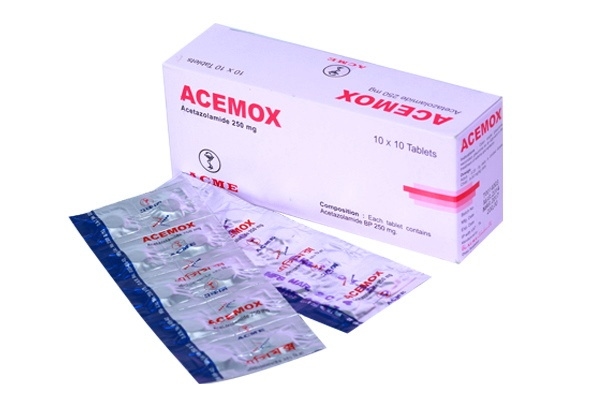
Generic medicine

Acetazolamide: Brands, Price & Uses in Bangladesh

Acetazolamide is a carbonic anhydrase inhibitor used as adjunctive (add-on) therapy for several conditions and more.

Forms:Tablet

About Acetazolamide

Indications of Acetazolamide

Acetazolamide is a carbonic anhydrase inhibitor used as adjunctive (add-on) therapy for several conditions, with the strength of evidence varying by indication:

FDA-approved / established uses

  • Glaucoma: Adjunctive treatment of chronic open-angle glaucoma, secondary glaucoma, and short-term preoperative management of acute angle-closure glaucoma, by lowering intraocular pressure.
  • Epilepsy: Adjunctive therapy (used together with other anticonvulsants) for centrencephalic epilepsies, including certain generalized (petit mal/absence) and mixed seizure patterns.
  • Edema: Adjunctive treatment of edema due to congestive heart failure and drug-induced edema.
  • Acute mountain sickness (altitude sickness): Prevention and reduction in severity of symptoms of acute mountain sickness in individuals undertaking rapid ascent to high altitude.

Commonly used off-label (not FDA-approved but supported by clinical practice/literature)

  • Idiopathic intracranial hypertension (pseudotumor cerebri) to reduce cerebrospinal fluid production.
  • Periodic paralysis syndromes (hypokalemic/hyperkalemic) in selected patients.
  • Metabolic alkalosis in critically ill patients, as an adjunct.

Note: Acetazolamide is always used as an adjunct in epilepsy and edema; it is not intended as sole/first-line therapy for these conditions.

Dosage & Administration of Acetazolamide

Glaucoma

TypeAdult Dose
Chronic open-angle glaucoma250 mg to 1 g per day, usually in divided doses; doses above 1 g/day give no additional benefit
Secondary glaucoma / preoperative acute angle-closure glaucoma250 mg every 4 hours, or 250 mg twice daily short-term; in acute cases, an initial 500 mg dose followed by 125-250 mg every 4 hours

Epilepsy (adjunctive)

Total daily dose of 8 to 30 mg/kg in divided doses; optimum range is usually 375-1000 mg daily. When added to existing anticonvulsant therapy, start at 250 mg once daily and titrate as needed.

Edema (congestive heart failure / drug-induced)

250-375 mg once daily in the morning (approximately 5 mg/kg); best results are often obtained with intermittent dosing (alternate days, or two days on/one day off) to avoid reduced diuretic response.

Acute mountain sickness

500-1000 mg daily in divided doses; the higher dose is preferred for rapid ascent. Start dosing 24-48 hours before ascent and continue for at least 48 hours after arrival at high altitude (or longer if symptoms persist).

Administration

Tablets may be taken with or without food; taking with food may reduce stomach upset. Tablets can be crushed and mixed with soft food (e.g., applesauce) or a flavored syrup for patients who have difficulty swallowing. See Renal/Hepatic notes under Precautions and Special Populations.

Side Effects of Acetazolamide

Side effects of Acetazolamide range from common and generally mild to rare but serious:

Common

  • Paresthesias (tingling/numbness), particularly of the fingers, toes, and around the mouth - usually mild and dose-related.
  • Fatigue, drowsiness, malaise, headache.
  • Loss of appetite, nausea, vomiting, altered taste, diarrhea.
  • Increased urination (mild diuretic effect).

Less common / serious

  • Metabolic acidosis and electrolyte disturbances (hypokalemia, hyponatremia) - see Contraindications/Precautions.
  • Kidney stone (renal calculus) formation.
  • Blood disorders: aplastic anemia, agranulocytosis, leukopenia, thrombocytopenia (rare but require monitoring with prolonged use).
  • Liver dysfunction, including rare cholestatic jaundice or fulminant hepatic necrosis.
  • Hypersensitivity/skin reactions: urticaria, photosensitivity, and rarely Stevens-Johnson syndrome or toxic epidermal necrolysis.
  • Hearing disturbances, tinnitus.
  • Transient myopia; rarely, choroidal effusion/detachment after ocular surgery.

Contraindications of Acetazolamide

Acetazolamide is contraindicated in patients with:

  • Known hypersensitivity to Acetazolamide or to any component/excipient of the formulation (including cross-reactivity risk in patients with prior severe sulfonamide allergy).
  • Hyponatremia and/or hypokalemia (depressed sodium and/or potassium levels).
  • Marked (severe) renal disease or renal failure.
  • Marked (severe) hepatic disease, or cirrhosis, due to risk of precipitating hepatic encephalopathy.
  • Adrenal (suprarenal) gland failure/insufficiency.
  • Hyperchloremic acidosis.
  • Long-term use in chronic non-congestive (chronic) angle-closure glaucoma, since it may permit organic angle closure to occur while masking symptoms by lowering intraocular pressure.

Frequently Asked Questions about Acetazolamide

What is Acetazolamide used for?

Acetazolamide is used as an add-on treatment for certain types of glaucoma, epilepsy, and edema (fluid retention), and to prevent or reduce symptoms of altitude (mountain) sickness.

Can I take Acetazolamide if I am allergic to sulfa antibiotics?

Acetazolamide is chemically related to sulfonamides. If you have had a severe allergic reaction to sulfa drugs in the past, tell your physician before starting Acetazolamide, since Acetazolamide is contraindicated in patients with known hypersensitivity to it or its components.

Is Acetazolamide safe during pregnancy?

Acetazolamide has caused birth defects in animal studies, so it should be used during pregnancy only if clearly needed and the benefit outweighs the potential risk to the baby. Always consult your physician before using Acetazolamide if you are pregnant or planning pregnancy.

What are the common side effects of Acetazolamide?

The most common side effects of Acetazolamide are tingling in the fingers, toes, or around the mouth, fatigue, drowsiness, loss of appetite, and increased urination. These are usually mild, but you should contact your physician if they are severe or persistent.

How should I take Acetazolamide to prevent altitude sickness?

Acetazolamide is usually started 24 to 48 hours before ascending to high altitude and continued for at least 48 hours after arrival, as directed by your physician. Follow your prescribed dose exactly.

What should I do if I think I have taken too much Acetazolamide?

If an overdose of Acetazolamide is suspected, seek immediate medical attention or contact emergency services/poison control right away. Do not try to treat an overdose at home.

Disclaimer

The information provided is accurate to the best of our knowledge, but it does not replace professional medical advice. We cannot guarantee its completeness or accuracy, and the absence of specific information about a drug should not be taken as an endorsement. We are not responsible for any consequences arising from this information, so please consult a healthcare professional for any concerns or questions.

DoctorBlogArticles