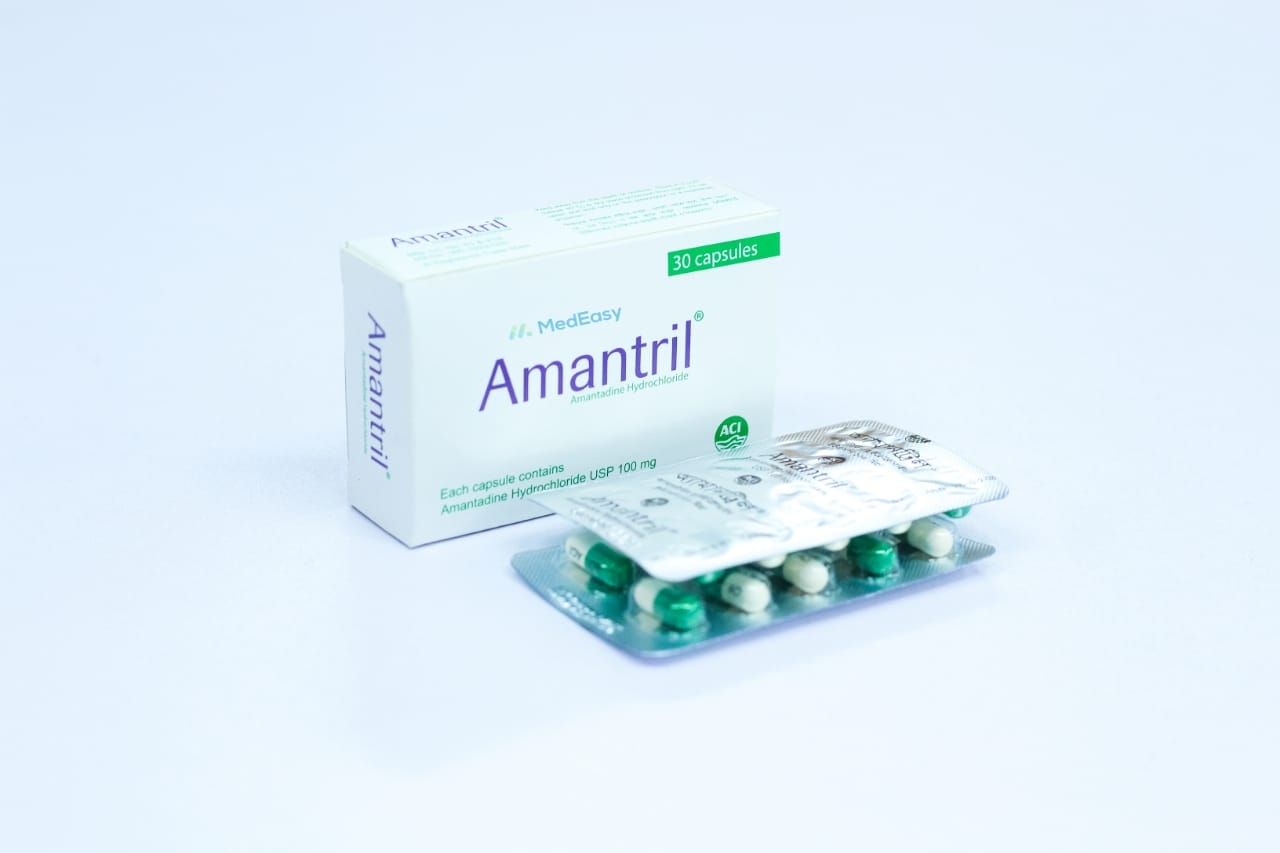
Generic medicine

Amantadine Hydrochloride: Brands, Price & Uses in Bangladesh

Amantadine Hydrochloride is indicated for the following conditions, with evidence strength noted for each: Established / FDA-approved uses Parkinson's disease: Idiopathic Parkinson's disease and more.

Forms:Capsule

About Amantadine Hydrochloride

Indications of Amantadine Hydrochloride

Amantadine Hydrochloride is indicated for the following conditions, with evidence strength noted for each:

Established / FDA-approved uses

  • Parkinson's disease: Idiopathic Parkinson's disease, postencephalitic parkinsonism, and parkinsonism associated with carbon monoxide intoxication. Amantadine Hydrochloride is used as monotherapy in early or mild disease, or as an adjunct to other antiparkinsonian agents such as levodopa.
  • Drug-induced extrapyramidal reactions: Amantadine Hydrochloride is used to treat extrapyramidal symptoms (e.g., rigidity, tremor, dystonia) caused by antipsychotic (neuroleptic) medications.
  • Influenza A prophylaxis and treatment: Amantadine Hydrochloride was historically approved for prophylaxis and treatment of uncomplicated influenza A respiratory illness. This use is now considered largely obsolete because circulating influenza A strains have developed widespread resistance to adamantanes; health authorities (including the CDC) generally no longer recommend Amantadine Hydrochloride for influenza unless susceptibility of the circulating strain is confirmed.

Notes on evidence strength

The Parkinson's disease and drug-induced extrapyramidal reaction indications are well established. The influenza indication, while still present on some regulatory labels, should only be used based on current local resistance-surveillance data and physician judgment, not as first-line antiviral therapy.

Dosage & Administration of Amantadine Hydrochloride

Parkinson's Disease

Usual adult dose of Amantadine Hydrochloride: 100 mg twice daily. In patients with serious associated illness, or those already receiving other antiparkinsonian medication, therapy may be started at 100 mg once daily, increasing to 100 mg twice daily after one to several weeks, based on clinical response and tolerability. In some patients, a dose of up to 400 mg/day in divided doses may be used under close medical supervision.

Drug-Induced Extrapyramidal Reactions

Usual adult dose of Amantadine Hydrochloride: 100 mg twice daily; up to 300 mg/day in divided doses may be used if needed and tolerated.

Influenza A (where still used per local resistance data)

Adults and children 9-12 years: 200 mg/day as a single dose or in two divided doses. Adults over 65 years: 100 mg/day. Treatment should start within 24-48 hours of symptom onset and continue for about 3-5 days, or up to 24-48 hours after symptoms resolve.

Renal Impairment Dose Adjustment

Creatinine ClearanceSuggested Amantadine Hydrochloride Dosing
30-50 mL/min/1.73m²200 mg on day 1, then 100 mg once daily
15-29 mL/min/1.73m²200 mg on day 1, then 100 mg on alternate days
Less than 15 mL/min/1.73m²200 mg once every 7 days
Hemodialysis200 mg once every 7 days

Doses should always be individualized and adjusted by the treating physician based on renal function, response, and tolerability. Discontinuation of Amantadine Hydrochloride in Parkinson's disease should be gradual (tapered), as abrupt withdrawal can precipitate a serious neuroleptic-malignant-syndrome-like reaction (see Precautions and Warnings).

Side Effects of Amantadine Hydrochloride

Side effects of Amantadine Hydrochloride are generally dose-related and more common in elderly patients or those with renal impairment.

Common (5-10%)

  • Nausea
  • Dizziness / lightheadedness
  • Insomnia

Less common (1-5%)

  • Dry mouth
  • Constipation
  • Depression, anxiety, irritability
  • Hallucinations, confusion
  • Livedo reticularis (a mottled, lace-like purplish-blue skin discoloration, usually on the legs, which is generally reversible after stopping Amantadine Hydrochloride)
  • Peripheral edema
  • Orthostatic hypotension (dizziness on standing)

Rare but serious

  • Seizures
  • Neuroleptic-malignant-syndrome-like reaction on dose reduction or abrupt withdrawal (see Precautions and Warnings)
  • Suicidal ideation or behavior
  • Corneal edema with blurred or worsening vision
  • Congestive heart failure, psychosis, urinary retention, leukopenia (uncommon)

Patients should seek prompt medical attention for sudden vision changes, high fever with muscle rigidity, or thoughts of self-harm while taking Amantadine Hydrochloride.

Contraindications of Amantadine Hydrochloride

Amantadine Hydrochloride is contraindicated in:

  • Patients with known hypersensitivity to Amantadine Hydrochloride or to any component of the formulation.

Other conditions such as seizure disorders, congestive heart failure, renal impairment, and psychiatric illness are important cautions requiring dose adjustment or close monitoring, but are not absolute contraindications; see Precautions and Warnings.

Frequently Asked Questions about Amantadine Hydrochloride

What is Amantadine Hydrochloride used for?

Amantadine Hydrochloride is mainly used to treat Parkinson's disease and drug-induced extrapyramidal reactions caused by antipsychotic medicines. It was also historically used for influenza A, though this use is now uncommon due to widespread viral resistance; your physician will advise if it is appropriate for you.

Can I stop taking Amantadine Hydrochloride suddenly if I feel better?

No. If you are taking Amantadine Hydrochloride for Parkinson's disease, stopping it suddenly can cause a serious reaction with high fever, muscle stiffness, and confusion. Always reduce the dose gradually under your physician's supervision.

What are the most common side effects of Amantadine Hydrochloride?

The most common side effects of Amantadine Hydrochloride are nausea, dizziness, and insomnia. Some patients also develop a mottled skin discoloration on the legs called livedo reticularis, which usually resolves after stopping the medicine.

Is Amantadine Hydrochloride safe during pregnancy or breastfeeding?

Amantadine Hydrochloride should be used in pregnancy only if clearly necessary and if your physician decides the benefit outweighs the potential risk to the baby, since animal studies have shown risk at high doses. It is generally not recommended during breastfeeding because it passes into breast milk. Always consult your physician.

Who should not take Amantadine Hydrochloride?

Amantadine Hydrochloride should not be used by anyone with a known allergy (hypersensitivity) to amantadine or any ingredient in the product. People with seizure disorders, heart failure, fluid retention, or psychiatric conditions should use it only with close medical supervision.

What should I do if I take too much Amantadine Hydrochloride?

An overdose of Amantadine Hydrochloride is a medical emergency that can cause irregular heartbeat, severe confusion, or seizures. Seek immediate medical attention or contact emergency services / a poison control center right away; do not try to treat an overdose at home.

Disclaimer

The information provided is accurate to the best of our knowledge, but it does not replace professional medical advice. We cannot guarantee its completeness or accuracy, and the absence of specific information about a drug should not be taken as an endorsement. We are not responsible for any consequences arising from this information, so please consult a healthcare professional for any concerns or questions.
DoctorBlogArticles