8% Off
Curafin30 gm
Navana Pharmaceuticals Ltd.
৳257.60
Add to cart
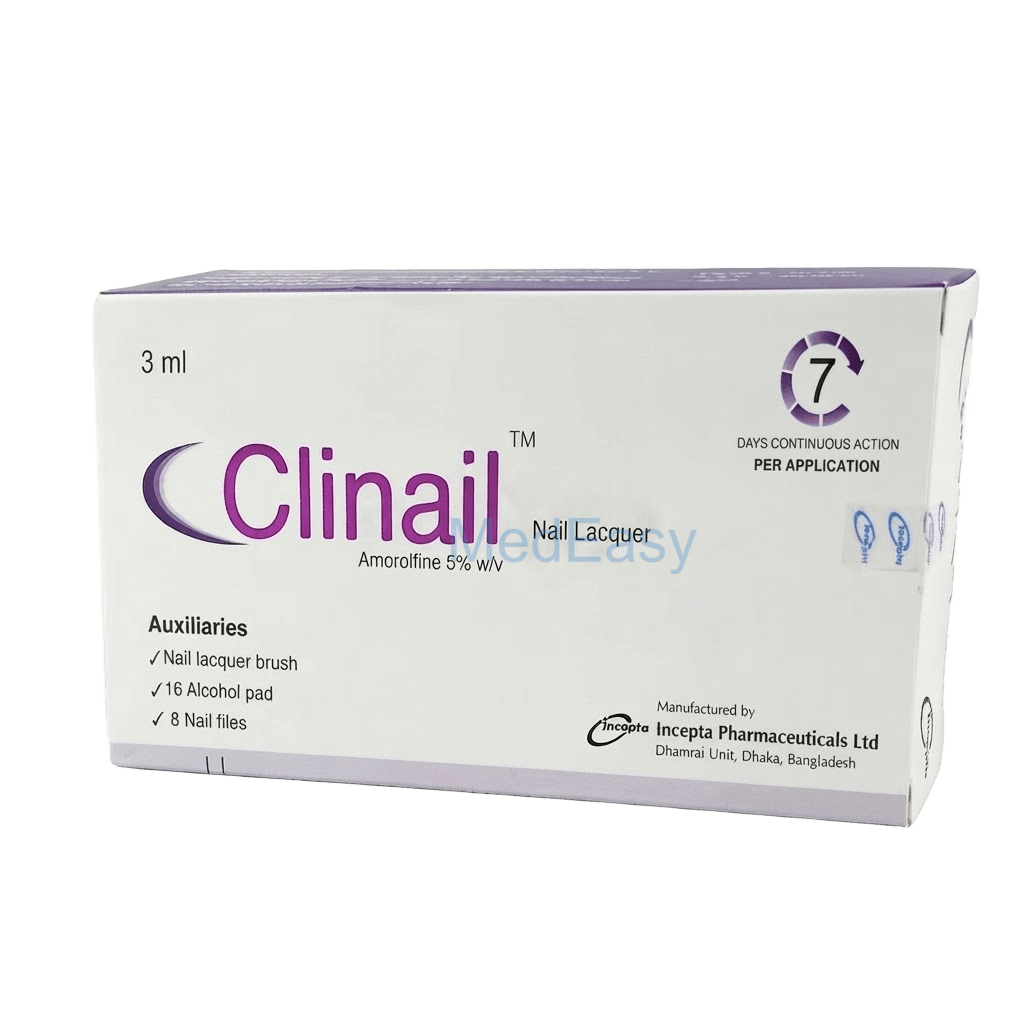
Established uses Onychomycosis (fungal nail infection) — Amorolfine Hydrochloride 5% nail lacquer is indicated for onychomycosis of the fingernails and toenails caused by dermatophytes, yeasts and more.
Extensive onychomycosis (more than 2-3 nails affected, or a single nail with more than 50% involvement, or matrix involvement) generally requires specialist evaluation and often benefits from combination with, or referral for, systemic antifungal therapy rather than Amorolfine Hydrochloride lacquer alone. Amorolfine Hydrochloride is not indicated for scalp (tinea capitis) fungal infections.
| Step | Instructions |
|---|---|
| Preparation | File the surface of the affected nail(s) using the file provided, then clean with the cleansing swab/alcohol pad and allow to dry. |
| Application | Apply Amorolfine Hydrochloride nail lacquer evenly over the entire nail surface using the applicator provided, once or twice weekly as directed by the physician. |
| Drying | Allow the lacquer to dry for approximately 3 minutes before covering with socks or footwear; avoid washing the treated nail for at least 6 hours. |
| Re-application | Before each new application, remove residual lacquer with the cleansing swab and re-file the nail surface. |
| Duration | Continue treatment until the nail has fully regrown and is clinically normal — typically 6 months for fingernails and 9-12 months for toenails (see Duration of Treatment). |
| Indication | Dosing |
|---|---|
| Tinea pedis, tinea cruris, tinea corporis, tinea manuum, pityriasis versicolor | Apply a thin layer of Amorolfine Hydrochloride cream once daily to the cleansed and dried affected skin area, preferably in the evening, for 2-3 weeks (up to 6 weeks for tinea pedis of the soles/heels) or as directed by the physician, continuing for a few days after clinical cure. |
Important: Complete the full prescribed duration of Amorolfine Hydrochloride treatment as directed by your physician; stopping early — especially with the nail lacquer, given slow nail growth — is a common cause of treatment failure or relapse.
Amorolfine Hydrochloride is generally well tolerated locally. Reported adverse effects include:
Amorolfine Hydrochloride is contraindicated in patients with known hypersensitivity to amorolfine or to any excipient of the nail lacquer or cream formulation.
Disclaimer
The information provided is accurate to the best of our knowledge, but it does not replace professional medical advice. We cannot guarantee its completeness or accuracy, and the absence of specific information about a drug should not be taken as an endorsement. We are not responsible for any consequences arising from this information, so please consult a healthcare professional for any concerns or questions.