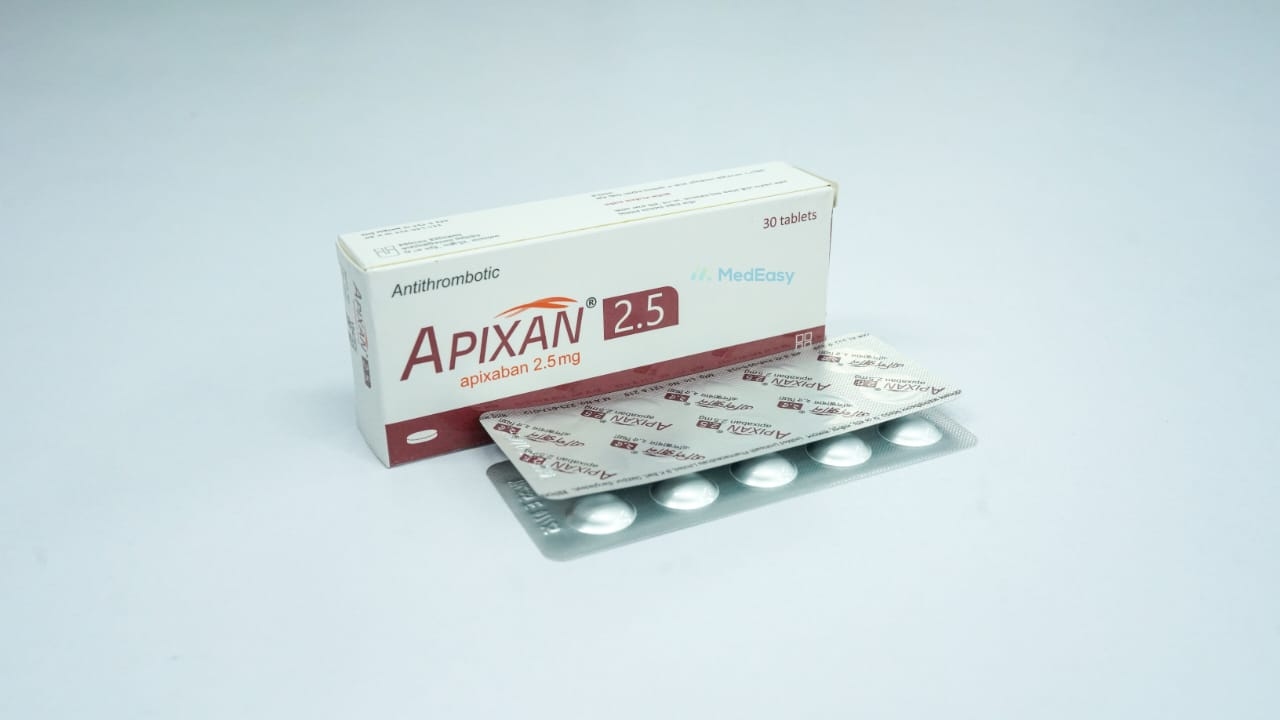
Generic medicine

Apixaban: Brands, Price & Uses in Bangladesh

Established / FDA-Approved Uses Stroke and systemic embolism prevention in non-valvular atrial fibrillation (NVAF): Apixaban is indicated to reduce the risk of stroke and systemic embolism in adult…

Forms:Tablet

About Apixaban

Indications of Apixaban

Established / FDA-Approved Uses

  • Stroke and systemic embolism prevention in non-valvular atrial fibrillation (NVAF): Apixaban is indicated to reduce the risk of stroke and systemic embolism in adult patients with non-valvular atrial fibrillation.
  • Deep vein thrombosis (DVT) and pulmonary embolism (PE) treatment: Apixaban is indicated for the treatment of acute DVT and PE.
  • Reduction in risk of recurrent DVT/PE: Apixaban is indicated to reduce the risk of recurrent DVT and PE following at least 6 months of initial anticoagulant treatment.
  • VTE prophylaxis after hip or knee replacement surgery: Apixaban is indicated for prophylaxis of DVT, which may lead to PE, in adults who have undergone hip or knee replacement surgery.
  • Pediatric venous thromboembolism (VTE): Apixaban is indicated for the treatment of VTE and reduction in the risk of recurrent VTE in pediatric patients (birth to less than 18 years) after at least 5 days of initial parenteral anticoagulation treatment.

Off-Label / Adjunct Use

Apixaban is sometimes used off-label for other thromboembolic conditions (e.g., in certain patients with left ventricular thrombus) at the discretion of the treating physician; such use is not FDA-approved and should follow specialist advice.

Dosage & Administration of Apixaban

Adult Dosing by Indication

IndicationRecommended Dose
Stroke/systemic embolism prevention in non-valvular atrial fibrillation5 mg orally twice daily. Reduce to 2.5 mg twice daily if the patient meets at least 2 of: age ≥80 years, body weight ≤60 kg, or serum creatinine ≥1.5 mg/dL.
Treatment of acute DVT/PE10 mg orally twice daily for the first 7 days, followed by 5 mg orally twice daily.
Reduction of recurrent DVT/PE (after ≥6 months of initial treatment)2.5 mg orally twice daily.
VTE prophylaxis after hip replacement surgery2.5 mg orally twice daily, starting 12–24 hours after surgery, for 35 days.
VTE prophylaxis after knee replacement surgery2.5 mg orally twice daily, starting 12–24 hours after surgery, for 12 days.

Pediatric Dosing (VTE treatment)

Apixaban dosing in pediatric patients is weight-based and given after at least 5 days of initial parenteral anticoagulation; the treating physician determines the exact regimen based on body weight bands. Apixaban is not recommended in infants weighing less than 2.6 kg, as it has not been studied in this population.

Renal Impairment

No dose adjustment is required for DVT/PE treatment or prophylaxis based on renal function alone, including patients on hemodialysis. For NVAF, dose reduction applies only when the serum creatinine criterion above is met. Use in pediatric patients with significant renal impairment is not recommended.

Hepatic Impairment

No dose adjustment is needed in mild hepatic impairment (Child-Pugh A). Apixaban should be used with caution in moderate impairment (Child-Pugh B) and is not recommended in severe hepatic impairment (Child-Pugh C) due to limited clinical data.

Missed Dose

The missed dose should be taken as soon as remembered on the same day, and dosing continued twice daily as before. Doses should not be doubled to make up for a missed dose.

Side Effects of Apixaban

Common Side Effects

The most common adverse reactions are related to bleeding, and their frequency depends on the indication and dose. These include:

  • Easy bruising, minor cuts bleeding longer than usual
  • Nosebleeds (epistaxis)
  • Gum bleeding
  • Blood in urine (hematuria)
  • Heavier or prolonged menstrual bleeding
  • Nausea
  • Anemia

Serious Side Effects (Seek Immediate Medical Attention)

  • Signs of major or internal bleeding: severe or uncontrolled bleeding, red/black tarry stools, coughing up blood, vomiting blood, severe headache, dizziness, or weakness
  • Symptoms of spinal or epidural hematoma after spinal procedures: back pain, numbness, muscle weakness, or loss of bladder/bowel control (see Precautions and Warnings)
  • Signs of allergic reaction: rash, swelling of the face/lips/tongue, difficulty breathing

Contraindications of Apixaban

  • Known hypersensitivity (including severe or anaphylactic reactions) to Apixaban or any component of the formulation.
  • Active pathological bleeding.

Note: Apixaban is not recommended in patients with mechanical prosthetic heart valves, as safety and efficacy have not been established in this population; this is a use-limitation based on lack of studied benefit/safety rather than a classical absolute contraindication, but such use should be avoided.

Frequently Asked Questions about Apixaban

What is Apixaban used for?

Apixaban is used to reduce the risk of stroke in people with non-valvular atrial fibrillation, and to treat and prevent blood clots such as deep vein thrombosis (DVT) and pulmonary embolism (PE), including after hip or knee replacement surgery.

Can I stop taking Apixaban if I feel fine?

No. Apixaban should not be stopped without consulting your physician, even if you feel well. Stopping Apixaban early increases the risk of stroke or blood clots. If Apixaban needs to be discontinued for a procedure or another reason, your doctor will advise on how to do this safely, sometimes with a bridging anticoagulant.

What should I do if I miss a dose of Apixaban?

Take the missed dose as soon as you remember on the same day, then continue your normal twice-daily schedule. Do not take a double dose to make up for a missed one.

Can Apixaban be taken during pregnancy or while breastfeeding?

Data on Apixaban use in pregnancy are limited, and it may increase bleeding risk during pregnancy and delivery, so it should only be used if the potential benefit clearly outweighs the potential risk to the baby, under close physician supervision. Breastfeeding is generally not recommended during Apixaban treatment because it is not known whether it passes into breast milk in significant amounts. Always consult your physician before use in either situation.

What are the warning signs of bleeding I should watch for while on Apixaban?

Watch for unusual bruising, nosebleeds, bleeding gums, blood in urine or stool, black tarry stools, coughing or vomiting blood, unusually heavy menstrual bleeding, or severe headache/dizziness. Seek immediate medical attention if any of these occur, as Apixaban increases bleeding risk.

Does Apixaban require regular blood test monitoring like warfarin?

No, Apixaban does not require routine coagulation monitoring like warfarin. However, your doctor may still order periodic blood tests to check kidney function, liver function, or for signs of bleeding, especially if you have other risk factors.

Disclaimer

The information provided is accurate to the best of our knowledge, but it does not replace professional medical advice. We cannot guarantee its completeness or accuracy, and the absence of specific information about a drug should not be taken as an endorsement. We are not responsible for any consequences arising from this information, so please consult a healthcare professional for any concerns or questions.

DoctorBlogArticles
