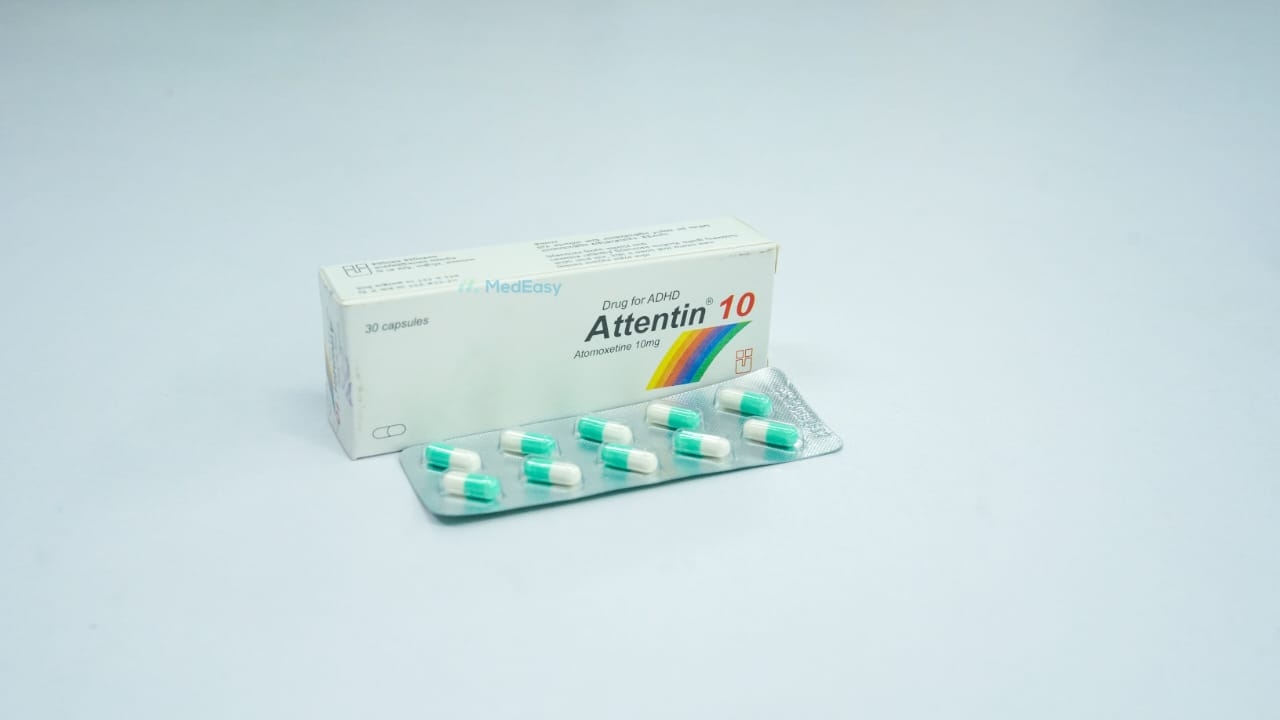
Generic medicine

Atomoxetine Hydrochloride: Brands, Price & Uses in Bangladesh

Atomoxetine Hydrochloride is a non-stimulant medicine approved for the treatment of Attention-Deficit/Hyperactivity Disorder (ADHD).

Forms:Capsule

About Atomoxetine Hydrochloride

Indications of Atomoxetine Hydrochloride

Atomoxetine Hydrochloride is a non-stimulant medicine approved for the treatment of Attention-Deficit/Hyperactivity Disorder (ADHD).

  • FDA-approved / established use: Treatment of ADHD in children aged 6 years and older, adolescents, and adults, as part of a comprehensive treatment programme that may also include psychological, educational and social measures.
  • Maintenance therapy: Atomoxetine Hydrochloride has demonstrated benefit in maintaining response with continued use in children and adolescents who initially responded to treatment.
  • Not established: Safety and efficacy have not been established in children younger than 6 years, and Atomoxetine Hydrochloride is not indicated for this age group.

Atomoxetine Hydrochloride is not a controlled substance and does not carry the abuse potential associated with stimulant ADHD medicines, making it a preferred option in some patients, such as those with a personal or family history of substance misuse.

Dosage & Administration of Atomoxetine Hydrochloride

Dosing of Atomoxetine Hydrochloride is individualised by body weight (in children) and clinical response. Treatment is typically started at a lower dose and titrated upward.

Adults and children/adolescents weighing more than 70 kg

StepDose
Starting dose40 mg once daily
Target doseIncrease to approximately 80 mg/day after a minimum of 3 days, given once daily (morning) or as two evenly divided doses (morning and late afternoon/early evening)
Maximum doseMay be increased to a maximum of 100 mg/day after 2–4 additional weeks if response is insufficient

Children and adolescents weighing up to 70 kg

StepDose
Starting doseApproximately 0.5 mg/kg/day
Target doseIncrease after a minimum of 3 days to a target of approximately 1.2 mg/kg/day, given once daily or in divided doses
Maximum doseShould not exceed 1.4 mg/kg/day or 100 mg/day, whichever is less

Dose adjustment in hepatic impairment

  • Moderate hepatic impairment: Reduce to 50% of the usual dose.
  • Severe hepatic impairment: Reduce to 25% of the usual dose.

Dose adjustment with strong CYP2D6 inhibitors or known poor metabolisers

In patients taking strong CYP2D6 inhibitors (e.g. paroxetine, fluoxetine, quinidine) or known CYP2D6 poor metabolisers, Atomoxetine Hydrochloride should be initiated at the usual starting dose; the dose should be increased to the target dose only if symptoms fail to improve after 4 weeks and the initial dose is well tolerated.

Renal impairment

No dose adjustment is required in renal impairment, as renal clearance is a minor elimination pathway.

Administration: Atomoxetine Hydrochloride capsules may be taken with or without food and may be discontinued without tapering.

Side Effects of Atomoxetine Hydrochloride

Side effects of Atomoxetine Hydrochloride differ somewhat between children/adolescents and adults.

PopulationCommon side effects (≥5%)
Children and adolescentsAbdominal pain, decreased appetite, nausea, vomiting, headache, somnolence (sleepiness), dizziness, fatigue, irritability
AdultsDry mouth, nausea, constipation, decreased appetite, dizziness, somnolence, insomnia, sweating, urinary hesitation, erectile dysfunction

Less common but clinically important effects include increased heart rate and blood pressure, weight/growth changes in children (see Precautions and Warnings), and rare but serious reactions such as liver injury, priapism and allergic reactions (see Precautions and Warnings for full detail).

Contraindications of Atomoxetine Hydrochloride

Atomoxetine Hydrochloride is contraindicated in patients with:

  • Known hypersensitivity to Atomoxetine Hydrochloride or any component of the formulation.
  • Concurrent use of a monoamine oxidase inhibitor (MAOI), or use of an MAOI within the preceding 14 days.
  • Narrow-angle glaucoma.
  • Pheochromocytoma or a history of pheochromocytoma.
  • Severe cardiovascular disorders in which clinically important increases in blood pressure or heart rate could cause deterioration (e.g. certain structural cardiac abnormalities, cardiomyopathy, serious arrhythmias, or severe coronary artery disease).

Frequently Asked Questions about Atomoxetine Hydrochloride

What is Atomoxetine Hydrochloride used for?

Atomoxetine Hydrochloride is a non-stimulant medicine used to treat Attention-Deficit/Hyperactivity Disorder (ADHD) in children aged 6 years and above, adolescents, and adults, as part of an overall treatment plan.

How long does Atomoxetine Hydrochloride take to work?

Unlike stimulant ADHD medicines, Atomoxetine Hydrochloride does not work immediately. Noticeable improvement in attention and behaviour typically takes several weeks (often up to 4–8 weeks) of consistent use to become apparent.

Is Atomoxetine Hydrochloride a controlled substance or stimulant?

No. Atomoxetine Hydrochloride is a selective norepinephrine reuptake inhibitor and is not classified as a stimulant or a controlled substance, so it does not carry the same abuse or misuse potential as stimulant ADHD medicines.

Who should not take Atomoxetine Hydrochloride?

Atomoxetine Hydrochloride should not be used by people who are hypersensitive to it, who are taking or have recently taken (within 14 days) a monoamine oxidase inhibitor (MAOI), who have narrow-angle glaucoma, who have a pheochromocytoma or history of it, or who have severe cardiovascular disease that could worsen with an increase in heart rate or blood pressure.

What are the most serious risks with Atomoxetine Hydrochloride?

Atomoxetine Hydrochloride carries a boxed warning for increased risk of suicidal thinking in children and adolescents, especially in the first month of treatment; it can also, rarely, cause severe liver injury, serious cardiovascular effects, new psychiatric symptoms, and priapism (a painful, prolonged erection requiring emergency care). Anyone taking Atomoxetine Hydrochloride should be monitored closely, particularly early in treatment.

Can Atomoxetine Hydrochloride be taken during pregnancy or while breastfeeding?

Data on Atomoxetine Hydrochloride in pregnancy and breastfeeding are limited. It should be used in pregnancy only if the potential benefit justifies the potential risk to the baby, and a physician should be consulted before using Atomoxetine Hydrochloride while pregnant or breastfeeding.

Disclaimer

The information provided is accurate to the best of our knowledge, but it does not replace professional medical advice. We cannot guarantee its completeness or accuracy, and the absence of specific information about a drug should not be taken as an endorsement. We are not responsible for any consequences arising from this information, so please consult a healthcare professional for any concerns or questions.

DoctorBlogArticles