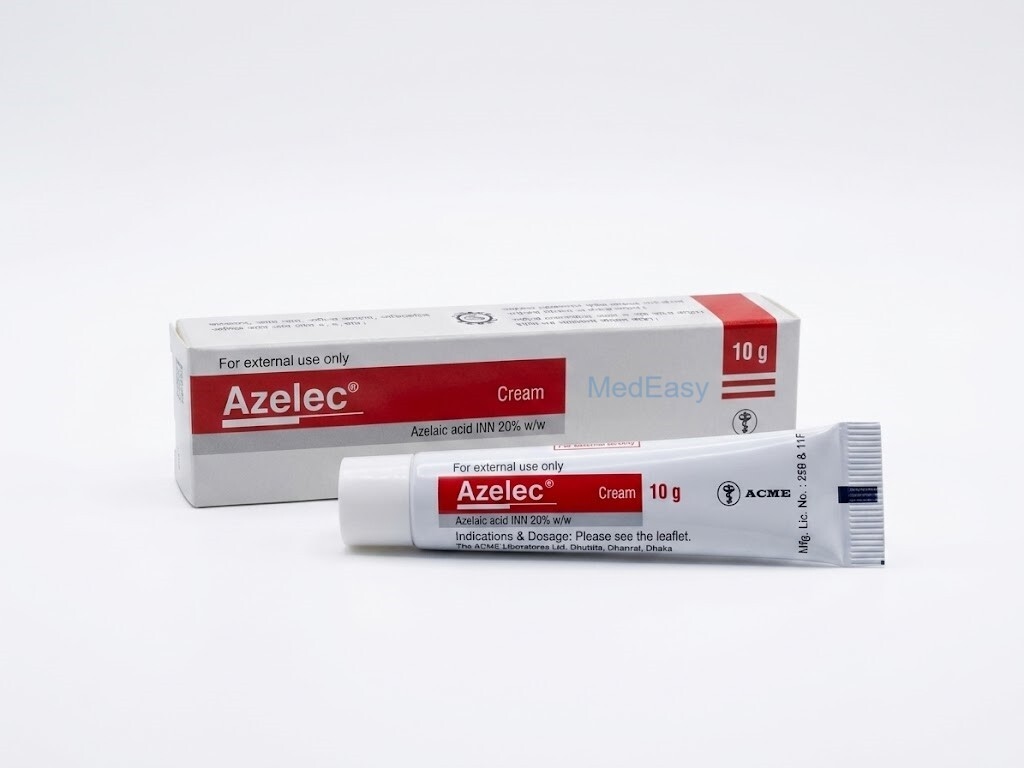
Generic medicine

Azelaic Acid: Brands, Price & Uses in Bangladesh

Azelaic Acid is a topical medication with established efficacy in dermatology, used according to the following evidence-based indications: FDA-Approved / Established Uses Mild to moderate acne…

Forms:Cream

About Azelaic Acid

Indications of Azelaic Acid

Azelaic Acid is a topical medication with established efficacy in dermatology, used according to the following evidence-based indications:

FDA-Approved / Established Uses

  • Mild to moderate acne vulgaris - Azelaic Acid (20% cream, 15% gel) is approved for topical treatment of acne, particularly comedonal and inflammatory lesions.
  • Inflammatory papulopustular rosacea - Azelaic Acid (15% gel or foam) is approved to reduce inflammatory lesions (papules and pustules) associated with rosacea.

Common Off-Label / Adjunct Uses

  • Post-inflammatory hyperpigmentation and melasma - Azelaic Acid is frequently used off-label, often in combination with other agents, for its mild tyrosinase-inhibiting (skin-lightening) effect. This is not an FDA-approved indication and should be discussed with a clinician.

Azelaic Acid is often combined with other topical or oral acne/rosacea therapies as part of a broader treatment regimen; a physician should confirm the specific regimen appropriate for each patient.

Dosage & Administration of Azelaic Acid

IndicationAdult DosePediatric Dose
Acne vulgarisApply a thin layer of Azelaic Acid to clean, dry affected skin twice daily (morning and evening)Safety and efficacy of Azelaic Acid not established in children under 12 years
RosaceaApply a thin layer of Azelaic Acid to clean, dry affected facial skin twice daily (morning and evening)Not indicated for pediatric rosacea; safety and efficacy not established

Improvement is usually noted after several weeks; treatment is often continued for up to 6 months as advised by a physician. See Duration of Treatment for details.

Side Effects of Azelaic Acid

Local application-site reactions are the most common side effects of Azelaic Acid and are often most noticeable when treatment is started, typically improving with continued use:

  • Burning, stinging, or tingling sensation
  • Itching (pruritus)
  • Dryness, peeling, or scaling
  • Redness (erythema) or mild irritation

Less commonly, contact dermatitis, rare hypopigmentation (see Precautions and Warnings), and rare hypersensitivity reactions have been reported with Azelaic Acid. Systemic side effects are uncommon given minimal systemic absorption.

Contraindications of Azelaic Acid

Azelaic Acid is contraindicated in patients with known hypersensitivity to Azelaic Acid or to any component of the specific formulation being used.

Frequently Asked Questions about Azelaic Acid

What is Azelaic Acid used for?

Azelaic Acid is a topical medication mainly used to treat mild to moderate acne vulgaris and the inflammatory bumps (papules and pustules) of rosacea. It is also sometimes used off-label to help even out skin tone in certain pigmentation conditions.

How long does it take for Azelaic Acid to work?

Most people using Azelaic Acid notice improvement after several weeks of consistent, twice-daily use. Full benefit for acne or rosacea may take up to 6 months of continued treatment, so it is important not to stop early without talking to a physician.

Is it safe to use Azelaic Acid during pregnancy or while breastfeeding?

Data on Azelaic Acid in human pregnancy are limited, and systemic absorption from the skin is low. It should be used during pregnancy only if clearly needed and if the potential benefit outweighs any potential risk to the fetus. It is not known whether Azelaic Acid passes into breast milk in significant amounts; use with caution and consult a physician before using Azelaic Acid while pregnant or breastfeeding.

What are the common side effects of Azelaic Acid?

The most common side effects of Azelaic Acid are local skin reactions such as burning, stinging, itching, dryness, and mild redness, especially when treatment is first started. These effects usually lessen with continued use. Rarely, Azelaic Acid can cause patches of lighter skin (hypopigmentation), which should be reported to a physician if noticed.

Can children use Azelaic Acid?

The safety and efficacy of Azelaic Acid have not been established in children under 12 years of age. In adolescents 12 and older, a physician may prescribe Azelaic Acid for acne under medical supervision.

What should I do if Azelaic Acid accidentally gets in my eyes or is swallowed?

If Azelaic Acid accidentally contacts the eyes, mouth, or mucous membranes, rinse thoroughly with plenty of water. If Azelaic Acid is swallowed or causes concerning symptoms, seek immediate medical attention or contact a poison control center rather than attempting home treatment.

Disclaimer

The information provided is accurate to the best of our knowledge, but it does not replace professional medical advice. We cannot guarantee its completeness or accuracy, and the absence of specific information about a drug should not be taken as an endorsement. We are not responsible for any consequences arising from this information, so please consult a healthcare professional for any concerns or questions.

DoctorBlogArticles