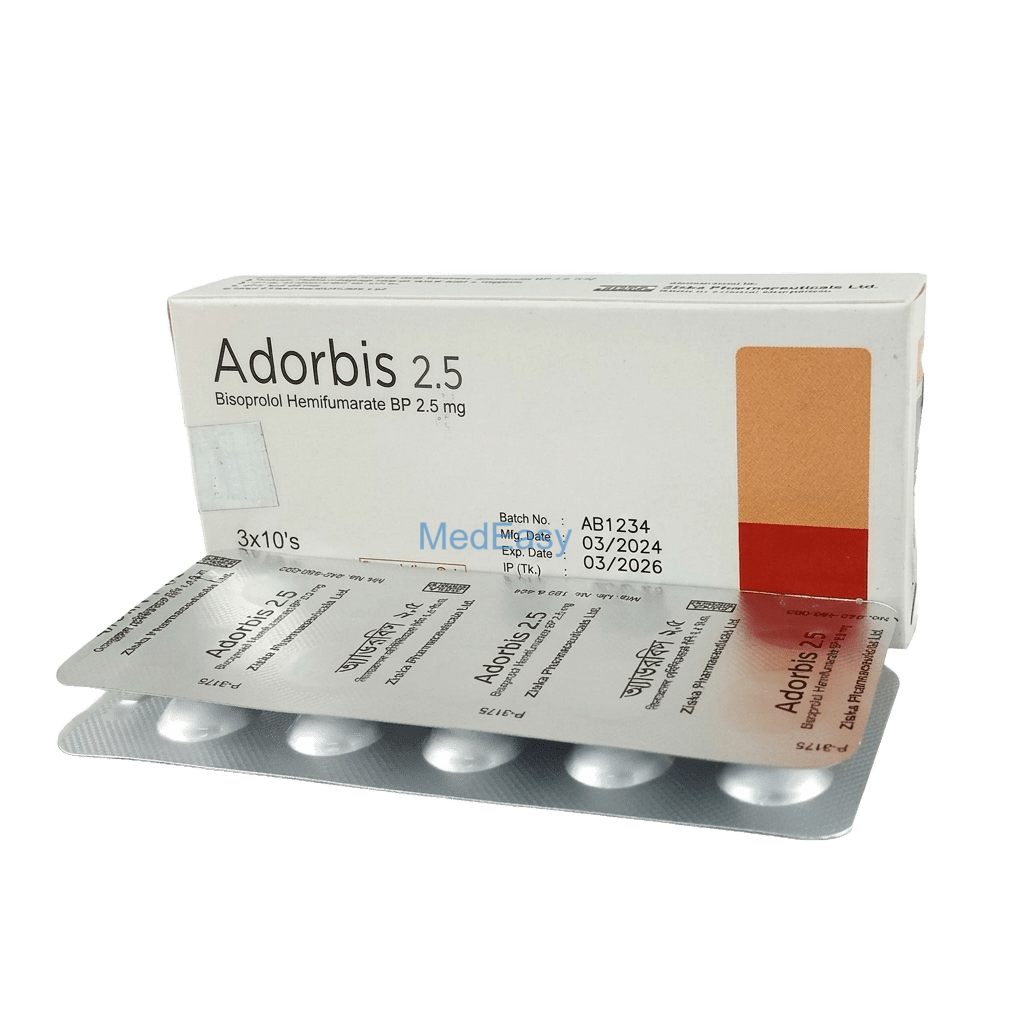
Generic medicine

Bisoprolol Hemifumarate: Brands, Price & Uses in Bangladesh

Bisoprolol Hemifumarate is a cardioselective (beta-1 selective) beta-adrenergic blocking agent with the following indications: Established/Approved Uses Hypertension: Indicated alone or in…

Forms:Tablet

About Bisoprolol Hemifumarate

Indications of Bisoprolol Hemifumarate

Bisoprolol Hemifumarate is a cardioselective (beta-1 selective) beta-adrenergic blocking agent with the following indications:

Established/Approved Uses

  • Hypertension: Indicated alone or in combination with other antihypertensive agents for management of high blood pressure.

Guideline-Supported Uses

  • Chronic stable angina pectoris: Used to reduce the frequency of anginal attacks and improve exercise tolerance in patients with chronic stable angina.
  • Chronic heart failure with reduced ejection fraction (HFrEF): Used as part of guideline-directed medical therapy (in combination with other heart failure medications such as ACE inhibitors/ARBs/ARNI, diuretics, and mineralocorticoid receptor antagonists), initiated at a very low dose and gradually up-titrated under specialist supervision, only once the patient is hemodynamically stable.

Note: Bisoprolol Hemifumarate should always be used as prescribed by a physician; the indication, dose, and monitoring plan depend on the individual patient's cardiac status.

Dosage & Administration of Bisoprolol Hemifumarate

Hypertension (Adults)

Initial dose: 5 mg once daily. May be increased to 10 mg once daily, and up to a maximum of 20 mg once daily, if needed, based on blood pressure response. In patients with renal or hepatic impairment, initiate at 2.5 mg once daily.

Chronic Stable Angina (Adults)

Initial dose: 5 mg once daily, titrated according to response, up to a maximum of 20 mg once daily.

Chronic Heart Failure with Reduced Ejection Fraction (Adults)

Must only be initiated in stable patients by a physician experienced in heart failure management, following a strict up-titration schedule:

StepDoseDuration before next increase
11.25 mg once dailyAt least 1 week (if tolerated)
22.5 mg once dailyAt least 1 week
33.75 mg once dailyAt least 1 week
45 mg once dailyAt least 4 weeks
57.5 mg once dailyAt least 4 weeks
610 mg once daily (target/maintenance dose)-

Renal/Hepatic Impairment

In patients with severe renal impairment (creatinine clearance below 20 mL/min) or severe hepatic impairment, the maximum recommended dose is generally 10 mg once daily; dose adjustment should be individualized by the physician.

Bisoprolol Hemifumarate should not be discontinued abruptly (see Precautions and Warnings).

Side Effects of Bisoprolol Hemifumarate

Side effects of Bisoprolol Hemifumarate are generally dose-related and most common at the start of treatment or during dose up-titration.

Common

  • Fatigue and tiredness
  • Dizziness
  • Headache
  • Bradycardia (slow heart rate)
  • Cold extremities
  • Gastrointestinal disturbances (nausea, diarrhea)

Less Common/Serious

  • Symptomatic hypotension
  • Worsening of heart failure symptoms (particularly during dose up-titration)
  • AV conduction disturbances
  • Bronchospasm (more likely in patients with reactive airway disease; see Precautions and Warnings)
  • Sleep disturbances, including vivid dreams or insomnia
  • Depression (rare)
  • Erectile dysfunction (rare)

Contraindications of Bisoprolol Hemifumarate

Bisoprolol Hemifumarate is contraindicated in patients with:

  • Known hypersensitivity to Bisoprolol Hemifumarate or any component of the formulation
  • Cardiogenic shock
  • Decompensated/acute heart failure requiring intravenous inotropic therapy (initiation of Bisoprolol Hemifumarate is contraindicated during acute decompensation; it should only be started once the patient is clinically stable)
  • Second- or third-degree atrioventricular (AV) block, unless a functioning pacemaker is in place
  • Sick sinus syndrome
  • Severe bradycardia
  • Severe hypotension
  • Severe peripheral arterial occlusive disease
  • Untreated pheochromocytoma

Frequently Asked Questions about Bisoprolol Hemifumarate

What is Bisoprolol Hemifumarate used for?

Bisoprolol Hemifumarate is used to treat high blood pressure (hypertension) and chronic stable angina (chest pain due to coronary artery disease), and, in combination with other heart failure medicines, as part of guideline-directed treatment for chronic heart failure with reduced ejection fraction.

Can I stop taking Bisoprolol Hemifumarate suddenly if I feel better?

No. You should never stop Bisoprolol Hemifumarate suddenly without consulting your physician. Abrupt discontinuation can cause rebound high blood pressure, worsening chest pain, dangerous heart rhythm problems, or even heart attack, especially in people with underlying coronary artery disease. Your doctor will taper the dose gradually if it needs to be stopped.

Who should not take Bisoprolol Hemifumarate?

Bisoprolol Hemifumarate should not be used by people with severe slow heart rate, certain heart block conditions without a pacemaker, sick sinus syndrome, cardiogenic shock, decompensated/acute heart failure, severe low blood pressure, severe peripheral artery disease, untreated pheochromocytoma, or known hypersensitivity to the medicine.

Can people with diabetes take Bisoprolol Hemifumarate?

Diabetic patients can take Bisoprolol Hemifumarate under medical supervision, but they should be aware that it can mask the usual warning signs of low blood sugar (hypoglycemia), such as a fast heartbeat and tremor. Regular blood glucose monitoring is recommended.

Can I take Bisoprolol Hemifumarate if I have asthma?

Bisoprolol Hemifumarate is beta-1 selective, which reduces (but does not completely eliminate) the risk of triggering bronchospasm compared to older, non-selective beta-blockers. Patients with asthma or chronic obstructive pulmonary disease should only use it with caution, at the lowest effective dose, and under close physician supervision.

What should I do if I take too much Bisoprolol Hemifumarate?

If you suspect an overdose of Bisoprolol Hemifumarate, seek immediate medical attention or contact emergency services/poison control right away, as overdose can cause dangerously slow heart rate, low blood pressure, and low blood sugar requiring urgent hospital care.

Disclaimer

The information provided is accurate to the best of our knowledge, but it does not replace professional medical advice. We cannot guarantee its completeness or accuracy, and the absence of specific information about a drug should not be taken as an endorsement. We are not responsible for any consequences arising from this information, so please consult a healthcare professional for any concerns or questions.

DoctorBlogArticles