10% Off
Dicaltrol Plus
Drug International Ltd.
৳58.50
Add to cart
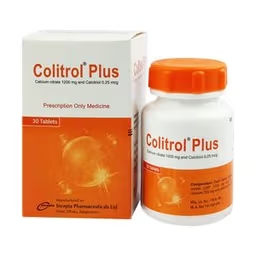
Calcitriol + Calcium Citrate is a fixed-dose combination of calcitriol (the active, hormonally-functional form of vitamin D) and calcium citrate (an elemental calcium salt).
Calcitriol + Calcium Citrate is a fixed-dose combination of calcitriol (the active, hormonally-functional form of vitamin D) and calcium citrate (an elemental calcium salt). It is used when both a rapidly-acting form of vitamin D and a well-absorbed calcium supplement are needed together.
Calcitriol + Calcium Citrate is typically used as an adjunct alongside other osteoporosis therapies (e.g., bisphosphonates) rather than as monotherapy for fracture prevention, and alongside phosphate binders and dietary phosphate control in chronic kidney disease.
Calcitriol + Calcium Citrate is sometimes used off-label in vitamin D-dependent rickets and in postmenopausal women with vitamin D receptor resistance or malabsorption states, under specialist supervision; such use should be guided by a physician.
Dosing of Calcitriol + Calcium Citrate must be individualized based on serum calcium, phosphate, and parathyroid hormone levels, and titrated slowly under medical supervision.
| Indication | Typical adult dosing (calcitriol component) | Notes |
|---|---|---|
| Hypocalcemia in chronic kidney disease (dialysis) | 0.25 mcg once daily or every other day, adjusted by 0.25 mcg/day increments | Calcium citrate dose adjusted to maintain normal serum calcium |
| Hypoparathyroidism | 0.25 mcg once daily, titrated according to response | Some patients require higher doses under close monitoring |
| Osteoporosis (adjunct) | 0.25 mcg twice daily with elemental calcium as directed | Used with other anti-osteoporotic therapy |
Doses are increased only after checking serum calcium, generally not more often than every 2-4 weeks, since hypercalcemia can develop rapidly with calcitriol.
Most adverse effects of Calcitriol + Calcium Citrate relate to excess calcium/vitamin D activity (hypercalcemia) or to the calcium citrate component itself.
Patients should report symptoms suggestive of hypercalcemia promptly (see Precautions and Warnings).
Calcitriol + Calcium Citrate should not be used in these settings; other cautions related to renal impairment, concurrent thiazide use, or hyperphosphatemia are addressed under Precautions and Warnings rather than being absolute contraindications.
Disclaimer
The information provided is accurate to the best of our knowledge, but it does not replace professional medical advice. We cannot guarantee its completeness or accuracy, and the absence of specific information about a drug should not be taken as an endorsement. We are not responsible for any consequences arising from this information, so please consult a healthcare professional for any concerns or questions.