
10% Off
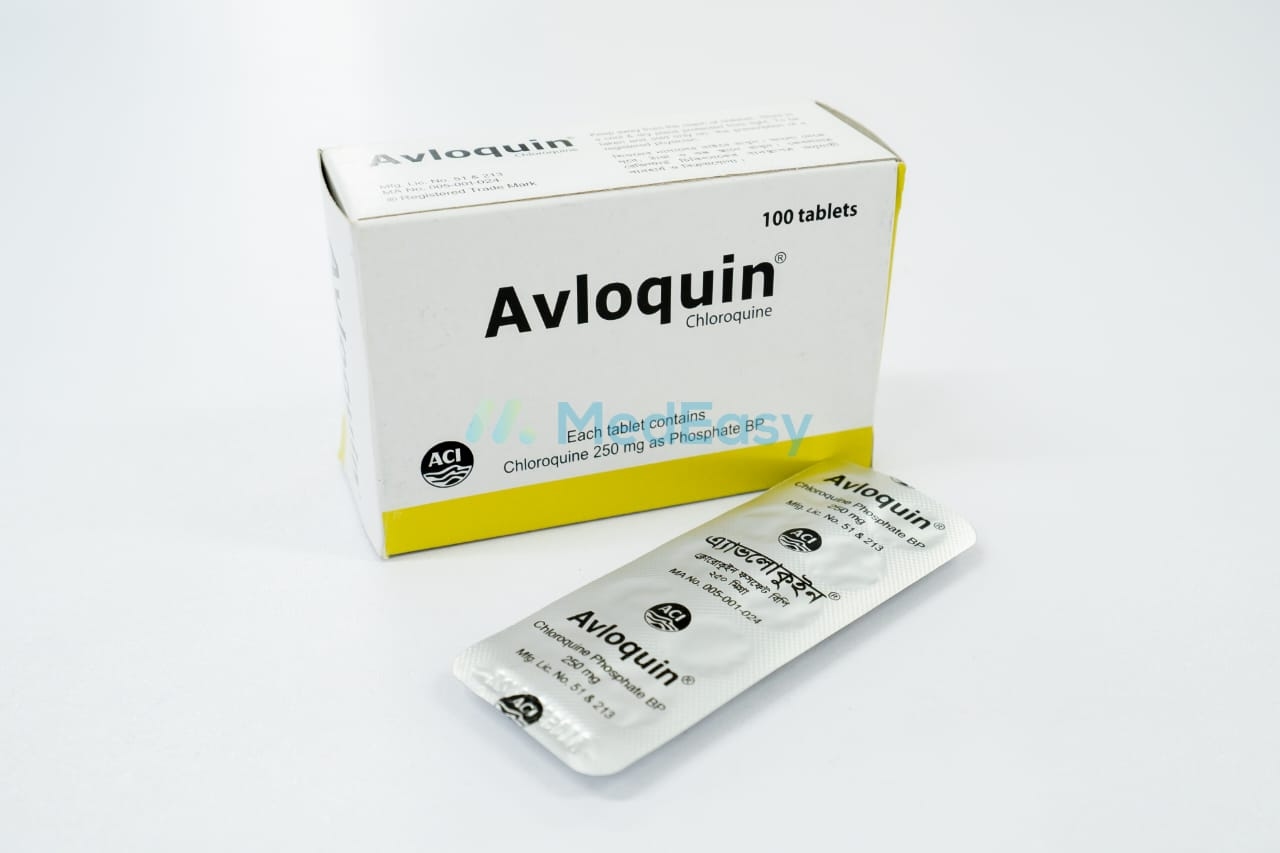
Avloquin250 mg
ACI Limited
৳11.88
Add to cart
Chloroquine Phosphate is indicated for the following uses: Established / Approved Uses Treatment of uncomplicated malaria caused by chloroquine-sensitive strains of Plasmodium vivax , P.
Chloroquine Phosphate is indicated for the following uses:
Chloroquine Phosphate is not effective against chloroquine-resistant strains of malaria and should not be relied upon in regions where resistance is documented; a physician should confirm local resistance patterns before prescribing.
Dosage of Chloroquine Phosphate is expressed below as the phosphate salt, with the chloroquine base equivalent noted in parentheses; always confirm strength with the specific product label.
| Indication | Dosage |
|---|---|
| Treatment of acute malaria | 1 g (600 mg base) as an initial dose, followed by 500 mg (300 mg base) at 6 hours, 24 hours, and 48 hours after the first dose (total 2.5 g phosphate / 1.5 g base over 3 days) |
| Malaria prophylaxis | 500 mg (300 mg base) once weekly on the same day each week, starting 1–2 weeks before entering an endemic area and continuing for 4 weeks after leaving |
| Extraintestinal amebiasis (with an intestinal amebicide) | 1 g (600 mg base) daily for 2 days, then 500 mg (300 mg base) daily for at least 2–3 weeks |
| Indication | Dosage |
|---|---|
| Treatment of acute malaria | 10 mg base/kg (maximum 600 mg base) initially, then 5 mg base/kg at 6, 24, and 48 hours after the first dose |
| Malaria prophylaxis | 5 mg base/kg once weekly (maximum 300 mg base), starting 1–2 weeks before and continuing 4 weeks after travel to an endemic area |
Pediatric dosing must always be calculated on a mg/kg basis by a physician; the pediatric dose of Chloroquine Phosphate should never exceed the corresponding adult dose. Because Chloroquine Phosphate has a narrow margin between therapeutic and fatal doses, especially in children, dosage must be measured and administered with extreme care.
Chloroquine Phosphate should be used with caution and may require dose adjustment or closer monitoring in patients with significant renal or hepatic impairment, as elimination may be reduced; consult a physician for individualized dosing.
Chloroquine Phosphate should be taken orally with food or milk to reduce gastrointestinal upset, at the same time each day/week as prescribed. Doses of antacids or kaolin-containing products should be separated from Chloroquine Phosphate by at least 4 hours (see Interaction).
Common side effects of Chloroquine Phosphate include:
Serious but less common effects include:
Seek medical attention promptly for visual changes, palpitations, fainting, unusual bleeding/bruising, or signs of infection while taking Chloroquine Phosphate.
Chloroquine Phosphate is contraindicated in:
Disclaimer
The information provided is accurate to the best of our knowledge, but it does not replace professional medical advice. We cannot guarantee its completeness or accuracy, and the absence of specific information about a drug should not be taken as an endorsement. We are not responsible for any consequences arising from this information, so please consult a healthcare professional for any concerns or questions.
