Generic medicine

Ciclesonide: Brands, Price & Uses in Bangladesh

Ciclesonide is an inhaled corticosteroid (prodrug) used for long-term maintenance and prophylactic treatment of two separate conditions and more.

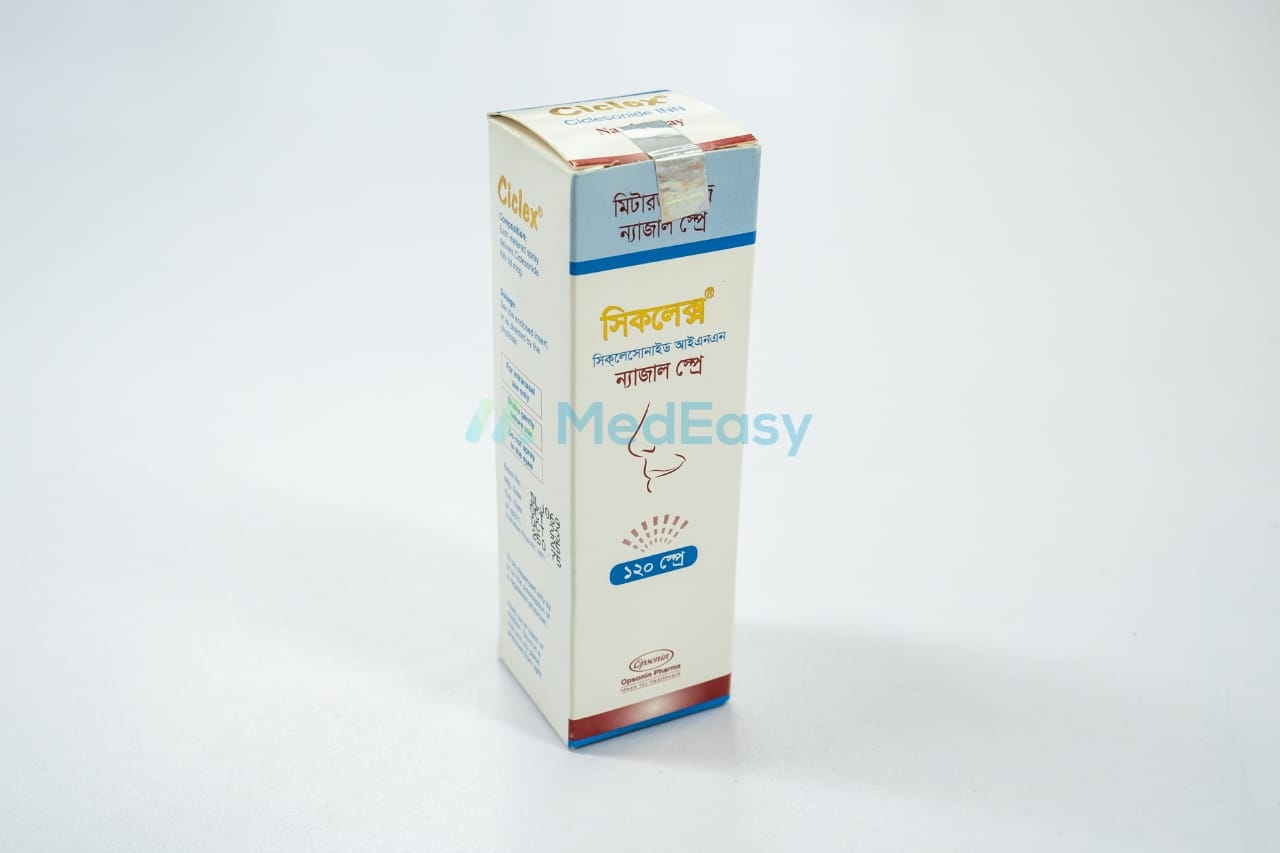
Forms:Nasal Spray

About Ciclesonide

Indications of Ciclesonide

Ciclesonide is an inhaled corticosteroid (prodrug) used for long-term maintenance and prophylactic treatment of two separate conditions, depending on the formulation used:

  • Oral inhalation (metered-dose inhaler): Maintenance treatment of asthma as prophylactic (preventive) therapy in adults and pediatric patients 12 years of age and older who require regular use of an inhaled corticosteroid.
  • Nasal spray: Treatment of nasal symptoms (sneezing, itching, congestion, rhinorrhea) of seasonal allergic rhinitis in adults and children 6 years and older, and of perennial (year-round) allergic rhinitis in adults and adolescents 12 years and older.

Important: Ciclesonide is not indicated for the relief of acute bronchospasm or status asthmaticus. It is a controller medicine, not a rescue inhaler, and must be used together with a separate fast-acting (rescue) bronchodilator for sudden asthma symptoms.

Ciclesonide has also been studied off-label for other allergic and inflammatory airway conditions, but such uses are not established by regulatory labeling and should only be undertaken under direct physician guidance.

Dosage & Administration of Ciclesonide

Ciclesonide Oral Inhalation (Asthma) - Adults and Children 12 Years and Older

Prior TherapyStarting DoseMaximum Dose
Bronchodilators alone80 mcg twice daily160 mcg twice daily
Inhaled corticosteroids80 mcg twice daily320 mcg twice daily
Oral corticosteroids320 mcg twice daily320 mcg twice daily

The lowest dose that maintains asthma control should be used. Maximum benefit may take 4 weeks or longer to appear.

Ciclesonide Nasal Spray (Allergic Rhinitis)

  • Adults and children 6 years and older (seasonal allergic rhinitis): 2 sprays (50 mcg/spray) in each nostril once daily (total 200 mcg/day).
  • Adults and adolescents 12 years and older (perennial allergic rhinitis): 2 sprays in each nostril once daily (total 200 mcg/day).

Ciclesonide is not approved for use in children younger than 6 years (nasal spray) or younger than 12 years (oral inhaler). It is not a substitute for a rescue bronchodilator and must not be used to treat an acute asthma attack.

Side Effects of Ciclesonide

Common Side Effects

  • Headache
  • Nasopharyngitis (common cold-like symptoms)
  • Sinusitis
  • Pharyngolaryngeal pain / sore throat
  • Upper respiratory tract infection
  • Nasal congestion
  • Epistaxis (nosebleed, more common with nasal spray)
  • Back pain, joint pain (arthralgia)

Less Common but Important Side Effects

  • Oral or nasal candidiasis (thrush) with Ciclesonide use - reduced risk compared with some other inhaled corticosteroids due to the prodrug design, but still possible; rinse the mouth after inhaler use as a precaution.
  • Hypersensitivity reactions, including rash, urticaria, and rarely angioedema (swelling of lips, tongue, or throat) - seek urgent care if these occur.
  • Nasal septal effects (rare nasal ulceration or perforation with nasal spray).

Systemic corticosteroid-related effects (adrenal suppression, reduced growth velocity in children, decreased bone mineral density, glaucoma/cataracts) are discussed under Precautions and Warnings, as they relate mainly to long-term or high-dose use of Ciclesonide rather than typical short-term adverse events.

Contraindications of Ciclesonide

  • Known hypersensitivity to Ciclesonide or to any excipient in the formulation.
  • Primary treatment of status asthmaticus or other acute episodes of asthma/bronchospasm requiring intensive measures - Ciclesonide is a maintenance (controller) therapy, not a rescue treatment, and must not be relied upon for acute symptom relief.

Frequently Asked Questions about Ciclesonide

What is Ciclesonide used for?

Ciclesonide is an inhaled corticosteroid used as a maintenance (long-term controller) medicine. As an oral inhaler, it prevents asthma symptoms and flare-ups in patients 12 years and older. As a nasal spray, it relieves nasal symptoms of seasonal allergic rhinitis (from age 6) and perennial allergic rhinitis (from age 12).

Can I use Ciclesonide to treat a sudden asthma attack?

No. Ciclesonide is not a rescue medicine and will not relieve sudden breathing difficulty or an acute asthma attack. It must always be used together with a separate fast-acting (rescue) bronchodilator inhaler for acute symptoms, and should not be used as the sole treatment for status asthmaticus or acute bronchospasm.

Does Ciclesonide cause thrush (oral yeast infection)?

Ciclesonide is designed as a prodrug that activates mainly in the lung, which lowers the risk of oral thrush compared with some other inhaled steroids, but the risk is not eliminated. Rinsing the mouth with water (without swallowing) after each use of the Ciclesonide inhaler is recommended as a precaution to further reduce this risk.

Is Ciclesonide safe to use during pregnancy or breastfeeding?

There is limited human data on Ciclesonide in pregnancy and breastfeeding. Ciclesonide should be used during pregnancy only if the potential benefit (such as maintaining asthma control) justifies the potential risk to the fetus, and during breastfeeding only if clearly needed, always under a physician's guidance. Uncontrolled asthma itself can be risky in pregnancy, so Ciclesonide treatment should not be stopped without medical advice.

Can children use Ciclesonide?

The Ciclesonide oral inhaler is approved for asthma in children 12 years and older; it is not established as safe and effective below that age. The Ciclesonide nasal spray is approved from 6 years of age for seasonal allergic rhinitis and from 12 years for perennial allergic rhinitis. Growth should be monitored in children using Ciclesonide long-term, as with other inhaled corticosteroids.

What should I do if I miss a dose or think I have taken too much Ciclesonide?

If a dose of Ciclesonide is missed, take it as soon as remembered unless it is almost time for the next dose; do not double the dose. Ciclesonide should be taken exactly as prescribed. If an overdose is suspected, especially in a child, seek immediate medical attention or contact emergency services/poison control rather than treating it at home.

Disclaimer

The information provided is accurate to the best of our knowledge, but it does not replace professional medical advice. We cannot guarantee its completeness or accuracy, and the absence of specific information about a drug should not be taken as an endorsement. We are not responsible for any consequences arising from this information, so please consult a healthcare professional for any concerns or questions.

DoctorBlogArticles