
8% Off
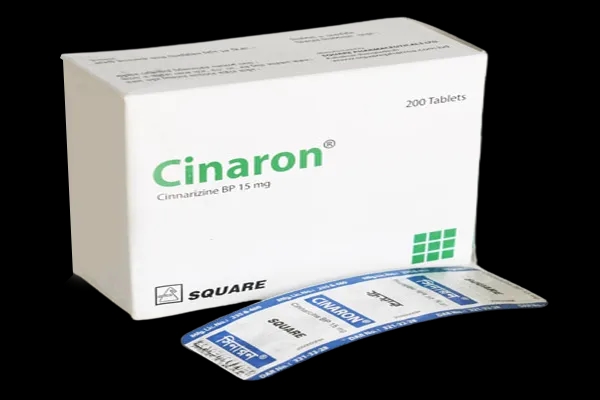
Cinaron15 mg
Square Pharmaceuticals PLC.
৳12.42
Add to cart
Cinnarizine is an antihistamine with additional calcium channel-blocking activity that is used mainly for disorders of balance and for prevention of travel sickness.
Cinnarizine is an antihistamine with additional calcium channel-blocking activity that is used mainly for disorders of balance and for prevention of travel sickness. Its uses can be classified by strength of evidence as follows:
Cinnarizine treats symptoms only; it does not treat the underlying cause of vertigo or vascular disease, so the underlying condition should still be diagnosed and managed by a physician.
Dosage of Cinnarizine should be individualised by the prescribing physician according to indication, age, and response. Typical dosing ranges used in regional labeling are summarised below; always follow the specific product label and physician's instructions.
| Indication | Adult dose | Paediatric dose |
|---|---|---|
| Vertigo, Meniere's disease, labyrinthitis | Usually 25 mg three times daily, titrated to response; some patients are maintained on a lower dose once symptoms are controlled | Not generally recommended for this indication in young children; use only under specialist supervision |
| Motion sickness (prevention) | 25–30 mg taken about 2 hours before travel, then 12.5–15 mg every 8 hours during the journey if needed | Children 5–12 years: approximately half the adult dose on the same schedule; children under 5 years: safety and efficacy not established, not generally recommended |
| Adjunct in peripheral vascular disorders | Typically 75 mg once daily (as a higher-strength "forte" formulation) or 25 mg three times daily, as directed by physician | Not applicable |
Administration: Tablets should be swallowed with water, preferably after food, to reduce the chance of stomach upset. Do not exceed the dose or duration recommended by the physician. See Use in Special Populations for elderly, hepatic, and renal dosing considerations.
Side effects of Cinnarizine are generally mild and dose-related.
| Frequency | Effects |
|---|---|
| Common | Drowsiness/sedation, weight gain, gastrointestinal upset (nausea, dyspepsia, dry mouth, abdominal discomfort), headache, sweating (hyperhidrosis), fatigue |
| Less common / with prolonged use | Extrapyramidal symptoms and drug-induced parkinsonism (tremor, rigidity, abnormal movements) — a notable, dose- and duration-related risk that is more frequent with long-term use, particularly in the elderly, and is usually reversible after stopping Cinnarizine |
| Rare | Hypersensitivity reactions (rash, itching), lichenoid skin eruptions, and rarely liver enzyme abnormalities |
Patients or caregivers should seek medical advice promptly if tremor, muscle stiffness, or abnormal movements develop during Cinnarizine treatment.
Cinnarizine is contraindicated in:
Cinnarizine should also not be used in patients with rare hereditary conditions affecting sugar/excipient tolerance where these are present in the specific tablet formulation (check individual product labeling).
Disclaimer
The information provided is accurate to the best of our knowledge, but it does not replace professional medical advice. We cannot guarantee its completeness or accuracy, and the absence of specific information about a drug should not be taken as an endorsement. We are not responsible for any consequences arising from this information, so please consult a healthcare professional for any concerns or questions.
