
10% Off
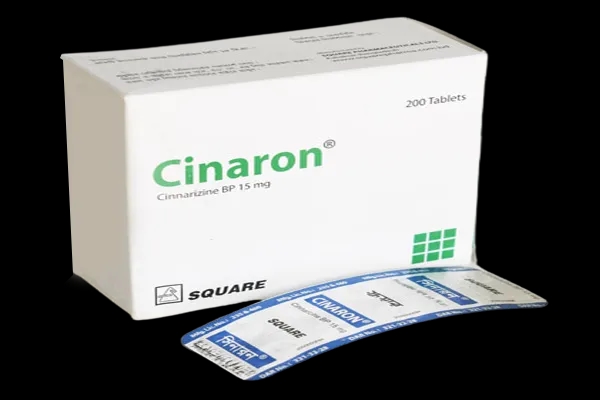
Cinaron15 mg
Square Pharmaceuticals PLC.
৳12.15
Add to cart


Zincin is an antihistamine with additional calcium channel-blocking activity that is used mainly for disorders of balance and for prevention of travel sickness. Its uses can be classified by strength of evidence as follows:
Zincin treats symptoms only; it does not treat the underlying cause of vertigo or vascular disease, so the underlying condition should still be diagnosed and managed by a physician.
Each tablet commonly available in this market contains Cinnarizine INN as the active ingredient, typically at a strength of 25 mg per tablet (some markets also supply 15 mg or 75 mg "forte" strength tablets, and fixed-dose combinations with dimenhydrinate exist for motion sickness). Exact strength and excipients vary by manufacturer — always check the product label/pack insert of the specific brand dispensed.
Zincin is a piperazine-derivative antihistamine that also acts as a selective blocker of T-type voltage-gated calcium channels. It is widely used around the world (though not marketed in the United States or Canada) for the symptomatic control of vertigo and for prevention of motion sickness. By reducing the excitability of vestibular hair cells and dampening histaminergic and calcium-mediated signaling pathways involved in the vomiting reflex, Zincin helps relieve dizziness, nausea, and vomiting associated with disorders of the inner ear and with travel.
Zincin belongs to the piperazine-derivative class of antihistamines and is classified as an H1-antihistamine with selective T-type calcium channel-blocking (calcium antagonist) activity. It is used therapeutically as an anti-vertigo / antiemetic agent.
Cinnarizine has a dual mechanism of action:
Pharmacokinetics: Cinnarizine is well absorbed orally, with peak plasma concentration reached in about 1–3 hours. It is extensively metabolised in the liver and eliminated mainly via the faeces, with a minor fraction excreted in urine. Elimination half-life is age-dependent and can be prolonged in elderly patients, contributing to drug accumulation with long-term dosing.
Dosage of Zincin should be individualised by the prescribing physician according to indication, age, and response. Typical dosing ranges used in regional labeling are summarised below; always follow the specific product label and physician's instructions.
| Indication | Adult dose | Paediatric dose |
|---|---|---|
| Vertigo, Meniere's disease, labyrinthitis | Usually 25 mg three times daily, titrated to response; some patients are maintained on a lower dose once symptoms are controlled | Not generally recommended for this indication in young children; use only under specialist supervision |
| Motion sickness (prevention) | 25–30 mg taken about 2 hours before travel, then 12.5–15 mg every 8 hours during the journey if needed | Children 5–12 years: approximately half the adult dose on the same schedule; children under 5 years: safety and efficacy not established, not generally recommended |
| Adjunct in peripheral vascular disorders | Typically 75 mg once daily (as a higher-strength "forte" formulation) or 25 mg three times daily, as directed by physician | Not applicable |
Administration: Tablets should be swallowed with water, preferably after food, to reduce the chance of stomach upset. Do not exceed the dose or duration recommended by the physician. See Use in Special Populations for elderly, hepatic, and renal dosing considerations.
Take Zincin tablets by mouth with a glass of water, preferably after meals, to minimise gastrointestinal discomfort. For motion sickness, the first dose should be taken about 2 hours before starting travel so that adequate blood levels are reached before exposure to motion. Swallow tablets whole; do not crush or chew unless the product labeling states this is acceptable. Take doses at evenly spaced intervals and do not double a dose to make up for one missed.
The following interactions with Zincin are clinically significant and well documented:
Cinnarizine is contraindicated in:
Cinnarizine should also not be used in patients with rare hereditary conditions affecting sugar/excipient tolerance where these are present in the specific tablet formulation (check individual product labeling).
Side effects of Zincin are generally mild and dose-related.
| Frequency | Effects |
|---|---|
| Common | Drowsiness/sedation, weight gain, gastrointestinal upset (nausea, dyspepsia, dry mouth, abdominal discomfort), headache, sweating (hyperhidrosis), fatigue |
| Less common / with prolonged use | Extrapyramidal symptoms and drug-induced parkinsonism (tremor, rigidity, abnormal movements) — a notable, dose- and duration-related risk that is more frequent with long-term use, particularly in the elderly, and is usually reversible after stopping Zincin |
| Rare | Hypersensitivity reactions (rash, itching), lichenoid skin eruptions, and rarely liver enzyme abnormalities |
Patients or caregivers should seek medical advice promptly if tremor, muscle stiffness, or abnormal movements develop during Zincin treatment.
Pregnancy: Safety of Zincin in human pregnancy has not been firmly established. Animal reproduction studies have not shown clear evidence of teratogenicity, but human data are insufficient. Zincin should be used during pregnancy only if clearly needed and if the potential benefit to the mother justifies the potential risk to the fetus; a physician should be consulted before use.
Lactation: It is not known with certainty whether Zincin is excreted in human breast milk in clinically significant amounts. Because sedating antihistamines can pass into breast milk and affect a nursing infant, use during breastfeeding is not generally recommended unless a physician determines the benefit outweighs the risk.
Overdose of Zincin may cause drowsiness progressing to impaired consciousness or coma, vomiting, low muscle tone (hypotonia), stupor, extrapyramidal symptoms, and convulsions, particularly in children.
There is no specific antidote. If overdose is suspected, seek immediate medical attention or contact emergency services / a poison control centre right away. Treatment is supportive and symptomatic and should be carried out in a hospital setting, including monitoring of vital signs and neurological status; do not attempt specific home treatment.
Store at room temperature (below 30°C), away from light and moisture. Keep out of reach of children.
For motion sickness, Zincin is used short-term — for the duration of travel only. For vertigo and Meniere's disease, treatment duration should be determined by the prescribing physician based on response, and is typically continued only as long as symptoms persist, with periodic reassessment. Because prolonged continuous use, especially in the elderly, carries a higher risk of extrapyramidal side effects, Zincin should not be used long-term without regular medical review.
Antihistamines (piperazine derivatives); Calcium channel blockers (selective T-type blockers); Antivertigo/antiemetic agents
Cinnarizine acts through a combination of H1-receptor antihistaminic blockade and selective inhibition of T-type voltage-gated calcium channels in vestibular hair cells of the inner ear. This dual action reduces abnormal excitability and calcium-dependent signal transmission from the vestibular apparatus to the vomiting centre in the brainstem, thereby suppressing the nausea, vomiting, and dizziness that arise from vestibular disorders and from the sensory mismatch that occurs during motion sickness. Its mild calcium-channel blocking effect on vascular smooth muscle and red blood cells also produces modest vasodilation and improved red cell deformability, which underlies its adjunct use in peripheral vascular disorders.
Zincin may be used for prevention of motion sickness in children aged 5 years and above, at approximately half the adult dose, following the same timing schedule (a dose about 2 hours before travel, then repeated at intervals during the journey) under medical or pharmacist guidance. Safety and efficacy of Zincin in children under 5 years of age have not been established, and it is not generally recommended for this age group. Use of Zincin for vertigo or other indications in children should be undertaken only under specialist medical supervision, with attention to the possibility of sedation and, with prolonged use, extrapyramidal effects.
Q: What is Zincin 15 mg Tablet used for?
A: Zincin 15 mg Tablet is mainly used to relieve vertigo (dizziness/spinning sensation) caused by inner ear problems such as Meniere's disease or labyrinthitis, and to prevent or treat motion sickness during travel. In some countries it is also used as an adjunct treatment for peripheral vascular disorders.
Q: How should I take Zincin 15 mg Tablet?
A: Take Zincin 15 mg Tablet tablets by mouth with water, preferably after food. For motion sickness, take the first dose about 2 hours before travelling and repeat as directed during the journey. For vertigo, follow the dosing schedule given by your physician, usually two to three times a day.
Q: Can I take Zincin 15 mg Tablet if I have Parkinson's disease?
A: No. Zincin 15 mg Tablet is contraindicated in people with Parkinson's disease because it can worsen tremor, rigidity, and other movement symptoms due to its effect on dopamine signalling in the brain.
Q: Is Zincin 15 mg Tablet safe during pregnancy or breastfeeding?
A: Safety of Zincin 15 mg Tablet in pregnancy has not been firmly established, and it should be used only if a physician decides the benefit clearly outweighs the potential risk to the baby. It is also not generally recommended while breastfeeding unless your physician advises otherwise. Always consult your doctor before use.
Q: What are the main side effects of Zincin 15 mg Tablet?
A: The most common side effects of Zincin 15 mg Tablet are drowsiness, weight gain, and mild stomach upset. With long-term use, especially in elderly patients, Zincin 15 mg Tablet can rarely cause tremor, muscle stiffness, or other movement problems (extrapyramidal symptoms/parkinsonism); tell your doctor promptly if these occur.
Q: Can I drive after taking Zincin 15 mg Tablet?
A: You should be cautious. Zincin 15 mg Tablet commonly causes drowsiness, which can impair your ability to drive or operate machinery safely. Avoid these activities until you know how Zincin 15 mg Tablet affects you.
Disclaimer
The information provided is accurate to the best of our knowledge, but it does not replace professional medical advice. We cannot guarantee its completeness or accuracy, and the absence of specific information about a drug should not be taken as an endorsement. We are not responsible for any consequences arising from this information, so please consult a healthcare professional for any concerns or questions.

