
10% Off
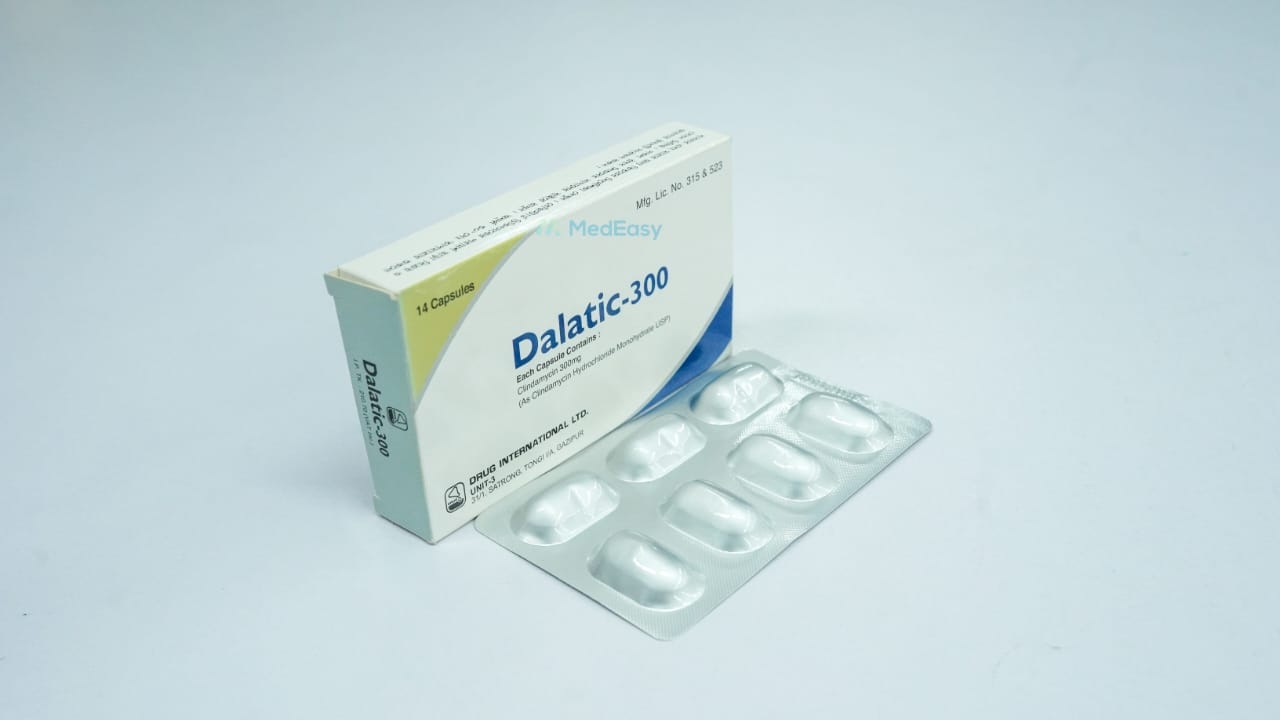
Dalatic300 mg
Drug International Ltd.
৳94.81
Add to cart
Serious Anaerobic and Susceptible Gram-Positive Bacterial Infections Clindamycin USP is an established treatment, given orally or by injection and more.
Clindamycin USP is an established treatment, given orally or by injection, for serious infections caused by susceptible anaerobic bacteria and susceptible strains of streptococci, pneumococci, and staphylococci. Because of the risk of Clostridioides difficile-associated diarrhea (see Precautions and Warnings), Clindamycin USP is generally reserved for patients who are allergic to penicillin, or for infections in which a penicillin is inappropriate or clinically inferior, including:
Clindamycin USP is an established adjunct to surgical treatment for chronic bone and joint infections caused by susceptible staphylococci.
Clindamycin USP is used off-label, always in combination with quinine, for the treatment of certain forms of malaria, including in pregnant women when other options are unsuitable; this is a guideline-recognized use but Clindamycin USP is never used alone for malaria.
Clindamycin USP, generally combined with pyrimethamine, is used off-label as an alternative treatment for toxoplasmosis, including in patients who cannot tolerate sulfonamides. Clindamycin USP combined with primaquine is also used off-label as an alternative regimen for Pneumocystis jirovecii pneumonia in patients unable to take first-line therapy.
Topical (vaginal) formulations of Clindamycin USP are an established treatment for bacterial vaginosis.
Topical (skin) formulations of Clindamycin USP are an established adjunctive treatment for moderate to severe acne vulgaris, generally used as part of a broader skin-care regimen rather than as monotherapy, and typically for a limited, periodically reassessed course.
Clindamycin USP is a guideline-supported alternative for antibiotic prophylaxis against infective endocarditis in penicillin-allergic patients undergoing certain dental or invasive procedures, in patients at highest risk of adverse outcomes from endocarditis.
Important: Clindamycin USP is not indicated for the treatment of meningitis, as it does not penetrate the cerebrospinal fluid in adequate concentrations.
The dose, route, frequency, and duration of Clindamycin USP vary considerably by indication, severity of infection, patient age and weight, and organ function, and must be determined by a qualified healthcare professional; a regimen used for one infection or dosage form is not necessarily appropriate for another. Take Clindamycin USP exactly as prescribed by your physician; do not stop, extend, skip doses, or share Clindamycin USP with others without medical advice, and complete the full prescribed course even if symptoms improve early.
Clindamycin USP is contraindicated in patients with known hypersensitivity to Clindamycin USP (clindamycin) or to lincomycin.
Disclaimer
The information provided is accurate to the best of our knowledge, but it does not replace professional medical advice. We cannot guarantee its completeness or accuracy, and the absence of specific information about a drug should not be taken as an endorsement. We are not responsible for any consequences arising from this information, so please consult a healthcare professional for any concerns or questions.