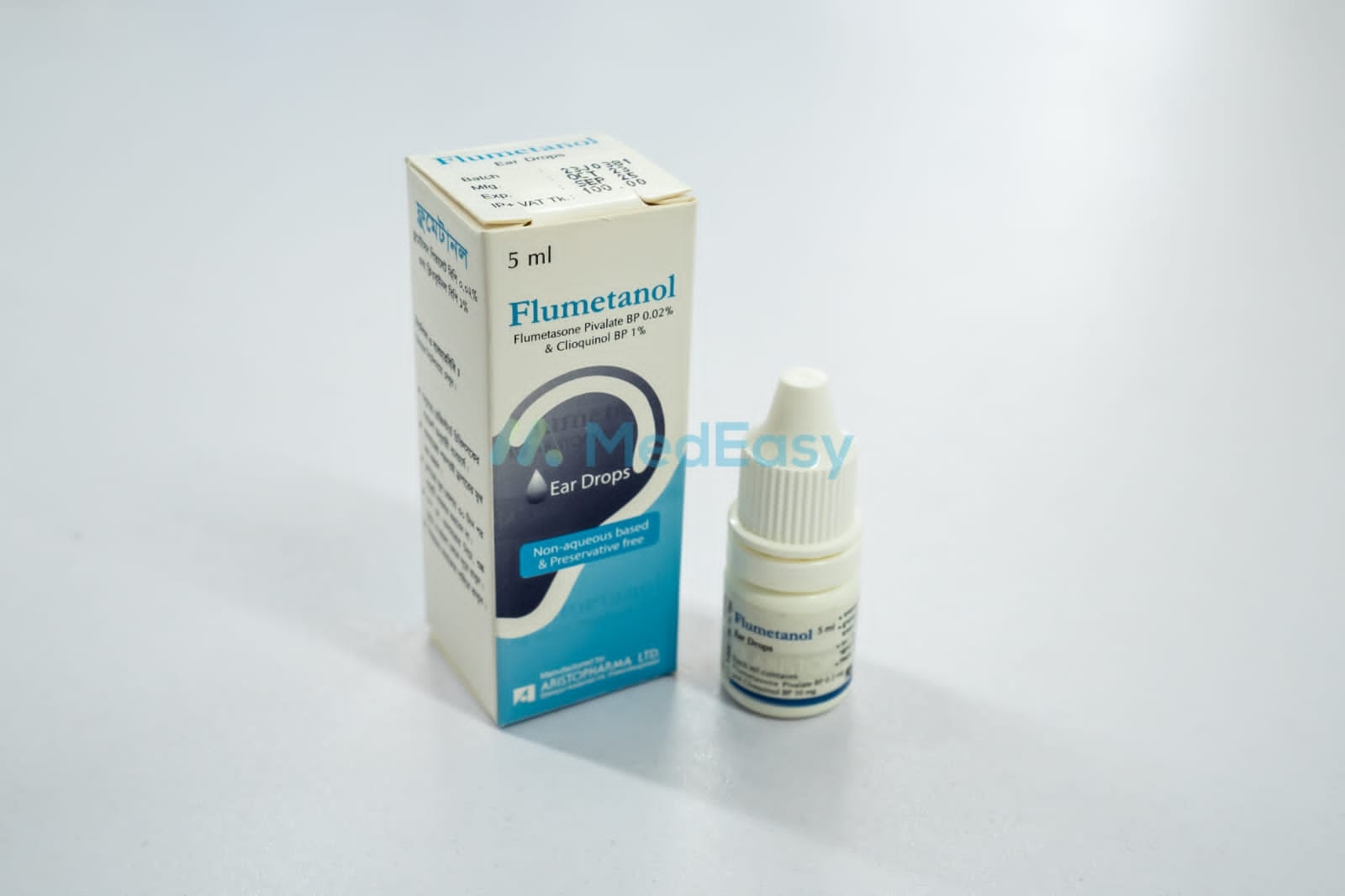
Generic medicine

Clioquinol + Flumetasone Pivalate: Brands, Price & Uses in Bangladesh

Clioquinol + Flumetasone Pivalate is a topical/otic combination of an anti-infective (iodoquinoline) and a corticosteroid and more.

Forms:Ear Drop

About Clioquinol + Flumetasone Pivalate

Indications of Clioquinol + Flumetasone Pivalate

Clioquinol + Flumetasone Pivalate is a topical/otic combination of an anti-infective (iodoquinoline) and a corticosteroid, used for short-term treatment of inflammatory skin and ear conditions that are infected or likely to be infected.

Established/labelled uses

  • Acute and chronic otitis externa (inflammation of the external ear canal) with bacterial and/or fungal infection, where reduction of inflammation together with anti-infective cover is required.
  • Infected inflammatory dermatoses such as infected eczema, infected contact dermatitis, and infected seborrhoeic dermatitis of the skin, where a mixed or presumed bacterial/fungal infection accompanies the inflammation.

Notes on evidence strength

Clioquinol + Flumetasone Pivalate is intended only for short courses in conditions where both an anti-infective and an anti-inflammatory effect are wanted at the same time; it is not intended as first-line therapy for infection or inflammation alone. It should not be used to treat primary fungal or viral infections without concurrent appropriate antimicrobial cover, and it is not a substitute for systemic therapy in severe or spreading infection.

Dosage & Administration of Clioquinol + Flumetasone Pivalate

Otitis externa (ear drops)

PopulationDose
Adults2-3 drops instilled into the affected ear, 2-3 times daily, or as directed by the physician
ChildrenAs directed by a physician; short courses only, with careful assessment of the ear canal and eardrum before use

Infected inflammatory skin conditions

PopulationDose
AdultsApply a thin layer / a few drops to the affected area 2-3 times daily
ChildrenAs directed by a physician; use the smallest effective amount for the shortest necessary duration

Clioquinol + Flumetasone Pivalate is intended for short-term use only (see Duration of Treatment). If there is no improvement within 5-7 days, or symptoms worsen, treatment should be reviewed by a physician.

Side Effects of Clioquinol + Flumetasone Pivalate

Most side effects of Clioquinol + Flumetasone Pivalate are local and related to the site of application:

  • Local burning, stinging, itching, or irritation at the application site
  • Allergic contact dermatitis or hypersensitivity reactions
  • Yellow-brown staining of skin, hair, nails, and clothing (a characteristic effect of clioquinol)
  • With prolonged or extensive use: skin thinning, striae, telangiectasia, or other signs of local corticosteroid overuse; delayed wound healing
  • With use in a perforated eardrum: ototoxicity (hearing disturbance) - see Contraindications
  • Rarely, secondary fungal or bacterial overgrowth with prolonged use

Patients should stop use and consult a physician if irritation, sensitisation, or worsening of the condition occurs.

Contraindications of Clioquinol + Flumetasone Pivalate

Clioquinol + Flumetasone Pivalate is contraindicated in:

  • Known hypersensitivity to clioquinol, flumetasone pivalate, iodine, or any other component of the formulation.
  • A perforated tympanic membrane (ear drum), when intended for otic use, due to the risk of ototoxicity from absorption into the middle/inner ear.
  • Untreated viral infections of the skin or ear canal (e.g., herpes simplex, herpes zoster, varicella, vaccinia) and tuberculous skin/ear lesions, since the corticosteroid component may mask signs and worsen the infection.

Frequently Asked Questions about Clioquinol + Flumetasone Pivalate

What is Clioquinol + Flumetasone Pivalate used for?

Clioquinol + Flumetasone Pivalate is a combination ear/skin preparation used for short-term treatment of infected or potentially infected inflammatory conditions such as otitis externa (inflammation of the outer ear canal) and infected eczema or dermatitis, combining an anti-infective with an anti-inflammatory corticosteroid.

Can I use Clioquinol + Flumetasone Pivalate if my eardrum is perforated?

No. Clioquinol + Flumetasone Pivalate should not be used in the ear if the eardrum is perforated, because of the risk of ototoxicity (damage to hearing) if the drug reaches the middle or inner ear. Tell your doctor if you have ever had a perforated eardrum or ear surgery.

Will Clioquinol + Flumetasone Pivalate stain my skin?

Yes, Clioquinol + Flumetasone Pivalate can cause a temporary yellow-brown staining of the skin, hair, nails, and clothing; this is a known characteristic of the clioquinol component and is not usually a sign of harm, but tell your physician if it concerns you.

How long can I use Clioquinol + Flumetasone Pivalate?

Clioquinol + Flumetasone Pivalate is meant for short-term use only - typically about 7-10 days for ear conditions and up to about 2-4 weeks for skin conditions. Do not use it for longer than your physician recommends, as prolonged use increases the risk of skin thinning and absorption-related side effects.

Is Clioquinol + Flumetasone Pivalate safe during pregnancy or breastfeeding?

Data are limited. Clioquinol + Flumetasone Pivalate should be used in pregnancy only if clearly needed, using the smallest effective amount for the shortest time, and breastfeeding women should avoid applying it to the breast/nipple area. Always consult your physician before use during pregnancy or breastfeeding.

What should I do if I accidentally swallow Clioquinol + Flumetasone Pivalate?

If Clioquinol + Flumetasone Pivalate is accidentally swallowed, or if you notice unusual symptoms after extensive use, seek immediate medical attention or contact a poison control centre rather than trying to treat it at home.

Disclaimer

The information provided is accurate to the best of our knowledge, but it does not replace professional medical advice. We cannot guarantee its completeness or accuracy, and the absence of specific information about a drug should not be taken as an endorsement. We are not responsible for any consequences arising from this information, so please consult a healthcare professional for any concerns or questions.

DoctorBlogArticles