8% Off
Sizopin100 mg
Sun Pharmaceutical Ltd.
৳9.21
Add to cart
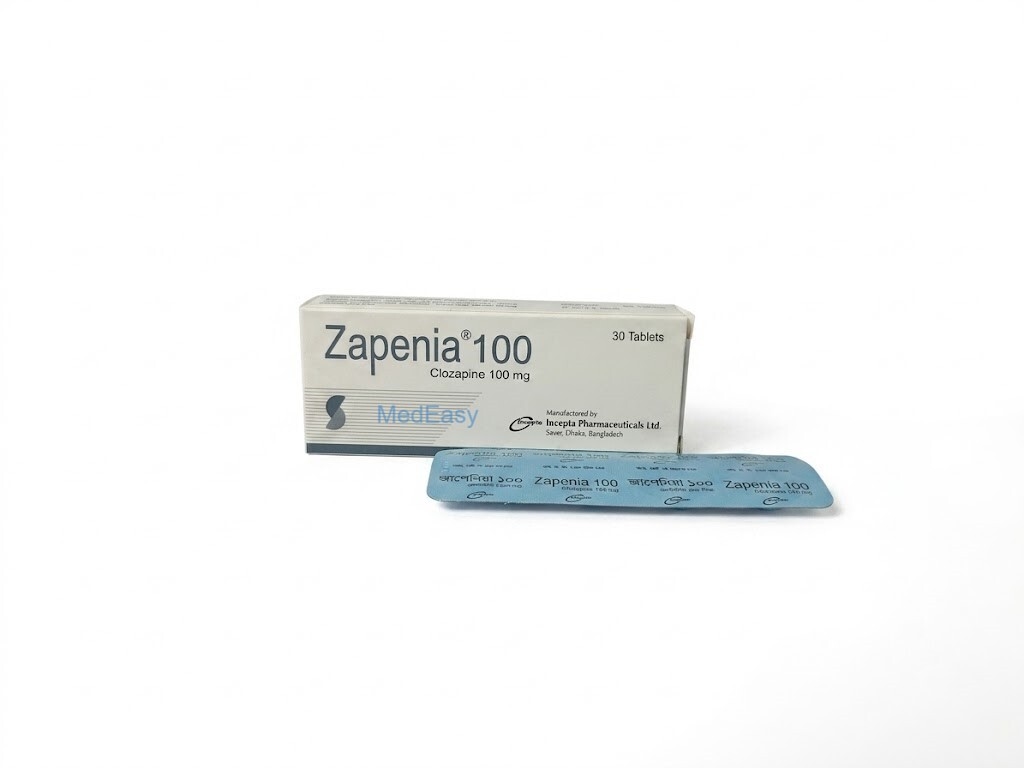
Clozapine is an atypical (second-generation) antipsychotic reserved for specific, difficult-to-treat clinical situations because of its serious safety profile and the intensive monitoring it requires.
Clozapine is an atypical (second-generation) antipsychotic reserved for specific, difficult-to-treat clinical situations because of its serious safety profile and the intensive monitoring it requires. Indications below are grouped by strength of evidence.
Clozapine is not approved for elderly patients with dementia-related psychosis; a boxed warning specifically advises against use in this population because of increased mortality risk.
Dosing of Clozapine must be individualized, started at a low dose, and titrated slowly, because the risk of orthostatic hypotension, bradycardia, syncope, and seizures is highest during initial dose escalation.
| Step | Regimen |
|---|---|
| Initiation | 12.5 mg once or twice daily on Day 1 |
| Titration | Increase in increments of 25–50 mg/day, as tolerated, to reach approximately 150–225 mg/day (in divided doses) by the end of about 2 weeks |
| Further increases | If needed, increase further in increments of up to 100 mg once or twice weekly |
| Usual effective range | 300–450 mg/day (in divided doses) |
| Maximum dose | 900 mg/day; doses above 450 mg/day increase the risk of seizures and other adverse effects and require careful monitoring |
Because of the risk of severe neutropenia (see Precautions and Warnings), Clozapine may only be prescribed and dispensed through a monitoring program that requires a baseline ANC before starting and regular ANC checks throughout treatment (typically weekly for the first 6 months, then every 2 weeks for months 7–12, then monthly thereafter if counts remain normal). Dosing must be interrupted or discontinued according to ANC thresholds established by the monitoring program.
If Clozapine has been stopped for 2 days or more, it must be restarted at the initial titration dose (12.5 mg once or twice daily) and re-titrated, because of the renewed risk of orthostatic hypotension, bradycardia, and syncope.
Dose reduction and slower titration may be necessary in patients with significant renal or hepatic impairment; such patients should be monitored more closely.
Whenever possible, Clozapine should be tapered gradually over 1–2 weeks rather than stopped abruptly, to reduce the risk of rebound psychosis and cholinergic rebound symptoms (sweating, headache, nausea, vomiting, diarrhea). If abrupt discontinuation is medically necessary, the patient should be monitored closely.
See Dosage and Administration above for full titration and monitoring detail; see Interaction for dose adjustments needed with certain co-administered drugs.
The most commonly reported adverse effects of Clozapine, occurring in a substantial proportion of patients, include:
Serious adverse effects — including severe neutropenia, seizures, myocarditis/cardiomyopathy, severe gastrointestinal hypomotility (constipation progressing to bowel obstruction), neuroleptic malignant syndrome, and marked metabolic changes (hyperglycemia, dyslipidemia) — are covered in detail under Precautions and Warnings, as they require specific monitoring and action rather than being routine side effects.
Clozapine is contraindicated in patients with:
Disclaimer
The information provided is accurate to the best of our knowledge, but it does not replace professional medical advice. We cannot guarantee its completeness or accuracy, and the absence of specific information about a drug should not be taken as an endorsement. We are not responsible for any consequences arising from this information, so please consult a healthcare professional for any concerns or questions.