
8% Off
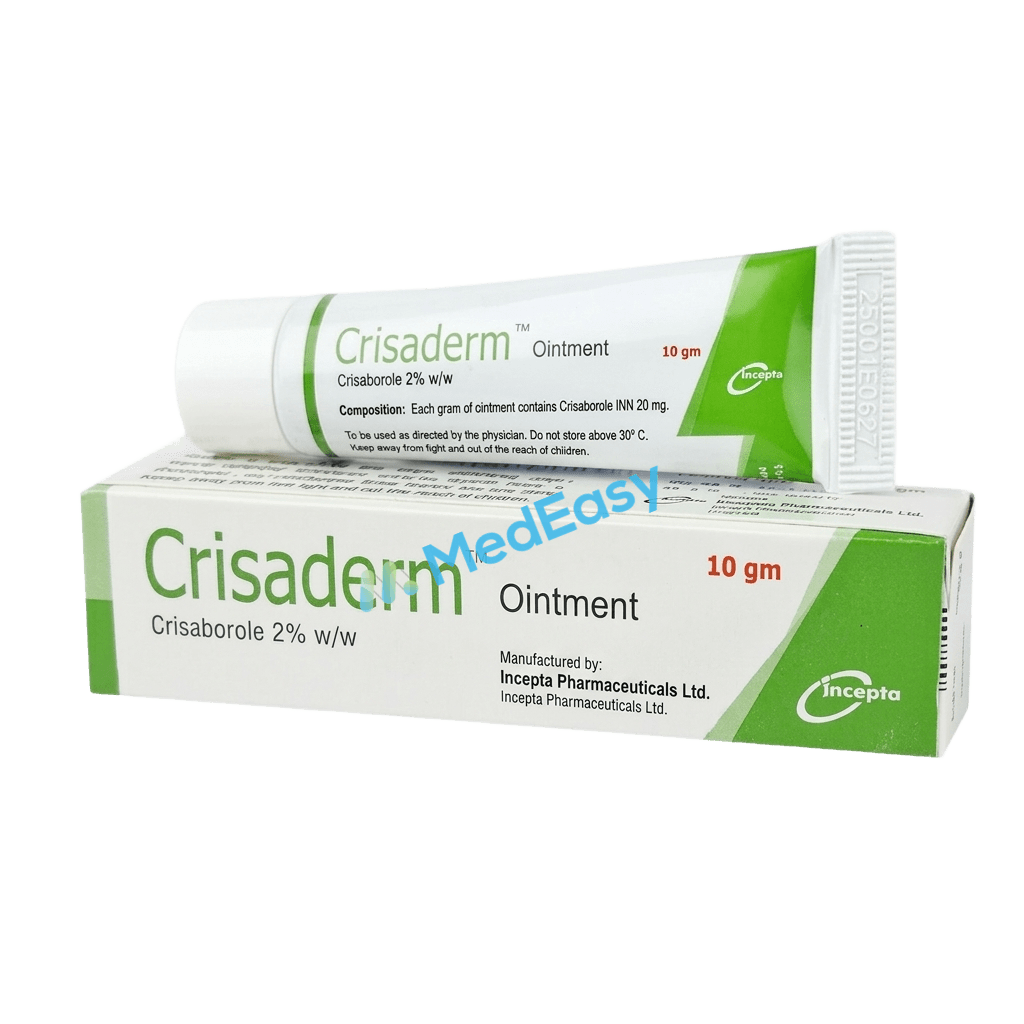
Crisaderm10 gm
Incepta Pharmaceuticals Ltd.
৳460.00
Add to cart
Crisaborole is a topical, non-steroidal phosphodiesterase-4 (PDE4) inhibitor approved for the following use: Established/FDA-approved use: Topical treatment of mild-to-moderate atopic dermatitis…
Crisaborole is a topical, non-steroidal phosphodiesterase-4 (PDE4) inhibitor approved for the following use:
Crisaborole is intended as a steroid-sparing option for eczema and does not replace basic eczema skin-care measures such as regular moisturizing and avoidance of known triggers (irritants, allergens, extreme temperature/humidity changes). There are currently no other guideline-endorsed or off-label indications with sufficient evidence to recommend routine use of Crisaborole outside atopic dermatitis; any such use should be individualized by a physician.
| Step | Instruction |
|---|---|
| Frequency | Apply a thin layer of Crisaborole to affected skin areas twice daily. |
| After improvement | Once visible clinical improvement occurs, the treating physician may reduce frequency to once daily. |
| Review | If there is no improvement after about 4 weeks of regular use, patients should follow up with their physician to reassess the diagnosis and treatment plan. |
Crisaborole is for topical (skin) use only; it is not intended for oral, ophthalmic, or intravaginal use. See Administration for application technique and Precautions and Warnings for site-restriction details.
The most commonly reported side effect of Crisaborole is application-site pain, described as burning or stinging, which is usually mild-to-moderate in intensity and transient. Other reported effects include:
If signs of a hypersensitivity reaction occur (see Contraindications and Precautions and Warnings), stop using Crisaborole and contact a physician.
Crisaborole is contraindicated in patients with known hypersensitivity to Crisaborole or to any excipient in the Crisaborole ointment formulation.
Disclaimer
The information provided is accurate to the best of our knowledge, but it does not replace professional medical advice. We cannot guarantee its completeness or accuracy, and the absence of specific information about a drug should not be taken as an endorsement. We are not responsible for any consequences arising from this information, so please consult a healthcare professional for any concerns or questions.
