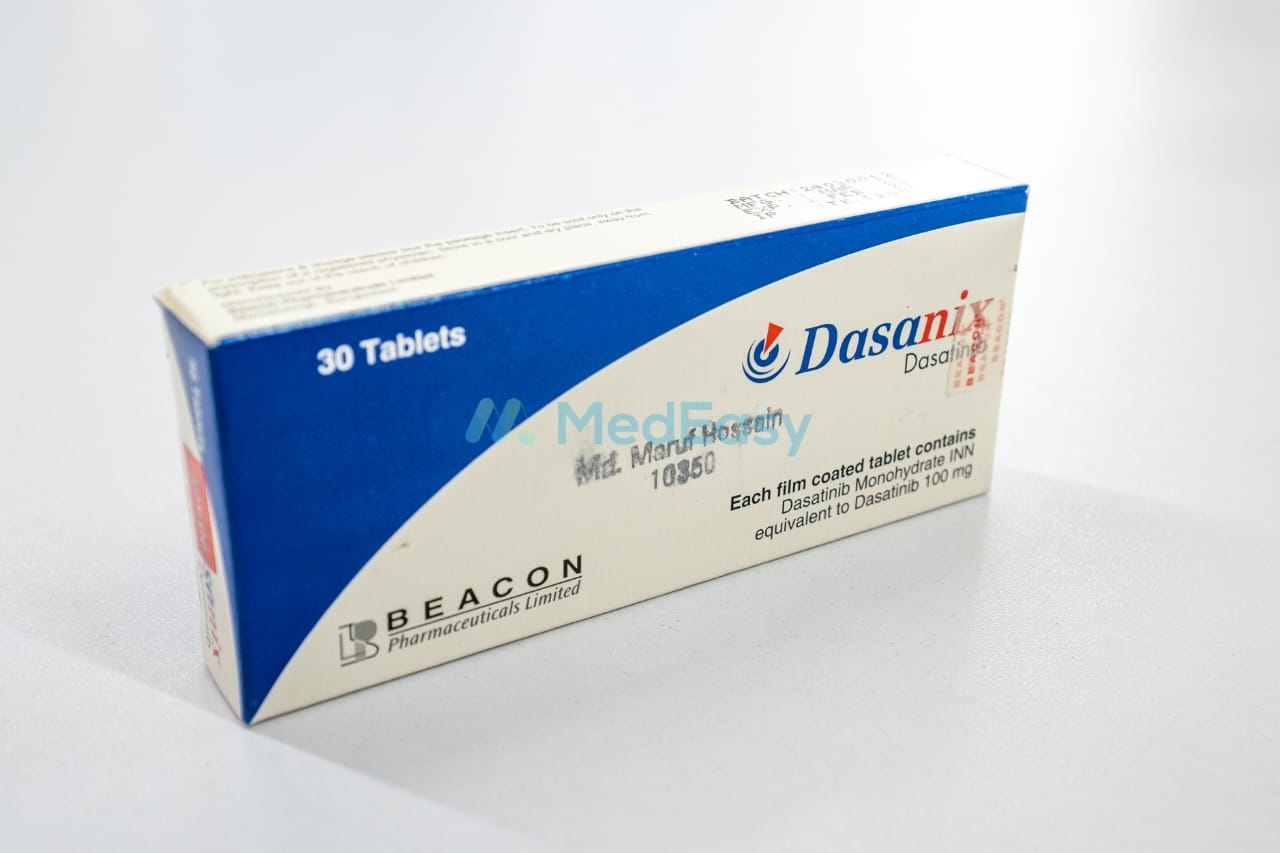
Generic medicine

Dasatinib: Brands, Price & Uses in Bangladesh

Dasatinib is a tyrosine kinase inhibitor (TKI) approved for the treatment of certain Philadelphia chromosome-positive (Ph+) leukemias.

Forms:Tablet

About Dasatinib

Indications of Dasatinib

Dasatinib is a tyrosine kinase inhibitor (TKI) approved for the treatment of certain Philadelphia chromosome-positive (Ph+) leukemias. Its use is classified by strength of evidence as follows:

FDA-approved / established indications

  • Newly diagnosed adults with Philadelphia chromosome-positive chronic myeloid leukemia (Ph+ CML) in chronic phase.
  • Adults with chronic, accelerated, or myeloid/lymphoid blast phase Ph+ CML with resistance or intolerance to prior therapy, including imatinib.
  • Adults with Philadelphia chromosome-positive acute lymphoblastic leukemia (Ph+ ALL) with resistance or intolerance to prior therapy.
  • Pediatric patients 1 year of age and older with Ph+ CML in chronic phase (newly diagnosed, or resistant/intolerant to prior TKI therapy).
  • Pediatric patients 1 year of age and older with newly diagnosed Ph+ ALL, used in combination with chemotherapy (combination-therapy-dependent indication).

Off-label / investigational use

Dasatinib is sometimes used off-label in other BCR-ABL-driven or SRC-kinase-driven conditions under specialist oncology guidance; such use is not FDA-approved and should only occur within a clinical trial or specialist protocol.

Dosage & Administration of Dasatinib

Adult dosing (by indication)

IndicationRecommended dose
Chronic phase Ph+ CML (newly diagnosed or prior therapy)100 mg orally once daily
Accelerated, myeloid, or lymphoid blast phase Ph+ CML140 mg orally once daily
Ph+ acute lymphoblastic leukemia (ALL)140 mg orally once daily

Pediatric dosing

Dosing is weight-based for patients 1 year and older, using tablets or oral suspension as appropriate, generally ranging from about 40 mg to 100 mg once daily depending on body weight band; exact dose must be individualized by a pediatric oncologist per current weight-based dosing tables.

Dose adjustment for toxicity

Dose interruption, reduction, or discontinuation is required for severe myelosuppression (neutropenia, thrombocytopenia), non-hematologic toxicity, QT prolongation, or fluid retention, as determined by the treating physician based on blood counts and clinical status.

Hepatic/renal impairment

No formal dose adjustment has been firmly established for renal impairment; use with caution and physician monitoring. In hepatic impairment, use with caution as hepatic metabolism may be altered; consult a physician for individualized dosing.

Administration instructions

  • Tablets should be swallowed whole; do not crush, split, or chew film-coated tablets.
  • May be taken with or without food, at approximately the same time each day.
  • Avoid concurrent acid-reducing agents as described under Interactions.

Side Effects of Dasatinib

Common side effects

  • Myelosuppression: thrombocytopenia, neutropenia, anemia (see Precautions and Warnings)
  • Fluid retention: peripheral edema, pleural effusion
  • Diarrhea, nausea, vomiting
  • Headache, fatigue
  • Musculoskeletal pain, rash
  • Bleeding events (mostly mild, e.g., epistaxis, bruising)

Serious/less common side effects

  • Severe hemorrhage (including gastrointestinal or central nervous system bleeding)
  • QT-interval prolongation and cardiac arrhythmia
  • Pulmonary arterial hypertension (potentially irreversible) and pulmonary edema
  • Congestive heart failure/cardiac dysfunction
  • Growth retardation in pediatric patients with long-term use
  • Tumor lysis syndrome (in patients with high tumor burden)

Contraindications of Dasatinib

Dasatinib is contraindicated in patients with known hypersensitivity to dasatinib or any component of the formulation.

Frequently Asked Questions about Dasatinib

What is Dasatinib used for?

Dasatinib is used to treat Philadelphia chromosome-positive chronic myeloid leukemia (CML) and Philadelphia chromosome-positive acute lymphoblastic leukemia (ALL), usually in patients who are newly diagnosed or who have not responded well to, or cannot tolerate, other similar medicines.

How should I take Dasatinib?

Dasatinib tablets should be swallowed whole with water, with or without food, at the same time each day. Do not crush, split, or chew the tablets, and follow your physician's prescribed dose exactly.

What are the most serious risks of Dasatinib?

Dasatinib carries boxed warnings for severe low blood counts (myelosuppression), fluid retention (including fluid around the lungs or heart), bleeding, heart rhythm changes (QT prolongation), and a serious lung blood-pressure condition called pulmonary arterial hypertension. Your physician will monitor you with regular blood tests and check-ups during treatment.

Can Dasatinib be used during pregnancy or breastfeeding?

Dasatinib can harm an unborn baby and should be avoided during pregnancy; effective contraception is required during treatment and for a period after stopping. Breastfeeding should also be avoided during and shortly after treatment. Always consult your physician before use if you are pregnant, planning pregnancy, or breastfeeding.

What should I avoid while taking Dasatinib?

Avoid proton pump inhibitor acid-reducing medicines, and separate any antacid or H2-blocker dosing from Dasatinib by several hours, since these can reduce its absorption. Also inform your physician of all other medicines you take, as several can interact with Dasatinib.

What should I do if I miss a dose or suspect an overdose?

If you miss a dose of Dasatinib, take it as soon as you remember unless it is almost time for the next dose — do not double up. If an overdose is suspected, seek immediate medical attention or contact a poison control center right away.

Disclaimer

The information provided is accurate to the best of our knowledge, but it does not replace professional medical advice. We cannot guarantee its completeness or accuracy, and the absence of specific information about a drug should not be taken as an endorsement. We are not responsible for any consequences arising from this information, so please consult a healthcare professional for any concerns or questions.

DoctorBlogArticles