
Generic medicine

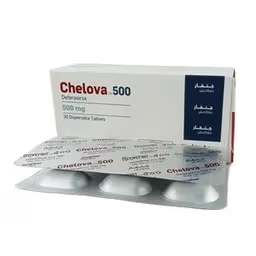
Deferasirox: Brands, Price & Uses in Bangladesh

Deferasirox is an orally active iron-chelating agent.

Forms:TabletDispersible Tablet

About Deferasirox

Indications of Deferasirox

Deferasirox is an orally active iron-chelating agent. Its evidence-based indications are as follows:

Established / FDA-approved uses

  • Chronic iron overload due to blood transfusions (transfusional hemosiderosis): Indicated in patients aged 2 years and older who have received repeated blood transfusions (e.g., for thalassemia, sickle cell disease, myelodysplastic syndromes, or other chronic anemias), typically when the patient has received at least 100 mL/kg of packed red blood cells and serum ferritin is consistently greater than 1,000 mcg/L.
  • Chronic iron overload in non-transfusion-dependent thalassemia (NTDT) syndromes: Indicated in patients aged 10 years and older with liver iron concentration (LIC) of at least 5 mg Fe/g dry weight and serum ferritin greater than 300 mcg/L.

Not established / limitations

  • The safety and effectiveness of Deferasirox used together with other iron chelation therapies have not been established; combination chelation is considered an off-label, specialist-directed approach used only in select refractory cases under close hematology supervision.
  • Deferasirox is not indicated for acute iron poisoning/acute iron intoxication.

Dosage & Administration of Deferasirox

General principles

The starting dose of Deferasirox is individualized according to indication, body weight, transfusional iron intake, and treatment goals, and is subsequently adjusted based on serial serum ferritin trends (and, where used, liver iron concentration) every 3-6 months. Baseline renal function (eGFR) should be assessed before starting therapy, and dosing should not exceed the maximum recommended dose for the relevant indication.

IndicationAdult doseNotes
Transfusional iron overloadInitial ~14 mg/kg/day (film-coated tablet dosing; equivalent adjustment needed for other formulations); may be titrated in increments of 3.5-7 mg/kg every 3-6 months based on ferritin trend, up to a maximum of 28 mg/kg/dayReduce dose if ferritin falls below ~1,000 mcg/L on consecutive assessments; interrupt if ferritin falls below ~500 mcg/L
Non-transfusion-dependent thalassemia (NTDT)Initial ~7 mg/kg/day; may increase to 14 mg/kg/day after 4 weeks if liver iron concentration is high; maximum 14 mg/kg/dayInterrupt therapy once liver iron concentration and ferritin fall to target/low levels; reassess every 6 months

Pediatric dosing

In children aged 2 years and older (transfusional iron overload) and 10 years and older (NTDT), dosing is calculated on the same mg/kg basis as adults, with closer monitoring for volume depletion, renal toxicity, and overchelation (dosing too high relative to actual iron burden).

Renal and hepatic adjustment

  • Renal impairment: Deferasirox should not be started if estimated glomerular filtration rate (eGFR) is below 40 mL/min/1.73 m2 (see Contraindications). If eGFR is 40-60 mL/min/1.73 m2, the starting dose should be reduced by approximately 50% with close monitoring.
  • Hepatic impairment: No dose adjustment is required for mild hepatic impairment, but closer monitoring is advised. For moderate hepatic impairment, the starting dose should be reduced by approximately 50%. Deferasirox should be avoided in severe hepatic impairment.

Side Effects of Deferasirox

The following side effects have been reported with Deferasirox:

Common side effects

  • Diarrhea, nausea, vomiting, abdominal pain
  • Skin rash
  • Increase in serum creatinine
  • Proteinuria

Serious side effects (seek medical attention promptly)

  • Signs of kidney injury (reduced urine output, swelling, unusual fatigue) - see Precautions and Warnings
  • Signs of liver injury (yellowing of the skin/eyes, dark urine, severe abdominal pain) - see Precautions and Warnings
  • Signs of gastrointestinal bleeding (black or bloody stools, vomiting blood, severe stomach pain) - see Precautions and Warnings
  • Signs of low blood counts (unusual bruising/bleeding, persistent fever, severe fatigue) suggesting bone marrow suppression
  • Signs of a severe allergic or skin reaction (facial/throat swelling, difficulty breathing, widespread blistering rash)
  • Hearing changes or visual disturbances with long-term use

Contraindications of Deferasirox

Deferasirox is contraindicated in the following situations:

  • Known hypersensitivity to Deferasirox or to any component of the formulation.
  • Estimated glomerular filtration rate (eGFR) less than 40 mL/min/1.73 m2.
  • Poor performance status, high-risk myelodysplastic syndromes with advanced disease, or advanced malignancies.
  • Platelet count less than 50 x 10^9/L.

Frequently Asked Questions about Deferasirox

What is Deferasirox used for?

Deferasirox is an oral iron-chelating medicine used to remove excess iron from the body in patients who have chronic iron overload from repeated blood transfusions, and in certain patients with non-transfusion-dependent thalassemia who have significant iron buildup in the liver.

How should I take Deferasirox?

Deferasirox is usually taken once daily, at the same time each day, on an empty stomach or with a light meal, exactly as prescribed by your physician. Do not take it with aluminum-containing antacids, and do not change your dose without medical advice.

What monitoring will I need while taking Deferasirox?

Because Deferasirox can affect the kidneys and liver and can rarely cause gastrointestinal bleeding, your physician will check your kidney function and liver enzymes before starting treatment and regularly during treatment, along with periodic serum ferritin tests, and, for long-term use, hearing and eye examinations.

Can Deferasirox be used during pregnancy or breastfeeding?

Deferasirox should be used in pregnancy only if clearly needed and if the potential benefit justifies the potential risk to the fetus, as safety data in pregnant women is limited. Breastfeeding is generally not recommended during treatment with Deferasirox; always consult your physician.

What are the warning signs I should watch for while on Deferasirox?

Contact your physician immediately if you notice reduced urine output or swelling (possible kidney problem), yellowing of the skin or eyes or dark urine (possible liver problem), black or bloody stools or vomiting blood (possible gastrointestinal bleeding), or a severe skin rash, facial swelling, or difficulty breathing (possible allergic reaction).

Who should not take Deferasirox?

Deferasirox should not be used by people with a known allergy to Deferasirox, those with significantly reduced kidney function (eGFR below 40 mL/min/1.73 m2), and certain patients with advanced myelodysplastic syndromes, advanced malignancies, poor performance status, or very low platelet counts. Your physician will assess whether Deferasirox is appropriate for you.

Disclaimer

The information provided is accurate to the best of our knowledge, but it does not replace professional medical advice. We cannot guarantee its completeness or accuracy, and the absence of specific information about a drug should not be taken as an endorsement. We are not responsible for any consequences arising from this information, so please consult a healthcare professional for any concerns or questions.
DoctorBlogArticles