Generic medicine

Deferoxamine Mesylate: Brands, Price & Uses in Bangladesh

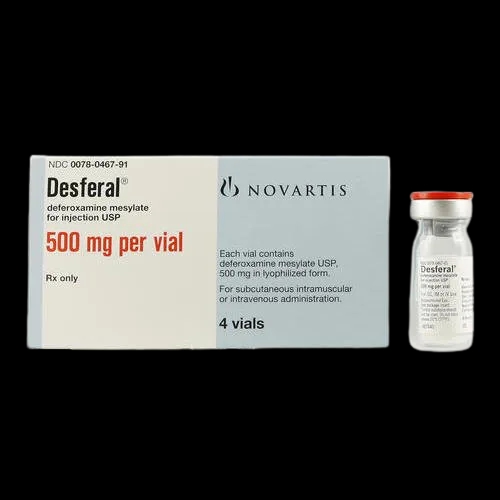
Deferoxamine Mesylate is an iron-chelating agent used to remove excess iron from the body.

Forms:Injection

About Deferoxamine Mesylate

Indications of Deferoxamine Mesylate

Deferoxamine Mesylate is an iron-chelating agent used to remove excess iron from the body. Indications are classified below by strength of evidence.

Established / FDA-approved uses

  • Acute iron intoxication: Deferoxamine Mesylate is indicated as an adjunct to standard supportive treatment (e.g. gastric decontamination where appropriate) in acute iron poisoning/overdose, particularly when serum iron levels are markedly elevated or the patient is symptomatic.
  • Chronic iron overload: Deferoxamine Mesylate is indicated for chronic iron overload due to transfusion-dependent anemias (for example, thalassemia major and other conditions requiring repeated blood transfusions) in patients where iron accumulates from ongoing transfusion therapy.

Important limitation

Deferoxamine Mesylate is not indicated for the treatment of primary hemochromatosis (a hereditary iron-overload disorder), for which therapeutic phlebotomy is generally the treatment of choice; it is reserved for situations where phlebotomy is not feasible or appropriate, under specialist direction.

Deferoxamine Mesylate therapy for chronic iron overload should be initiated and monitored by a physician experienced in the management of iron-overload disorders (e.g. hematologist).

Dosage & Administration of Deferoxamine Mesylate

Acute iron intoxication (adults and children)

RouteTypical regimen
Intramuscular (preferred when not in shock)Initial dose of 1 g, followed by 0.5 g every 4 hours for two doses; further doses of 0.5 g may be given every 4-12 hours depending on clinical response, up to a usual maximum of 6 g in 24 hours
Intravenous (only if patient is in cardiovascular shock)Infusion rate must not exceed 15 mg/kg/hour for the first 1 g infused; subsequent infusions given more slowly, not exceeding a total of 6 g in 24 hours

Chronic iron overload (e.g. transfusional iron overload in thalassemia)

Population/RouteTypical regimen
Adults - subcutaneous1-2 g/day (approximately 20-60 mg/kg/day) infused over 8-24 hours using a portable infusion pump, typically 5-7 nights per week
Children - subcutaneous/intravenousApproximately 20-40 mg/kg/day, individualized to iron burden and growth; doses generally kept lower relative to adults, especially in young children, to reduce growth-related and ocular/auditory risks
Intravenous (chronic overload, e.g. via existing venous access)Approximately 40-50 mg/kg/day (adults) infused slowly over 8-12 hours, on the days transfusions or chelation are scheduled, not exceeding about 60 mg/kg/day

Administration

Deferoxamine Mesylate powder for injection must be reconstituted with an appropriate sterile diluent (see Reconstitution) immediately before use, and any unused reconstituted solution should be discarded. Intravenous infusions must be given slowly at the controlled rate specified above (never as a rapid IV push, except under specialist-directed emergency overdose protocols), as rapid administration can cause hypotension, flushing, and shock-like reactions. Subcutaneous infusion via a small portable pump is the standard method for long-term chronic overload therapy. All doses and duration must be individualized and supervised by a physician experienced in iron-chelation therapy.

Renal impairment

Deferoxamine Mesylate is contraindicated in severe renal disease or anuria because the iron-chelate complex is cleared renally (see Contraindications); in milder renal impairment, use with caution and closer monitoring.

Hepatic impairment

No formal validated dose-adjustment guidelines exist for hepatic impairment; use with caution and clinical monitoring.

Side Effects of Deferoxamine Mesylate

The most common and clinically significant adverse effects of Deferoxamine Mesylate include:

  • Injection-site reactions: pain, swelling, induration, or itching at subcutaneous/intramuscular injection sites; common with prolonged subcutaneous infusion.
  • Infusion-related reactions with rapid IV administration: flushing, urticaria (hives), hypotension, and, rarely, shock-like reactions (see Precautions).
  • Gastrointestinal: nausea, vomiting, diarrhea, and abdominal pain/discomfort.
  • Ocular: visual disturbances including blurred vision, reduced visual acuity, night blindness, cataracts, and retinal changes, generally with prolonged or high-dose use (see Precautions).
  • Auditory: tinnitus and high-frequency sensorineural hearing loss, generally with prolonged or high-dose use (see Precautions).
  • Musculoskeletal (children): growth retardation with long-term high-dose therapy relative to iron burden (see Precautions and Pediatric Uses).
  • Respiratory: rare acute respiratory distress syndrome (ARDS)-like pulmonary reactions, particularly with high-dose intravenous use (see Precautions).
  • Hematologic/other rare effects: leg cramps, dizziness, tachycardia, fever, and rare blood dyscrasias.
  • Serious hypersensitivity: anaphylaxis has been reported rarely.

Contraindications of Deferoxamine Mesylate

Deferoxamine Mesylate is contraindicated in the following situations:

  • Known hypersensitivity to Deferoxamine Mesylate or any component of the formulation.
  • Severe renal disease or anuria, because the iron-chelate complex formed by Deferoxamine Mesylate is eliminated primarily by the kidneys and cannot be adequately cleared.

Frequently Asked Questions about Deferoxamine Mesylate

What is Deferoxamine Mesylate used for?

Deferoxamine Mesylate is an injectable medicine used to remove excess iron from the body. It is used for acute iron poisoning/overdose and for chronic iron overload that builds up from repeated blood transfusions, such as in thalassemia.

How is Deferoxamine Mesylate given?

Deferoxamine Mesylate is given only by injection - as a slow intravenous infusion, an intramuscular injection, or (most commonly for long-term therapy) as a subcutaneous infusion using a small portable pump, exactly as directed by your physician. It is never taken by mouth and must never be given as a rapid intravenous injection except in a specific emergency protocol directed by a specialist.

What are the most important side effects of Deferoxamine Mesylate?

The most important effects of Deferoxamine Mesylate include eye problems (blurred vision, night blindness, retinal changes) and hearing problems (tinnitus, hearing loss), especially with high doses or long-term use, which is why regular eye and hearing checks are recommended. Rapid intravenous infusion can cause flushing, low blood pressure, and shock-like reactions, so it must always be given slowly. Other effects include injection-site reactions, nausea, and, rarely, serious infections or breathing problems.

Can Deferoxamine Mesylate be used during pregnancy or breastfeeding?

Deferoxamine Mesylate should be used in pregnancy only if your physician decides the benefit clearly outweighs the potential risk to the baby, since some animal studies have shown effects at high doses. It is not fully known whether Deferoxamine Mesylate passes into breast milk, so it should be used while breastfeeding only if clearly needed and under your physician's advice.

Why do I need eye and hearing tests while on Deferoxamine Mesylate?

Long-term or high-dose Deferoxamine Mesylate therapy has been linked to eye problems (including retinal changes and reduced vision) and hearing loss/tinnitus. Because these effects are more common at higher doses or when iron levels are already low, your specialist will check your eyes and hearing at the start of treatment and periodically afterward, and may adjust your dose based on the results.

What should I do if too much Deferoxamine Mesylate is given or an overdose is suspected?

An overdose of Deferoxamine Mesylate is a medical emergency that can cause low blood pressure, fast heart rate, vision problems, or more serious effects such as shock or kidney problems. If an overdose is suspected, seek immediate medical attention or contact emergency services/poison control right away; treatment in a hospital is supportive, since there is no specific antidote.

Disclaimer

The information provided is accurate to the best of our knowledge, but it does not replace professional medical advice. We cannot guarantee its completeness or accuracy, and the absence of specific information about a drug should not be taken as an endorsement. We are not responsible for any consequences arising from this information, so please consult a healthcare professional for any concerns or questions.

DoctorBlogArticles